
The Fall Dessert That Goes Viral on TikTok Every September
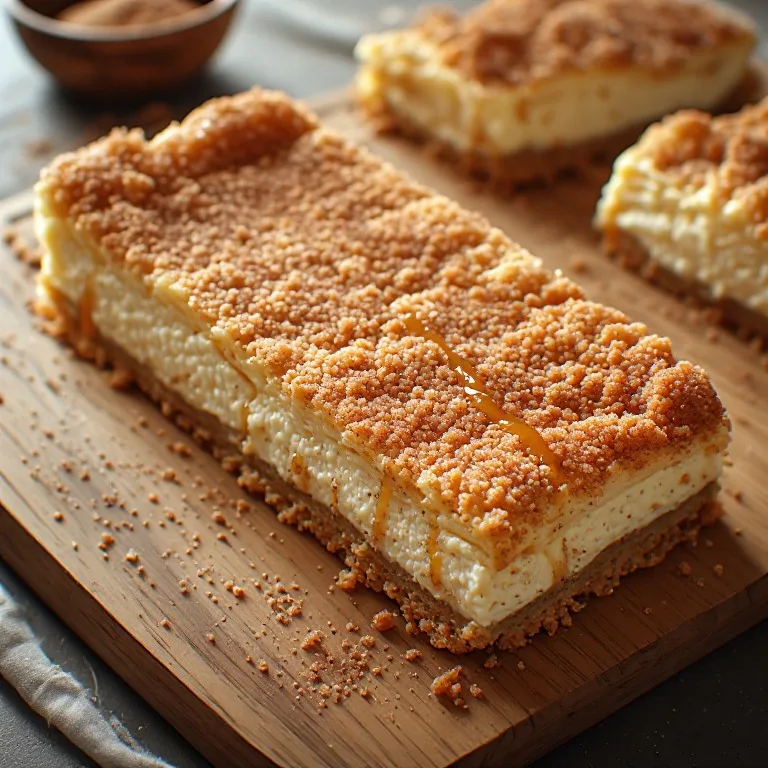
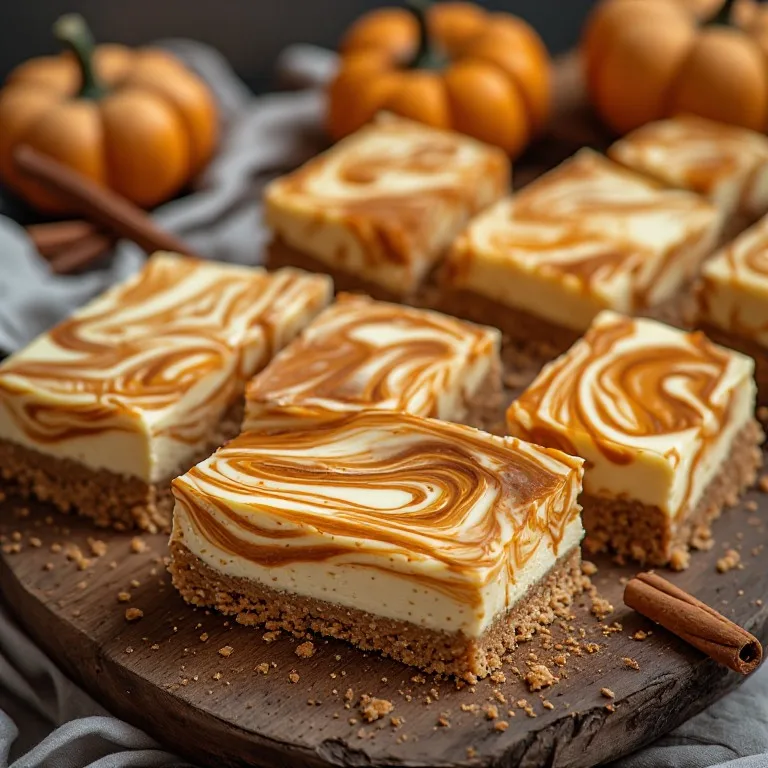
Every September, two things happen in tandem: apple orchards open, and pumpkin cheesecake bar videos flood #FoodTok. The format is almost always the same — a knife cuts through a chilled slab to reveal the orange-and-cream marble pattern inside, the bar lifts off the pan intact, and the caption says something like “I can’t stop making these.”
The reason these videos work, and the reason the bars keep getting made, is that they solve a real problem: you want the flavor of pumpkin cheesecake for a fall gathering without the intimidation of a full cheesecake (water bath, springform pan, careful unmolding). Bars solve all of it. You bake in a 9×13 pan, lift out by the parchment, cut into rectangles, and serve from a platter. No springform, no water bath, no nerve-wracking unmolding.
The swirled version — two batters alternated and swirled with a knife — is the TikTok format because the marble pattern is visually distinctive and looks technically impressive while requiring about 30 seconds of extra effort. The rest is patience: room-temperature cream cheese, low-speed egg incorporation, and enough refrigerator time for the filling to set properly.
The Two Non-Negotiable Rules
Room-temperature cream cheese. Everything else about this recipe is flexible. This is not. Cold cream cheese doesn’t beat smooth — it breaks into chunks with tacky spots between them, and those chunks survive the bake and show up as dense, lumpy pockets in the finished bars. Pull it from the refrigerator 2 hours before you start. If you’re in a hurry, the microwave-at-20%-power method (15-second bursts, turn each time, 45 to 60 seconds total) works in emergencies, but room temperature is more reliable.
Low speed when adding eggs. Cream cheese + sugar + sour cream can be beaten at medium speed because you’re trying to make it smooth and aerated doesn’t matter. The moment the eggs go in, drop to the lowest setting and add them one at a time, 10 to 15 seconds each. Eggs beaten in at high speed whip air into the batter. That air expands in the oven, lifts the surface, then collapses and cracks as the bars cool. Low speed, one egg at a time, just until gone.
Why the Swirl Works
The visual hook of this recipe — and the thing that makes it look more technically impressive than it is — comes from the fat in both batters. Full-fat cream cheese is dense and moves slowly; pumpkin purée adds more structure to its half of the batter, making it slightly stiffer. When you drag a knife through the alternating dollops, the two batters blend just enough to create clean lines without fully mixing together. The result looks like someone painted orange and cream stripes inside a bar.
The only mistake is over-swirling: six to eight long S-curves is the right amount. More than that and the batters blend into a uniform tan, which loses both the visual and the flavor contrast between the plain vanilla half and the pumpkin-spice half.
The Cooling Protocol That Prevents Cracks
Cheesecake bars crack when they cool too fast. The gradient matters more than the total time: oven → cracked oven door (1 hour) → room temperature rack (1 hour) → refrigerator (4+ hours). This three-stage protocol exists because the starch network in the cheesecake filling sets progressively as it cools, and the crust contracts at a different rate than the filling. Giving the bars 2 hours of gradual temperature reduction before refrigeration allows the entire structure to contract evenly rather than the surface contracting faster than the interior and tearing.
If your bars crack anyway, it’s not a flavor problem — cover the cracks with a thin layer of sweetened sour cream (½ cup sour cream + 1 tablespoon sugar) spread over the warm bars before refrigerating, or cover them with whipped cream at serving.
Make-Ahead Notes
Pumpkin cheesecake bars made the day before are noticeably better than bars made the same day. The filling firms up, the spice flavors bloom, and the bars cut more cleanly after overnight chilling. Bake the day before, cool completely, and refrigerate overnight in the pan. Lift out and cut just before serving. Keep covered in the refrigerator for up to 5 days.