


Pin It

Viral TikTok Salmon Wellington (Christmas Fish Centerpiece)

Viral TikTok Salmon Wellington (Christmas Fish Centerpiece)
Jump to Recipe
Prep 30 min Cook 28 min Serves 6
Quick answer: Wilt 3 cups baby spinach, wring it bone-dry in a towel, and fold it into 6 oz softened cream cheese with 2 tbsp dill, 1 tbsp chives, 1 grated garlic clove, and the zest of 1 lemon. Pat two 6–7 oz skinless salmon fillets dry and season. Roll a thawed puff pastry sheet to 12x14 inches, center one fillet, spread the filling over it, then set the second fillet (top brushed with Dijon, mustard-side down) on top to make a salmon sandwich. Wrap in the pastry seam-side down, egg-wash, score, and chill 20 minutes. Bake at 425°F (220°C) for 25–28 minutes until deeply golden, then rest 5–8 minutes and slice with a serrated knife. Serves 6.

Shop the tools

Gear matched to this recipe. These are Amazon affiliate links — we may earn a small commission if you buy, at no extra cost to you.

As an Amazon Associate, Copycat Spices earns from qualifying purchases. Product images are generic illustrations, not the exact item listed.

Viral TikTok Salmon Wellington (Christmas Fish Centerpiece)

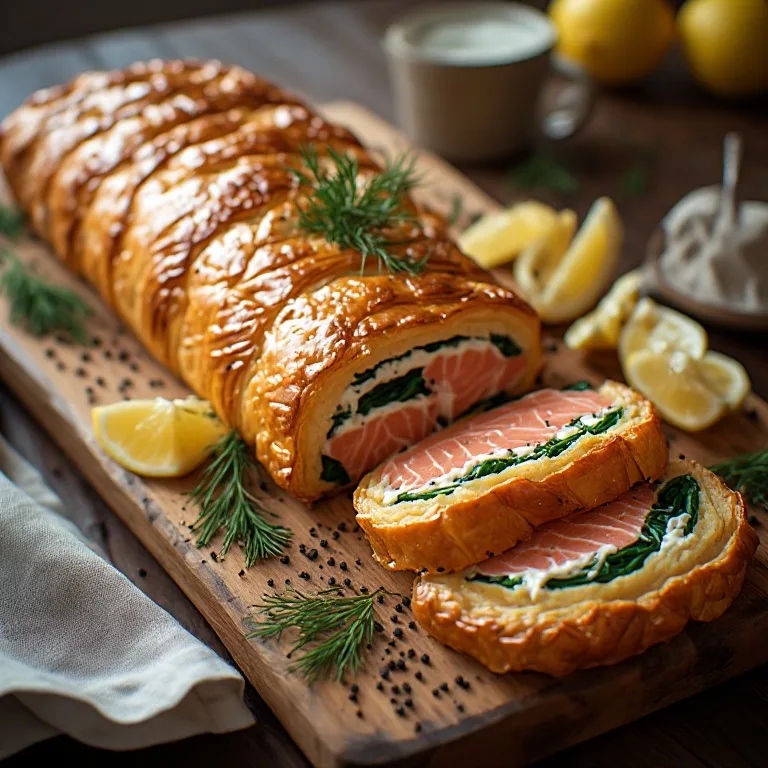
Two salmon fillets sandwiched around a cream cheese, dill, and spinach filling, wrapped in golden puff pastry — the pescatarian Christmas centerpiece taking over TikTok. Easier than beef Wellington, more forgiving than mushroom Wellington, and the table reveal is just as dramatic.

Medium Prep: 30 min Cook: 28 min Total: 58 min6 servings ~$4.20/serving
Prep30 min
Cook28 min
Total58 min
Servings
6
At home~$4.20/serving
vs
Restaurant~$18.90/serving
You save ~78%

The Story Behind the Recipe

Beef Wellington went viral on TikTok and never left. Mushroom Wellington followed as the vegetarian answer. Now salmon Wellington has emerged as the pescatarian Christmas centerpiece — and it's easier than either. Where beef Wellington requires a precise internal temperature window between raw and overcooked, salmon is far more forgiving. Where duxelles needs 20 minutes of careful cooking to drive out moisture, the cream cheese and herb filling takes five minutes and a bowl. The visual payoff is identical: golden puff pastry, a clean cross-section at the table, and a dish that reads as a restaurant production even if you've never made it before.

The TikTok version that keeps circulating uses cream cheese and fresh dill as the filling — the dairy fat creates a barrier between the salmon and the pastry that resists sogginess, while dill's mild anise note pairs with salmon so naturally it barely needs explaining. The one technique that separates great salmon Wellington from a soggy one is the spinach: wilt it, transfer it to a clean towel, and squeeze until you'd swear it's dry. Then squeeze once more. A full salmon fillet at the center retains enough moisture during baking to keep the flesh tender; the cream cheese, properly applied, contains it. The result is genuinely impressive at a cost under $30 for six people.

Nutrition Facts

Per serving (6 servings)
Calories445
Total Fat26g
Total Carbs24g
Dietary Fiber1g
Sugars2g
Protein22g
Sodium480mg

* Estimated values based on standard recipe preparation. Actual values may vary.

Ingredients

Instructions

💡
Pro tip: This recipe tastes even better the next day. The flavors need time to meld together in the fridge.
❄️
Storage: Keeps in an airtight container in the fridge for up to 2 weeks. Freezer-friendly for up to 3 months.
🦃 Free Thanksgiving cookbook — download now The Copycat Thanksgiving Cookbook A ready-made, photo-illustrated PDF of our best thanksgiving copycat recipes — free to download, no building required. Pay what you want to support if you love it.

Free PDF — instant download. We'll also send new seasonal copycat recipes now and then; unsubscribe anytime. Or just download it →

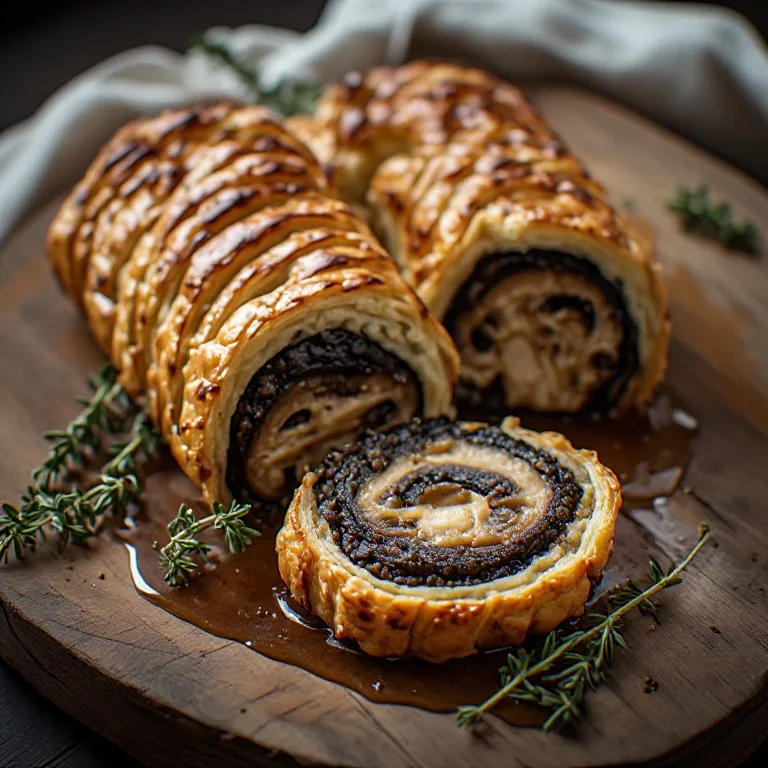
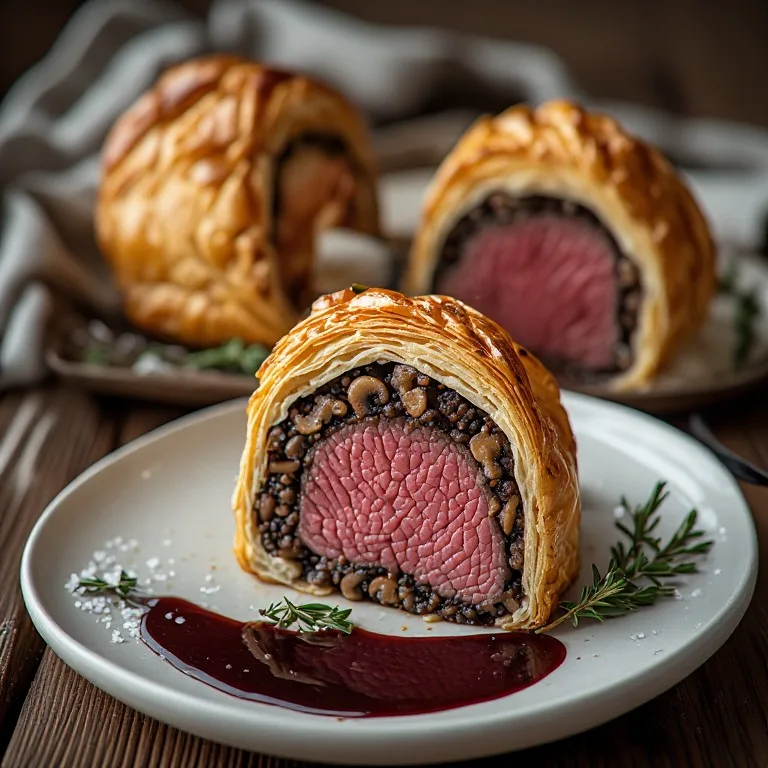
Every year around December, the same format of video recirculates: a golden Wellington sliced open to reveal a dramatic cross-section. Beef Wellington was first. The mushroom Wellington came along as the vegetarian answer. Salmon Wellington is the third arrival — the pescatarian Christmas centerpiece, trending now because it delivers the same table reveal at lower cost, lower effort, and a wider window for error.

Why Salmon Wellington Is Easier Than It Looks

The beef Wellington’s notorious difficulty comes from a single constraint: beef tenderloin needs to hit exactly the right internal temperature, and the window between rare and overcooked is about 10 degrees. You’re also cooking the duxelles for 20 minutes and searing the beef at screaming-hot temperatures, then chilling it, then wrapping it, then baking it again.

Salmon Wellington strips away most of those variables. Salmon is genuinely forgiving — a few degrees in either direction doesn’t ruin the dish, and most people are happy with a salmon center anywhere from 120°F to 135°F. The filling is cream cheese, dill, and spinach, which comes together in a bowl in 5 minutes. There’s no searing, no thermometer-monitoring partway through, no hour-long rest between steps.

The one place salmon Wellington does require genuine care is the spinach. This is also where most home cook failures happen.

The Spinach Problem (And Its Fix)

Baby spinach is roughly 91% water by weight. Wilted spinach, even after cooking, retains enough moisture to steam the puff pastry from the inside if it makes it into the filling in any wet state. The TikTok videos skip over this step quickly, which is why so many home cooks report soggy bottoms.

The fix is simple but must be done properly: wilt the spinach, transfer to a clean kitchen towel, fold the towel around it, and squeeze. Twist the bundle and squeeze again. Squeeze harder than seems reasonable. The finished spinach should be a dry, compact clump — nearly the size of a golf ball — with almost nothing left to squeeze. Chop it roughly before adding to the cream cheese filling.

The cream cheese serves a secondary function here: it forms a moisture barrier between the salmon and the pastry. Cream cheese melts at a higher temperature than butter, which means it holds its shape in the oven longer than a beurre-based filling would. By the time it softens enough to release moisture, the pastry is already set from the dry heat. This is why the cream cheese version of salmon Wellington is more reliable than older versions that used a butter-based sauce or a plain spinach layer.

The Two-Fillet Method

The TikTok version that performs best uses two salmon fillets stacked with filling in between — a “salmon sandwich” formation. This solves a structural problem: a single fillet laid flat in puff pastry produces an uneven Wellington that’s too thin at the edges and too thick in the middle, which means the ends overcook before the center is done.

Two fillets of matched thickness, stacked, create a more uniform block. The filling layer in between distributes moisture evenly and acts as additional insulation. Both fillets face the puff pastry at roughly similar distances, so the whole thing cooks more evenly.

Place the Dijon-brushed fillet mustard-side inward, against the filling. The mustard adds depth and helps the filling adhere to the salmon during baking. It also provides an acid note that cuts through the richness of the cream cheese — a detail that would be easy to skip but makes a perceptible difference in the finished slice.

Assembly and the Chill Step

Work on a lightly floured surface and move quickly once the pastry is unrolled — puff pastry softens fast at room temperature, and soft pastry doesn’t puff. Get the salmon and filling onto the pastry, fold and seal, and move the assembled Wellington directly to the refrigerator. The 20-minute chill is what produces the dramatic rise when it hits the 425°F oven: the butter in the pastry layers needs to be cold and solid before baking so it steams rather than melts into the dough.

The 24-hour option is genuinely useful for Christmas dinner planning. Assemble the evening before, refrigerate overnight, and bake straight from the refrigerator the next day — adding 3–4 minutes to the bake time to account for the lower starting temperature. The extended chill only improves the pastry.

At the Table

Slice with a serrated knife using a sawing motion — pressing down with a straight blade collapses the pastry layers before the knife cuts through. Each slice should show the full cross-section: amber-gold pastry on the outside, a visible cream-green filling ring, and the pink salmon center. Serve immediately with a simple dill sauce or a squeeze of lemon alongside roasted potatoes or steamed green beans.

The leftover Wellington reheats acceptably in a 325°F oven for 12–15 minutes, though the pastry won’t crisp back to its original state. For parties, a puff pastry Christmas tree as an appetizer followed by this as the main course keeps the pastry-based theme going and lets you prep most of the meal the night before.
🥗

Make It Healthier

Love Viral TikTok Salmon Wellington (Christmas Fish Centerpiece) but want a lighter version? Try these simple swaps:

  • ✓Use Neufchâtel cheese (1/3 less fat cream cheese) in place of full-fat cream cheese — the filling stays creamy and cohesive and saves about 30 calories per serving.
  • ✓One large salmon fillet (about 1.5 lbs) instead of two stacked fillets makes a thinner Wellington that cooks in 20 minutes at 425°F — leaner per serving since there's less fish relative to pastry.
  • ✓Add 2 tbsp of finely chopped sun-dried tomatoes (oil-packed, patted dry) to the cream cheese filling for extra flavor without adding meaningful calories — and you can reduce the cream cheese by 1 oz.
  • ✓Serve with a simple cucumber-dill salad instead of roasted potatoes — it mirrors the dill in the Wellington and keeps the overall plate much lighter.

Frequently Asked Questions

Why is salmon Wellington trending on TikTok?

It's the pescatarian answer to beef Wellington, arriving at Christmas every year as people search for an impressive centerpiece that's not red meat. The cross-section reveal — golden pastry, cream cheese and herb layer, pink salmon center — is the kind of visually satisfying moment TikTok food creators frame in slow motion. It also happens to be genuinely easier than beef Wellington: salmon is more forgiving, the filling takes 5 minutes, and you can assemble it the night before.

How do I know when salmon Wellington is done?

Check the pastry first — it should be deeply amber-golden all over, not pale yellow. For the salmon itself, insert an instant-read thermometer through the end of the Wellington into the fish: 125–130°F is medium (slightly translucent center, very moist), 140°F is well done (fully opaque, firmer). Most people prefer salmon at 125–130°F, which takes about 25–28 minutes at 425°F for a two-fillet Wellington. The pastry will be perfectly cooked at this point. If the pastry is golden before the salmon reaches temperature, tent loosely with foil.

Why does my salmon Wellington have a soggy bottom?

Almost always the spinach. Raw spinach is mostly water, and wilted spinach still contains enough residual moisture to steam the pastry from the inside if not properly dried. The fix is aggressive: wilt the spinach, transfer to a clean kitchen towel, roll it up, and twist and squeeze until no more liquid releases — more than you think is necessary. Other causes: not chilling the assembled Wellington before baking (20 minutes minimum), or assembling while the filling is still warm. The cream cheese filling is actually the least likely cause — it forms a moisture barrier that protects the pastry.

Can I make salmon Wellington ahead of time?

Yes — up to 24 hours. Assemble completely (through egg wash and scoring), wrap loosely in plastic wrap, and refrigerate overnight. Bake straight from the refrigerator, adding 3–4 extra minutes to the bake time since it's starting cold. The extended chill further firms the butter in the pastry layers and produces an even better puff. Don't freeze it assembled — the raw salmon releases moisture as it thaws, which compromises the pastry.

What kind of salmon works best for salmon Wellington?

Use a center-cut salmon fillet, skin removed, with pin bones pulled out. Center-cut gives you an even thickness so the Wellington cooks uniformly — a tapered tail piece will be overcooked on the thin end by the time the thick part is done. Wild king salmon has the best flavor; Atlantic farmed salmon is more widely available and works well. Avoid pre-frozen salmon if possible — thawed salmon releases more moisture than fresh during baking, which increases the risk of a soggy bottom. If using thawed salmon, pat it extra-dry and add a thin extra layer of cream cheese to compensate.

Can I add other things to the filling?

A few good additions: (1) 2 oz softened goat cheese mixed into the cream cheese for a tangier, richer filling; (2) 1–2 tablespoons of finely chopped capers for a briny note that pairs well with dill; (3) finely grated lemon zest of a full second lemon for a brighter, more citrus-forward filling. Avoid anything wet (fresh tomatoes, undrained artichokes) or chunky (large pieces of onion) that could compromise the cream cheese barrier. A thin layer of pesto under the cream cheese also works.

What sauce should I serve with salmon Wellington?

A dill beurre blanc is the traditional pairing — melt a shallot in white wine, reduce, whisk in cold butter a piece at a time, finish with dill and a squeeze of lemon. For something simpler: a soured cream with dill sauce (equal parts sour cream and crème fraîche, seasoned with dill, lemon, and a little salt) takes three minutes and needs no cooking. A simple lemon-caper butter sauce also works well. Avoid cream-heavy sauces that add richness to an already-rich Wellington.

Love this recipe? Share it!

Free PDF: our 12 most-wanted copycat recipes — instant download.

Made it? Buy us a coffee

Every recipe here is free, with no paywalls. If this one was a hit at your table, a small tip keeps new copycats coming.

$

Ratings & Reviews

—
No ratings yet

Rate this recipe

Click a star to rate

Leave a Review

0/500

CS

Copycat Spices Editorial

Researched + fact-checked. Every recipe on Copycat Spices is built from published sources — official ingredient lists, brand-published recipes, interviews and food-science references — and fact-checked before it goes live, then written as clear, step-by-step instructions for home cooks of all skill levels.

Learn more about our mission →