


Viral TikTok Mushroom Wellington (Vegetarian Christmas Showstopper)
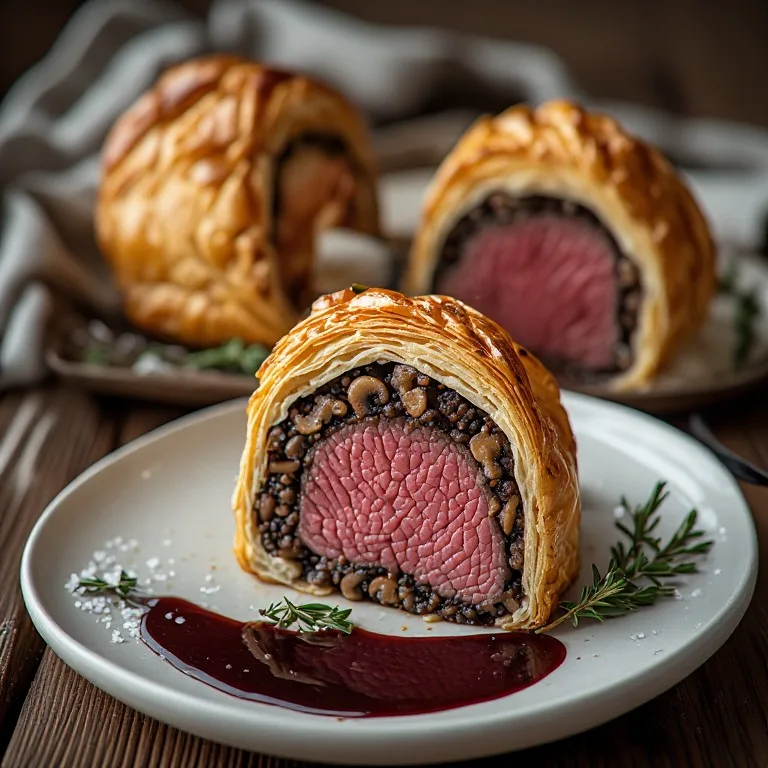
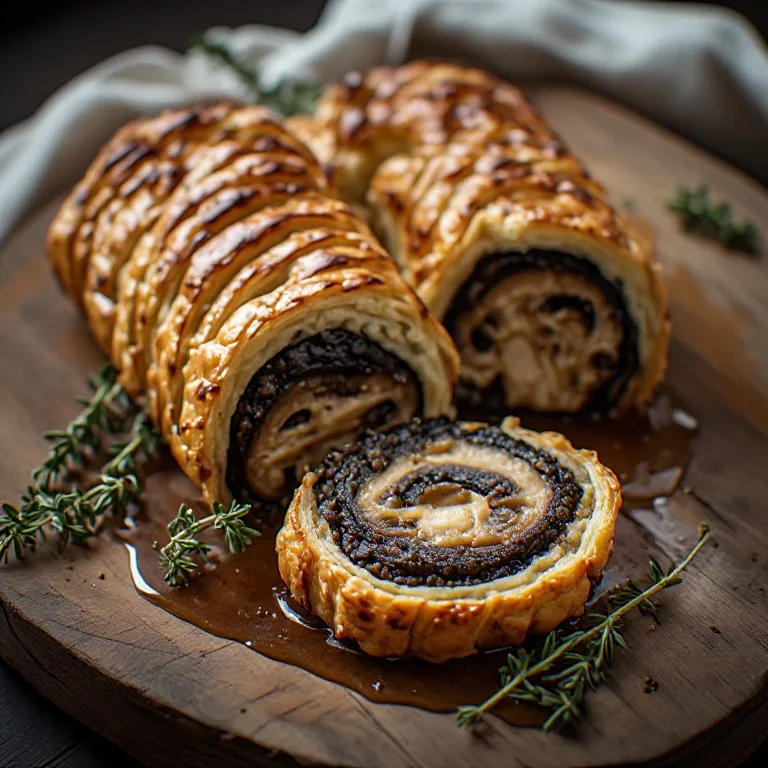
Every November, the same video recirculates on TikTok: golden puff pastry, sliced open to reveal a ring of flaky layers around dark herby mushroom filling and a thick portobello center. It’s the vegetarian Wellington, and it earns its virality the honest way — it looks exactly as impressive as the beef version, costs a fraction as much, and can be assembled the night before.
The technique is nearly identical to classical beef Wellington. Portobello mushroom caps take the place of the beef fillet. A deeply savory duxelles — cremini mushrooms cooked down with shallots and garlic until completely dry — coats the inside of the puff pastry. Dijon mustard brushed on the portobellos adds depth and helps everything bind. The main difference: you don’t need to sear it in a screaming-hot pan for 8 minutes or worry about internal temperature. This is simpler, and the margin for error is much wider.
The One Technique That Separates Good From Soggy
Before anything else: the duxelles must be completely, fully, aggressively dry.
Cremini mushrooms are about 90% water by weight. When you finely chop them and cook them, they release that water into the pan. The mistake home cooks make is stopping too early — at 10 minutes the mushrooms look “cooked,” but the mixture is still wet. That residual moisture steams the puff pastry from the inside during baking, and no amount of high heat fixes it once it starts.
Cook the duxelles for 18–22 full minutes over medium heat. You’re looking for a mixture that is dark brown (nearly black), dry enough that it pulls away from the pan sides, and reduced to about a third of its original volume. At this stage it looks almost burnt. It isn’t. It’s concentrated and savory and will not ruin your crust.
The same logic applies to the spinach: squeeze it in a clean towel until you’d swear there’s nothing left, then squeeze again. Any vegetable that goes into the Wellington must be dry.
Why Portobello Mushrooms Work
Portobello caps are the right vegetable for this for three reasons:
-
Texture. After searing, portobellos firm up and hold their shape through 30 minutes in the oven. They slice cleanly without collapsing, giving you a defined center in each slice rather than a smashed filling.
-
Size. Four portobello caps laid end-to-end create a log roughly the length and diameter of a beef tenderloin — which means the cooking times, pastry thickness, and visual proportions of the original recipe translate almost directly.
-
Flavor. Seared portobello has a depth that most vegetables don’t. The Maillard reaction on the flat surfaces develops compounds similar to roasted meat. When combined with the duxelles and Dijon mustard, the result reads as umami-rich in a way that earns its place as the Christmas main.
Remove the gills from the underside before searing. The dark gills release a nearly black liquid when cooked that bleeds through the duxelles and turns the pastry filling an unappetizing gray. A spoon and 30 seconds per cap is all it takes.
The Dijon Mustard Layer
This isn’t optional. In classical beef Wellington, the tenderloin is coated in Dijon mustard before the duxelles goes on. The mustard does two things: it adds a sharp, bright counterpoint to the earthy mushroom and pastry (flavors that can go muddy without acidity), and it helps the duxelles adhere to the filling rather than sliding around during assembly.
Brush the rounded top of each seared portobello cap with a thin, even layer. The heat of baking mellows the raw edge of the Dijon; by the time the Wellington comes out of the oven, it reads as savory depth rather than mustard flavor.
Assembling the Wellington
The assembly has one enemy: warmth. Everything — the duxelles, the portobellos, the spinach — must be completely cool before it touches the pastry. Warm ingredients melt the butter in the puff pastry before it hits the oven, which produces a flat, dense crust instead of a flaky one.
Work fast once the pastry is on the counter. Roll it out, add the filling, and roll it up in one continuous motion. Move the assembled Wellington immediately to the fridge for at least 20 minutes before baking. This 20-minute chill is what produces the dramatic puff when it hits the 425°F oven.
At the Table
Rest the Wellington 10 minutes after baking. The filling needs to set so slices hold their shape when cut. Use a serrated knife with a gentle sawing motion — pressing straight down with a chef’s knife compresses the pastry layers.
Each slice reveals: golden, shatteringly flaky pastry on the outside, a thin ring of dark duxelles, a layer of green spinach, and a round of meaty portobello in the center. This is the TikTok moment. It also happens to be genuinely delicious.
For a full Christmas dinner, serve with roasted potatoes, a simple green salad, and a red wine reduction made from the pan drippings and a half bottle of whatever you’re drinking. If you have leftover puff pastry, the Boursin puff pastry pinwheels make an easy appetizer to start the meal.