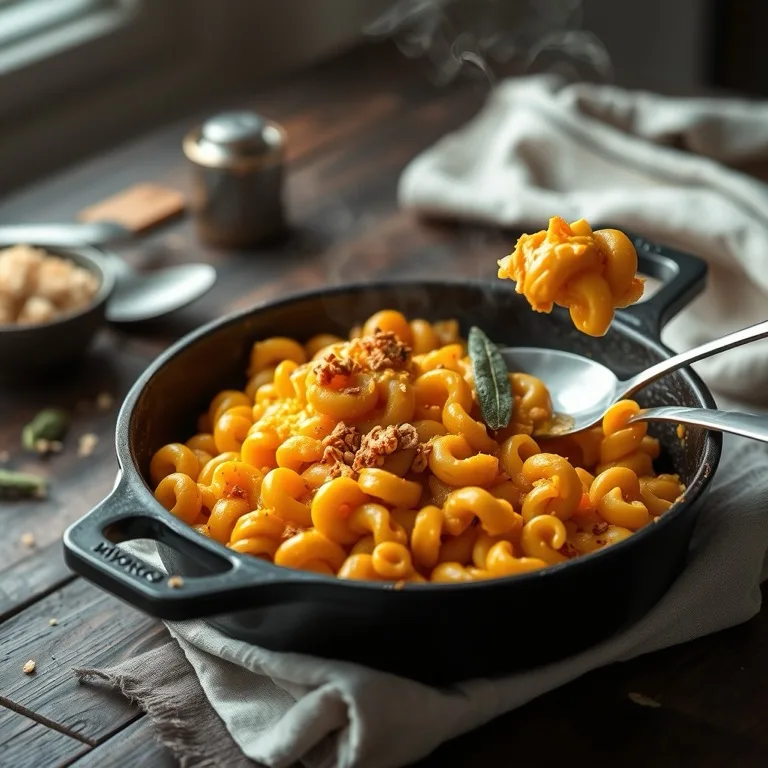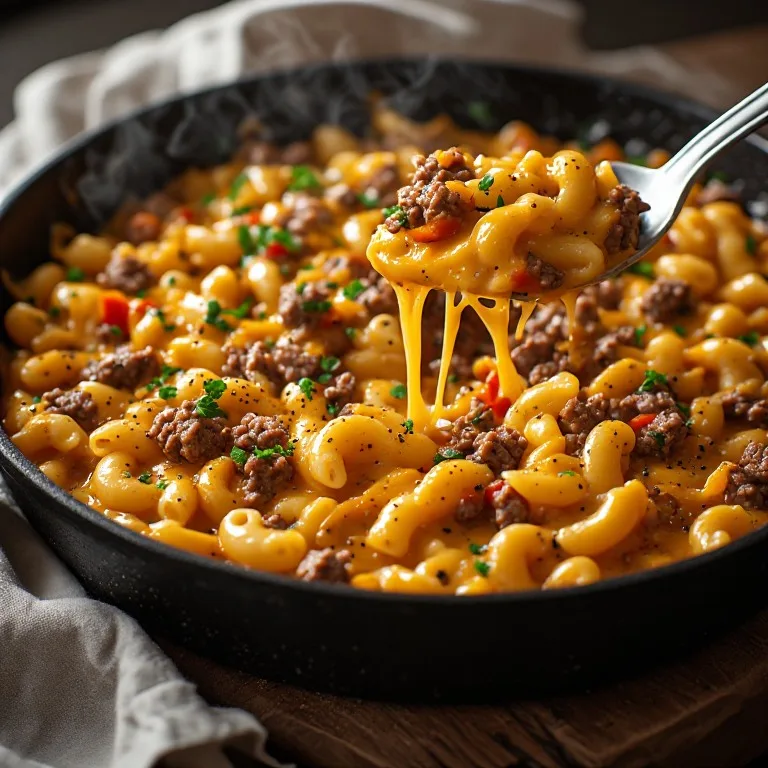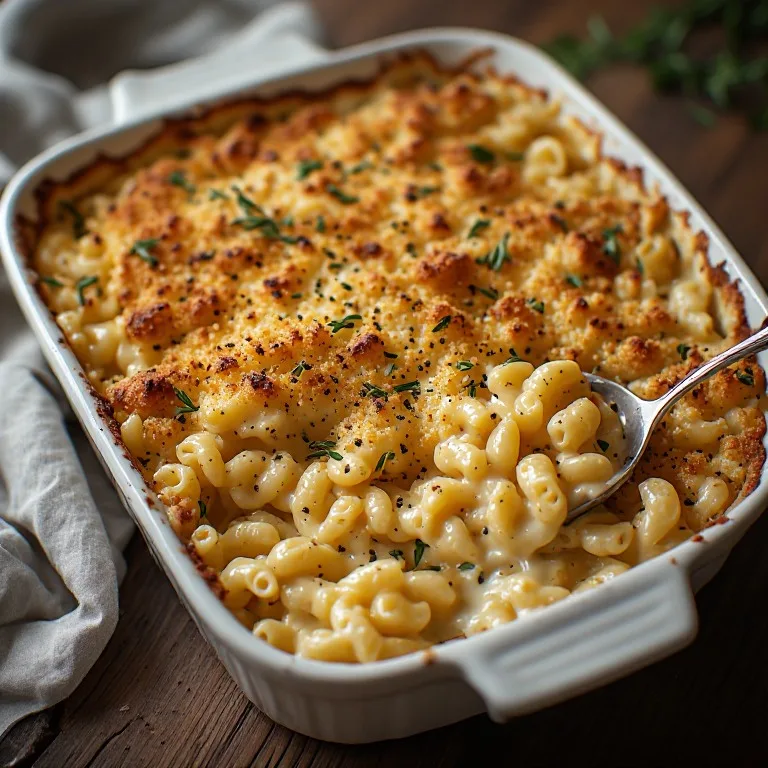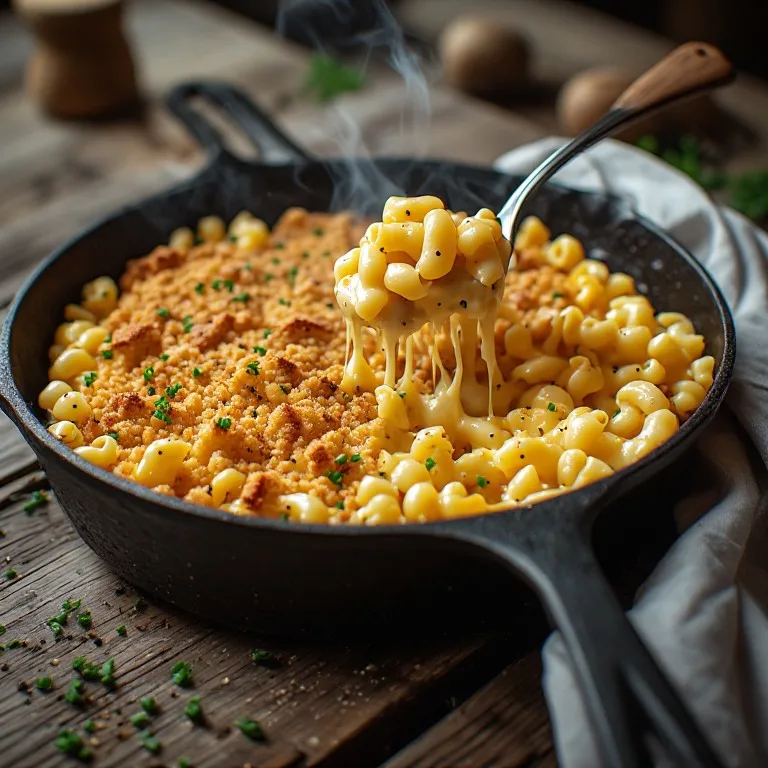




Every fall, two things happen on TikTok: #PumpkinEverything takes over For You Pages for exactly three weeks, and then — quietly, reliably — the smoker crowd shows up with cast iron skillets full of golden, bubbling mac and cheese. The hashtag #SmokedMacAndCheese has hundreds of millions of views. It’s the most-searched beginner smoker recipe for a reason: it’s forgiving, it’s dramatic when it comes off the grill, and it tastes genuinely different from anything you can make in an oven.
The difference is not just flavor — it’s texture. Sixty minutes at 225°F in an open smoker does something a covered baking dish cannot: it dries the surface of the pasta just enough to form a golden, slightly pulled crust while leaving the interior loose and spoonable. The smoke gets into that surface layer and lingers. You can taste hickory in the crust and cream cheese in the center, and they don’t fight each other.
- Four-cheese roux sauce: sharp cheddar + smoked gouda + gruyere + cream cheese
- Fold in al-dente pasta, transfer to cast iron, top with panko-butter crumble
- Smoke uncovered at 225°F for 60 minutes — done when golden on top, bubbling at the edges
- Stay at 225°F; above 250°F the sauce breaks and the pasta dries out
Why 225°F Is Non-Negotiable
The single most common smoked mac failure is running the smoker too hot. At 275°F — barely 50 degrees over the target — the heavy cream in the sauce evaporates faster than the pasta can absorb it, the fat and water separate into greasy pools, and the panko turns black before the center is hot. At 225°F, evaporation is slow enough that the sauce stays emulsified. The cheese proteins don’t seize. The panko toasting rate matches the time needed to fully cook the pasta.
Use a probe thermometer clipped to the grill grate near the skillet — smoker dial thermometers are notoriously inaccurate, sometimes reading 30–40°F low. If your smoker runs hot, crack the lid slightly to let the temperature drop.
The Cheese Architecture
This recipe uses four cheeses and each one has a specific job:
Sharp cheddar (8 oz) — the base. Classic flavor, clean melt, structural backbone.
Smoked gouda (4 oz) — the bridge between the dairy and the wood smoke. Buttery, slightly sweet, extremely low melt point. Don’t skip it.
Gruyere (4 oz) — nutty depth and a slightly funky finish that makes the sauce taste restaurant-caliber rather than box mac. White cheddar or fontina works here if gruyere isn’t available.
Cream cheese (4 oz) — the emulsifier. Added before the shredded cheeses, it stabilizes the fat-to-liquid ratio so the sauce doesn’t break during the long smoke. This is the ingredient most recipes that fail on the smoker are missing.
All four must be shredded from blocks. Pre-shredded bags contain potato starch and cellulose anti-caking agents that turn the sauce grainy.
The Smoke
For the pellets, think in intensity tiers:
- Mild: apple or cherry — faint sweetness, subtle smoke, works best with gouda
- Medium: pecan — nutty, direct, the all-purpose choice for comfort food
- Bold: hickory — classic BBQ smoke, adds the most flavor depth
Mesquite is too aggressive. Dairy amplifies bitterness, and after 60 minutes the mesquite smoke turns the cream sauce harsh. Save it for steaks.
What to Serve With It
Smoked mac is a side that eats like a main. On a barbecue plate it belongs next to pulled pork, brisket, or ribs — the smoke tying the whole plate together. If you want it to carry the meal, fold in pulled pork or crumbled bacon (see the add-meat FAQ above) and serve with something sharp and acidic to cut the richness: a vinegar-forward slaw, quick pickles, or a plain green salad.
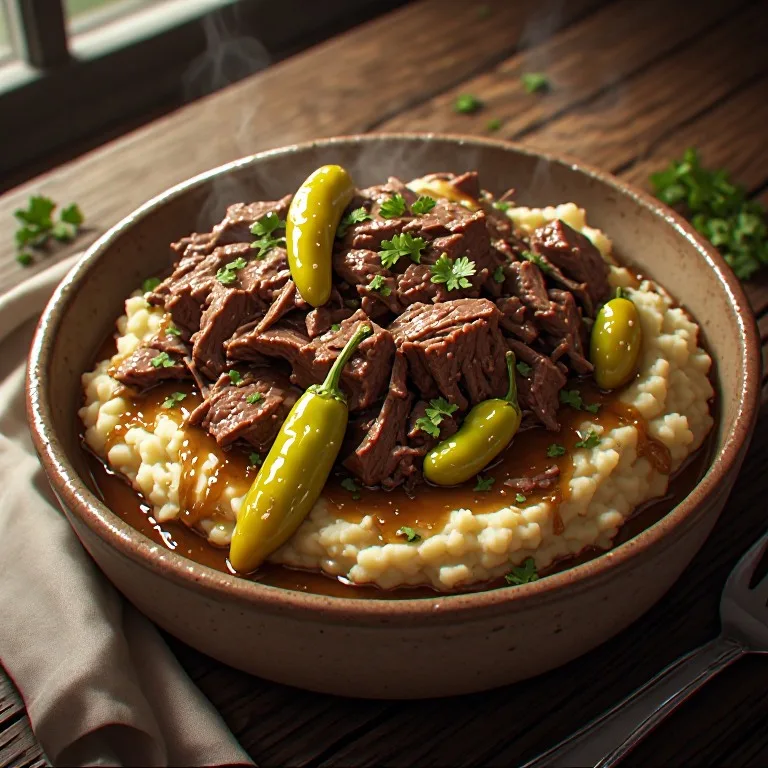
If you liked this, the viral TikTok Tini mac and cheese is the stovetop, no-smoker counterpart, and the viral TikTok butternut squash mac and cheese is the fall-forward version. For a smoky main to serve alongside, the viral TikTok Mississippi pot roast is the easiest crowd-feeder on the site.