

Pin It

French Onion Mac and Cheese

French Onion Mac and Cheese
Jump to Recipe
Prep 20 min Cook 70 min Serves 6
Quick answer: Caramelize 4 large yellow onions in butter and olive oil over low heat for 45–55 minutes, deglaze with white wine, then make a béchamel with butter, flour, warm milk, and beef broth. Melt in 2 cups Gruyère and 1 cup sharp white cheddar, fold in the onions, toss with cooked rigatoni, and transfer to a 9x13 baking dish. Top with ½ cup Gruyère mixed with ½ cup panko and 2 tablespoons melted butter. Bake at 375°F for 20 minutes, then broil 3–4 minutes until the crust is deep golden and bubbling at the edges.

French Onion Mac and Cheese

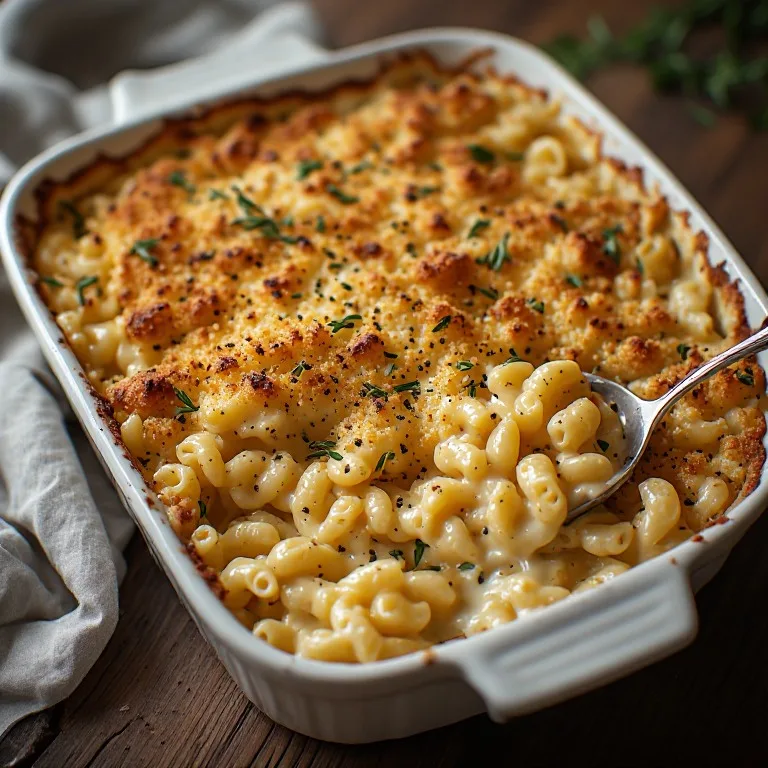
The viral TikTok macaroni and cheese recipe with a French onion soul: 45-minute caramelized onions folded into a Gruyère béchamel, baked under a broiled cheese-and-breadcrumb crust that cracks open exactly like a bowl of French onion soup. Step-by-step with the onion technique that makes or breaks it.

Medium Prep: 20 min Cook: 70 min Total: 1h 30m6 servings ~$4.50/serving
Prep20 min
Cook70 min
Total1h 30m
Servings
6
At home~$4.50/serving
vs
Restaurant~$20.25/serving
You save ~78%

The Story Behind the Recipe

French onion soup has appeared on French menus since at least the 18th century — it was cheap peasant food, onions being plentiful and cheap while the beef broth was a by-product of other cooking. Julia Child's TV work in the 1960s turned it into a dinner-party staple in American kitchens, and the crouton-and-Gruyère gratinée lid became the dish's signature. The TikTok mac mashup arrived because the caramelized onion craze (which produced millions of posts about the 1-hour low-and-slow method) collided directly with the mac and cheese obsession. Sam Way's version accumulated 1.3 million likes. The viral moment is visual: you broil the Gruyère-and-breadcrumb crust until it's crackling and golden, then lift through it with a spoon exactly like cracking open a classic soupe à l'oignon gratinée. Except underneath is pasta, not broth.

At Balthazar in New York, a bowl of French onion soup runs $22. A full 9x13 pan of this mac costs about $25 to make and feeds six. The non-negotiable technique is the onions: 45 minutes minimum at low heat, stirring occasionally, until they shrink from a mound to a jammy, amber-brown pile. Onions caramelized for 20 minutes are sweet and soft; at 45 minutes they're concentrated, nutty, and slightly sticky — the difference in the finished dish is not subtle. The rest of the recipe (a simple béchamel, Gruyère, pasta) is straightforward. The onions are everything.

Nutrition Facts

Per serving (6 servings)
Calories650
Total Fat32g
Total Carbs62g
Dietary Fiber3g
Sugars8g
Protein27g
Sodium620mg

* Estimated values based on standard recipe preparation. Actual values may vary.

Ingredients

  • For the caramelized onions
  • For the mac
  • For the topping

Instructions

💡
Pro tip: This recipe tastes even better the next day. The flavors need time to meld together in the fridge.
❄️
Storage: Keeps in an airtight container in the fridge for up to 2 weeks. Freezer-friendly for up to 3 months.
🎃 Free Halloween cookbook — download now The Copycat Halloween Cookbook A ready-made, photo-illustrated PDF of our best halloween copycat recipes — free to download, no building required. Pay what you want to support if you love it.

Free PDF — instant download. We'll also send new seasonal copycat recipes now and then; unsubscribe anytime. Or just download it →

The viral TikTok French onion mac and cheese is exactly what it sounds like: real caramelized onions, Gruyère béchamel, pasta, and a broiled cheese-and-breadcrumb crust that cracks open like a bowl of soupe à l’oignon. The technique that made it go viral is that reveal — lifting through the golden crust and seeing jammy onion-studded pasta underneath.

The caramelized onions take 45 minutes and they’re the whole recipe. Budget the time, cook them low and slow, and everything else is straightforward.

Why French Onion Mac Went Viral

The caramelized onion craze on TikTok (which produced millions of posts about the slow-and-low method) met the mac and cheese obsession head-on. Sam Way’s version accumulated 1.3 million likes. What made it travel fast was the visual: you spend 45 minutes on onions, build a Gruyère mac, bake it, then hit it with a broiler until the top is crackling and golden. You crack through the crust with a spoon exactly like you crack through the crouton-and-cheese lid on a classic French onion soup bowl. Except underneath is pasta.

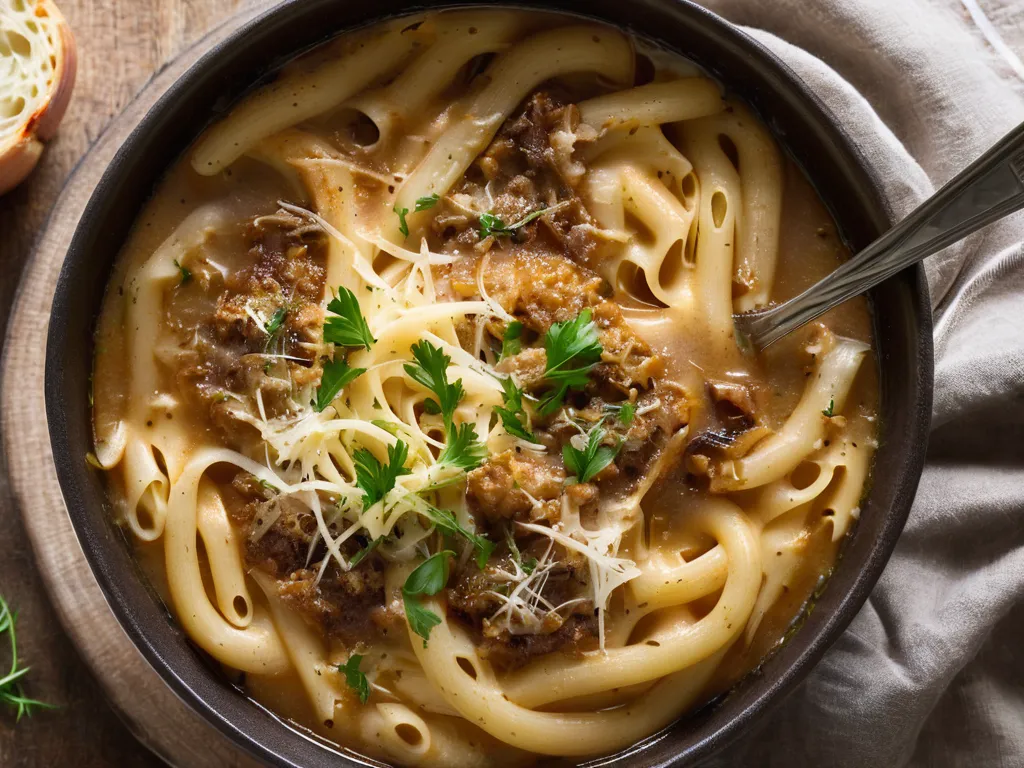
If you want the same flavor in a lighter, saucier form, the French onion soup pasta skips the bake and keeps it brothy; for a straight-up decadent baked mac without the onions, the martini-glass TikTok mac is the other viral benchmark.

The onion caramelization step is also the source of most failures. People pull the onions at 20 minutes when they’re soft and golden-sweet — that version is fine. The version in the viral TikToks that made comments say “I made this three times this month” uses onions that have been going for 45–55 minutes: jammy, amber-brown, sticky, concentrated. The difference shows up in every bite.

The Caramelized Onion Step (Do Not Rush This)

Four large yellow onions, sliced ¼-inch thick, cooked in butter and olive oil over medium-low heat for 45–55 minutes. The only active work is stirring every 5–7 minutes and scraping up any fond that sticks to the bottom. If the pan dries out before you hit the right color, add a splash of water or broth to release the fond — don’t let it burn.

The sugar (1 tsp) is not for sweetness; it’s to kickstart the Maillard browning chemistry on the onion surface. The salt draws water out early, which speeds the initial softening phase.

When finished, the onions should be reduced to about ¼ of their original volume, deep amber-brown, and slightly sticky. They should smell nutty and savory, not sweet-onion-sharp. Deglaze with white wine, cook down 2 minutes, stir in thyme. These onions can be made up to 4 days ahead.

The Gruyère Béchamel

A standard roux-based béchamel with one addition: ½ cup beef broth whisked in with the warm milk. The broth echoes the French onion soup flavor through the entire sauce — not obviously “beefy,” but deeper and more savory than a milk-only sauce.

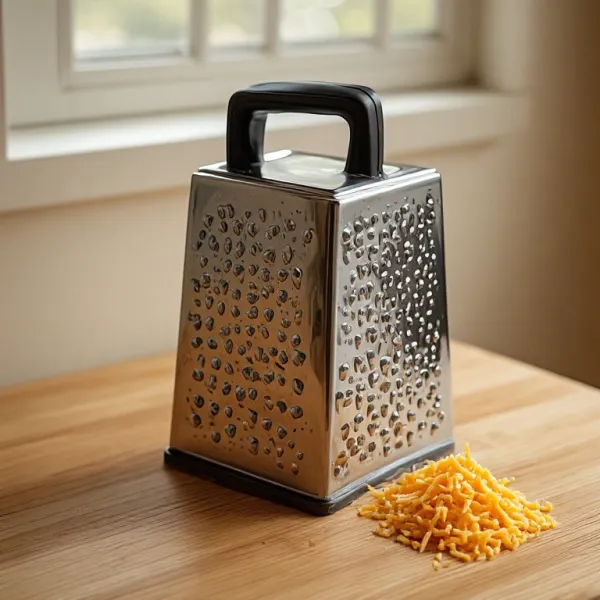
Gruyère is the primary cheese for the same reason it’s on every bowl of soupe à l’oignon: its nutty, slightly sweet Alpine flavor is what makes this read as French onion rather than just caramelized onion. Sharp white cheddar or Comté handles the salt and bite. Pre-shredded cheese in this recipe is a mistake — the anti-caking starch blocks smooth melting and leaves you with a lumpy sauce.

The Broiled Crust

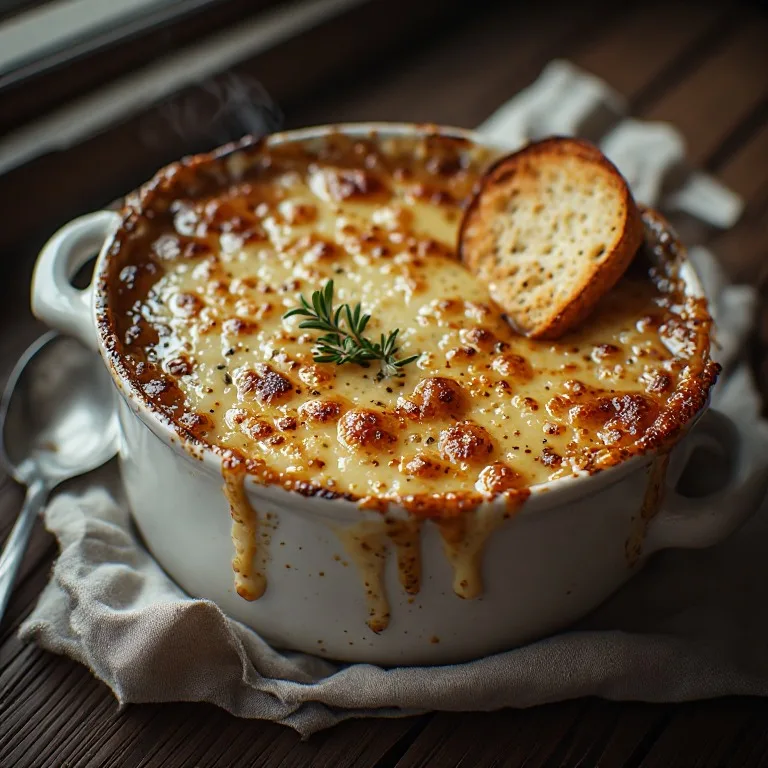
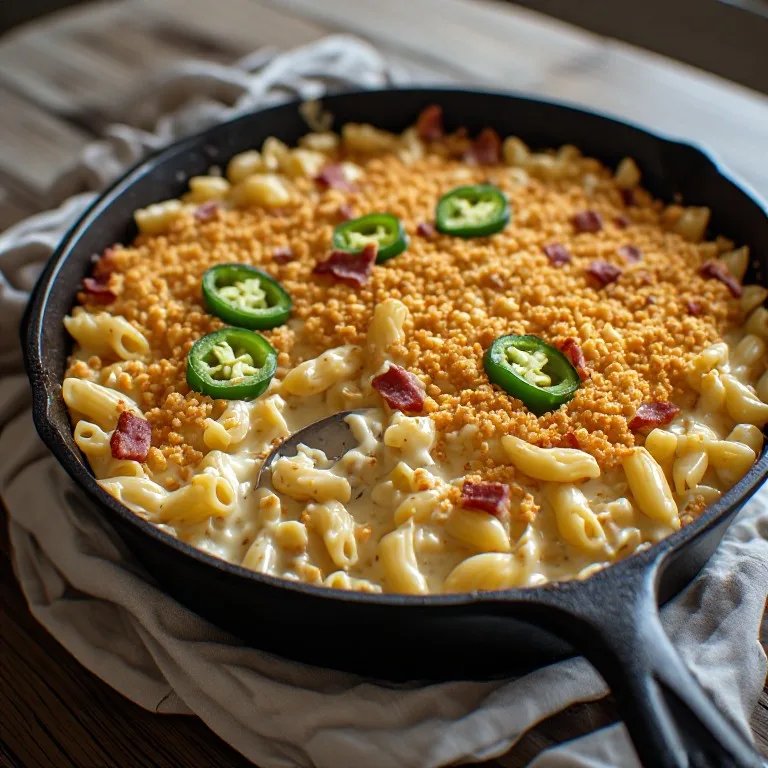
Equal parts panko and Gruyère, fully coated in melted butter, scattered over the top before baking. Bake at 375°F until the sides bubble, then broil 3–4 minutes for the crackled golden top. The butter-coated panko browns evenly; the fine-grated Gruyère melts into the gaps. The result is the visual payoff that made the recipe spread: lift your spoon through the crackling crust, exactly like cracking through the cheese lid of a bowl of French onion soup.
🥗

Make It Healthier

Love French Onion Mac and Cheese but want a lighter version? Try these simple swaps:

  • ✓Use half whole-wheat rigatoni — it adds fiber and a slight nuttiness that pairs well with the Gruyère without changing the sauce
  • ✓Replace 1 cup of the whole milk with an equal amount of extra beef broth — the Gruyère provides enough fat to hold the sauce, and the broth deepens the French onion flavor
  • ✓Gruyère has about 9g fat per ounce; swap a third of it for Comté (similar melt, slightly lighter) or part-skim Swiss to reduce fat by ~20% with minimal flavor loss
  • ✓Make the caramelized onions a day ahead and refrigerate — they actually improve overnight, and front-loading that 45-minute cook means weeknight assembly takes under 30 minutes

Frequently Asked Questions

Can I caramelize the onions faster? The 45-minute time seems long.

Not without a real quality loss. The caramelization process requires low, slow heat to allow the sugars and amino acids in the onions to undergo Maillard browning — the same reaction that browns meat and bread. At high heat, the outside of the onion slices burns before the interior softens and the water cooks off; you get unevenly cooked onions that taste bitter at the edges and still sharp in the middle. The only shortcut that actually works is the baking soda method: a pinch (⅛ tsp) of baking soda added early raises the pH of the onions slightly, which accelerates browning chemistry and can shave 10–15 minutes off the process. The trade-off is a slightly softer, mushier texture versus the version without it. For this recipe, either approach works — straight slow caramelization (45–55 min) for the best texture, or low-and-slow with a baking soda assist (30–35 min) if time is genuinely short.

Why Gruyère? Can I use Swiss, Emmental, or provolone instead?

Gruyère is the right call because it's the defining cheese of French onion soup — the combination of its nutty, slightly sweet flavor with caramelized onions is what makes this taste like the soup translated to pasta rather than just caramelized onion mac. Emmental is the closest substitute (similar Alpine lineage, slightly milder, melts similarly) — use it 1-for-1 if Gruyère isn't available. Comté is even better if you can find it: richer and more complex than Gruyère, slightly more expensive, melts beautifully. Swiss (domestic) works in a pinch but has less flavor depth and a higher moisture content that can make the sauce slightly thin. Provolone doesn't belong here — it melts fine but the flavor is mild and milky, nothing like the Alpine nuttiness that drives this dish. The sharp white cheddar is there for bite and salt, not to dominate, so don't skip it or substitute in a milder cheddar.

What pasta shape works best — rigatoni, cavatappi, or elbows?

Rigatoni is the top choice for this recipe because the large ridged tube captures both the onion-studded sauce on the outside and a small reservoir of sauce inside the tube. Every bite delivers two textures: sauced exterior and a burst of concentrated sauce from the hollow. Cavatappi (corkscrew) is a very close second — the spiral grabs sauce on every surface and gives a slightly firmer bite. Elbows are the classic mac shape and work well, especially if you want a more traditional 'mac' feel with the French onion flavor. Avoid thin, long pasta (spaghetti, linguine) — they tangle under the weight of the heavy onion sauce and don't hold the topping the same way. Also avoid very small pasta like ditalini — it disappears under the crust instead of giving you a substantial mouthful.

How do I get the broiled crust to look like the TikTok videos?

Three things produce the crackled, deeply-golden crust you see in the best videos. First, enough fat in the topping — the panko needs to be fully coated in butter to brown properly; dry panko just sits there. Mix the butter thoroughly into the panko before adding the cheese so every crumb is coated. Second, the reserved Gruyère on top must be grated fine, not in thick clumps — fine grating means more surface area, faster browning, and an evenly melted cheese layer rather than gooey lumps. Third, the broiler distance matters: the top of the dish should be 4–6 inches from the broiler element. Too close and the top burns before the edges finish; too far and it just melts without browning. Watch it from the 2-minute mark and pull when you see deep golden-brown color spreading across the whole surface. The visual tell is the same as classic French onion soup: irregular caramelized patches, slightly crackling edges where the cheese meets the dish rim.

Can I make this ahead?

Yes, and it actually benefits from it. The caramelized onions can be made up to 4 days ahead and refrigerated — they improve in the fridge as the flavors concentrate further. You can also assemble the whole dish (pasta + sauce + topping) up to 24 hours ahead without baking; cover tightly with foil and refrigerate. When ready to bake, take it out 30 minutes before to come to room temperature, then bake covered with foil at 375°F for 25 minutes, uncover and bake 10 more minutes, then broil. The added covered time makes up for the cold start. Leftovers reheat well: add a tablespoon of milk or broth, cover with a damp paper towel, and microwave in 90-second bursts; or reheat covered in a 325°F oven for 20 minutes.

Love this recipe? Share it!

Free PDF: our 12 most-wanted copycat recipes — instant download.

Made it? Buy us a coffee

Every recipe here is free, with no paywalls. If this one was a hit at your table, a small tip keeps new copycats coming.

$

Ratings & Reviews

—
No ratings yet

Rate this recipe

Click a star to rate

Leave a Review

0/500

CS

Copycat Spices Editorial

Researched + fact-checked. Every recipe on Copycat Spices is built from published sources — official ingredient lists, brand-published recipes, interviews and food-science references — and fact-checked before it goes live, then written as clear, step-by-step instructions for home cooks of all skill levels.

Learn more about our mission →