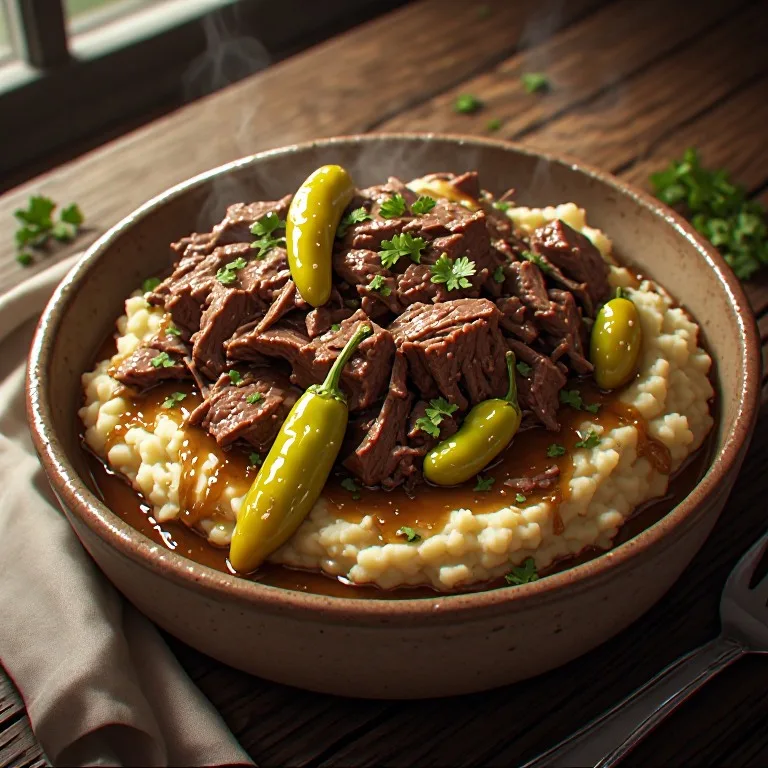


The Mississippi Pot Roast is one of those recipes that sounds too simple to be worth making — 5 ingredients, a slow cooker, and 8 hours of walking away — until you eat it. Then it becomes the only pot roast you make for the next decade.
TikTok has put it back in front of millions of people who’d never heard of it, and the reaction is always the same: disbelief that the technique is this easy, then complete conversion after the first bite. The shredded beef is deeply flavored, genuinely fall-apart tender, and swimming in a braising liquid that’s rich enough to be its own gravy.
What Each Ingredient Actually Does
This recipe gets dismissed as “dump and go with packets,” which technically it is — but understanding what each element contributes explains why you can’t swap them out and get the same result.
Chuck roast: The cut matters more than anything. Chuck comes from the shoulder, a muscle that works hard and is loaded with connective tissue (collagen). Eight hours of sustained low heat converts that collagen into gelatin, which coats every shred of meat in a silky layer and makes the braising liquid thick and glossy without adding a drop of thickener. Lean cuts like round or sirloin don’t have the collagen — they dry out and turn tough at these temperatures instead of becoming tender.
Ranch seasoning packet: The packet contains dried buttermilk powder, garlic powder, onion powder, dried herbs (parsley, dill, chives), and salt. It’s building an aromatic base of alliums and dairy tang in one step. The buttermilk powder — dried acid — starts breaking down the surface proteins of the meat from the first hour. It also provides a backdrop of garlic and herbs that you’d spend 10 minutes preparing if you were doing this from scratch.
Au jus packet: Au jus mix contains beef extract, hydrolyzed proteins, caramel color, and salt. Its job is deep beef umami — it amplifies the flavor of the chuck’s natural juices rather than adding a foreign flavor. Without it, the braising liquid tastes like good beef broth. With it, it tastes like reduced restaurant-grade stock. The caramelized flavor compounds in the packet’s beef extract approximate what you’d get from a long stovetop reduction of real stock.
Unsalted butter: A full stick of butter sounds like a lot for a savory meat dish, and it is — but most of it emulsifies into the braising liquid rather than sitting as a fat cap on top. The butterfat enriches the liquid and gives it a velvety coating texture when you stir the shredded meat back in. It also acts as the initial basting medium: as the butter melts over the first hour, it carries the ranch and au jus seasoning down into the meat fibers before the roast releases its own moisture.
Pepperoncini and brine: This is the ingredient that surprises people. Pepperoncini are pickled in a mild brine of vinegar, salt, and water. The acid in that brine serves two functions: it brightens the entire flavor profile (braised beef without any acid tends to taste flat and heavy), and the mild heat of the peppers themselves adds gentle complexity after 8 hours of slow cook. By the time the roast is done, the pepperoncini are completely soft and entirely non-spicy — what they’ve contributed is quietly dispersed throughout the braising liquid.
Why It Has to Be Low, Not High
The slow cooker has two settings and almost everyone has used HIGH when they’re in a hurry. For most recipes, this works. For chuck roast, it matters.
Collagen — the connective tissue that makes chuck tough when cooked quickly — converts to gelatin only when held above roughly 160°F (71°C) for an extended period. Both slow-cooker settings eventually bring the contents up near a gentle simmer (around 200–210°F); the difference is speed. LOW ramps up gradually and holds the meat in that collagen-melting zone for the full 8 hours, so the connective tissue has time to fully break down. HIGH reaches simmering temperature much faster, which drives the muscle fibers to contract and squeeze out moisture before the collagen has finished converting. The meat still shreds, but it comes out slightly fibrous and stringy rather than having the melt-apart quality that makes this recipe famous. Time in the zone — not a higher final temperature — is what does the work.
Low for 8 hours is the version that went viral. It’s the one worth making.
The Pepperoncini Question
Every person who sees this recipe for the first time asks some version of: “Why are there whole peppers in my pot roast?”
Pepperoncini are not hot. On the Scoville scale — the measure of pepper heat — they register 100–500 units. A jalapeño is 2,500–8,000 units. You could eat a pepperoncini plain and find it mildly tangy, slightly bitter, and barely warm. After 8 hours in a slow cooker, they’re completely neutral in heat and fully soft.
What they contribute is acid and complexity. The brine they come in is a mild vinegar solution, and that acidity is the key missing piece in most pot roast recipes. Rich, fatty braised beef needs a counterpoint. Professional braises use wine, tomatoes, or vinegar for exactly this reason. The pepperoncini brine is the acid source in this recipe — you add 2-3 tablespoons directly to the pot, and then the peppers continue releasing their brine slowly throughout the cook.
If you’re genuinely averse to any pickled flavor: start with 3 peppers instead of 8, and only 1 tablespoon of brine. You’ll still get the brightening effect, but at a level that’s essentially undetectable.
Turning the Drippings Into Gravy
When you open the slow cooker after 8 hours, there’s a pool of braising liquid that looks like too much to deal with. Don’t pour it out.
This is the best part of the recipe. The liquid is loaded with the rendered beef gelatin, dissolved seasoning from both packets, the butter’s richness, and the pepperoncini’s tang. Shredding the beef directly in the pot lets the meat re-absorb most of it.
For a proper gravy to pour over mashed potatoes: ladle 1.5 cups of the braising liquid into a saucepan. Whisk 2 tablespoons of cornstarch into 3 tablespoons of cold water until completely smooth, then whisk that slurry into the simmering liquid. Stir constantly for 2–3 minutes until it coats the back of a spoon. This is a gravy that tastes like it took hours to make — because the 8-hour braise is what produced it.
The Sandwich Version (the TikTok Dip Sandwich)
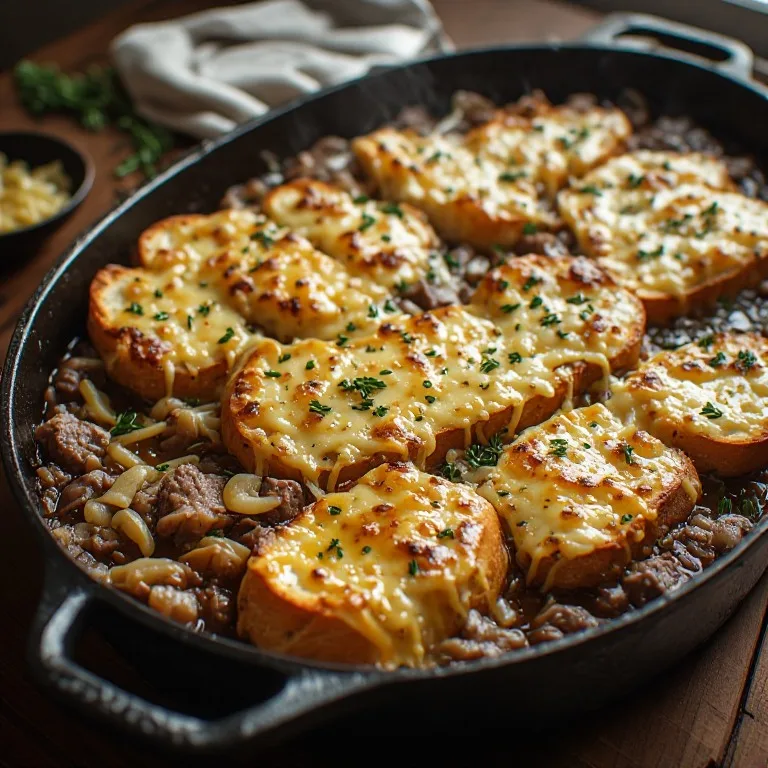
The pot roast sandwich variation is its own viral moment. Toast a hoagie roll cut-side down in a hot dry skillet for 90 seconds until the surface is golden. Pile the shredded beef generously on the bottom half. Spoon a ladle of the braising liquid directly over the meat — don’t be shy, you want the bread to start absorbing it. Lay a slice of provolone or Swiss cheese on top and run it under the broiler for 90 seconds to melt.
The remaining braising liquid goes into a small bowl for dipping. This is structurally a French dip sandwich, but the flavors are different: richer, more complex, with that tangy-butter character that the Mississippi braising liquid has instead of the clean beef-and-au-jus of a traditional French dip.
Serve immediately. The bread that doesn’t immediately get eaten will be fully soaked and perfect for a second pass.