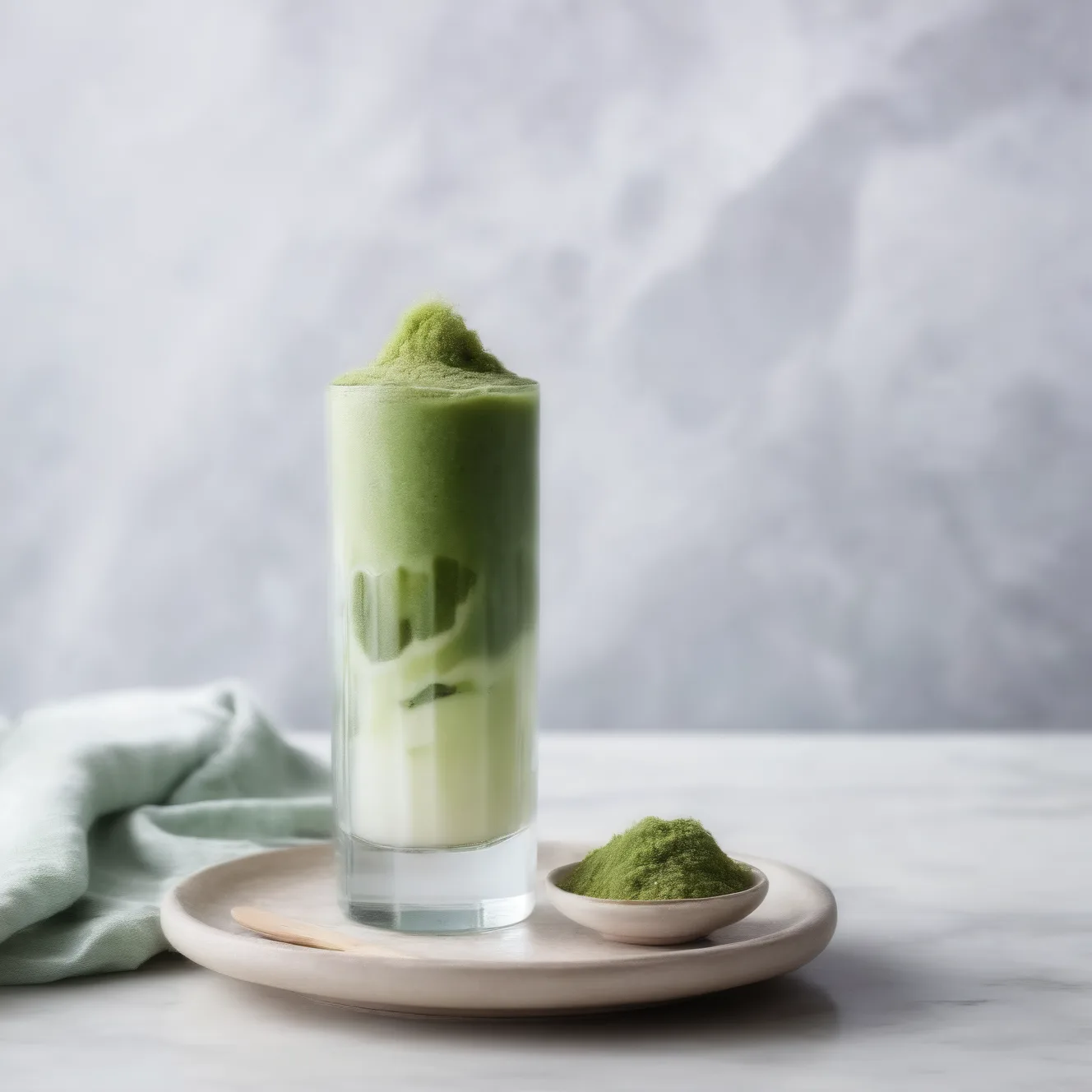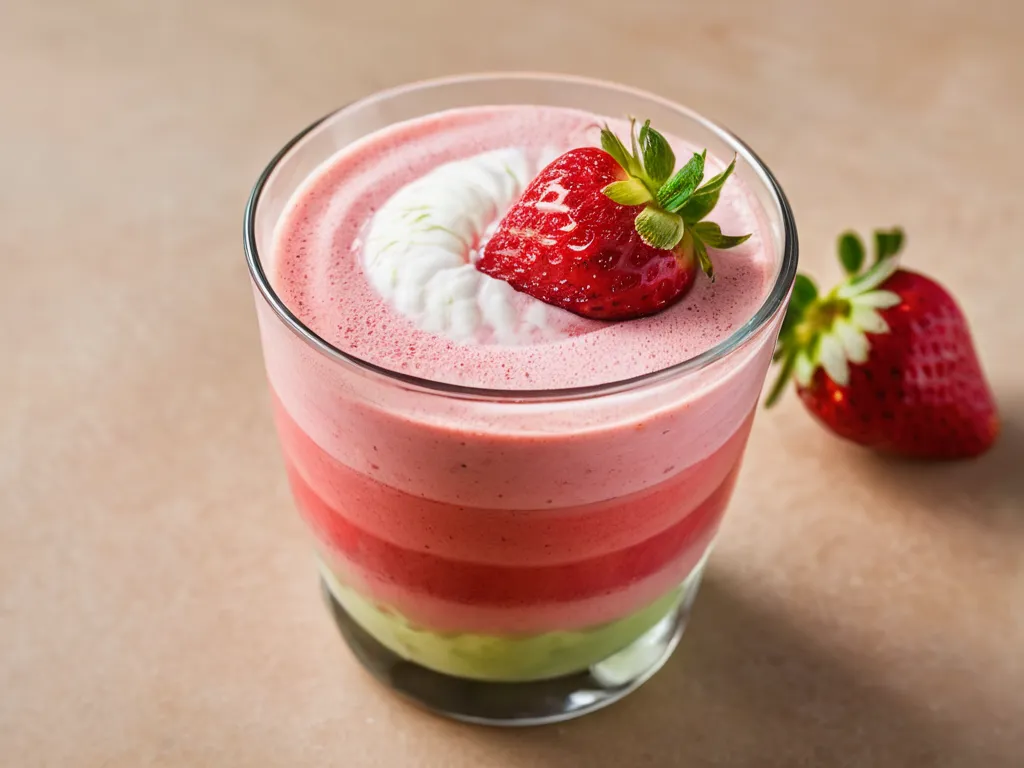
The strawberry matcha latte went viral on TikTok for one reason: it looks almost impossible. Three distinct layers — vivid pink on the bottom, white ice in the middle, vibrant green on top — sitting in a clear glass with the precision of a lab experiment. Then someone stirs it and it turns a satisfying brownish-green, and the flavor turns out to be genuinely good: sweet-tart strawberry, creamy milk, and the earthy bitterness of green tea in every sip.
This isn’t a secret menu hack. It’s a real recipe with a technique behind it, and once you understand the technique, you can make it in about 10 minutes for under $3 versus $7–9 at a specialty café.
TL;DR
Macerate strawberries with sugar (5–10 minutes releases the juice). Sift matcha and whisk with 175–180°F water — not boiling. Layer: strawberry base → ice → sweetened milk → matcha poured over a spoon. Serve before stirring. That’s the whole recipe.
The Viral Moment: Why This Went Everywhere
Three things made this drink unstoppable on social media.
First, the color gradient. Pink, white, and green stacked in a clear glass photograph like a product shoot. The drink does the visual work for you.
Second, the pour shot. Slowly pouring vibrant green matcha over the back of a spoon while it settles onto white milk is one of the most satisfying food-video moments TikTok has ever produced. It’s been replicated millions of times.
Third, Starbucks adjacency. The drink isn’t an official Starbucks US menu item — it started as a secret menu hack — but the Starbucks association made it feel aspirational yet accessible. When Starbucks launched their official “Iced Double Berry Matcha” in February 2026 (strawberry puree, matcha, raspberry cream cold foam), it validated what home cooks had been making for years. The homemade version, made with fresh macerating strawberries, is better than the syrup-based café version.
Step 1: Macerate the Strawberries — Don’t Skip This
The single biggest quality difference between a great strawberry matcha latte and a mediocre one is how you prepare the strawberries.
Most recipes say “blend strawberries and milk.” That produces a pale pink, watery mixture with none of the vibrant red that makes this drink look like it does in the videos. The trick is macerating the strawberries first.
Macerating means tossing halved strawberries with a small amount of sugar and a pinch of salt, then letting them sit for 5–10 minutes. The sugar draws water out of the fruit through osmosis, and what you’re left with is a naturally concentrated strawberry syrup that surrounds the fruit. The color is an intense ruby red. The flavor is strawberry jam, not fresh strawberry juice.
After macerating, you have two options:
- Mash lightly with a fork for a chunky, textured base that sinks cleanly to the bottom of the glass. This is the more visual version — you can see the fruit pieces through the glass.
- Blend until smooth for a pourable, seed-free puree. This produces a cleaner drink that’s easier to sip through a straw but reads as a single dense pink layer rather than visible fruit chunks.
Either way, the macerating step is what creates that vivid color. Without it, you’re making a pale version of this drink.
Matcha Grade: The Counterintuitive Answer
Most guides say to use ceremonial grade matcha for drinks. They’re wrong, for this recipe.
Ceremonial grade matcha is made from the youngest, most carefully shade-grown first-flush leaves. It’s designed to be whisked with hot water and consumed on its own — the delicate, sweet, umami-forward flavor profile is what you’re paying for. When you add it to a drink with strawberries and sweetener, every nuance you paid for disappears. It’s like cooking with a $60 bottle of wine.
Culinary grade matcha is more robust, slightly more bitter, and made from more mature leaves. In a latte, those traits are advantages: the stronger flavor pushes through the sweetness, the more intense green color survives dilution by milk, and the lower price ($8–12 for a tin vs. $25–40 for ceremonial) means you’re not being precious about spooning it.
One real quality note: avoid the cheapest culinary matcha powders, which can be dull olive-green in color and taste muddy or grass-clipping-adjacent. Spend a bit more for a bright, vivid green powder from a reputable source. The color difference in the final drink is significant.
The Matcha Temperature Rule
Matcha is more temperature-sensitive than any other tea. The target window is 175–180°F (79–82°C).
Below 160°F: the matcha powder doesn’t dissolve properly and the flavor is flat. Above 185°F: the heat degrades the L-theanine and amino acids that give good matcha its smooth, non-harsh flavor. The result is a tea that tastes astringent, bitter, and one-dimensional. Boiling (212°F): scorches the matcha immediately. The flavor turns harsh and the color often goes dull.
If you don’t have a thermometer: boil water, remove from heat, and let it sit for 3–4 minutes. That cooling time drops most kettles from 212°F to approximately 175–180°F.
The whisking technique also matters. Always sift the matcha powder through a fine-mesh strainer into the bowl before adding water — matcha clumps in the tin, and those clumps won’t dissolve no matter how hard you whisk. Once sifted, add the water and whisk in a rapid back-and-forth Z or W motion (not circles) until the powder is fully incorporated and the surface has a light froth.
The Layering Technique
This is where people get frustrated, and it’s simpler than it looks.
Layers separate because of density. The strawberry base is thick, heavy, and sweet — it sinks to the bottom naturally. Cold milk sits above it. Matcha, whisked with only 2 tablespoons of water, is the lightest layer and floats on top.
The one technique that makes or breaks the layering: pour the matcha over the back of a spoon.
Hold a large spoon just above the milk layer, convex side facing up, and pour the matcha onto the spoon rather than directly into the glass. The spoon diffuses the liquid across a wider surface area and dramatically reduces the pour speed, allowing the matcha to spread across the top of the milk rather than punching through it and sinking.
Other tips that help:
- Build order matters. Strawberry base → ice → milk → matcha (top). The ice creates a physical barrier between the strawberry and milk layers.
- Keep the milk cold. Cold milk has higher density than room-temperature milk and stays separated longer.
- Don’t stir until you’re ready to drink. Once mixed, the drink tastes great but looks brown-green, which defeats the point.
Milk Options and What Changes
The milk you choose affects both flavor and how long the layers hold.
Coconut milk (carton, not canned) gives the most dramatic layer separation and the cleanest visual — it floats clearly on the strawberry base and the subtle coconut flavor plays well with both strawberry and matcha. The most visually impressive option.
Oat milk is the most popular choice. It’s creamy, slightly sweet, and its neutral flavor doesn’t compete with the matcha or strawberry. Layers less dramatically than coconut but tastes the best.
Whole dairy milk produces the richest, most tea-shop-like result. Separates decently, though not as dramatically as coconut.
Almond milk (unsweetened) is the lowest-calorie option and works fine, but tastes thin — the flavor can get lost. Use it if calories matter; otherwise, oat or coconut milk is better.
Four Variations Worth Knowing
With matcha sweet cream foam — Make a small amount of matcha sweet cream: whisk 2 tsp matcha into ¼ cup heavy cream with 1 tsp simple syrup until slightly thickened. Pour the foam over the finished drink as a top layer. This is the direction Starbucks went with their Iced Double Berry Matcha (using raspberry cream cold foam instead).
Hot strawberry matcha latte — Warm the macerating strawberry sauce in a small pan until it simmers. Heat or steam the milk. Layer in a mug: warm strawberry sauce on the bottom, hot milk, matcha whisked into a paste on top. Stir gently. The pink-green layers are less distinct but the flavor is excellent in winter.
Oat milk strawberry matcha, no sweetener — Use unsweetened oat milk, skip the sugar in both layers, and rely on naturally sweet ripe strawberries. Drops to roughly 90–100 calories. The matcha bitterness is more pronounced, which some people prefer.
Strawberry matcha smoothie — Blend the entire drink: frozen strawberries, milk, matcha, banana, and ice. Skip the layering. This is the nutrient-dense breakfast version — about 250 calories with significantly more fiber and protein, especially if you add Greek yogurt.
Cost Breakdown
A strawberry matcha latte at a specialty café: $7–9. At Starbucks (Iced Double Berry Matcha, grande): around $7. Homemade, with fresh strawberries and quality matcha powder: approximately $2.50–3.00 per drink, and the matcha tin ($10–14) makes 20–30 drinks.
The homemade version is also better. Fresh macerating strawberries produce more vibrant color and deeper flavor than the strawberry syrup used in commercial versions. And you control the sweetness — most café versions are noticeably sweet, often with more sugar than the drink needs.
If you like iced matcha drinks, see the classic copycat Starbucks iced matcha latte for the plain version, or the Starbucks pink drink and strawberry acai refresher for the other viral pink drinks in the same TikTok era. All of these come from the same general aesthetic wave — the pink-and-green, red-and-purple color-gradient drinks that dominated social media around 2021–2023. A full overview of Starbucks copycat recipes lives at the Starbucks recipe collection.