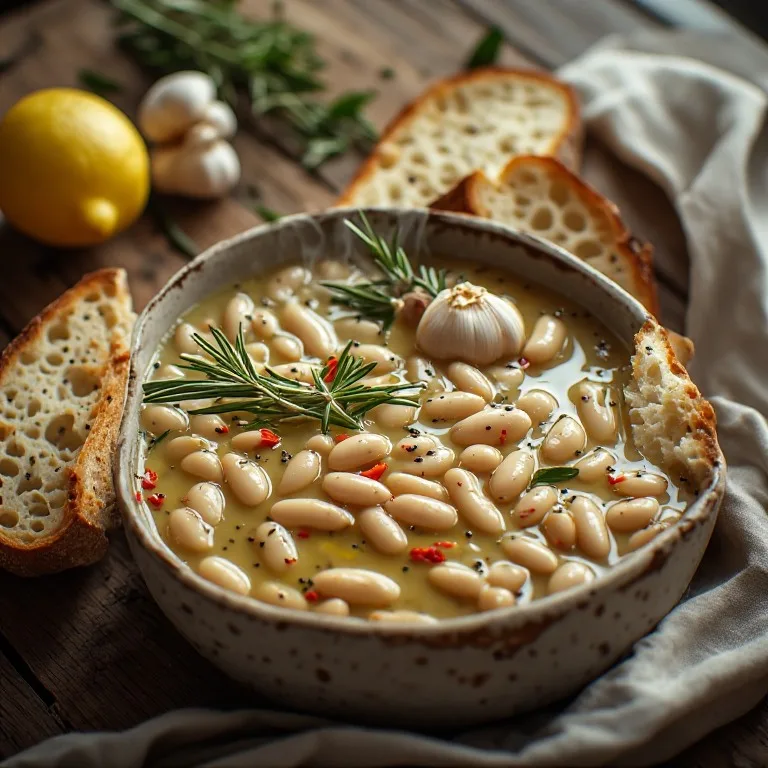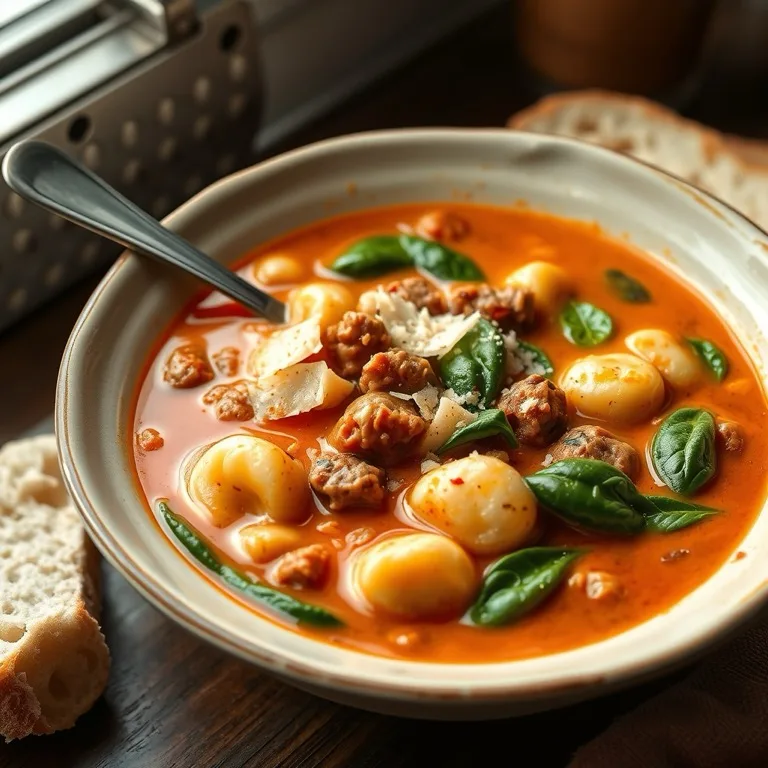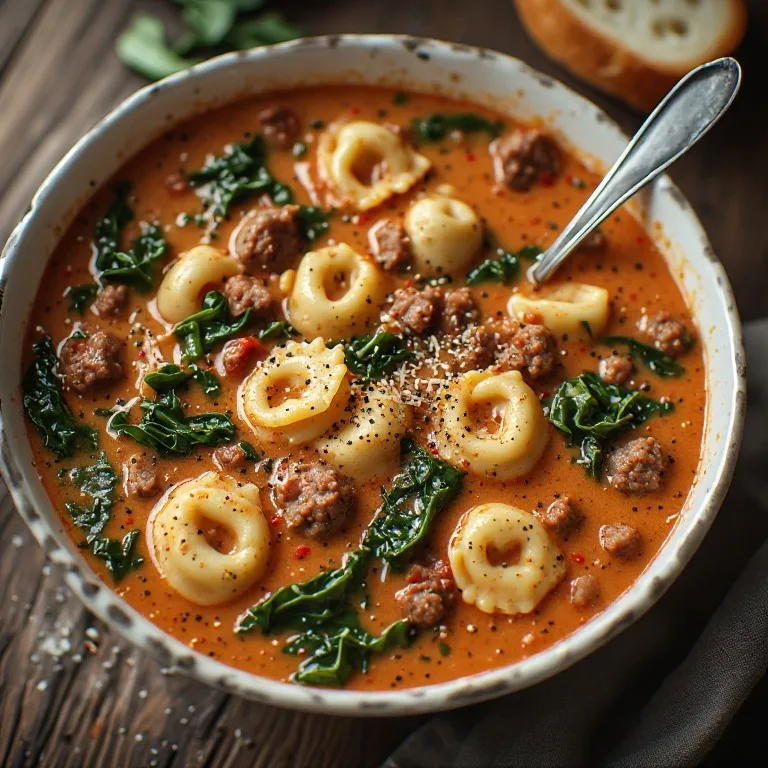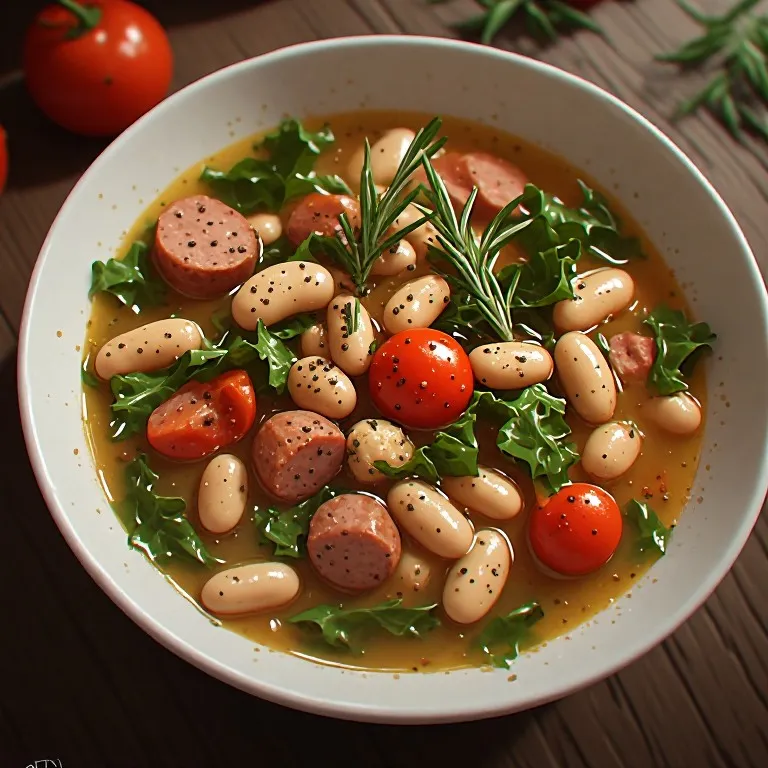



Tuscan White Bean Soup — A Hearty Italian Classic That’s Naturally Dairy-Free
Tuscan white bean soup is one of the great examples of peasant cooking done right: cheap, pantry-friendly ingredients transformed by good technique into something warming, filling, and deeply satisfying. The dish has roots in ribollita — the Florentine bread soup made from leftover minestrone and stale bread — but the TikTok version strips it to its essentials: sausage, cannellini beans, greens, broth, and a Parmesan rind simmering away like a slow revelation.
The appeal on TikTok is twofold. First, the mashed-bean technique is genuinely surprising to people who haven’t seen it: watching a cook mash a can of beans with a fork, stir the paste into the broth, and watch the soup transform from thin and brothy to silky and thick is the kind of visual trick that gets shared. Second, this soup delivers enormous flavor for its ingredient cost — a full pot can be made for under twelve dollars and feeds six people generously.
The Parmesan Rind Secret
The Parmesan rind is the ingredient that separates this recipe from a basic white bean soup. During the 20-minute simmer, the rind slowly releases glutamic acid — the same compound responsible for the savory, mouth-coating quality of aged cheese — into the broth. You won’t taste cheese; you’ll taste a broth that seems impossibly deep and complex for its cooking time. Remove the rind before serving (it will be soft and slightly swollen but is not pleasant to eat).
If you don’t have a rind, a teaspoon of white miso paste stirred in at the end provides similar glutamate depth. It’s not identical, but it’s a reasonable substitute.
Building Depth with the Sausage
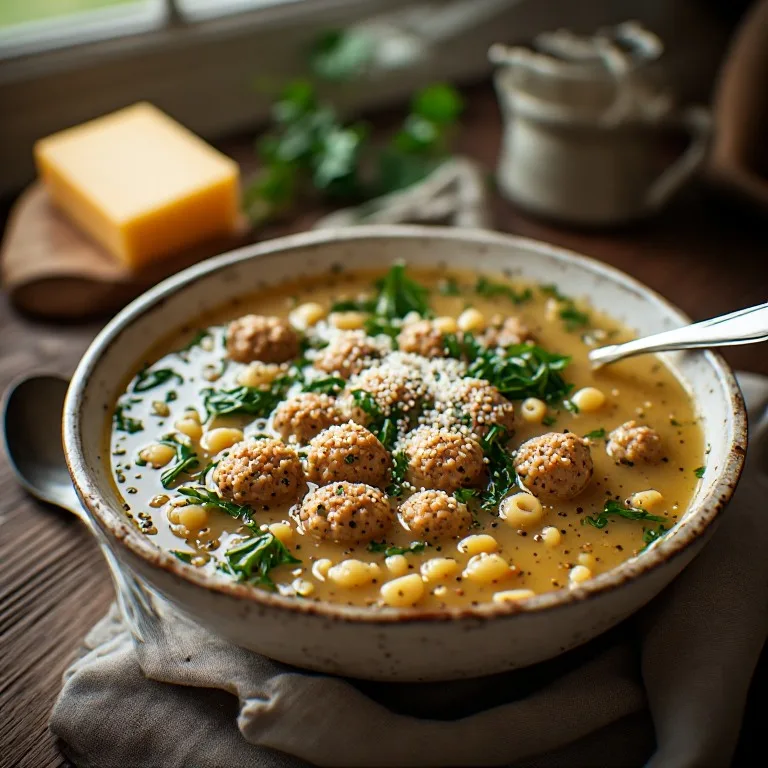
Italian sausage provides three things: fat for sautéing the aromatics, fennel and spice flavor that permeates the broth, and substantial chunks of protein that make the soup feel like a full meal. Brown the sausage in large pieces, allowing each side to form a crust before breaking it further. Those browned surfaces contribute fond to the pot, which dissolves into the broth and amplifies every other flavor.
For a more authentically Italian flavor, look for sausage with fennel seed — the anise note is classic in Tuscan cooking. Hot sausage adds a pleasant, slow-building heat that pairs well with the slightly bitter kale.
The Mashed Bean Technique
Cannellini beans are starchy, and that starch is what makes this technique work. One drained can, roughly mashed with a fork to a coarse paste, goes into the broth along with the intact beans from the other two cans. As the soup simmers, the mashed bean starch dissolves and gradually thickens the broth from watery to velvety. After 20 minutes of simmering, the consistency is somewhere between a thin cream soup and a thick broth — substantial enough to coat a spoon, light enough to drink from the bowl.
This technique works because of gelatinized starch, not fat. The result is a soup that feels rich without being heavy, satisfying without being cloying.
Kale: Lacinato vs. Curly
Lacinato kale — also called dinosaur kale or Tuscan kale — is the correct choice for this recipe. Its leaves are flatter and more tender than curly kale, and it wilts more evenly in soup without becoming slimy. Curly kale works but takes longer to soften and can have a tougher chew.
Strip the leaves from the stems and tear them into two-inch pieces rather than chopping. Torn kale has more surface area and wilts more uniformly. Add it in the last five minutes — kale added too early becomes dull-colored and loses its slight minerality.
Serving and Storing
A drizzle of good olive oil at serving is not optional. The fat carries the aromatic compounds from the fresh olive oil across the surface of the bowl, adding a brightness and fruitiness that the long-cooked soup needs. Use a finishing oil — not cooking oil — poured in a thin stream just before eating.
This soup keeps in the refrigerator for five days and improves significantly on day two as the flavors continue to meld. The beans absorb broth overnight; add a splash of broth when reheating to bring it back to soup consistency.
Variations
Fully Vegetarian Ribollita: Skip the sausage. Add one can of lentils with the beans, increase tomato paste to 3 tablespoons, and stir in 2 cups of torn stale sourdough bread in the last 10 minutes. The bread dissolves into the broth and makes it dramatically thick — closer to a stew. This is ribollita proper.
With Chicken: Use 1 lb boneless chicken thighs cooked directly in the broth and shredded. Use the chicken fat in place of the sausage drippings to sauté the vegetables. The result is lighter but still has good depth.
Roman White Bean Soup: Omit the sausage and kale. Add 1 cup of diced pancetta instead, and finish with 2 tbsp of chopped fresh sage leaves. This simpler version is about the beans themselves, with sage and pork as supporting flavors.