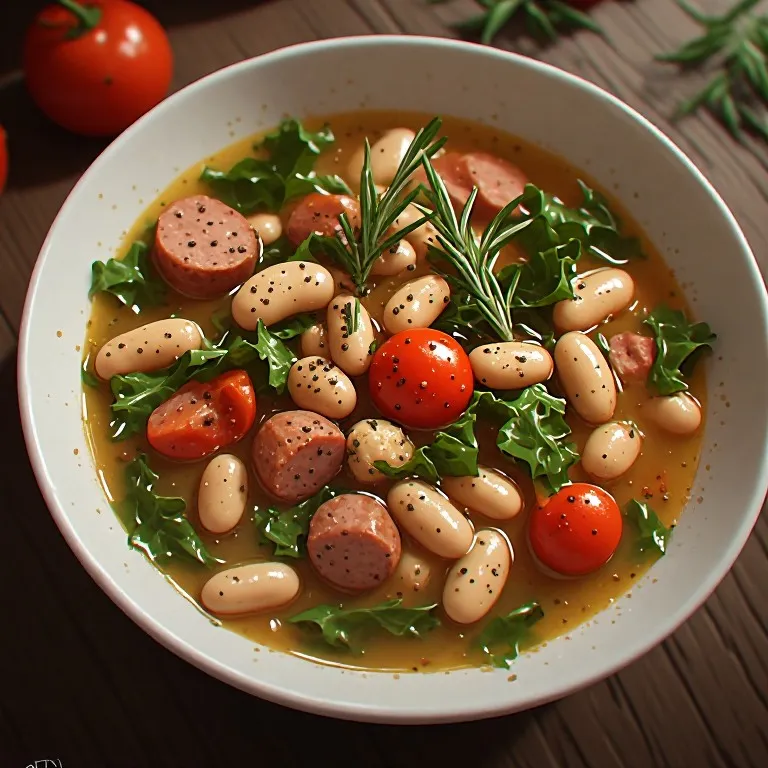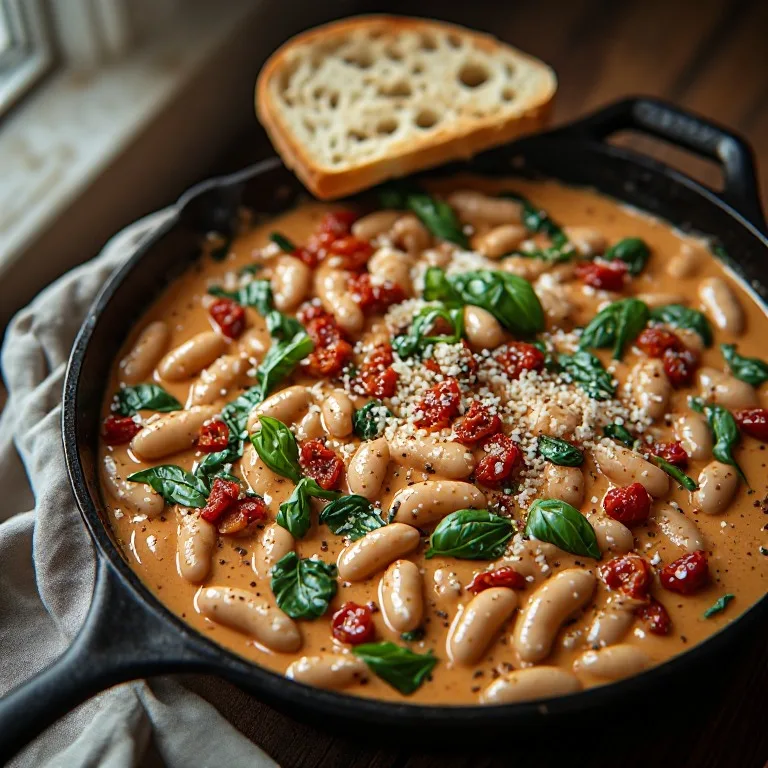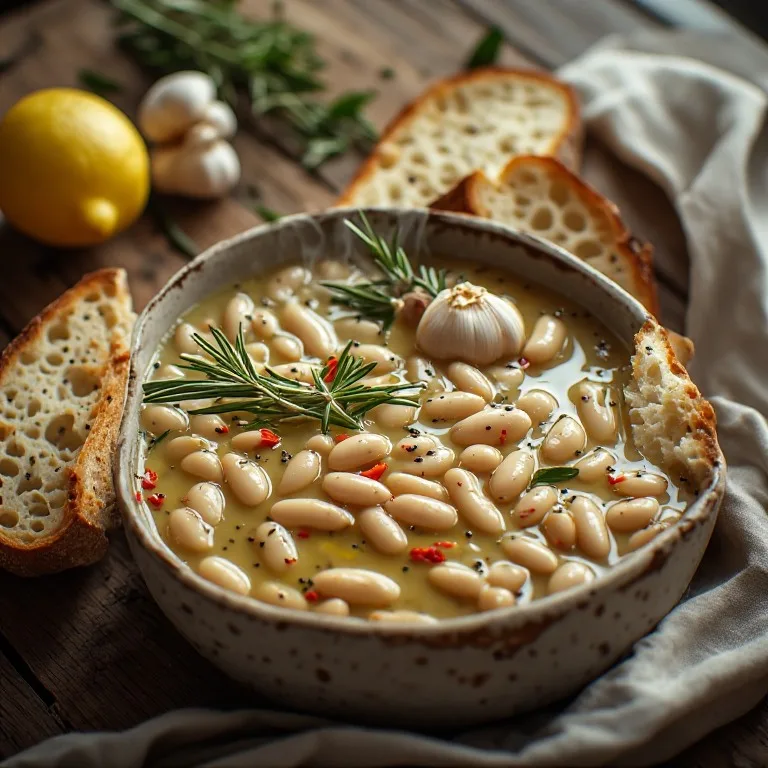



Brothy white beans are the dish TikTok’s food corner rediscovered from Italian grandmothers and couldn’t stop posting about. The concept is not new — Tuscans have been slowly simmering cannellini beans in olive oil, garlic, and herbs for centuries, calling it fagioli all’uccelletto when tomato is involved or fagioli al fiasco when cooked in a wine flask in fireplace embers. What TikTok added was the revelation that a $5 can of beans and a generous pour of good olive oil, treated correctly, can produce a bowl that tastes legitimately expensive.
The recipe succeeds or fails entirely on two decisions: how you handle the garlic, and whether you press some of the beans.
The garlic is everything
Every brothy white beans recipe starts the same way: garlic in olive oil, low heat, patience. But the garlic in this recipe is smashed, not minced — pressed flat with the side of a knife into thick, irregular pieces rather than chopped fine. This distinction is not aesthetic.
Minced garlic in olive oil at medium-low heat for six to eight minutes turns paste-like and merges invisibly into the oil. Smashed garlic pieces that size cook slowly, caramelize gently from the outside in, and stay visible in the finished dish as whole golden cloves nestled among the beans. More importantly, the flavor is fundamentally different: slow-cooked smashed garlic is mellow, almost sweet, with none of the sharp edge that raw or quickly-cooked garlic brings. That sweetness is the flavor base the beans are going to absorb for fifteen minutes.
The heat has to be medium-low, not medium or higher. If the oil is sizzling aggressively when the garlic goes in, it will brown before it cooks through — and browned garlic in olive oil is bitter in a way that cannot be corrected. The goal color is pale gold — not white (undercooked), not brown (bitter). If you see brown starting at the edges of the garlic before eight minutes have passed, lower the heat immediately.
Bean starch does the thickening
White beans are high in starch. When you press a portion of them against the side of the pot as they simmer, that starch is released directly into the cooking liquid, where it acts as a natural thickener. By the time fifteen minutes have passed, the stock you added — which started as clear liquid — should be opaque, lightly thickened, and just barely coating the back of a spoon.
This is why the recipe calls for pressing 20 to 25 beans, not blending, not adding cream, not adding flour. You’re using the ingredient itself to create the texture. The result is a broth that coats the beans and soaks into bread with an almost silky quality — very different from watered-down bean liquid.
The Parmesan rind is optional but important
A two- or three-inch Parmesan rind dropped into the pot when the beans go in will dissolve slowly over fifteen minutes, releasing fat-soluble glutamates, a small amount of salt, and rounded dairy flavor into the broth. The rind itself won’t fully dissolve — remove it at the end — but it leaves behind a savory, rounded depth that makes the broth taste as though you’ve been cooking for an hour.
Parmesan rinds are almost free: save the heel of every wedge you buy in a bag in the freezer, or buy a bag of rinds at any good cheese counter. They are one of the most disproportionately effective flavor additions in the Italian pantry.
The finishing olive oil is not optional
After the fifteen-minute simmer, after the seasoning and lemon juice, drizzle two tablespoons of good olive oil over the finished pot. This finishing oil doesn’t cook — it stays raw, and its fresh, grassy flavor sits on top of the richness of the bean broth like a garnish. In olive-oil-centric Italian cooking this is called olio a crudo (raw oil), and it makes an enormous difference to what arrives in the bowl. Use the best extra-virgin olive oil you own for this step. The quality of the oil is the quality of the dish.
Bread is not a side. It is the point.
Brothy white beans served without bread is a bowl of beans. Brothy white beans with crusty sourdough or ciabatta pushed into the bowl while the broth is still hot is a meal that genuinely satisfies. The bread soaks from underneath while you eat from the top; the final scraping of the bowl produces the best bite of the whole dish.
This is why good crusty bread in the house is listed in the ingredients, not the optional garnish section.