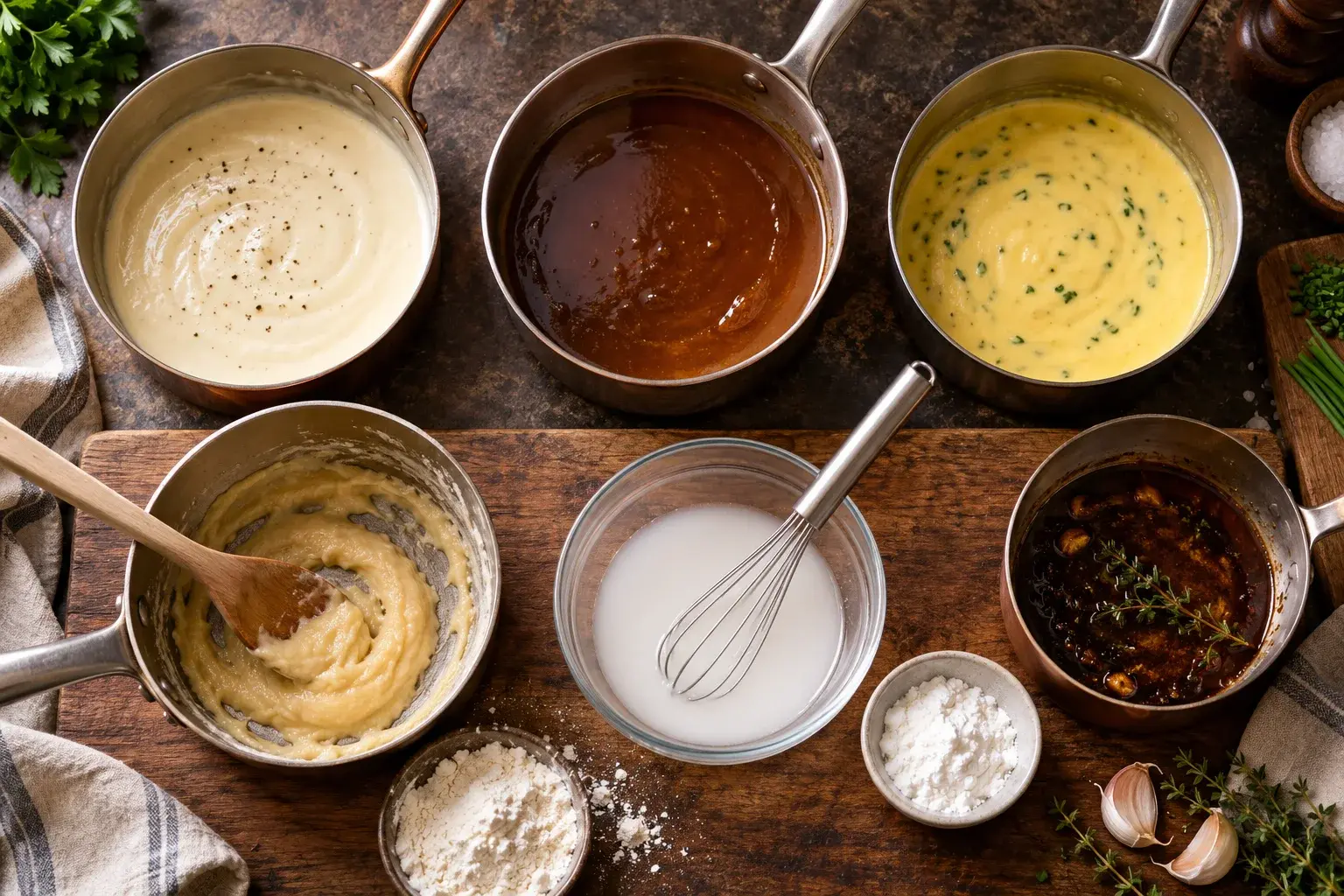
A thin sauce is not always a failed sauce. Sometimes it simply needs more evaporation. Other times it needs starch, fat, egg, or pureed ingredients to create body.
The best thickener depends on the texture and flavor you want. Reduction makes a sauce intense. Roux makes it opaque and comforting. Cornstarch makes it glossy. Choosing deliberately is better than adding random flour at the end.
Method 1: Reduction
Simmering uncovered evaporates water and concentrates everything left behind. Reduction gives the cleanest flavor because you add no thickener.
Use a wide pan to increase surface area. Simmer rather than violently boil, and stir more often as the liquid becomes concentrated.
Season lightly until the end. Salt becomes stronger as water leaves.
Best for pan sauces, wine sauces, tomato sauce, stock, and braising liquid.
Method 2: Roux
A roux is equal parts flour and fat cooked together by weight. Butter is classic, but oil or rendered fat works too.
Cook the mixture for at least one to two minutes to remove the raw flour taste. Slowly whisk in warm or room-temperature liquid. Adding the liquid in stages helps prevent lumps.
Pale roux has the strongest thickening power. Dark roux brings nutty flavor but thickens less because longer cooking breaks down some starch.
Best for gravy, béchamel, cheese sauce, gumbo, and creamy soups.
Method 3: Cornstarch slurry
Mix cornstarch with an equal amount of cold water until smooth. Whisk the slurry into simmering liquid a little at a time. The sauce will turn glossy and thicken quickly.
Start with about one tablespoon cornstarch per cup of liquid for a medium sauce, but add gradually. Boil only briefly after it thickens.
Best for stir-fry sauce, fruit sauce, quick gravy, and dishes where shine is welcome.
Method 4: Beurre manié
Knead equal parts soft butter and flour into a smooth paste. Whisk small pieces into a simmering sauce near the end.
Unlike roux, it is not cooked in advance, so the sauce must simmer for several minutes after the addition. It is a useful rescue method because the butter disperses the flour and prevents dry lumps.
Best for finishing stews and pan sauces that need a little more body.
Method 5: Pureed ingredients
Blend some of the food already in the dish. Beans, potatoes, squash, cooked onions, bread, nuts, and tomato paste can all thicken while adding flavor.
This method creates a rustic, substantial texture rather than a perfectly smooth sauce.
Best for soups, chili, curries, vegetable sauces, and bean dishes.
Method 6: Egg yolk or dairy
Egg yolks thicken through gentle heat and emulsification. Temper them by slowly whisking hot liquid into the yolks, then return the mixture to low heat. Do not boil.
Cream, yogurt, and sour cream add body too. Full-fat versions are less likely to split. Add cultured dairy off the heat when possible.
Best for custard, carbonara-style sauces, avgolemono, cream sauce, and enriched soups.
Avoid the most common mistakes
- Never dump dry flour or starch directly into hot liquid.
- Give flour time to cook so the sauce does not taste raw.
- Mix slurries again before using because starch settles.
- Remember that a sauce thickens as it cools.
- Taste after thickening. A change in water content changes salt, acid, and sweetness.
Use the spoon test
Dip a spoon into the sauce and draw a finger through the coating on its back. If the line stays clear for a moment, the sauce has reached a classic coating consistency.
Stop just before it seems quite thick enough. By the time it reaches the plate, it will usually be right.