


Applebee’s Maple Butter Blondies
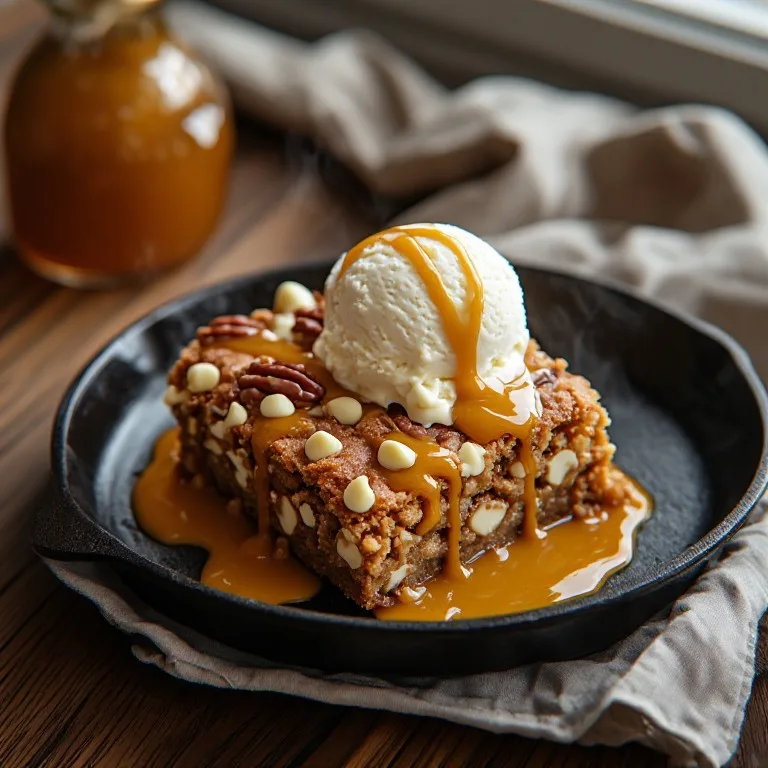
Applebee’s Maple Butter Blondies are the kind of dessert that arrives at the table looking almost too simple — a single square of warm blondie with ice cream on top — and then stays in your head for weeks. The blondie is a dense, butterscotch-forward bar packed with white chocolate chips and pecans. The ice cream melts into the warm surface. And the maple butter sauce ties it all together: sweet, slightly tangy from cream cheese, and soaking into everything.
This recipe makes nine servings from a single 9×9 pan in about 40 minutes. Each serving costs roughly $1.50 to $2 to make at home versus about $7 at the restaurant.
What Makes the Blondie Fudgy, Not Cakey
The texture difference between a great blondie and a mediocre one comes down to two things: how you mix the batter and when you pull it from the oven.
Blondie batter should be mixed like you are trying to not develop gluten — the opposite instinct from bread baking. Once the flour goes into the bowl, fold with a rubber spatula just until the last dry streak disappears. Ten to twelve folds, then stop. Anything more starts building the protein structure that turns a fudgy bar into something that bounces back like a muffin.
The second factor is the bake time. Blondies firm up significantly in the pan after coming out of the oven. Pull the pan when a toothpick comes out with a few moist crumbs — not raw batter, but not clean and dry either. If it comes out clean, the blondie will be dry and crumbly once cooled. The center should still look ever so slightly underdone.
The Maple Butter Sauce: Why Cream Cheese
Most maple dessert sauces are just maple syrup reduced with butter, which is delicious but thin. What sets Applebee’s version apart is a texture: the sauce is thick enough to drape and pool rather than run off the ice cream. That comes from cream cheese, which acts as an emulsifier.
The technique matters: melt the maple syrup, butter, and brown sugar together first, then take the pan off the heat before whisking in the cream cheese and heavy cream. Adding cream cheese to actively boiling liquid causes it to seize and clump. Off the heat, the residual warmth melts it smoothly and produces the glossy, clinging sauce.
Make the sauce right before serving. Cream cheese sauces are finicky when refrigerated and reheated — the proteins tighten at cold temperatures. If you must make it ahead, reheat over very low heat while whisking constantly.
Serving: The Hot-Cold Contrast
The whole point of this dessert is contrast. Warm blondie. Cold melting ice cream. Warm sauce soaking into both. The plating window is about two minutes — long enough to bring it from the kitchen to the table, not long enough to stand and take a photo for ten minutes first.
If you want to plate it properly: warm the blondie squares in a 325°F oven for 8 minutes. Add ice cream immediately. Drizzle sauce while everything is still hot. Serve.
For a fall dinner party, cut the blondie into 9 squares earlier in the day and store in an airtight container. Warm all 9 squares on a baking sheet at 325°F for 8–10 minutes right before dessert. Make the sauce fresh at that time. Serve within 5 minutes.
More warm restaurant desserts to try at home: Applebee’s Honey Pepper Chicken for dinner first, Cheesecake Factory’s original cheesecake when you want something cold, or Texas Roadhouse’s bread pudding for another warm-and-sauced restaurant classic.