


Applebee’s Neighborhood Nachos are one of the most copied dishes on the internet, and most of those copies are replicating the wrong recipe. The version that tops search results for “Applebee’s nachos copycat” is frequently built around black beans and shredded lettuce — a dish that was on the Applebee’s menu for years as “Nachos Nuevos” and has since been retired. Neighborhood Nachos replaced it, and the current version has neither beans nor lettuce.
This matters because getting the ingredient list wrong is the kind of error that’s immediately obvious to anyone who has ordered the real thing. If you serve someone nachos with black beans and they ordered them because they love the Applebee’s plate they know from every family birthday for the past decade, they’ll notice.
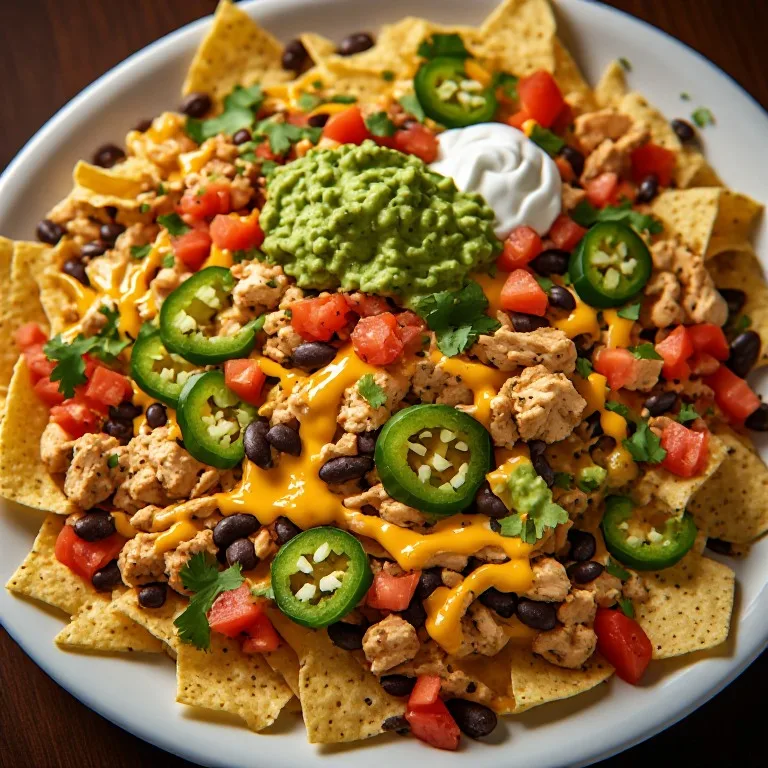
The current build: white corn chips, queso blanco, melted shredded cheddar, chipotle lime chicken or taco beef, then pico, sour cream, guacamole, fresh jalapeños, and cilantro. That’s it.
The Two-Cheese Problem
The most important technical detail is that Applebee’s uses two cheeses, applied in two stages.
A queso blanco sauce — white American cheese and Monterey Jack melted into cream and water, with minced onion and jalapeño — goes on the chips first, drizzled across the full surface. Then shredded cheddar goes on top of the queso layer. Applebee’s uses a blend of melted cheddars rather than a single variety, so a mix of sharp and mild (or a little Colby-Jack) gets you closest; straight sharp cheddar is fine too. Then protein. Then everything goes into the oven together.
These two cheeses do different things. Queso blanco is pourable. It flows between chips and coats every surface in the pan, including the chips around the edges that would otherwise be bare. When it bakes, it seeps into the chip layer slightly and holds everything together. Shredded cheddar, on top of the queso, provides the cheese pull and visible texture — the layer you see when the plate arrives, the strands that stay on each chip when you pick one up.
Nachos made with only queso are too saucy and don’t have that distinct cheese texture. Nachos made with only melted shredded cheese coat only the chips directly in the heat path. The combination is the reason restaurant nachos look and eat the way they do at home attempts rarely match.
Chipotle Lime Chicken vs. Taco Beef
The menu offers two protein choices. They produce meaningfully different plates — not just different proteins but different overall flavor profiles.
The beef version uses taco-seasoned ground beef. Chili powder, cumin, paprika, garlic, oregano — the standard taco spice lineup that’s assertive and savory. The fat in 80/20 beef adds richness that makes the nachos feel substantial. This is the more traditional bar-food version.
The chicken version uses chipotle lime grilled chicken. Chipotle in adobo and fresh lime juice marinade creates a smokier, brighter, more complex flavor. The acid from the lime cuts through the richness of the dual-cheese layer and keeps the plate from tasting heavy. This version eats slightly more like a meal and less like a bar snack.
Both are correct. The chicken version is more work (marinating, grilling or searing). The beef version is faster. The chicken version is slightly more interesting; the beef version is more universally liked.
For the chicken, use the chipotle-lime marinade and grill or sear to 165°F internal temperature. Do not use plain seasoned chicken — the chipotle and lime are what make it taste right against the queso and cheddar.
White Corn Chips
Applebee’s explicitly uses white corn tortilla chips, not yellow corn. This is a real difference, not a marketing detail. White corn tortilla chips have a nuttier, less sweet flavor than yellow corn, and a slightly thicker texture when fried. The less sweet chip is a better base for the assertively flavored toppings — taco beef, chipotle chicken, and queso blanco can all taste slightly unbalanced against the sweeter note of yellow corn chips.
Look for chips labeled “white corn” or “restaurant style white corn.” Tostitos Restaurant Style White Corn or On the Border Café Style White Corn are widely available and match the restaurant thickness — sturdy enough to hold the full loaded build without shattering when you scoop.
Cold Toppings Go on After the Oven
Everything except the two cheeses and the protein goes on after baking. Pico, sour cream, guacamole, fresh jalapeños, cilantro — all cold, all added after the pan comes out of the oven.
Sour cream that bakes curdles. Guacamole that bakes turns brown and bitter. Fresh cilantro that bakes turns bitter. Pico that bakes releases liquid that soaks into the chips and softens them.
Drain the pico before adding it. Fresh tomatoes release more liquid than they look like they will. A 30-second press through a fine-mesh strainer or a quick pat with a paper towel is enough to prevent the nachos from softening in the first two minutes after plating.
Serve immediately. Nachos hold well for about 5 minutes — after that, the chip layer starts absorbing moisture from the toppings and softening from the heat of the cheese and protein.
The Full Applebee’s Spread
Neighborhood Nachos as a shared appetizer pair naturally with the Applebee’s Boneless Wings in Honey BBQ or the Applebee’s Spinach Artichoke Dip — neither dish shares ingredients with the nachos, so you can prep all three simultaneously without conflict.
For a Tex-Mex Applebee’s night, follow the nachos with the Chicken Fajita Rollup or the Fiesta Lime Chicken. Both use chipotle and lime in the same flavor profile as the chicken nachos, so the meal feels intentional rather than random.
The Applebee’s Quesadilla Burger also uses Mexi-ranch that shares the chipotle profile — a batch of Mexi-ranch made for the quesadilla burger doubles as a drizzle over the nachos if you want to add a third sauce layer.
See all Applebee’s copycat recipes.