
Pin It

Canyon Bakehouse Mountain White Bread

Canyon Bakehouse Mountain White Bread
Jump to Recipe
Prep 15 min Cook 40 min Serves 12
Quick answer: Whisk 1 cup (140g) whole-grain brown rice flour, ¾ cup (105g) tapioca starch, ¼ cup (40g) potato starch, 1½ teaspoons xanthan gum, 1 teaspoon psyllium husk powder, 2¼ teaspoons instant yeast, 1½ teaspoons fine salt, and 2 teaspoons sugar. Beat in 1¼ cups (300ml) warm water (110°F), 2 egg whites, 2 tablespoons canola oil, and 1 teaspoon apple cider vinegar for 2 minutes — the dough will look like thick batter. Scrape into a greased 9×5-inch loaf pan, smooth the top with a wet spatula, cover loosely, and rise in a warm spot (75–80°F) until the dough just crests the rim, 60–90 minutes. Bake at 375°F for 35–40 minutes until internal temperature reaches 205°F and the top is deep golden. Cool completely on a wire rack — minimum 2 hours — before slicing with a serrated knife.

Shop the tools

Gear matched to this recipe. These are Amazon affiliate links — we may earn a small commission if you buy, at no extra cost to you.

As an Amazon Associate, Copycat Spices earns from qualifying purchases. Product images are generic illustrations, not the exact item listed.

Canyon Bakehouse Mountain White Bread

The homemade gluten-free bread recipe that actually tastes like Canyon Bakehouse's $9 Mountain White: soft, sliceable, and safe at under 10 ppm. Brown rice flour + tapioca starch + psyllium husk — and the one cooling step that makes or breaks the crumb.

Medium Prep: 15 min Cook: 40 min Total: 55 min12 servings ~$4.50/serving
Prep15 min
Cook40 min
Total55 min
Servings
12
At home~$4.50/serving
vs
Restaurant~$20.25/serving
You save ~78%

The Story Behind the Recipe

Canyon Bakehouse was founded in 2009 in Johnstown, Colorado, by a family that set out to fix gluten-free bread after a celiac diagnosis. At the time, every gluten-free sandwich bread on the market was either a dense brick or a crumbling mess that fell apart before it reached the toaster. Canyon Bakehouse changed that by building a bread that competed with wheat on texture: soft enough to press without shattering, sliceable cleanly, toastable, and certified at under 10 parts per million of gluten — half the FDA's 20 ppm legal GF threshold. It grew into the top-selling gluten-free loaf brand in natural and specialty stores; Flowers Foods (maker of Nature's Own) acquired it for about $205 million, a deal that closed in December 2018. An 18-ounce loaf now retails for $8–10.

Canyon's own loaf leans on brown rice flour, tapioca flour, and whole-grain sorghum, bound with xanthan gum. This home version keeps the brown-rice-and-tapioca backbone and swaps in potato starch for the pillowy softness — an easier starch to buy than sorghum flour — with psyllium husk added alongside the xanthan gum to firm the crumb. It's mixed into a batter-style dough that's poured, not shaped. The irreplaceable step is the cooling time: GF bread's crumb structure keeps setting for up to two hours after it comes out of the oven. Slice it early and the interior is gluey paste. Slice it once it's fully cool, and it holds together — soft, even-crumbed, close to the $9 version but made at home for about $1.25 a loaf.

Nutrition Facts

Per serving (12 servings)
Calories140
Total Fat2g
Total Carbs28g
Dietary Fiber1g
Sugars2g
Protein2g
Sodium220mg

* Estimated values based on standard recipe preparation. Actual values may vary.

Ingredients

  • Dry ingredients
  • Wet ingredients
💡
Pro tip: This recipe tastes even better the next day. The flavors need time to meld together in the fridge.
❄️
Storage: Keeps in an airtight container in the fridge for up to 2 weeks. Freezer-friendly for up to 3 months.
🎃 Free Halloween cookbook — download now The Copycat Halloween Cookbook A ready-made, photo-illustrated PDF of our best halloween copycat recipes — free to download, no building required. Pay what you want to support if you love it.

Free PDF — instant download. We'll also send new seasonal copycat recipes now and then; unsubscribe anytime. Or just download it →

Canyon Bakehouse Mountain White Bread

Canyon Bakehouse Mountain White Bread is the gold standard of commercial gluten-free bread — soft enough to press without crumbling, sliceable without a serrated knife struggle, and certified at under 10 ppm of gluten (the FDA’s legal limit is 20 ppm). An 18-ounce loaf costs $8–10 at Whole Foods or Kroger. This recipe recreates that soft, toastable crumb at home for about $1.25 a loaf, built on the same brown-rice-and-tapioca backbone Canyon Bakehouse uses.

Why Most Gluten-Free Bread Fails

The two problems that make almost every homemade GF bread disappointing:

Wrong binders. Single-binder recipes that rely on xanthan gum alone produce a gummy, dense interior. At home, adding psyllium husk powder alongside the xanthan gum fixes that: it absorbs up to 14 times its weight in water, forms a gel that gives the dough elasticity, and produces an even, non-gummy crumb that xanthan gum alone can’t achieve.

Cutting too soon. GF bread’s crumb is set by starch gelatinization and xanthan gum binding — a process that continues for up to two hours after the loaf leaves the oven. Slice it warm and the steam inside escapes before the crumb firms, leaving a gluey, underbaked-looking interior even in a fully cooked loaf. This is the single most common GF bread failure, and it’s entirely avoidable.

The Three-Starch Blend

Canyon Bakehouse Mountain White is built on brown rice flour, tapioca flour, and whole-grain sorghum. This home version keeps the brown rice flour and tapioca and swaps in potato starch where Canyon uses sorghum — potato starch is easier to find and delivers the same pillowy softness.

Whole-grain brown rice flour is the structural base. It provides the bulk and a faint nutty flavor that makes GF bread taste like bread rather than a rice cake. Use whole-grain (not white rice flour) for better flavor and the slightly coarser texture that helps the loaf hold its shape.

Tapioca starch is the chew builder. It’s highly elastic when baked and produces a slightly glossy crumb — the quality that makes Canyon Bakehouse bread feel soft rather than crumbly when you take a bite.

Potato starch adds softness. It bakes to a pillowy texture and prevents the dry, gritty crumb that happens when rice flour carries too much of the load. Don’t substitute cornstarch here — it bakes drier.

How to Mix Gluten-Free Bread Dough

GF bread dough looks nothing like wheat bread dough. It’s a thick, smooth batter that you pour into the pan — not a dough you knead or shape. That’s correct.

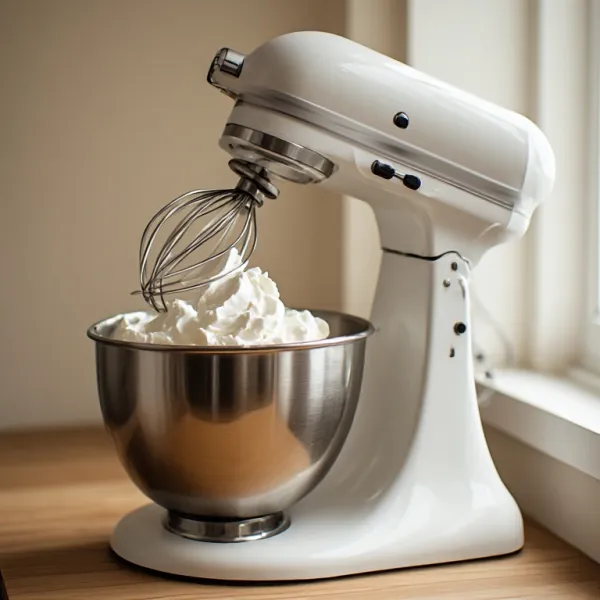
Beat the dry and wet ingredients together for a full 2 minutes with a hand mixer or stand mixer. The mixing activates the xanthan gum and psyllium husk, which begin hydrating and building the gel network that replaces gluten. Undermixing leaves those binders underactivated and produces pockets of dense, gummy flour in the finished loaf. Two minutes is enough; more won’t hurt.

Scrape the batter into a well-greased loaf pan, smooth the top with a wet spatula (dip it in water to prevent sticking), and cover loosely with plastic wrap.

Rise Time: Slow and Warm

GF bread needs a full rise to develop flavor and achieve the light crumb texture of Canyon Bakehouse bread. Place the covered pan in a warm spot — 75 to 80°F. A slightly warm oven (heated to 200°F, then turned off for 5 minutes) works well in a cold kitchen.

Rise until the dough crests just above the rim of the pan, 60 to 90 minutes. If the dough is heavily crowned (more than ½ inch above the rim), it may crack during baking — a slight peak is ideal. Don’t rush the rise; under-risen GF bread bakes dense.

Baking and the Temperature Check

Bake at 375°F for 35 to 40 minutes until the top is deep golden brown. The color check alone isn’t reliable — GF bread can brown on the outside before the interior is fully baked. Use a thermometer: the target is 205°F at the center of the loaf. Below 200°F and the crumb will gum when sliced; at 205°F, it’s done.

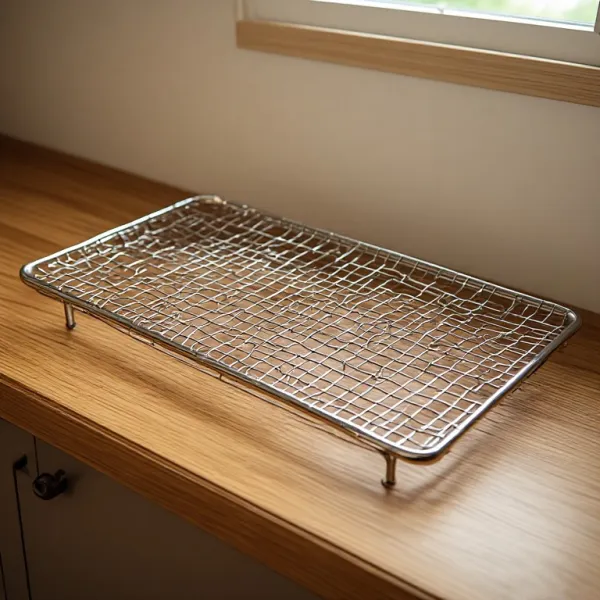
The loaf will pull slightly from the sides of the pan when done. Turn it out immediately onto a wire rack.

The 2-Hour Cooling Rule

Set the loaf on a wire rack and do not touch it for a minimum of 2 hours. If the loaf is still even slightly warm to the touch on the bottom, wait longer.

This is not optional. GF bread’s structure is still setting as it cools. The starches and binders continue to firm and the steam inside the loaf needs time to redistribute. Slice early and you’ll cut through a gluey, sticky interior that looks underbaked even though the thermometer read 205°F in the oven.

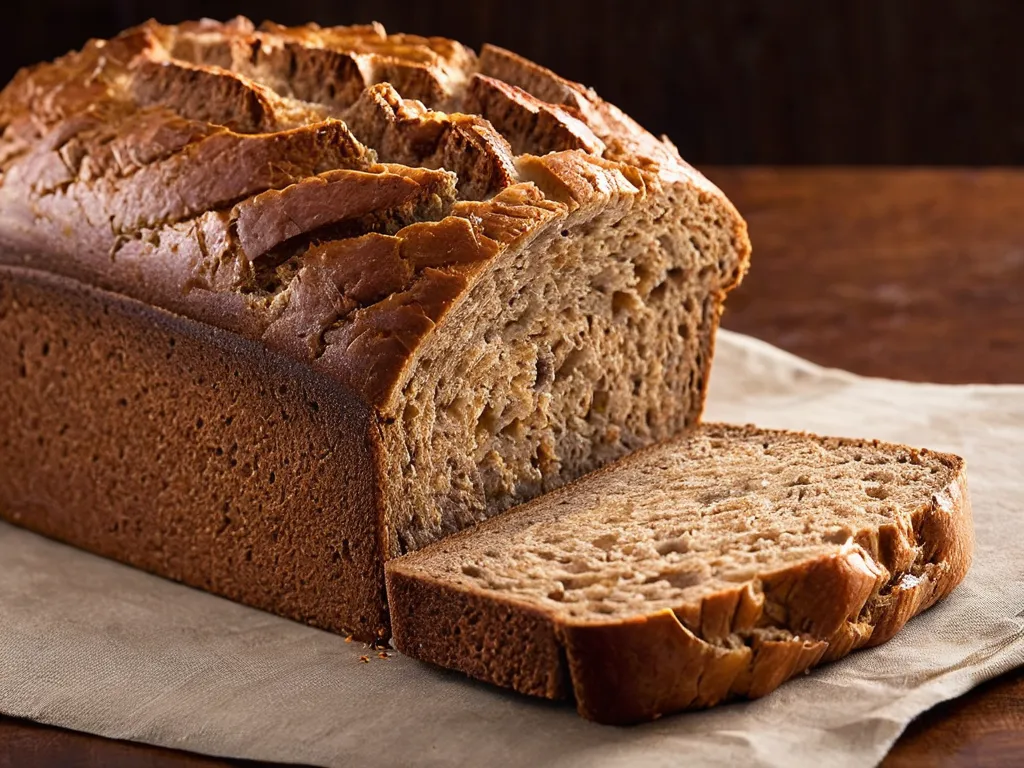
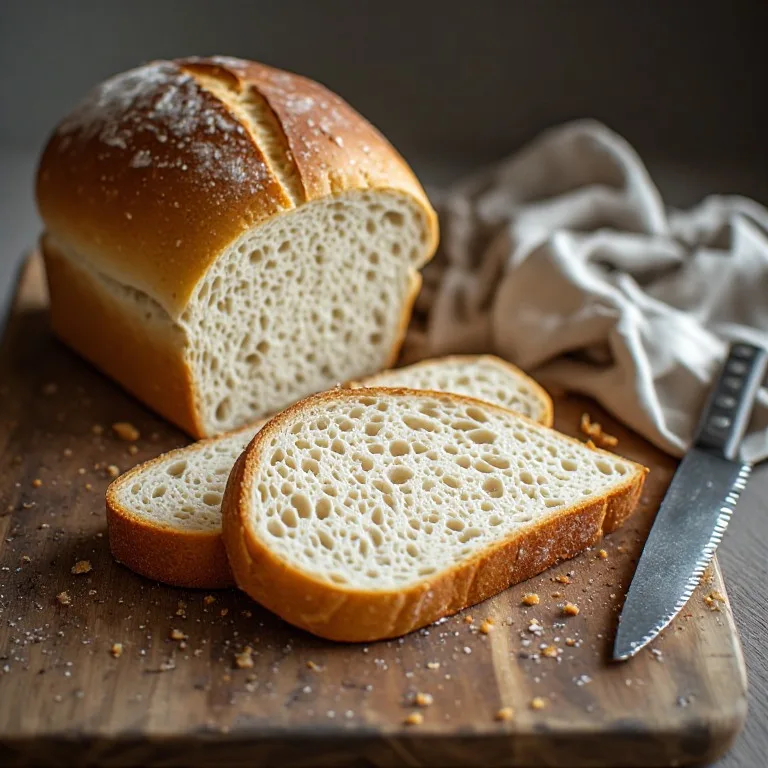
Once fully cooled, use a serrated bread knife and slice in confident, single-pass cuts. The loaf should hold together cleanly — no tearing, no crumbling at the edges.
🥗

Make It Healthier

Love Canyon Bakehouse Mountain White Bread but want a lighter version? Try these simple swaps:

  • ✓Swap the canola oil for extra-virgin olive oil — same fat content, more monounsaturated fat, and a faintly richer flavor that you won't notice in a sandwich but will in toast
  • ✓Add 2 tablespoons of ground flaxseed to the dry mix for 2g of extra omega-3 fatty acids and fiber per loaf — it integrates invisibly, doesn't change the texture, and doesn't alter the rise
  • ✓Reduce the sugar to 1 teaspoon (from 2) — it still feeds the yeast enough for a full rise and saves 4g of added sugar across the whole loaf
  • ✓Use 1 whole egg instead of 2 egg whites to add 2g of additional protein per loaf and a slightly more golden crumb from the yolk fat

Frequently Asked Questions

Why do I have to wait 2 hours before slicing gluten-free bread?

GF bread has no gluten network to hold its crumb together — the structure comes entirely from starch gelatinization and xanthan gum, which keep setting as the loaf cools. Pull it out of the oven and it's still completing that process. Cut into it early and the steam inside the loaf escapes before the structure has solidified, leaving a gummy, dense interior that looks underbaked. Two hours is the minimum; if the loaf is still even slightly warm to the touch at the bottom, wait longer. A fully cooled GF loaf slices cleanly with a serrated knife and holds together without crumbling.

Can I use whole eggs instead of just egg whites?

Yes — 1 whole large egg replaces the 2 egg whites in this recipe. The yolk adds fat, which gives the crumb a slightly richer flavor and a more golden color. The structural difference is minimal at the scale of a sandwich loaf: both produce a soft, sliceable bread. Egg whites give a slightly lighter crumb; a whole egg gives slightly more color and flavor. Either works.

Do I need both xanthan gum and psyllium husk, or can I use just one?

You can make the bread with xanthan gum alone, but the crumb will be gummier and slightly denser. Psyllium husk powder absorbs water and forms a gel that mimics gluten's elasticity in a way xanthan gum alone doesn't — the two binders work together, each covering what the other misses. If you only have xanthan gum, increase it to 2 teaspoons and expect a slightly stickier interior. If you only have psyllium husk, use 2 teaspoons and add an extra tablespoon of warm water, as psyllium absorbs significantly more liquid than xanthan.

What flour blend is closest to what Canyon Bakehouse actually uses?

Canyon Bakehouse's ingredient list is: water, brown rice flour, tapioca flour, whole grain sorghum flour, organic agave syrup, cane sugar, extra-virgin olive oil, cultured brown rice flour, and 2% or less of xanthan gum, eggs, egg whites, yeast, sea salt, and enzymes. The home recipe matches the brown rice flour and tapioca and uses the same xanthan gum, egg whites, yeast, and salt. The real differences are whole-grain sorghum (this recipe uses potato starch for softness instead), cultured brown rice flour and enzymes (commercial shelf-life and texture aids you can't replicate at home), and olive oil plus agave in place of canola oil and sugar. If you can find sorghum flour, replace the ¼ cup potato starch with ¼ cup sorghum flour and you'll be a step closer to the original.

How do I store homemade gluten-free bread so it doesn't go stale or moldy?

GF bread has no preservatives, so it stales faster than commercial GF bread. At room temperature in an airtight bag or container, it stays good for 2–3 days. For longer storage, freeze it: slice the fully cooled loaf, separate slices with parchment paper, and freeze in a zip-lock bag. Pull slices out individually and toast directly from frozen — they come out as soft as fresh. Do not refrigerate GF bread; the cold accelerates starch retrogradation, which is what makes GF bread gummy and hard when it goes 'stale.'

Love this recipe? Share it!

Free PDF: our 12 most-wanted copycat recipes — instant download.

Made it? Buy us a coffee

Every recipe here is free, with no paywalls. If this one was a hit at your table, a small tip keeps new copycats coming.

$

Canyon Bakehouse is a trademark of its owner, used here only to describe the dish this recipe recreates. This is an independent copycat written in our own words — Copycat Spices is not affiliated with, endorsed by or sponsored by Canyon Bakehouse.

Ratings & Reviews

—
No ratings yet

Rate this recipe

Click a star to rate

Leave a Review

0/500

CS

Copycat Spices Editorial

Researched + fact-checked. Every recipe on Copycat Spices is built from published sources — official ingredient lists, brand-published recipes, interviews and food-science references — and fact-checked before it goes live, then written as clear, step-by-step instructions for home cooks of all skill levels.

Learn more about our mission →