Pin It

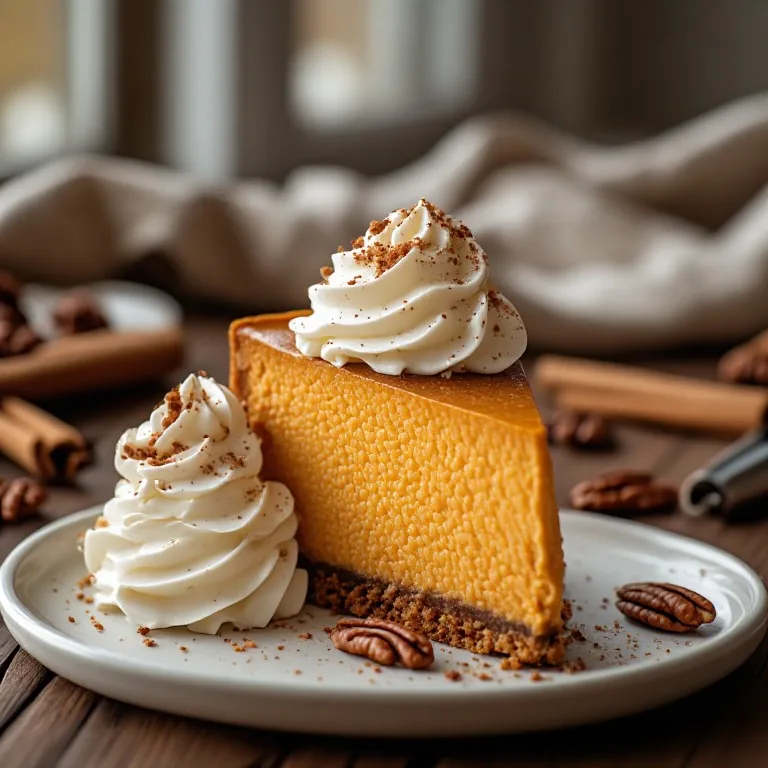
The Capital Grille Pumpkin Cheesecake, Made at Home

The Capital Grille Pumpkin Cheesecake, Made at Home
Jump to Recipe
Prep 25 min Cook 2 hr 30 min Serves 12
Quick answer: Press a crust of 1 cup crushed Nilla wafers + 1 cup crushed gingersnaps + ½ cup melted butter + ¼ cup sugar into the bottom of a greased 12-inch springform pan, ¼ inch thick. Par-bake at 325°F for 8 minutes, then lower the oven to 275°F. Beat 2 lbs softened cream cheese until smooth; blend in one 15 oz can pumpkin puree, 1½ cups granulated sugar, 1 cup sour cream, ½ cup ricotta, 1 tablespoon strained fresh lemon juice, and 1½ tablespoons pure vanilla extract. Add 4 eggs one at a time on low speed — stop mixing the moment the last egg disappears. Pour over the crust. Set the springform in a roasting pan with ½ inch of hot water, cover loosely with foil, and bake at 275°F for 2½ hours until the center has just a slight jiggle. Turn off the oven, crack the door, and rest 30 minutes inside before removing. Cool to room temperature, then refrigerate at least 4 hours. To serve, sprinkle an even layer of granulated sugar across the surface and torch in slow passes until the sugar turns deep amber and glassy.

Shop the tools

Gear matched to this recipe. These are Amazon affiliate links — we may earn a small commission if you buy, at no extra cost to you.

As an Amazon Associate, Copycat Spices earns from qualifying purchases. Product images are generic illustrations, not the exact item listed.

The Capital Grille Pumpkin Cheesecake, Made at Home

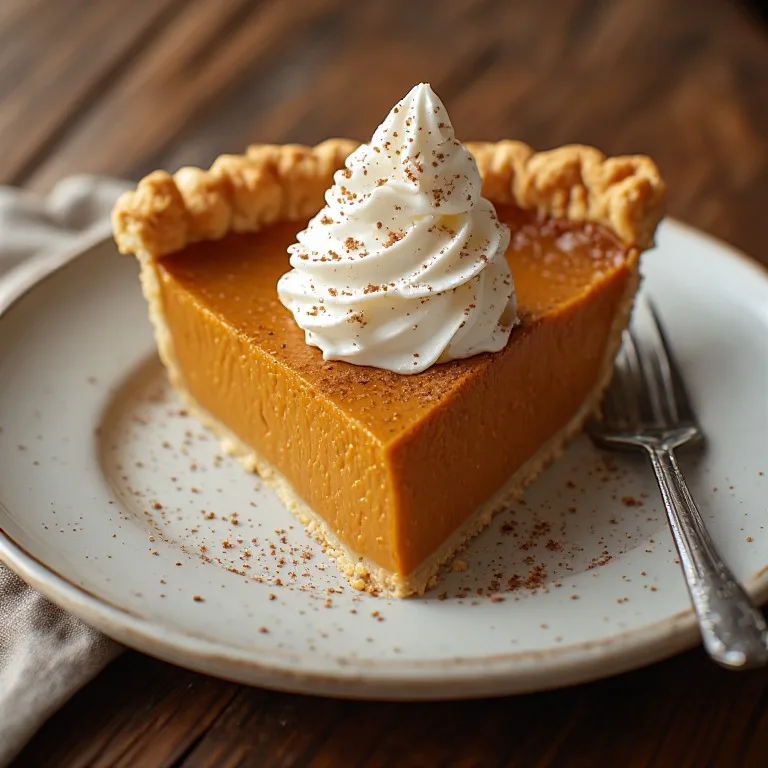
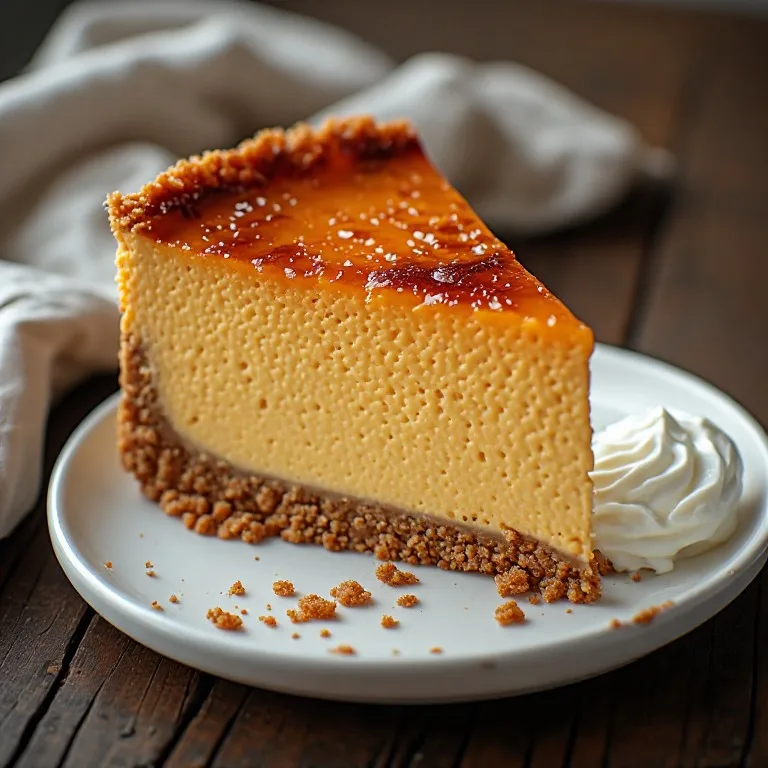
The Capital Grille's famous Thanksgiving pumpkin cheesecake at home: a gingersnap-Nilla wafer crust, ricotta-enriched filling baked at 275°F in a water bath, and the signature crème brûlée sugar top torched just before serving. Around $14–$16 per slice at the restaurant; under $4 per slice at home.

Medium Prep: 25 min Cook: 2 hr 30 min Total: 2h 55m12 servings ~$4.50/serving
Prep25 min
Cook2 hr 30 min
Total2h 55m
Servings
12
At home~$4.50/serving
vs
Restaurant~$20.25/serving
You save ~78%

The Story Behind the Recipe

The Capital Grille runs one of the most consistently popular Thanksgiving desserts in the upscale steakhouse world. The pumpkin cheesecake has appeared on the restaurant's holiday menu for years, and in an unusual move for a chain at this level, the Austin, Texas location shared the full recipe publicly. It is listed as a separate charge even on prix-fixe Thanksgiving menus — around $14 to $16 per slice at a venue where dinner for two regularly clears $200 — which is a statement about how confident the restaurant is that the dessert earns its own place.

What separates this from a standard grocery-store pumpkin cheesecake is a set of deliberate choices: ricotta folded into the cream cheese base for a lighter texture; a crust that blends crushed Nilla wafers with gingersnaps rather than plain graham crackers; a 275°F water bath bake running nearly two and a half hours for an exceptionally creamy interior; and a crème brûlée sugar finish torched just before serving. There are no cinnamon or nutmeg additions in the batter — the pumpkin flavor comes through clean, without the spice-cake warmth that characterizes most versions of the dish.

Nutrition Facts

Per serving (12 servings)
Calories620
Total Fat40g
Total Carbs50g
Dietary Fiber1g
Sugars42g
Protein10g
Sodium380mg

* Estimated values based on standard recipe preparation. Actual values may vary.

Ingredients

  • Crust
  • Filling
  • Brûlée topping

Instructions

💡
Pro tip: This recipe tastes even better the next day. The flavors need time to meld together in the fridge.
❄️
Storage: Keeps in an airtight container in the fridge for up to 2 weeks. Freezer-friendly for up to 3 months.
🦃 Free Thanksgiving cookbook — download now The Copycat Thanksgiving Cookbook A ready-made, photo-illustrated PDF of our best thanksgiving copycat recipes — free to download, no building required. Pay what you want to support if you love it.

Free PDF — instant download. We'll also send new seasonal copycat recipes now and then; unsubscribe anytime. Or just download it →

The Capital Grille Pumpkin Cheesecake, Made at Home

Prep time: 25 min | Cook time: 2 hr 30 min | Serves: 12

Capital Grille lists the pumpkin cheesecake as a separate charge on their Thanksgiving prix-fixe menu — around $14 to $16 per slice, at a steakhouse where entrées run $55 to $85 and dinner for two regularly clears $200. The restaurant’s Austin, Texas location released the recipe publicly: the ingredient proportions, the 275°F water-bath bake, and the torched-sugar finish all come directly from that release. The two small refinements below — beating the cream cheese smooth on its own before anything else goes in, and a short crust par-bake — are standard cheesecake practice added here for the best texture and a crust that stays crisp at home.

This is not a standard pumpkin cheesecake. There are no cinnamon or nutmeg additions in the batter. The crust is a 50/50 blend of Nilla wafers and gingersnaps, not graham crackers. The bake runs at 275°F for two and a half hours in a water bath. And the finish — a thin layer of granulated sugar caramelized tableside with a kitchen torch — is the thing people who have eaten this dessert consistently mention when they try to describe it.

The Crème Brûlée Finish — and Why Timing Matters

Most pumpkin cheesecakes at restaurants come with a rosette of whipped cream. Capital Grille’s version arrives with a hard, glassy sugar top: an amber caramel shell that cracks audibly when you press a fork through it. The technique is standard crème brûlée applied to the surface of a thoroughly chilled cheesecake.

A thin, even layer of granulated sugar covers the entire surface. A butane torch moves across it in slow, overlapping circles at about 3 to 4 inches of distance. The sugar bubbles, liquefies, turns amber, and then sets hard as it cools over 60 seconds. The result is structural — you crack through the caramel to reach the cheesecake, not slice through whipped cream.

The timing is deliberate: the brûlée step must happen within about 30 minutes of serving. Once caramelized sugar sits in a refrigerator, it absorbs ambient moisture and goes from crackly-hard to tacky-soft within a few hours. This is why Capital Grille does it tableside rather than in advance. For a dinner party at home, do the brûlée step in the kitchen immediately before the cheesecake goes to the table — or do it at the table with a torch if you want the theater of it.

The Ricotta Addition — the Quiet Differentiator

Of all the Capital Grille recipe’s choices, the ricotta is the most distinctive and the least-discussed.

Most pumpkin cheesecakes use cream cheese, sour cream, eggs, and pumpkin — nothing else in the dairy column. The Capital Grille adds ½ cup of whole-milk ricotta to 2 pounds of cream cheese. Half a cup is a small amount relative to the total filling, but it makes a textural difference.

Ricotta’s fine curd structure disperses evenly when beaten into a batter. During the long, slow bake at 275°F, the curd particles integrate fully — they do not stay separate or add graininess. What they do add is a slight lightness compared to an all-cream-cheese filling: the finished slice is dense and rich, as a cheesecake should be, but with a creaminess that reads as less monolithic than a straight cream-cheese version. The technique comes from Italian cheesecake tradition (torta di ricotta uses ricotta as the primary base), adapted here into an American-style cream-cheese format.

IngredientRole
Cream cheese (2 lbs)Structure, tang, rich base
Ricotta (½ cup)Textural lightness; subtle creaminess
Sour cream (1 cup)Moisture and additional tang
Pumpkin puree (15 oz)Clean pumpkin flavor — no added spices in batter
Sugar (1½ cups)Sweetness; also feeds the brûlée topping
The Crust: Why 50/50 Nilla and Gingersnap

Graham cracker is the default cheesecake crust. Capital Grille uses a split of two different cookies, and both choices are intentional.

A pure gingersnap crust has significant spice — ginger, cinnamon, and black pepper from the cookies — which can dominate a filling that has its own spice profile. Since this filling has no added spices (the pumpkin flavor comes through on its own), a strong gingersnap crust would become the loudest flavor element in each bite. That’s not the intention. Nilla wafers, by contrast, are mild, buttery, and faintly vanilla — they read as neutral against the filling and do not compete.

The 50/50 blend provides spiced warmth from the gingersnaps and buttery sweetness from the Nilla wafers. Neither one overwhelms. The crust is also pressed to ¼ inch — thinner than most cheesecake recipes call for — so the filling-to-crust ratio in each slice stays weighted toward the filling.

A brief par-bake at 325°F (before the oven drops to 275°F) sets the crust so it does not absorb moisture from the filling during the long, humid water bath bake.

The 275°F Logic — and Why You Cannot Speed It Up

Two and a half hours at 275°F is an unusual time investment. Most home cheesecake recipes run 60 to 75 minutes at 325°F. The difference in results is real, and it cannot be bridged by simply using a water bath at higher temperature.

Cream cheese proteins coagulate between roughly 160°F and 180°F internal temperature. At 325°F a cheesecake reaches that range from the outside in — the edges set and begin contracting while the center is still liquid. This uneven coagulation is the structural cause of cracks. Water baths help by reducing the effective temperature at the pan wall, but the center still lags.

At 275°F the entire filling heats slowly and nearly simultaneously. The center and edges arrive at coagulation temperature within minutes of each other, not tens of minutes apart. The result is a uniformly creamy interior with no thermal gradient — the texture is the same in the first bite from the edge and the last from the center. The surface remains smooth because there is no expansion differential between the set edges and the still-liquid center.

The slow-cool step — 30 minutes in the turned-off oven with the door cracked — prevents the surface crack that occurs when a hot cheesecake moves suddenly from 275°F into a 70°F kitchen. Thermal shock contracts the outer surface while the interior is still warm; cracking follows. The gradual temperature drop eliminates this.

None of the technique is difficult. It requires patience more than skill. The 2½-hour window is largely unattended — check the water bath level at the 1-hour mark and top up if it has evaporated below ¼ inch, then leave it alone.
🥗

Make It Healthier

Love The Capital Grille Pumpkin Cheesecake, Made at Home but want a lighter version? Try these simple swaps:

  • ✓Replace two of the four cream cheese packages with Neufchâtel (⅓-less-fat cream cheese) — the texture and flavor stay very close to the full-fat version while saving about 60 calories per slice with no perceptible change in richness.
  • ✓Reduce the filling sugar to 1 cup from 1½ cups: the sour cream and ricotta add tang, and the brûlée topping adds a separate sugar hit, so 1 cup in the batter is enough sweetness. This drops about 8g of sugar per slice.
  • ✓Use a gingersnap-only crust (1½ cups crumbs + 6 tablespoons butter + ¼ cup sugar) to cut about 25 calories per slice — you lose the buttery Nilla wafer note but the spiced crust still works well with the clean-pumpkin filling.
  • ✓Serve 16 slices instead of 12 from the full 12-inch cheesecake: at that cut the portion is still genuinely satisfying (a rich, caramel-topped dessert) and each slice runs about 465 calories rather than 620.

Frequently Asked Questions

Why does the Capital Grille add ricotta to their pumpkin cheesecake?

Ricotta has a different protein and fat profile than cream cheese — its fine curd structure disperses evenly when beaten into the batter and creates a slight textural lightness that an all-cream-cheese filling lacks. Half a cup added to 2 pounds of cream cheese does not dramatically change the flavor, but it softens the density of the finished slice. The technique is borrowed from Italian-style cheesecake tradition (torta di ricotta), adapted here to an American cream-cheese base. Most pumpkin cheesecake recipes use only cream cheese and sour cream. The ricotta addition is one of the identifiable markers of the Capital Grille version.

Can I use a 9-inch springform instead of a 12-inch?

Yes, with adjustments. In a 9-inch pan the filling will be significantly deeper, which extends the bake time. Start checking at 2½ hours but expect 3 to 3½ hours at 275°F to get the center to a barely-set jiggle. Keep the same water bath and temperature. If you want to reduce the recipe to fit the smaller pan cleanly, scale to 1½ lbs cream cheese, 3 eggs, ¾ cup sour cream, ⅓ cup ricotta, and 1 cup granulated sugar — the crust can stay the same proportions or be scaled down by one-third.

Why bake at 275°F instead of the standard 325–350°F?

Temperature is the single most important variable in cheesecake texture. Above about 325°F, the proteins in cream cheese and eggs coagulate quickly and unevenly — the edges set and contract before the center finishes, which causes cracking and a denser, more rubbery texture. At 275°F the entire filling heats slowly and simultaneously; the proteins coagulate gently across the whole cross-section at once. The result is noticeably creamier — the texture is closer to a dense custard than a standard cheesecake. The trade-off is time: 2½ hours versus 65 minutes. The slow-cool in the turned-off oven with the door cracked is part of the same logic — it prevents the thermal shock that causes surface cracking as the cheesecake moves from a 275°F environment to a 70°F kitchen.

Can I make this without a kitchen torch?

The broiler is the backup option, with caveats. Slide the thoroughly chilled cheesecake onto the top rack under a high broil, leaving the oven door slightly open so you can watch every second. A broiler heats the entire surface simultaneously from above and can warm the interior of the cheesecake if left too long — pull it the moment the sugar turns amber across the surface. Chill the cheesecake until immediately before torching, work fast, and check every 30 seconds. A butane kitchen torch ($15 to $25) is the correct tool: it gives you precise control over exactly where the heat lands and produces no risk of warming the interior. The torch is worth buying for this recipe.

Pumpkin puree vs. pumpkin pie filling — which one does this recipe use?

Plain pumpkin puree — one ingredient, just pumpkin (such as Libby's 100% Pure Pumpkin). Not pumpkin pie filling, which has sugar, cinnamon, nutmeg, ginger, and cloves pre-added. The Capital Grille batter has no spices in it, so the pumpkin flavor is clean and direct; using pumpkin pie filling would introduce both extra sweetness and pre-blended spicing that the restaurant version does not have. Older copycat sources sometimes say 'pumpkin filling,' which in older recipe language referred to the puree used as a pie filling base — not the pre-seasoned variety. Always read the ingredient label: the one-ingredient can is what you want.

How far ahead can I make the Capital Grille pumpkin cheesecake?

The cheesecake is better made 1 to 2 days ahead, without the brûlée topping. Bake, cool to room temperature, then cover tightly and refrigerate. The texture firms and the flavor deepens overnight. The brûlée step should happen within 30 minutes of serving: once caramelized sugar sits in a refrigerator, it absorbs moisture from the air and goes from a hard, glassy crust to a sticky layer within a few hours. Plate just before the dessert course and do the brûlée step in the kitchen or at the table.

Why use both Nilla wafers and gingersnaps in the crust?

A pure gingersnap crust introduces strong ginger, cinnamon, and black pepper notes that can dominate the filling — especially this one, which has no competing spices. A pure Nilla wafer crust is mild and buttery, which is fine but lacks the spiced warmth that bridges well to a pumpkin filling. The 50/50 split provides spiced depth from the gingersnaps and buttery sweetness from the Nilla wafers without either one overwhelming the filling. The crust is also pressed to ¼ inch — thinner than most cheesecake crusts — so that the filling-to-crust ratio in each slice stays in favor of the filling.

How does the Capital Grille pumpkin cheesecake compare to the Cheesecake Factory version?

These are genuinely different desserts. The Cheesecake Factory pumpkin cheesecake (~$11 per slice) uses a graham cracker crust, a filling with cinnamon and nutmeg added to the batter, and is served with whipped cream. The flavor reads as overtly spiced — closer to pumpkin pie than to a neutral cheesecake. The Capital Grille version has no spices in the batter (the pumpkin flavor is clean), adds ricotta to the filling for lightness, uses the mixed Nilla-gingersnap crust, bakes at lower temperature for a creamier texture, and finishes with a brûlée topping instead of whipped cream. The Capital Grille is more restrained and technique-forward; the Cheesecake Factory is a generous, accessible American dessert with broader spice appeal.

Love this recipe? Share it!

Free PDF: our 12 most-wanted copycat recipes — instant download.

Made it? Buy us a coffee

Every recipe here is free, with no paywalls. If this one was a hit at your table, a small tip keeps new copycats coming.

$

The Capital Grille is a trademark of its owner, used here only to describe the dish this recipe recreates. This is an independent copycat written in our own words — Copycat Spices is not affiliated with, endorsed by or sponsored by The Capital Grille.

Ratings & Reviews

—
No ratings yet

Rate this recipe

Click a star to rate

Leave a Review

0/500

CS

Copycat Spices Editorial

Researched + fact-checked. Every recipe on Copycat Spices is built from published sources — official ingredient lists, brand-published recipes, interviews and food-science references — and fact-checked before it goes live, then written as clear, step-by-step instructions for home cooks of all skill levels.

Learn more about our mission →