


Copycat Cheesecake Factory Pasta Da Vinci
Prep time: 15 min Cook time: 35 min Servings: 4
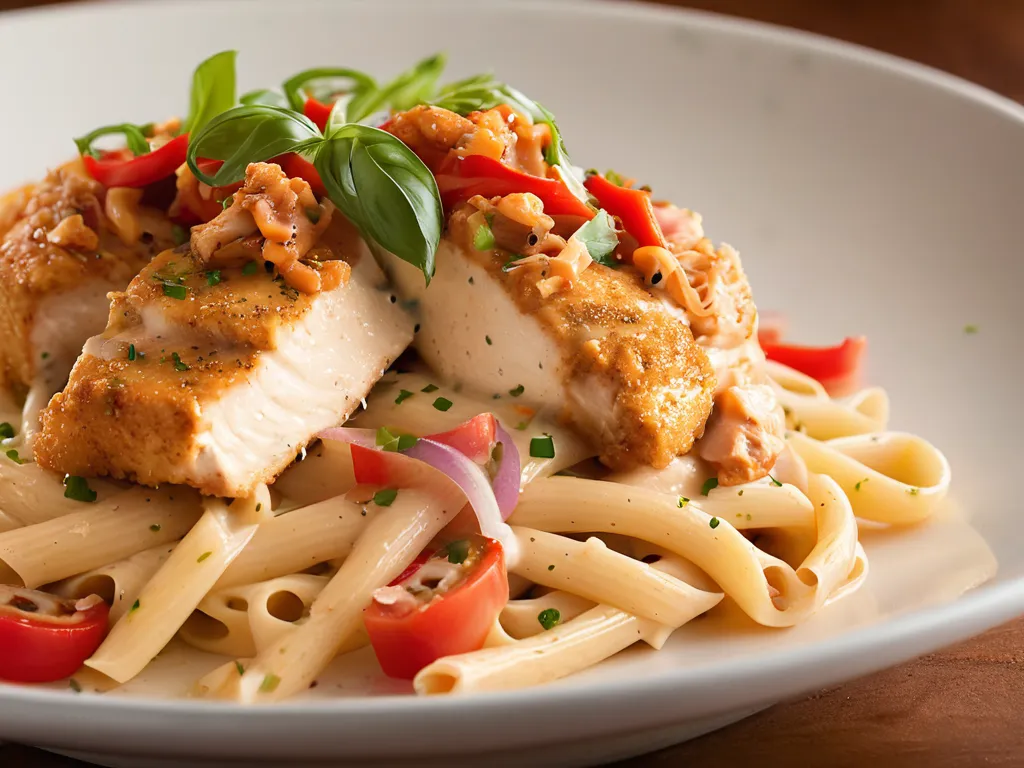
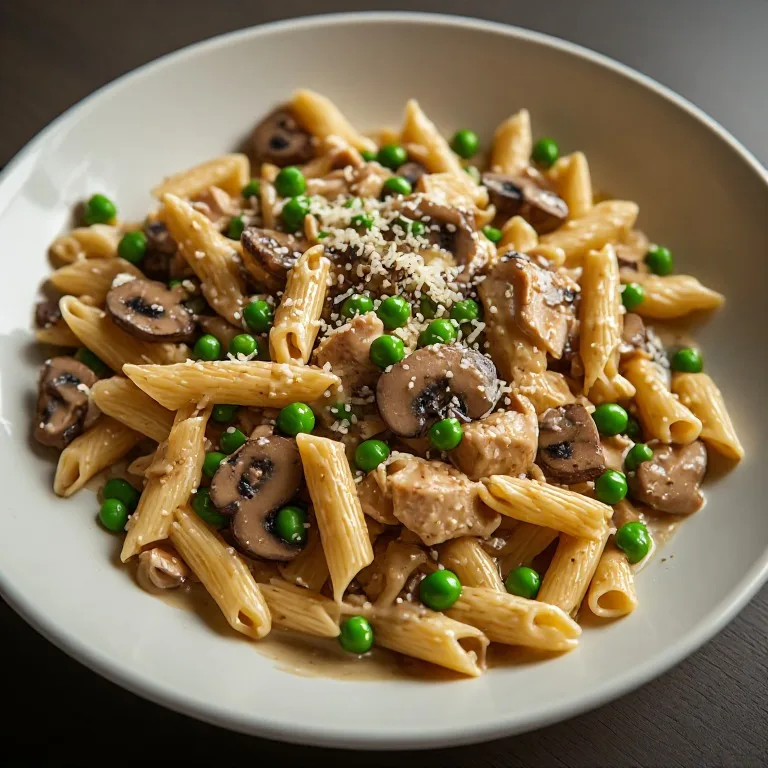
Here is what the Cheesecake Factory Pasta Da Vinci actually is: penne pasta with pan-seared chicken, thinly sliced cremini mushrooms, and slow-caramelized red onions in a Madeira wine cream sauce, finished with Parmesan. The restaurant charges $25.95 for a dinner portion at approximately 1,540 calories.
Two techniques separate the restaurant’s version from most homemade attempts, and neither of them is exotic. The first is actually caramelizing the red onions — 18 to 20 minutes over medium-low heat, not a 5-minute sauté. The second is building a chicken fond before the sauce even starts: searing the chicken first, removing it, and cooking everything else in the browned bits left in the pan. When the Madeira hits that fond, it lifts concentrated flavor into the sauce that no amount of seasoning added afterward can replicate.
Why the Sauce Tastes Different from Standard Cream Pasta
The simplest Alfredo-style sauce is butter, cream, and Parmesan. That produces a perfectly good rich pasta. Pasta Da Vinci tastes different in three specific ways, and understanding those differences tells you what not to shortcut.
Madeira’s caramelized character. Madeira undergoes an oxidative aging process (sometimes with deliberate heat) that produces natural caramelization and a slightly nutty, dried-fruit quality in the finished wine. When it reduces in a hot pan, those compounds concentrate into the sauce. No white wine, no broth, and no vinegar produces that particular sweet-savory depth. This is why Madeira appears by name on the CF menu and in every serious copycat recipe.
Fond from the chicken sear. The browned proteins and sugars stuck to the pan after searing the chicken are called fond. When liquid — in this case Madeira — hits that fond, it dissolves and lifts into the sauce. Those compounds add body, color, and complexity that are simply absent if you start with a clean pan. This is also why restaurants sear in cast iron or stainless rather than nonstick: nonstick doesn’t build fond.
Caramelized onions, not sautéed. Raw red onion tastes sharp and slightly aggressive. Sautéed onion (5 minutes, translucent) is mild. Caramelized onion (18+ minutes, golden-brown, sweet-smelling) has lost most of its water, and its sugars have concentrated and transformed through the Maillard reaction into something genuinely sweet and savory. That sweetness balances the Madeira’s acidity and the cream’s richness. It also helps the sauce feel harmonious rather than wine-forward or cream-forward.
The Step Most Copycat Recipes Get Wrong
The onions.
Search “Cheesecake Factory Pasta Da Vinci copycat” and you’ll find dozens of recipes that instruct you to “sauté the onions until translucent, about 5 minutes.” That’s not caramelization. That’s sautéed onion. It’s a fine ingredient in its own right, but it does not produce the sweet, complex, collapsed onion you get at the restaurant.
Here is what properly caramelized red onion looks like: the slices go from sharp-tasting and crunchy to completely collapsed and silky, turning from bright purple-red to a deep golden-amber. The volume reduces by more than half. At the 10-minute mark they look done; they are not. At the 18-minute mark they are genuinely sweet enough to eat on their own. That sweetness is load-bearing in this sauce.
Medium-low heat is the only speed that works. High heat cooks the outside before the interior sugars develop; the onions brown fast, taste burned at the edges, and remain sharp inside.
Madeira vs. Marsala: Why It Matters
Many copycat recipes call for Marsala interchangeably with Madeira. They are different wines from different countries and different grapes. Madeira is Portuguese (Verdelho, Bual, or Malmsey grapes), aged oxidatively on the island of Madeira, with a caramelized sweetness and nutty finish. Marsala is Sicilian (Catarratto or Grillo grapes), earthier, and less sweet in its dry form. Both are fortified, and both work in a cream sauce. But Madeira is what the restaurant uses, and its sweeter, more rounded character produces a less aggressive sauce.
If Madeira is unavailable: dry Marsala is the best substitute, followed by dry sherry. Sweet Marsala will make the sauce cloying. Cooking Madeira costs $12–20 a bottle; Blandy’s and Broadbent are the most widely distributed brands in the US and both cook well. A bottle lasts; unlike table wine, opened Madeira remains stable for months.
What to Serve With It
The restaurant serves Pasta Da Vinci as a standalone entrée. At home, a simple arugula salad with lemon and olive oil works well alongside — the bitter greens and acidity cut through the cream sauce. The Cheesecake Factory Pasta Carbonara and the Louisiana Chicken Pasta sit in the same category on the CF menu and make good comparison points if you’re cooking for a group with different heat preferences.
The other great Madeira dish at the restaurant is Chicken Madeira — a completely different construction (pan sauce, no cream, topped with asparagus and mozzarella), but the same wine with different technique. If you’re buying Madeira for this recipe, the same bottle works for that one too.
Storage and Reheating
Cream-sauced pasta thickens in the refrigerator as the starch in the penne absorbs the remaining sauce. To reheat: add a splash of cream or milk (2 to 3 tablespoons per serving) and warm over medium-low heat, tossing until the sauce loosens and the pasta is warmed through. Avoid the microwave — it heats unevenly and can tighten the sauce into gluey clumps before the center is warm.
The dish keeps refrigerated for 3 days. It does not freeze well; cream-based pasta sauces separate on thaw.