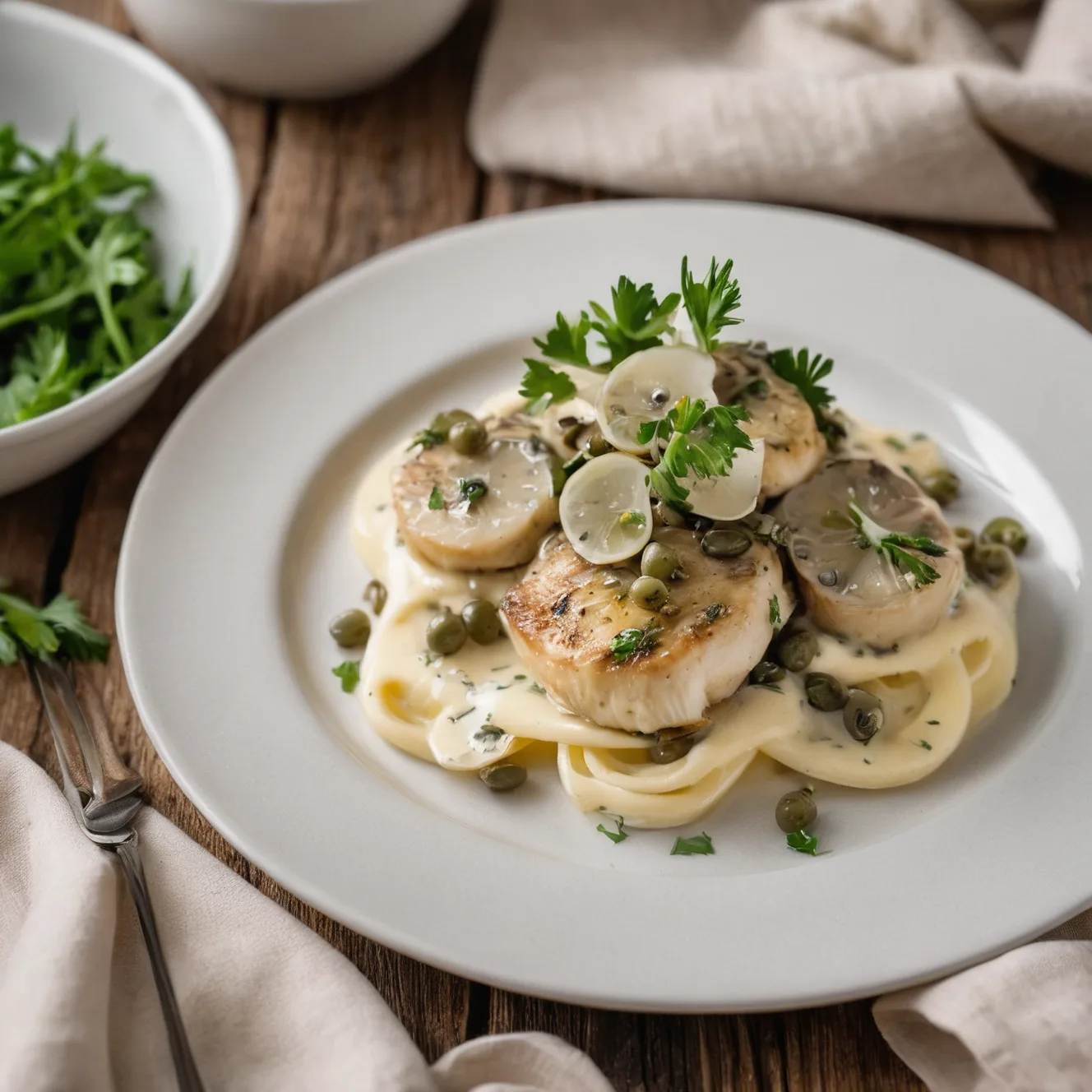
Copycat Cheesecake Factory Chicken Piccata
Prep time: 20 min Cook time: 25 min Servings: 4
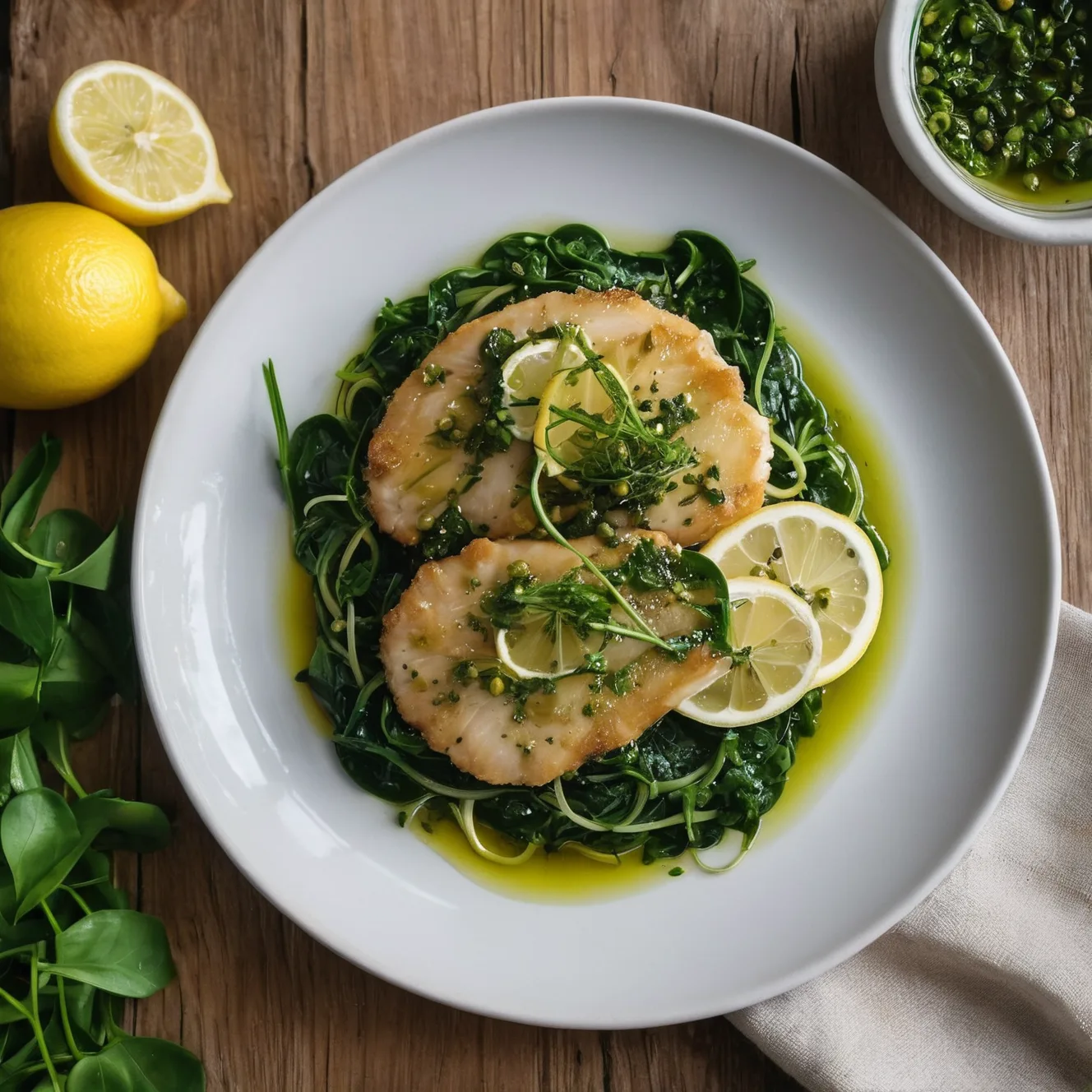
The Cheesecake Factory’s Chicken Piccata appears on the menu under Specialties, described simply as “sautéed chicken breast with lemon sauce, mushrooms, and capers, served with angel hair pasta.” That brief description obscures what actually makes this dish different from every other chicken piccata at an Italian restaurant: two ingredients that traditional Italian piccata never has. Heavy cream in the sauce. Cremini mushrooms. Both are absent from authentic Italian piccata. Both are what make the Cheesecake Factory’s version taste the way it does.
Classic Italian piccata — the kind that’s been on trattoria menus for generations — finishes a thin lemon-caper pan sauce with a mount of cold butter. It is bright, acidic, and relatively light. The Cheesecake Factory version adds cream to that base, which thickens the sauce, rounds the lemon edge, and produces something silkier that clings differently to the pasta. If you have ever made traditional piccata at home and felt the result was somehow less than the restaurant version, this is almost certainly why. The techniques are the same, but the sauce architecture is different.
The restaurant charges about $29 for the dinner portion ($28.95 as of 2026), which runs roughly 1,420–1,470 calories depending on the nutrition tracker. At home, the same dish feeds four for roughly $36 total — about $9 per plate — with the ability to control every element of the sauce, including how much cream and lemon you add.
Cost Comparison: Home vs. Restaurant
| Cheesecake Factory | Homemade (4 servings) | |
|---|---|---|
| Per plate | ~$29 | — |
| Full batch (4 plates) | ~$116 | ~$36 |
| Per serving | ~$29 | ~$9 |
| Calories (dinner) | ~1,420–1,470 | ~650 |
The heavy cream, fresh lemons, and cremini mushrooms are the only items that may not already be in your pantry. The white wine component requires a dry white — Pinot Grigio is the easiest choice and a single glass is enough for this recipe.
What Makes This Version Accurate
Heavy cream is the structural difference. Traditional Italian piccata sauce is emulsified with butter alone — acid, butter, and lemon make a glossy but thin sauce. Adding heavy cream changes the sauce fundamentally: it is thicker, richer, and has a softer lemon note. This is the primary reason Cheesecake Factory’s piccata does not taste like the piccata at your local Italian restaurant, even if both use lemon and capers. If you omit the cream, you make a very good piccata — just not this one.
Cremini mushrooms are in the dish, not optional garnish. The official CF menu description includes mushrooms as a named component alongside lemon sauce and capers. They are sautéed separately, which is the right approach: mushrooms release a significant amount of water as they cook, and adding them raw to the sauce would thin it. Sautéed first until browned, they bring earthiness and texture that balances the bright lemon-cream sauce.
Garlic and shallot should dissolve into the sauce. Todd Wilbur, who investigated the sauce for his Top Secret Recipes series, found that the restaurant’s sauce contained no visible garlic or shallot solids — the aromatics had either been strained out or cooked to the point of complete dissolution. Grating them on a microplane rather than chopping reduces the cells to a liquid paste that dissolves into the butter within about 60 seconds. This is the difference between a smooth restaurant sauce and a homemade one with occasional bites of minced garlic.
Angel hair specifically, not spaghetti. Angel hair (capellini) is 1.0–1.5 mm thick versus 2.0 mm for spaghetti. Its higher surface-area-to-volume ratio means the cream sauce coats every strand rather than pooling at the bottom of the plate. It also cooks in 2 to 3 minutes, which makes the timing of this recipe practical.
The Sauce in Stages
The sauce builds in four distinct steps, and understanding what each does helps you adjust it:
- Shallot + garlic in pan drippings — the fat carries flavor from the browned chicken and mushroom fond. The aromatics soften and dissolve in about 60 seconds.
- White wine deglaze — scrapes up all the browned bits from the bottom of the pan. Those bits are the flavor backbone of the sauce. Do not skip the scraping; that fond is what separates a restaurant sauce from a thin liquid.
- Broth + lemon reduce — intensifies the base and sets the acid level before the cream is added. Taste the reduction before adding cream — it should taste slightly too acidic, because the cream will soften that edge.
- Cream added and simmered — thickens the sauce and melds the lemon, wine, and broth flavors. The cold butter finish at the end adds gloss and the final round note.
Tips & Variations
- Do not overcook the chicken. At ¼-inch thickness, each cutlet takes 3 to 4 minutes per side — go longer and you have dry chicken in a beautiful sauce. Use a thermometer the first time; 165°F is the target.
- Let the mushrooms brown properly. The most common mistake is crowding the pan and stirring too early. Set them in a single layer and leave them alone for 2 to 3 minutes. A brown crust develops; that browning is where the mushroom flavor is. Stirring too soon produces steamed, gray mushrooms.
- Adjust lemon to taste after the cream is in. The cream softens acidity significantly. If the sauce tastes flat, add another squeeze of lemon at the end — about 1 tablespoon at a time — until it tastes balanced and bright without being sharp.
- Add a splash of pasta water to the sauce if it tightens. Starchy pasta water loosens a sauce without thinning the flavor, and it helps the sauce cling to the pasta. Have a cup reserved before you drain.
- Serve with crusty bread. The cream sauce is excellent for soaking up with good bread — this is not a light-sauce dish where bread is incidental.
Make-Ahead Notes
The mushrooms can be sautéed 1 to 2 days ahead and refrigerated. The sauce can be made a day ahead and refrigerated separately; reheat over low heat, whisking gently, and add a splash of broth if it has thickened in storage. The chicken is best cooked fresh — reheated piccata cutlets often turn rubbery, and they cook in only 8 minutes total.
Storage & Reheating
Store leftovers in an airtight container in the refrigerator for up to 2 days. Reheat gently in a skillet over low heat with a splash of chicken broth or water; the cream sauce can separate if reheated at too high a temperature. Stir frequently and pull off the heat while still slightly saucy — residual heat will continue to warm the dish. The pasta will tighten significantly in storage; toss it with a little olive oil before refrigerating to help prevent it from clumping into a solid mass.
More Cheesecake Factory Copycat Recipes
- Copycat Cheesecake Factory Chicken Madeira — pan-seared chicken in a Madeira wine and mushroom sauce, topped with asparagus and melted mozzarella — the other wine-and-mushroom CF chicken dish
- Cheesecake Factory Louisiana Chicken Pasta — creamy Cajun-spiced pasta with sautéed chicken, the other pasta-entree workhorse on the CF menu
- Copycat Olive Garden Chicken Marsala — the closest Italian-American analog to this dish: wine, mushrooms, cream, and pan-seared chicken at a competing casual-dining chain
- Copycat Carrabba’s Chicken Bryan — Italian grill chicken in a lemon butter sauce with goat cheese and sun-dried tomatoes; shares the lemon-butter sauce DNA