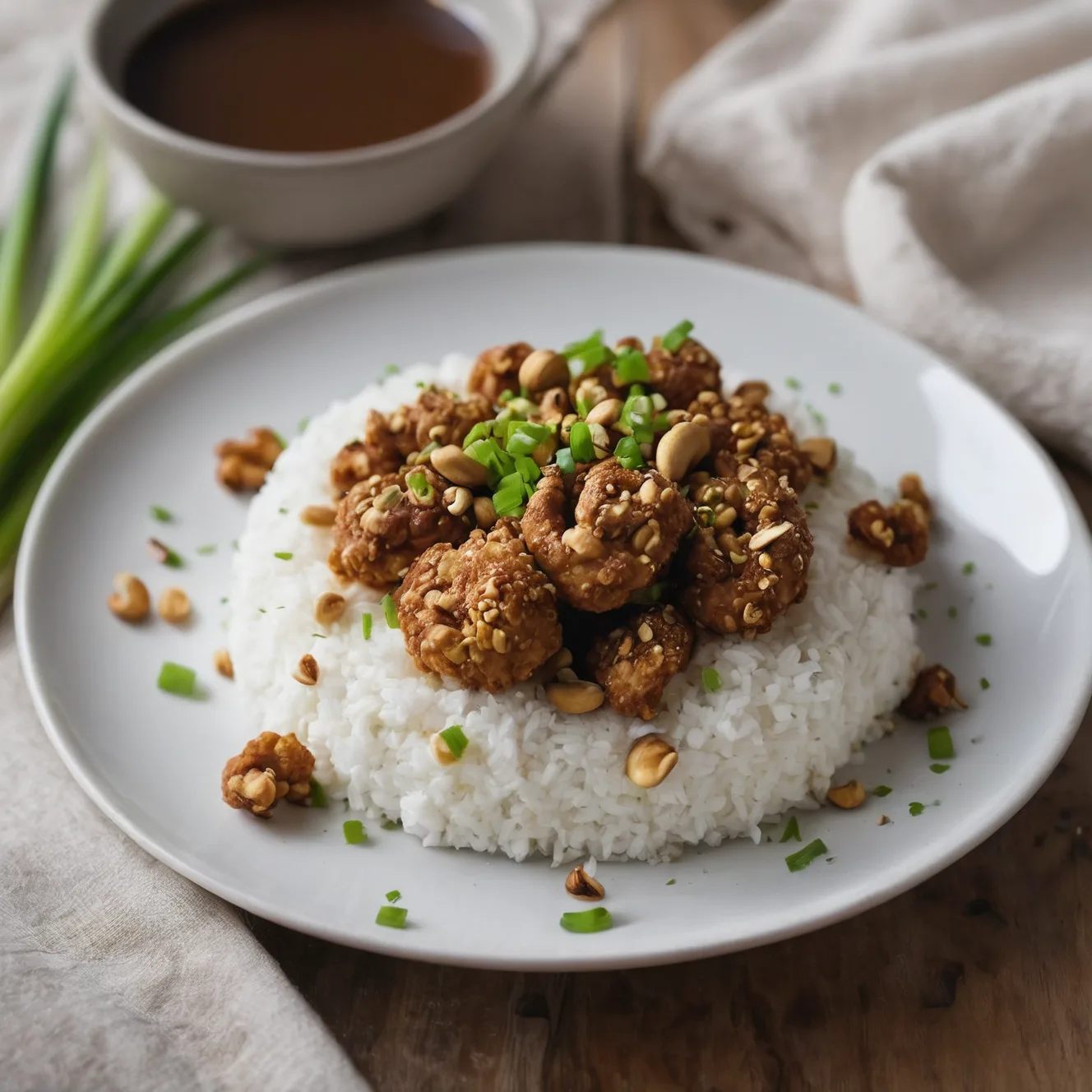
Copycat Cheesecake Factory Spicy Cashew Chicken
Prep time: 30 min (includes 20 min velvet rest) Cook time: 20 min Servings: 4
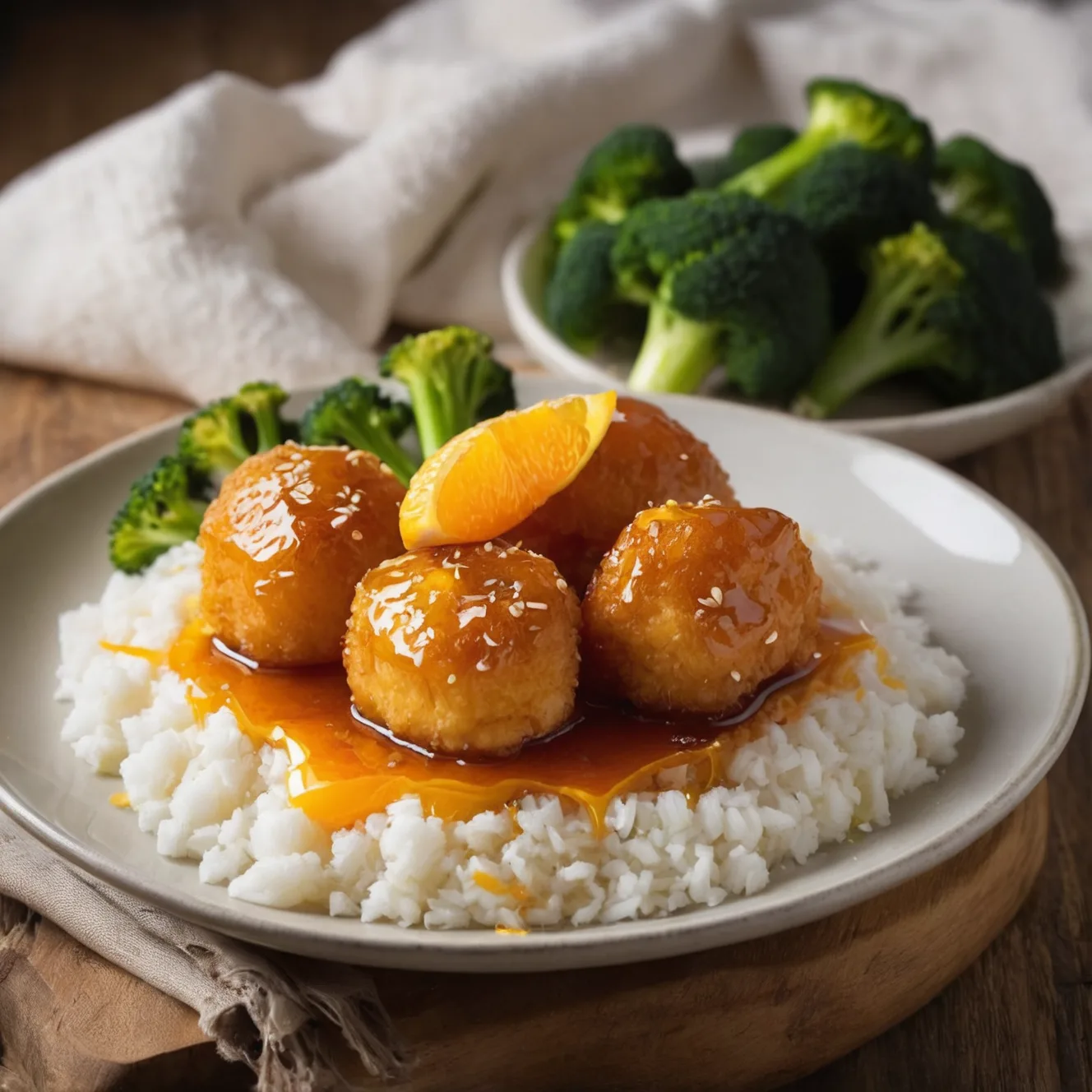
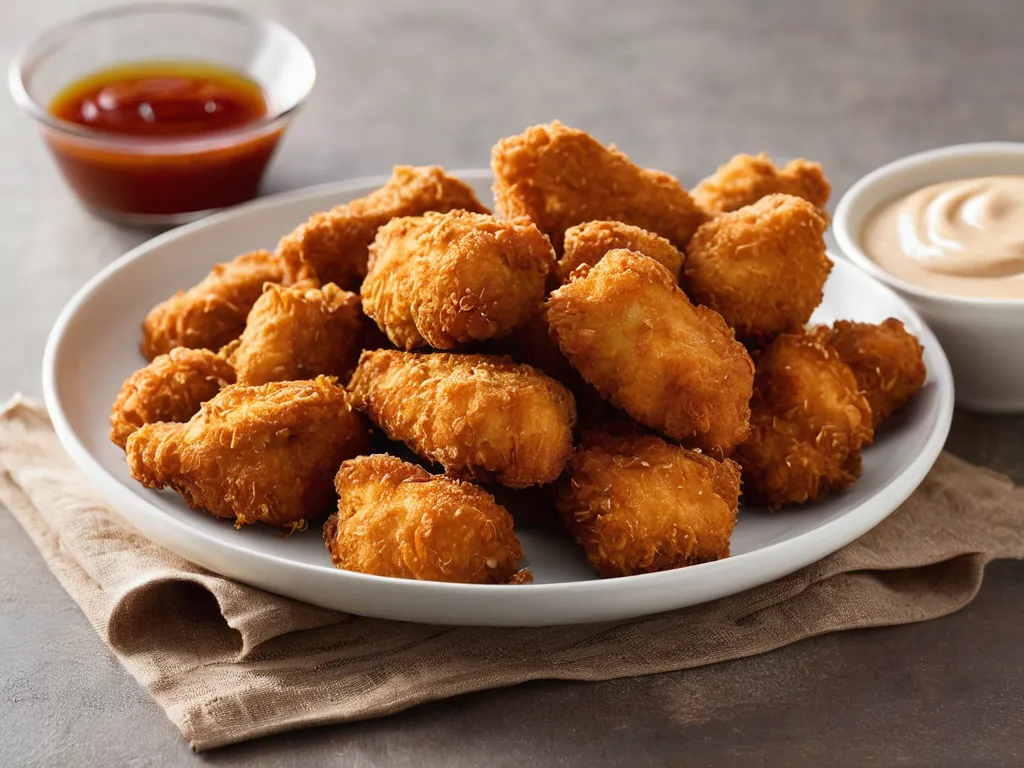
Cheesecake Factory’s Spicy Cashew Chicken is not what most copycat recipes say it is. The internet version is almost universally a stir-fry — sliced chicken, vegetables, sauce. The actual restaurant dish is something closer to a Chinese-American classic like General Tso’s: crispy batter-fried chicken chunks tossed in a sweet-spicy glaze, with whole roasted cashews and green onions. No bell peppers, no water chestnuts, no snow peas. Just crunchy chicken, crunchy cashews, and an addictive soy-sherry sauce that works because of its specific flavor components.
The menu price sits in the low $20s per plate, and the dish clocks in at about 1,820 calories — a number that makes sense once you understand that a full serving is a lot of fried chicken in a sweet sauce. At home, the same dish feeds four for less than the restaurant charges for two plates, and you have control over the oil temperature, the sauce heat level, and the portion size.
There are two technique details that most copycat versions miss. The first is the batter: a combination of rice flour and all-purpose flour mixed with ice water, not plain cornstarch. The difference is texture — rice flour produces a lighter, more tempura-like crust that clings cleanly to the chicken without becoming gummy when it hits the sauce. The second is the sauce. A good version balances hoisin, soy, sriracha, and a little vinegar against a splash of wine for aromatic depth. We use dry sherry for that wine component because it is the easiest supermarket substitute for Shaoxing rice wine; it gives the sauce a rounder, more restaurant-like sweetness than vinegar and sugar alone. Skip the wine entirely and the sauce reads flatter, even to people who cannot name why.
Cost Comparison: Home vs. Restaurant
| Cheesecake Factory | Homemade (4 servings) | |
|---|---|---|
| Per plate | ~$22–24 | — |
| Full batch (4 plates) | $88–96 | ~$28–32 |
| Per serving | ~$22–24 | ~$7–8 |
| Savings per serving | — | ~$15 |
The dry sherry is the most pantry-unfamiliar ingredient but is inexpensive and available at any grocery store in the wine aisle. The rest — rice flour, soy sauce, hoisin, sriracha — are standard staples.
What Makes This Dish Work
The batter combination is the crust. Rice flour is lower in starch and higher in amylose than cornstarch, which means it absorbs less moisture during frying and stays crispy for longer. Mixing it with all-purpose flour gives the batter enough protein structure to adhere firmly to the chicken without cracking. Ice water is the third element: cold liquid slows gluten development in the flour, keeping the batter light and airy rather than chewy. The practical instruction is to keep the batter bowl over ice or in the refrigerator until the moment you dip the chicken.
The wine component gives the sauce its roundness. A splash of wine is what separates a restaurant-quality glaze from a generic bottled sweet-spicy sauce. We use dry sherry because it is the easiest supermarket substitute for Shaoxing rice wine — drier and less syrupy than mirin, more accessible than hunting down an Asian-market bottle. Combined with hoisin (fermented-bean-paste sweetness) and soy sauce (salt and umami), it gives the glaze depth; sriracha and a little vinegar keep the sweet elements from turning cloying. If you keep Shaoxing wine on hand, use it — it is the more traditional choice.
Fry temperature and batch size determine the crunch. At 350°F, the batter sets within seconds and forms a sealed shell around the chicken. Below 325°F, the batter absorbs oil before it can set, producing a greasy crust. Above 375°F, the exterior browns before the chicken cooks through. Overcrowding the pan drops the oil temperature rapidly — one batch in uncrowded oil beats two batches in a crowded one every time.
Cashews go in last and the dish goes to the table immediately. The sauce contains moisture; the cashews contain fat. Once they meet, a slow transfer of moisture into the nuts begins. Adding the cashews as the last step and serving within 5 minutes preserves the crunch that makes the dish work. There is no technique trick for extending this — the restaurant serves it fast because it has to be fast.
Sauce Heat Level
The recipe as written is moderately spicy — identifiable heat but not uncomfortable.
- Mild: 1/2 tablespoon sriracha, no red chili flakes. The hoisin sweetness dominates.
- Medium (recipe): 1 tablespoon sriracha, 1/2 teaspoon chili flakes. Closest to the restaurant version.
- Hot: 2 tablespoons sriracha, 1 teaspoon chili flakes, plus 1/4 teaspoon cayenne in the sauce.
Tips & Variations
- Skip the velvet for speed. The velveting step makes the chicken interior noticeably more tender, but if you are short on time, it is the one step that can be omitted without fundamentally changing the dish. Cut the chicken slightly smaller (1-inch chunks) to compensate and reduce fry time by 30 seconds.
- Use chicken thighs. Boneless skinless thighs stay more forgiving during frying — higher fat content means they are harder to overcook. Cut to the same chunk size and cook for the same time.
- Add a drizzle of chili oil to finish. After plating, a light drizzle of Sichuan chili oil adds more complex, aromatic heat that layers well with the sriracha base in the sauce.
- Make the sauce ahead. The sauce keeps in the refrigerator for up to 5 days. Reheat gently before using and thin with a splash of water if it has thickened in storage.
Storage & Reheating
This dish is best eaten immediately. The crust softens as it sits, and there is no technique that fully restores the original crunch on leftovers.
That said, leftovers are still good. Store in an airtight container in the refrigerator for up to 2 days. To reheat, arrange the chicken pieces in a single layer on a wire rack over a sheet pan and bake at 400°F for 8 to 10 minutes — the dry oven heat re-crisps the exterior more effectively than a skillet or microwave. Add fresh cashews when serving since the stored ones will have softened. Avoid the microwave, which steams the crust into mush.
More Cheesecake Factory Copycat Recipes
- Copycat Cheesecake Factory Chicken Madeira — pan-seared chicken in a glossy Madeira wine and mushroom sauce, topped with asparagus and melted mozzarella
- Copycat Cheesecake Factory Louisiana Chicken Pasta — a creamy Cajun-spiced pasta that is one of the other most-ordered dishes on their menu
- Copycat Cheesecake Factory Avocado Egg Rolls — the crispy starter with the tamarind-cashew dipping sauce
- Copycat Cheesecake Factory Bang Bang Chicken — another fried chicken dish with a creamy sweet-spicy bang bang sauce