

Copycat Cheesecake Factory Spicy Chicken Chipotle Pasta
Prep time: 15 min
Cook time: 30 min
Servings: 4
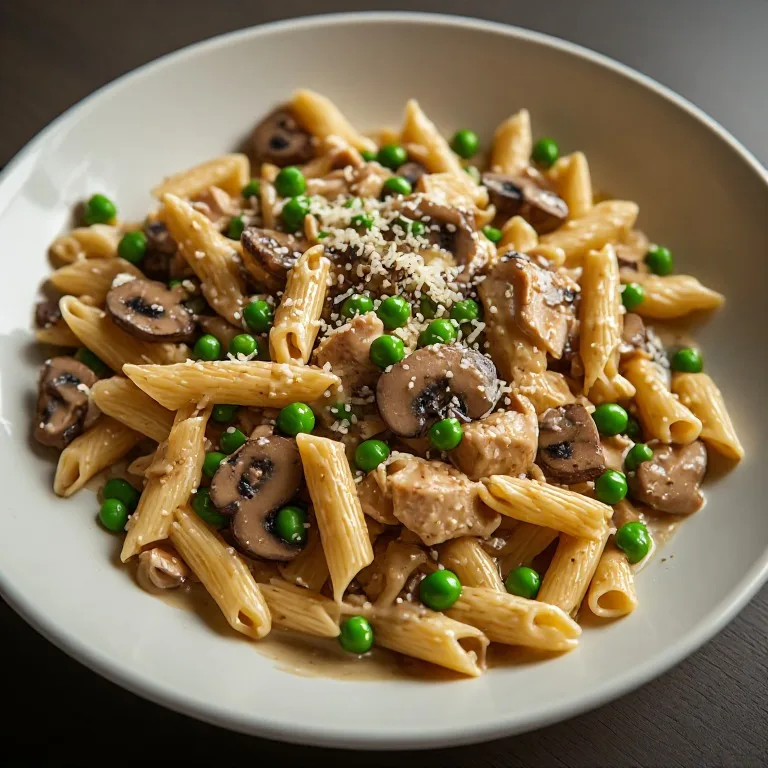
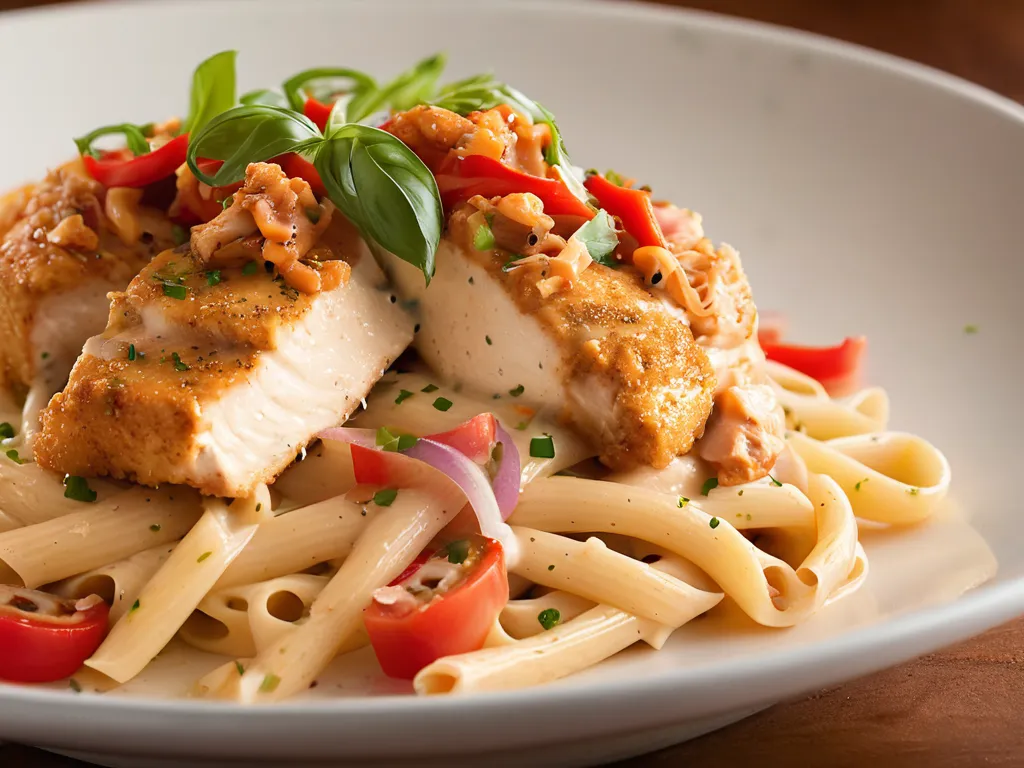
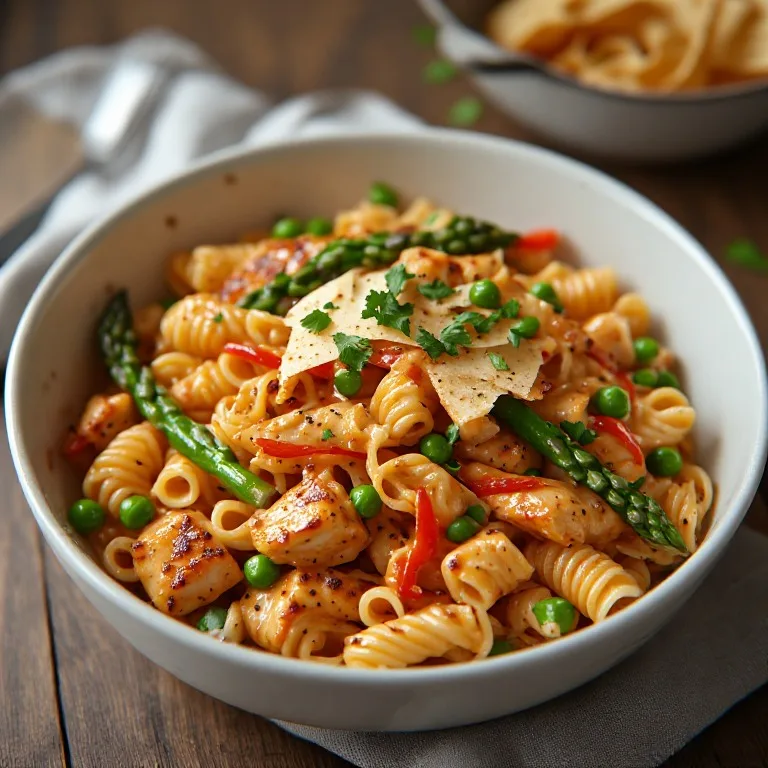
Here is what this dish actually is: penne pasta tossed with honey-glazed seared chicken, asparagus, red bell pepper, and peas in a chipotle-spiked Parmesan cream sauce. The restaurant charges $23.95 for a portion the menu lists at 1,740 calories. This recipe makes four sensible servings at about $8 each — same flavor, roughly half the calories per plate, and nothing you can’t find at any grocery store.
The two things most copycat recipes miss: the honey goes on the chicken before searing (it caramelizes on the surface and carries through into the sauce), and you need both the minced chipotle peppers and the adobo sauce from the can. The sauce is the adobo sauce — the peppers alone produce heat; the sauce produces the smoky, slightly tangy depth that makes the dish taste like a restaurant dish.
Why the Honey Step Matters
Most copycat versions skip it or add honey to the sauce at the end. That’s a different dish. Here the honey goes on raw chicken pieces, which are then seared in a very hot pan. The honey caramelizes on the surface — same process as the brown crust on crème brûlée — creating a slightly sweet, sticky exterior with complex flavor compounds that plain pan-seared chicken doesn’t have. The residue left in the pan after the chicken transfers becomes part of the sauce’s foundation. Add honey to finished cream sauce and you get sweet cream sauce. Caramelize honey on chicken first and you get a sauce with depth.
The Chipotle Sauce Technique
Add the minced chipotle peppers and adobo sauce directly to the sautéed vegetables and stir them in the hot pan for a full 60 seconds before the cream goes in. This step — brief but important — blooms the fat-soluble flavor compounds in the chipotle, deepens the smokiness, and allows the paste to distribute evenly throughout the sauce base. Cream poured over raw chipotle produces blotchy sauce with pools of heat rather than an evenly spicy-smoky sauce. One minute of cooking in the fat from the vegetables transforms the chipotles from chunky pieces to a fully integrated sauce component.
Timing the Vegetables
Asparagus and peas go in after the heat is off. This is the only way to keep them bright green and crisp-tender without overcooking. The residual heat from the cream sauce (still around 200°F when you add the vegetables) is enough to cook asparagus to crisp-tender in about 90 seconds and to warm the peas through. If you add the asparagus while the sauce is actively simmering, it will be gray and mushy by the time the pasta is tossed. Off-heat finishing is the technique professional kitchens use to maintain the color of bright vegetables in cream sauces.
Parmesan Off-Heat
When cream is at a rolling simmer and you add Parmesan directly, the rapid heat surge can break the fat from the proteins in the cheese, producing a greasy sauce with sandy Parmesan particles rather than a smooth, emulsified cream sauce. Pull the pan off the heat first, let the vigorous bubbling stop for 15 seconds, then stir in the Parmesan in two additions. The cream is still hot enough to melt the cheese completely — it just needs to be stable rather than boiling.
How to Adjust Heat
The recipe is mildly to moderately spicy — the same level as the restaurant version. For a milder dish: use 2 chipotle peppers and no extra adobo sauce. For the recipe as written (moderate): 3 to 4 peppers plus 1 teaspoon adobo sauce. For genuinely spicy: 5 peppers plus 2 teaspoons adobo sauce and a pinch of cayenne. If you overshoot the heat, stir in 2 extra tablespoons of heavy cream — dairy fat binds capsaicin and reduces perceived heat noticeably.