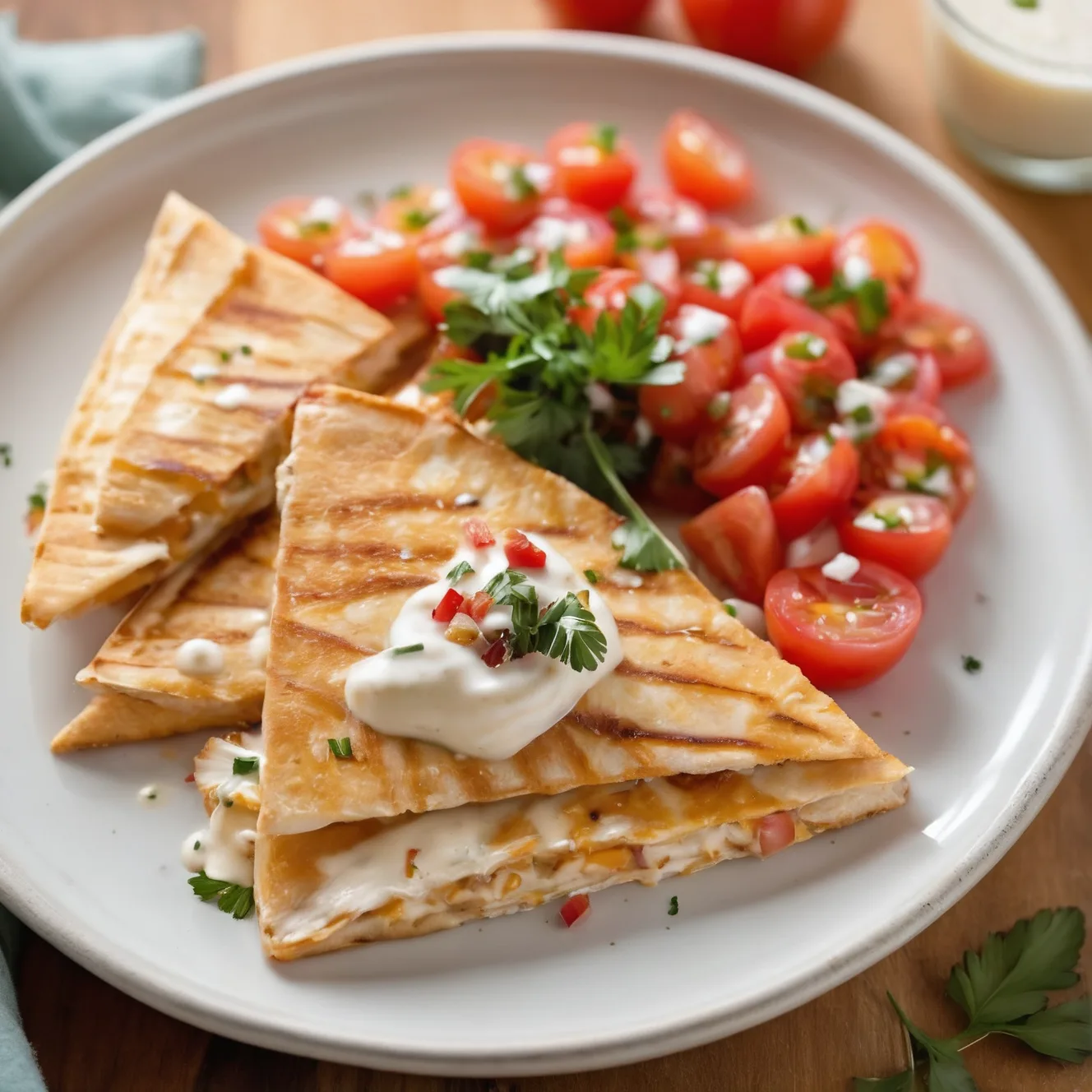
Chili’s Chicken Bacon Ranch Quesadillas appear on roughly every casual-dining-adjacent copycat list, and roughly every recipe gets the same thing wrong: they treat ranch as a dipping sauce and ignore it as a filling ingredient. The result tastes like a fine chicken-and-cheese quesadilla — but not like Chili’s specifically.
The difference is small. Chili’s mixes ranch dressing into the chicken-and-bacon mixture before the quesadilla is assembled. Two tablespoons per quesadilla, folded in. This means the ranch flavor is distributed through every bite, not concentrated at the edge where you dip. It is not a complex technique — it is easy to miss because most copycat recipes do not call attention to it.
There are two other things the recipe depends on getting right: the chile spice blend on the chicken, and the bacon texture. Both matter more than the tortilla brand or the cheese sourcing.
What “Chile Spices” Actually Means
Chili’s lists “chile spices” in the official ingredient description for this dish — a vague label for a specific thing. Based on cross-referencing the restaurant’s other dishes and the flavor of the finished quesadilla, it means a dry Tex-Mex spice blend applied to the chicken before cooking: chili powder, cumin, smoked paprika, garlic powder, onion powder, cayenne, and salt.
The smoked paprika specifically matters. Regular paprika adds color and a faint peppery note. Smoked paprika adds depth — a subtle campfire undertone that explains why restaurant chicken often tastes “richer” than the same protein cooked at home with just chili powder and cumin. It is one ingredient and it changes the flavor profile noticeably.
The seasoning goes on the chicken before it hits the pan, not after. Rubbing it onto the surface and then searing in a hot oiled pan creates a light crust and caramelizes the spices. Adding spices after cooking produces dull, dusty flavor instead of developed, integrated flavor.
The Cheese Formula
Equal parts Monterey Jack and sharp cheddar — 1/4 cup of each per quesadilla.
Monterey Jack is the functional cheese: it melts smooth and fast, covers the filling evenly, and produces the classic quesadilla “pull” without getting greasy or breaking. Used alone, it is mild to the point of blandness.
Sharp cheddar is the flavor cheese: it adds tang and bite, holds up with the ranch and bacon, and gives the quesadilla a recognizable “restaurant-style” cheese flavor. Used alone in a quesadilla, it melts slower and can pool unevenly.
The combination gives you the best of both — smooth melt from the Jack, assertive flavor from the cheddar. A standard pre-shredded “Mexican blend” typically substitutes low-moisture mozzarella for the Jack, which melts differently and tastes milder. It works in a pinch but does not replicate the specific texture and flavor of the restaurant version.
Bacon: The Texture Requirement
This is the most overlooked detail in every copycat recipe. The bacon must be cooked past chewy — fully crispy, drain-on-paper-towels, stiff-when-you-pick-it-up crispy — before it goes into the quesadilla.
Here is why: the quesadilla takes 3–4 minutes per side in a covered pan. During that time, trapped steam softens everything inside. Bacon that went in chewy comes out wet. Bacon that went in crispy loses some crunch but retains enough to give each bite texture. The difference is not subtle.
Crumbling the crispy bacon into small pieces (~1/4 inch) distributes it more evenly and prevents the long-strip problem where you pull a wedge and the entire bacon portion slides out. Smaller crumbles are also easier to eat in the finished quesadilla.
Assembly Order
The order in which you layer the filling matters for how the quesadilla holds together after cutting.
The right order: cheese layer first (directly on the tortilla), then chicken-bacon, then ranch, then fold. The cheese going down first contacts the hot pan and melts fastest, which essentially welds the filling to the tortilla. If the chicken goes down first, the filling can slide when you flip. This is the same reason pizza dough gets sauce before cheese — the cheese acts as a binder.
Two tablespoons of ranch is the right amount per quesadilla. More makes the filling wet and the tortilla soggy. Less fails to deliver the characteristic ranch flavor through the inside. Drizzle it evenly across the filling rather than pooling it in one area.
Replicating the Restaurant Texture
Chili’s cooks quesadillas on a commercial flat-top griddle — a broad, even, 375–400°F surface that applies consistent heat across the entire tortilla simultaneously. Home skillets concentrate heat in the center and have cooler edges.
Two adjustments compensate: first, use a large skillet (12-inch) so the whole folded quesadilla fits without the edges hanging over cooler spots. Second, cover the pan for the first 90 seconds. A lid traps steam, heats the interior evenly, and melts the cheese to the center before the bottom surface over-browns. Remove the lid for the rest of the cook time to let steam escape and the exterior crisp up.
Medium heat, not high. High heat crisps the tortilla in 60 seconds before the cheese has time to melt. Medium heat gives you 3–4 minutes of cook time per side — enough for a golden exterior and fully melted, cohesive interior.
Making a Full Chili’s Meal
The quesadillas pair with Chili’s Skillet Queso as a two-bite appetizer dip before the main, or with Chili’s Texas Cheese Fries if you want the full Chili’s spread. The Southwestern Eggrolls are the other appetizer in the same category — both fried (or griddled), both Tex-Mex-flavored chicken with dipping sauce. For a lighter Chili’s chicken preparation with the same chile-spice profile, see the Chicken Fajitas.
| Chili’s (restaurant) | Homemade | |
|---|---|---|
| Price | ~$13–15 per order | ~$7 for 4 quesadillas |
| Calories | ~1,680 total order | ~540 per quesadilla |
| Sodium | ~1,600mg+ | ~1,090mg per quesadilla |
| Cook time | Made to order | 30 min |
| Cheese | Monterey Jack + cheddar blend | Same |
| Ranch | Inside filling + dipping cup | Same |