


What the Foil Packet Actually Does
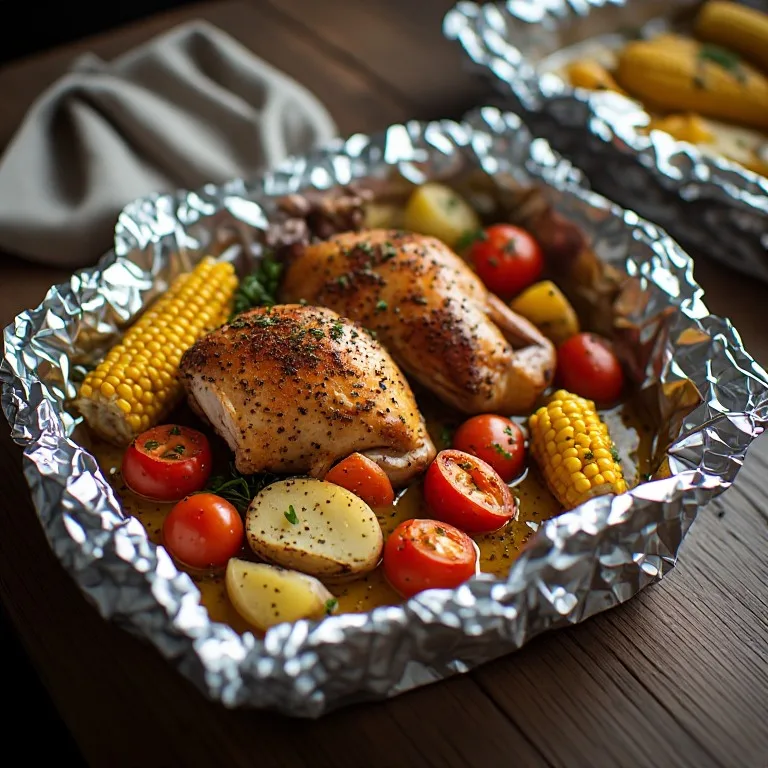
The “campfire” in Cracker Barrel’s Campfire Chicken refers to two things: the smoked-paprika-forward seasoning that approximates the flavor of food cooked over a fire, and the foil-packet method borrowed from actual campfire cooking. At home in an oven, the packet does real work: sealed tightly, it builds pressure from the steam inside and slow-braises the chicken from all sides simultaneously. The chicken stays moist in a way that open-pan roasting at the same temperature wouldn’t achieve.
The vegetables and liquid are not incidental. The carrots and potatoes release starch into the broth as they cook; the tomatoes break down and add acidity; the onion sweetens. The 2 tablespoons of chicken broth per packet start the liquid, and the butter and chicken fat melt into it over the 45 minutes. By the time the packets come out of the oven, the liquid at the bottom has transformed into something worth spooning over everything.
The Campfire Seasoning
Cracker Barrel hasn’t published the formula, but the dish has been reverse-engineered closely enough that the key ingredients are clear: smoked paprika carries the dominant flavor, followed by garlic and onion powder, dried parsley and thyme for herb backbone, and standard salt and pepper. The ratio in this recipe weights the smoked paprika most heavily — it’s the one ingredient doing the work of mimicking actual wood smoke.
Use smoked paprika specifically. Sweet paprika has none of the same flavor and the dish will taste like generic seasoned chicken. Hungarian or Spanish smoked paprika both work. The thyme can be swapped for rosemary if that’s what you have; the flavor is slightly more resinous but still works well against the buttery broth.
Sear or Skip?
The recipe includes an optional sear before the foil packet, and it’s genuinely optional. Cracker Barrel almost certainly doesn’t sear every piece of chicken before wrapping — the dish is designed for volume. But at home, 4 minutes skin-side down in a very hot skillet produces a deeper color and a thin layer of rendered, crisped skin that holds up inside the foil better than unseared chicken skin. Unseared skin comes out pale and soft, which some people find off-putting.
If you’re cooking for a crowd or making this on a weeknight and want to minimize steps, skip the sear. The flavor inside the foil is the same; only the skin texture changes.
Grill vs. Oven
The foil packets work in both. Oven at 400°F is the simpler and more controllable method — 45–55 minutes, check once, done. The grill version (medium indirect heat, lid down, 30–35 minutes) produces a slightly more interesting result because the smoke from the charcoal or gas burners interacts with the foil, and any liquid that seeps through the seam picks up a char note that makes the broth slightly smokier.
If you’re already firing up a grill for something else, throw the foil packets on at the end of indirect cooking — they require no attention and finish alongside whatever else you’re making.
The Summer-to-Fall Copycat Gap
Cracker Barrel runs Campfire Chicken as a summer limited-time item and pulls it from the menu around early fall. The search volume for the copycat recipe peaks in October and November, which tracks: people who ate it in July and August want to make it at home once it’s gone. This is one of those dishes where the home version is not a compromise — the foil-packet method is something a home oven handles just as well as a commercial one, and the seasoning is straightforward pantry spices. The restaurant’s advantage is the atmosphere and the biscuits from their oven. The recipe has no advantage over you.