


Pin It

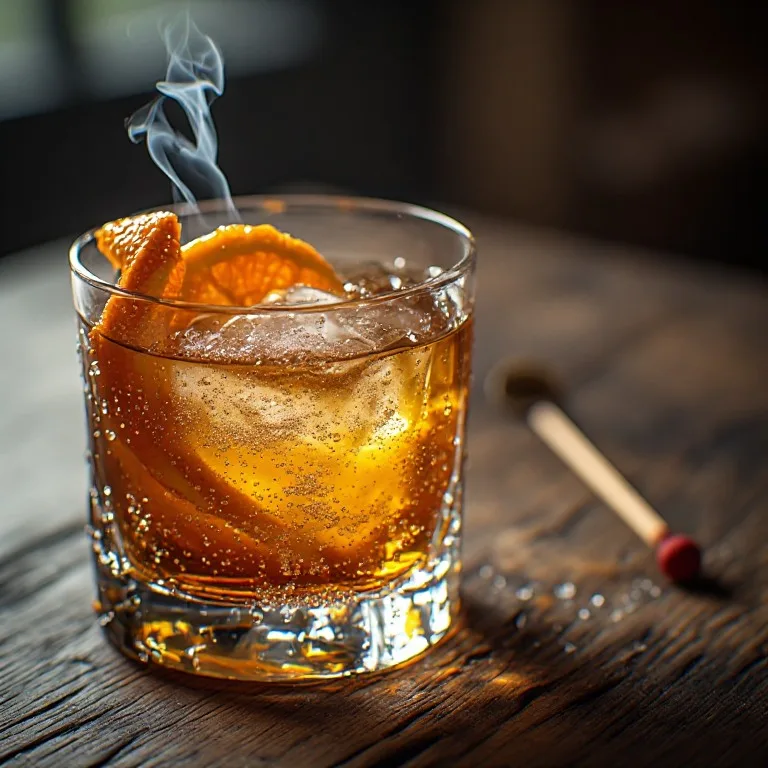
Death & Co Oaxacan Old Fashioned

Death & Co Oaxacan Old Fashioned
Jump to Recipe
Prep 5 min Cook 0 min Serves 1 cocktail
Quick answer: Combine 1½ oz reposado tequila, ½ oz mezcal, 1 teaspoon agave nectar, and 2 dashes Angostura bitters in a mixing glass or pint glass. (For the version the bar is reputed to pour, add 1 dash Bittermens Xocolatl Mole Bitters.) Fill two-thirds with ice and stir for 25 to 30 seconds until very cold. Strain into a rocks glass over one large 2-inch ice cube. To flame the garnish: cut a 1-by-2-inch strip of orange peel from a fresh orange. Hold the peel skin-side toward the glass, about 4 inches above the drink, with a lighter flame between them. Heat the skin side of the peel for 2 to 3 seconds. Pinch the peel sharply — the citrus oils spray through the flame and land on the drink's surface with a brief flare. Run the expressed peel around the rim of the glass, then drop it in. The Oaxacan Old Fashioned at Death & Co costs approximately $36; each glass at home with quality spirits costs $4–6.

Shop the tools

Gear matched to this recipe. These are Amazon affiliate links — we may earn a small commission if you buy, at no extra cost to you.

As an Amazon Associate, Copycat Spices earns from qualifying purchases. Product images are generic illustrations, not the exact item listed.

Death & Co Oaxacan Old Fashioned

Death & Co's Oaxacan Old Fashioned (also spelled Oaxaca Old Fashioned) — 1½ oz reposado tequila, ½ oz mezcal, agave nectar, and 2 dashes Angostura bitters — is the drink that launched the US mezcal renaissance. Created by Phil Ward at the East Village bar in 2007, it's $36 there now; here's the exact recipe and the one technique (the flamed orange peel) that makes it taste like the real thing.

Easy Prep: 5 min Cook: 0 min Total: 5 min1 cocktail servings ~$2.45/serving
Prep5 min
Cook0 min
Total5 min
Servings
1
At home~$2.45/serving
vs
Restaurant~$11.02/serving
You save ~78%

The Story Behind the Recipe

Death & Co opened at 433 East 6th Street in the East Village in January 2007. Phil Ward created the Oaxacan Old Fashioned in the bar's early months to answer a problem: mezcal was nearly impossible to use in cocktails. Del Maguey had been importing Oaxacan mezcal since 1995, but the smoke overwhelmed everything it touched. Ward's solution was not to tame the spirit but to use it as a modifier. He set 1½ oz of reposado tequila as the base, added ½ oz of mezcal for smoke and complexity — a 3:1 ratio — then bound the two agave spirits together with agave nectar and a couple dashes of bitters. Finished with a flamed orange peel, the drink became the most-requested item at Death & Co and a blueprint the entire cocktail industry copied.

The Oaxacan Old Fashioned is now widely cited as the recipe most responsible for the US mezcal boom. US mezcal sales grew many times over in the decade after the Death & Co cookbook codified the recipe in 2014. The bar has expanded to Denver, Washington DC, and Seattle; the East Village original currently charges approximately $36 for the drink. Making it at home with quality spirits costs $4–6 per glass.

Nutrition Facts

Per serving (1 cocktail servings)
Calories160
Total Fat0g
Total Carbs5g
Dietary Fiber0g
Sugars5g
Protein0g
Sodium0mg

* Estimated values based on standard recipe preparation. Actual values may vary.

Ingredients

Instructions

💡
Pro tip: This recipe tastes even better the next day. The flavors need time to meld together in the fridge.
❄️
Storage: Keeps in an airtight container in the fridge for up to 2 weeks. Freezer-friendly for up to 3 months.
🦃 Free Thanksgiving cookbook — download now The Copycat Thanksgiving Cookbook A ready-made, photo-illustrated PDF of our best thanksgiving copycat recipes — free to download, no building required. Pay what you want to support if you love it.

Free PDF — instant download. We'll also send new seasonal copycat recipes now and then; unsubscribe anytime. Or just download it →

Death & Co opened in the East Village in January 2007. Phil Ward was behind the bar, and the Oaxacan Old Fashioned — also spelled the Oaxaca Old Fashioned, the name under which Ward first logged it — was his answer to a problem the cocktail world did not yet know how to solve: how do you use mezcal in a drink without the smoke taking over everything?

Mezcal was barely available in the US in 2007. Del Maguey had been importing artisanal Oaxacan expressions since 1995, but the spirit had no template in cocktail culture. It was too intensely smoky to use the way bartenders used whiskey or rum. Ward’s solution was to stop treating it as a base spirit and use it as a modifier instead: 1½ oz of reposado tequila does the heavy lifting; ½ oz of mezcal — a quarter of the total pour — provides smoke, earthiness, and complexity at a level that registers clearly but doesn’t dominate. Agave nectar links both spirits (they’re both agave-derived), and a couple dashes of bitters tie it together — 2 dashes of Angostura in the printed cookbook recipe, or the chocolate-cinnamon-chili Bittermens mole bitters the bar is reputed to pour, which nod to Oaxacan culinary tradition. A flamed orange peel finishes it with a caramelized citrus aroma that arrives before the first sip.

The drink costs approximately $36 at Death & Co’s East Village bar now. At home with quality spirits, each glass costs $4–6.

The Technique That Makes or Breaks It

The Oaxacan Old Fashioned is easy to stir together. The gap between an acceptable version and a bar-quality one is almost entirely in the orange garnish.

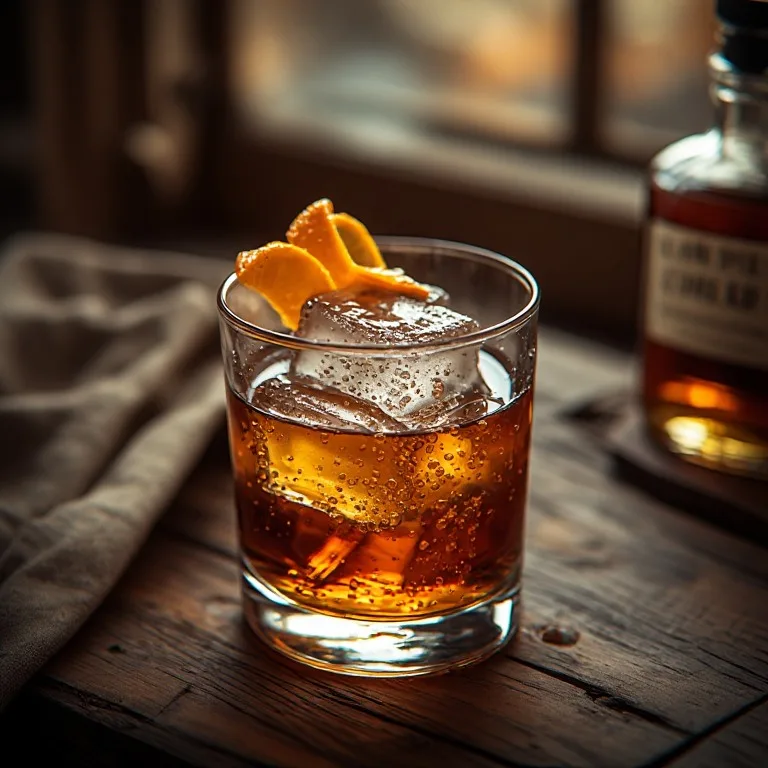
Hold a wide strip of orange peel skin-side toward the glass, with a lighter flame between the peel and the drink. Heat the skin for two to three seconds — this warms the essential oil pockets just under the surface. Then pinch the peel sharply. The pressure forces the oils through the heated skin; they briefly pass through the flame, caramelizing slightly, and land as a fine aromatic mist on the drink’s surface. You’ll see a small flare if the geometry is right.

Run the expressed peel around the rim of the glass. Drop it in. The caramelized orange oil is what you smell before the first sip, and it is the specific detail that makes the drink feel like something you ordered somewhere serious.

Skip the flaming and the cocktail still tastes of tequila, mezcal, and bitters — good, but flat. The technique is quick to learn and takes about thirty seconds.

Which Spirits to Buy

Tequila (1½ oz): Any 100% blue agave reposado. El Tesoro is the original spec. Olmeca Altos Reposado and Espolón Reposado are reliable at lower price points. Fortaleza Reposado is excellent if you’re spending more. Avoid silver/blanco tequila (too clean, reads as thin alongside the smoke) and añejo (too much barrel character crowds the mezcal and bitters).

Mezcal (½ oz): Del Maguey Vida is the standard accessible choice — espadín agave, artisanal small-batch production, reliable smoke without being overwhelming. The original spec calls for Del Maguey San Luis del Rio, a more expensive and harder-to-find expression; Vida is the correct substitute for home use. Wahaka Espadín and Montelobos are other solid options. At a ½ oz pour, avoid very heavily smoked or rarefied single-village expressions — the nuance is lost in a stirred cocktail with sweetener and bitters.

Mole Bitters vs. Angostura

The recipe as printed in the Death & Co cookbook calls for 2 dashes of Angostura — the bitters most home bartenders already have — and that version is fully authentic. The bar itself is widely reputed to pour Bittermens Xocolatl Mole Bitters instead: chocolate, cinnamon, and faint chili pepper. If you want the house version, add 1 dash of mole bitters; they run about $18 at most specialty liquor stores and online, and are worth owning if you make mezcal cocktails regularly. If you don’t have them, make the printed recipe with the 2 dashes of Angostura and pour with confidence — it’s the original.

Do not substitute orange bitters. They shift the flavor toward citrus and thin the spirit-forward structure of the drink in the wrong direction.

The Non-Alcoholic Version

Replace the tequila with 1½ oz of a good non-alcoholic agave spirit (Lyre’s Agave Blanco is the most widely available) and the mezcal with a small amount of smoked simple syrup for the smoke note: dissolve ½ cup sugar in ½ cup of strongly brewed lapsang souchong tea, cool, and use 1 teaspoon in place of the ½ oz mezcal. Keep the agave nectar; use alcohol-free aromatic bitters. Stir, strain, flame the orange peel exactly as the original. The result lacks the caramel depth of barrel-aged reposado but keeps the smoke, the bitters complexity, and the aromatic finish from the peel.
🥗

Make It Healthier

Love Death & Co Oaxacan Old Fashioned but want a lighter version? Try these simple swaps:

  • ✓Halve the pour — 1 oz reposado + ¼ oz mezcal, same technique — delivers the same flavor structure at roughly 80 calories and half the alcohol.
  • ✓Reduce the agave to ½ teaspoon: the smoke, bitters, and flamed orange oils carry enough perceived sweetness that the difference is barely noticeable.
  • ✓For a near-sugar-free glass, replace the teaspoon of agave with 2 to 3 drops of liquid monk fruit or stevia — the smoke, bitters, and flamed orange oils carry the drink, so you drop all 5 g of sugar without losing the flavor.
  • ✓Sip over 15 minutes: the large 2-inch cube slows dilution so the drink stays cold and flavorful without any reason to rush.

Frequently Asked Questions

What is Death & Co and why is the Oaxacan Old Fashioned its signature drink?

Death & Co opened at 433 East 6th Street in Manhattan's East Village in January 2007, founded by David Kaplan and Alex Day. It became one of the most influential bars in cocktail history — a dark, serious room where the menu changed seasonally and bartenders like Phil Ward treated mixing with the rigor a tasting-menu kitchen applies to food. The Oaxacan Old Fashioned is the bar's signature because it created a category that did not exist before Ward invented it: the template for mezcal-modified cocktails. Within a few years of its creation, virtually every serious cocktail bar in the US had a mezcal Old Fashioned variation, most descended directly from this recipe. Death & Co published a cookbook in 2014 (by David Kaplan, Nick Fauchald, and Alex Day) that codified the recipe and brought it to a mass audience; the bar since expanded to Denver, DC, and Seattle.

Why is the ratio 1½ oz tequila to ½ oz mezcal, not equal parts?

Equal parts mezcal and tequila produces a drink where the smoke overwhelms the caramel and vanilla notes of the reposado — the mezcal dominates. At ½ oz out of a 2 oz pour (25%), mezcal provides a persistent smoky finish and a note of complexity that registers clearly but does not dominate. At ¾ oz, the balance shifts noticeably toward smoke; at 1 oz, it starts to overwhelm the agave nectar and bitters entirely. The 3:1 ratio is the point where all four components — tequila, mezcal, agave, bitters — exist as distinct, balanced flavors rather than one big smoky note. That precision is why the drink is still considered a benchmark nearly 20 years after it was created.

What are mole bitters and where do I find them?

Bittermens Xocolatl Mole Bitters are chocolate, cinnamon, and chili-pepper bitters. The recipe as printed in the Death & Co cookbook calls for 2 dashes of Angostura — the bitters most home bartenders already have — so that spec is fully authentic on its own. The bar, though, is widely reputed to pour mole bitters instead, which is why the house version tastes a touch darker and spicier. If you want that version, add 1 dash of mole bitters; they run about $18 at most specialty liquor stores, Total Wine, and online, and are worth buying if you make mezcal cocktails regularly. If you can't find them, don't worry — the 2 dashes of Angostura is the original printed recipe. The practical difference: mole bitters add a dark chocolate and faint chili warmth that mirrors Oaxacan culinary tradition; Angostura leans toward orange peel and aromatic spice. Do not substitute orange bitters — they shift the flavor toward citrus and lighten the spirit-forward body in the wrong direction.

Why stir instead of shake?

Shaking introduces air bubbles that cloud a cocktail and add an unwanted frothy texture, and it over-dilutes a spirit-forward drink faster than stirring does. The Old Fashioned family is stirred because the goal is to chill and gently dilute the spirits without aerating them. Stirred cocktails are clear, silky, and integrated; shaken versions of the same recipe taste muted and feel thin. Stir for 25 to 30 seconds — the outside of the mixing glass should feel uncomfortably cold through your hand, which signals the drink is ready.

How do I flame an orange peel correctly?

Cut a strip of orange peel about 1 inch wide and 2 inches long from a fresh orange using a wide vegetable peeler — you want skin and minimal white pith. Hold the peel skin-side toward the glass with a lighter flame between the peel and the drink, about 4 inches above the glass. Heat the outer (skin) surface of the peel for 2 to 3 seconds — this warms the essential oil pockets just beneath the skin. Then pinch the peel sharply by squeezing your thumb and forefinger together quickly and firmly. The pressure forces the oils out through the heated skin; they pass briefly through the flame, caramelizing slightly, and land in a fine mist on the drink's surface. A brief orange flare is the sign you did it right. Run the expressed peel around the rim of the glass, then drop it in. A peel that is not heated before pinching releases oils that are cold and uncooked — the aroma lands flat. The flame step is what makes the drink read as bar-quality the moment you raise the glass.

What tequila and mezcal should I use at home?

For the tequila, any 100% blue agave reposado works. El Tesoro is the original spec; Olmeca Altos Reposado and Espolón Reposado are reliable at lower price points. Fortaleza Reposado is excellent if you want to spend more. Avoid silver/blanco (too clean and reads as thin against the smoke) and añejo (too much barrel character). For the mezcal, Del Maguey Vida is the standard accessible choice — espadín agave, artisanal production, approachable smokiness. The original spec calls for Del Maguey San Luis del Rio, a harder-to-find and more expensive expression; Vida is the correct substitute. At a ½ oz pour, avoid heavily smoked or very rarefied single-village expressions — the subtlety is lost in a stirred cocktail with bitters and sweetener.

Love this recipe? Share it!

Free PDF: our 12 most-wanted copycat recipes — instant download.

Made it? Buy us a coffee

Every recipe here is free, with no paywalls. If this one was a hit at your table, a small tip keeps new copycats coming.

$

Death & Co is a trademark of its owner, used here only to describe the dish this recipe recreates. This is an independent copycat written in our own words — Copycat Spices is not affiliated with, endorsed by or sponsored by Death & Co.

Ratings & Reviews

—
No ratings yet

Rate this recipe

Click a star to rate

Leave a Review

0/500

CS

Copycat Spices Editorial

Researched + fact-checked. Every recipe on Copycat Spices is built from published sources — official ingredient lists, brand-published recipes, interviews and food-science references — and fact-checked before it goes live, then written as clear, step-by-step instructions for home cooks of all skill levels.

Learn more about our mission →