


Pin It

Nobu Black Cod Miso (The Famous One, Made at Home)

Nobu Black Cod Miso (The Famous One, Made at Home)
Jump to Recipe
Prep 15 min Cook 15 min Serves 4
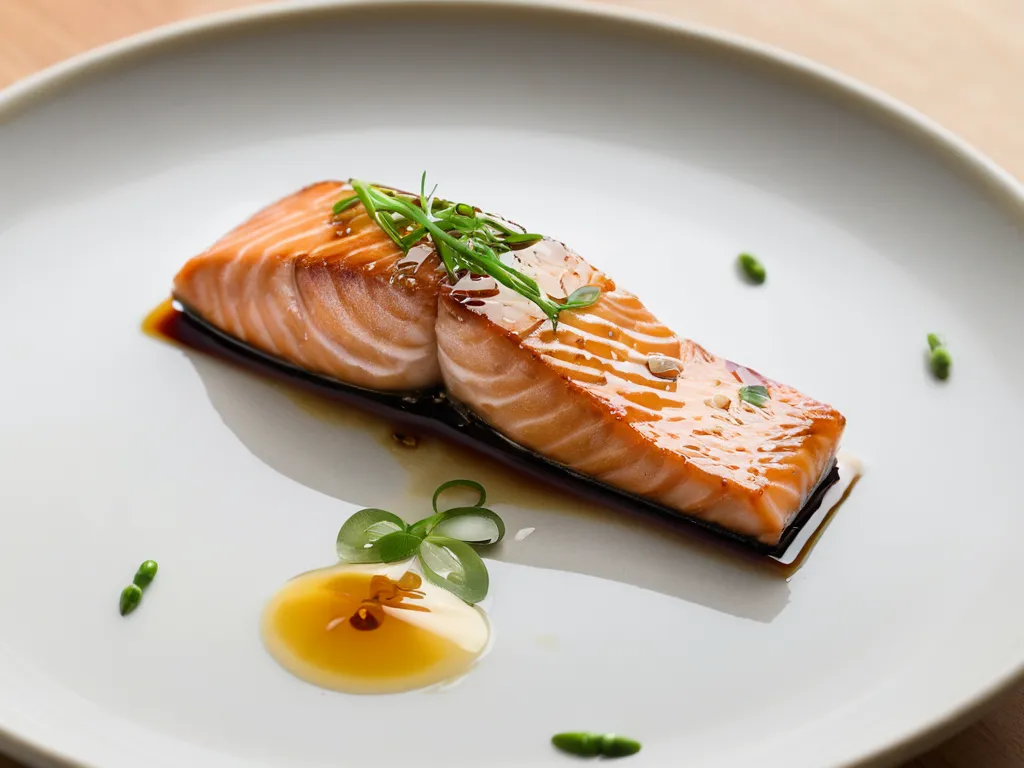
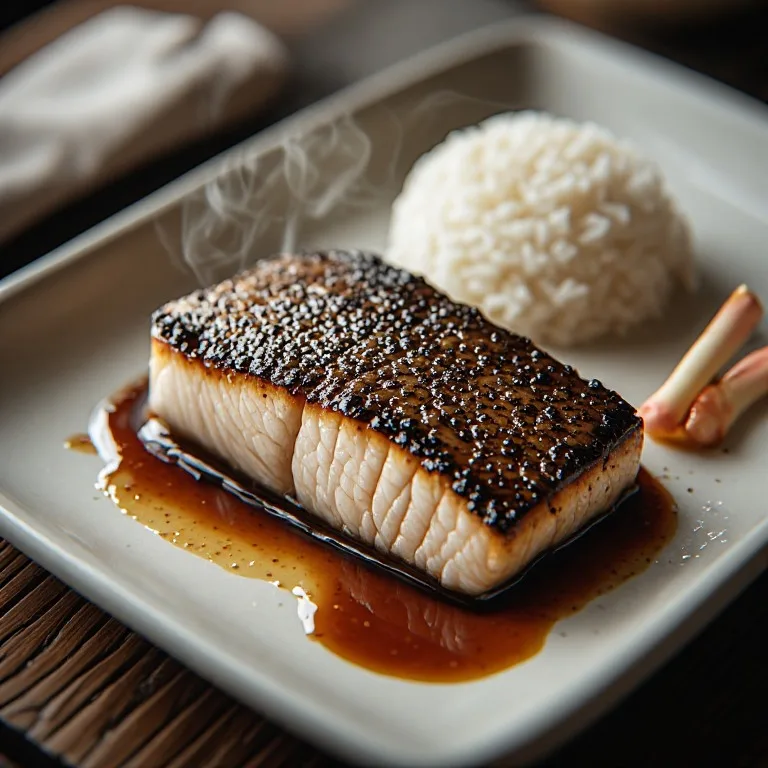
Quick answer: Three days before serving, make the miso marinade: in a small saucepan, bring 1/4 cup sake and 1/4 cup mirin to a boil and simmer 1 minute to cook off the alcohol. Whisk in 1/3 cup of white sugar until dissolved. Remove from heat, add 3/4 cup of white miso (Saikyo miso from Kyoto is the ideal; regular shiro miso with an extra tablespoon of sugar also works), and whisk until smooth. Cool completely in the refrigerator. Pat 4 black cod (sablefish) fillets, 6 oz each, thoroughly dry with paper towels. Place in a shallow dish or zip-top bag, coat all sides with the cold marinade, seal, and refrigerate for 2 to 3 days — 48 hours is the minimum for the flavors to penetrate the fish's dense fat content; 72 hours is ideal. Do not exceed 3 days or the texture becomes mushy. When ready to cook, preheat the oven to 400°F. Remove the fillets and use your hand or a spatula to wipe off most of the excess marinade — leave a thin coating, not a thick paste. Excess marinade scorches before the fish is done. Heat 1 tablespoon of neutral oil (grapeseed or vegetable) in an oven-safe cast-iron skillet over high heat until smoking. Set the fish flesh-side down and sear undisturbed for 2 minutes until deeply caramelized. Flip once and sear the skin side for 1 minute. Transfer the skillet to the oven and cook 8 to 10 minutes until the flesh is opaque through and flakes at the thickest point. Serve immediately with steamed short-grain rice and pickled ginger on the side. The dish at Nobu NYC runs approximately $45 to $50. At home, each serving costs roughly $12 in black cod alone.

Shop the tools

Gear matched to this recipe. These are Amazon affiliate links — we may earn a small commission if you buy, at no extra cost to you.

As an Amazon Associate, Copycat Spices earns from qualifying purchases. Product images are generic illustrations, not the exact item listed.

Nobu Black Cod Miso (The Famous One, Made at Home)

The famous Nobu Black Cod Miso, made at home: sweet white miso (Saikyo if you can find it), 2 to 3 days of cold marination, and a hard sear before the oven. The fish that put Nobu Matsuhisa on the map — at $12 a plate instead of $50.

Medium Prep: 15 min Cook: 15 min Total: 30 min4 servings ~$4.20/serving
Prep15 min
Cook15 min
Total30 min
Servings
4
At home~$4.20/serving
vs
Restaurant~$18.90/serving
You save ~78%

The Story Behind the Recipe

The famous Nobu Black Cod Miso, made at home: sweet white miso (Saikyo if you can find it), 2 to 3 days of cold marination, and a hard sear before the oven. The fish that put Nobu Matsuhisa on the map — at $12 a plate instead of $50.

Nutrition Facts

Per serving (4 servings)
Calories380
Total Fat19g
Total Carbs18g
Dietary Fiber0g
Sugars12g
Protein34g
Sodium680mg

* Estimated values based on standard recipe preparation. Actual values may vary.

Ingredients

  • Miso marinade (make 2-3 days ahead)
  • For the fish
  • For serving

Instructions

💡
Pro tip: This recipe tastes even better the next day. The flavors need time to meld together in the fridge.
❄️
Storage: Keeps in an airtight container in the fridge for up to 2 weeks. Freezer-friendly for up to 3 months.
🎃 Free Halloween cookbook — download now The Copycat Halloween Cookbook A ready-made, photo-illustrated PDF of our best halloween copycat recipes — free to download, no building required. Pay what you want to support if you love it.

Free PDF — instant download. We'll also send new seasonal copycat recipes now and then; unsubscribe anytime. Or just download it →

Copycat Nobu Black Cod Miso (The Famous One, Made at Home)

Prep time: 15 min (plus 2-3 days marination) Cook time: 15 min Servings: 4

Nobu Matsuhisa opened his first American restaurant, Matsuhisa, on La Cienega Boulevard in Beverly Hills in 1987. He had been cooking in Peru, Argentina, and Alaska before that, and the cuisine he developed — Japanese technique applied to South American ingredients, with particular attention to acid-fish preparations — had no real category in American dining at the time. Matsuhisa became immediately crowded. In 1994, he partnered with Robert De Niro to open Nobu at 105 Hudson Street in TriBeCa, New York City.

Robert De Niro had been eating at Matsuhisa in Beverly Hills during the late 1980s before he approached Nobu Matsuhisa about opening in New York. The black cod miso was already on the menu at Matsuhisa, but the TriBeCa opening made it globally famous. Within two years of opening, Nobu NYC had a months-long reservation backlog. The restaurant quickly became a reference point for a particular kind of New York experience — aspirational, Japanese-influenced, expensive, and genuinely excellent in a way that justified the aspiration.

The black cod miso has been on the menu continuously for more than 30 years. It is Nobu’s most-imitated dish. The home version requires three days of planning and about 15 minutes of active cooking.

What Makes This Different from a Quick Miso Salmon

This is a question worth answering directly, because the internet is full of 30-minute miso-glazed salmon recipes tagged as “Nobu-inspired” — and the Costco pre-marinated miso sablefish ($5/piece) has spawned an entire genre of TikTok side-by-side taste tests against Nobu’s $45-50 plate. The differences are structural.

The fish. Black cod (sablefish) contains approximately 15 to 18 percent fat by weight — intramuscular fat distributed through the flesh, not just under the skin. Most lean white fish contains 1 to 2 percent fat. That fat is what makes the fish nearly impossible to overcook, what allows the marinade to penetrate the flesh over 48 to 72 hours, and what produces the silky, almost molten texture inside a well-cooked fillet. Salmon has meaningful fat content, but not to this degree. The fish is not a flavor note — it is the structural reason the dish works.

The miso and the time. Sweet white miso (Saikyo is the ideal; regular white miso with extra sugar is also used in Nobu’s published recipe) caramelizes into a very different glaze than sharper or darker misos. But it is the marination time that changes the category. Miso contains proteolytic enzymes from koji fermentation — the same enzymes in traditional sake-lees fish marinades — that slowly break down fish proteins during extended refrigeration, creating a texture that no amount of applied heat alone can produce. At 48 to 72 hours, these enzymes have gently tenderized the outer flesh. A 30-minute marinade coats; a 72-hour marinade permeates and transforms. The distinction is noticeable on the first bite.

The White Miso Question

The published Chef Nobu recipe (released in partnership with the miso brand Hikari) specifies white miso (shiro miso) with a generous amount of sugar — 1/3 cup of sugar to 3/4 cup of miso — which approximates the naturally sweeter flavor of Saikyo miso. Many authoritative Japanese cooking sources specify Saikyo miso (the sweet Kyoto-style white miso) as the ideal. Both approaches are documented; use whatever you can find.

Saikyo miso, if available, has a higher rice-to-soybean ratio and ferments for a shorter period, producing a sweeter, less salty, pale ivory paste. It is sold in small tubs at Japanese grocery stores (Mitsuwa, H Mart, Marukai) and widely available online. The brand Hikari Saikyo Miso White is the most commonly available in the US; any tub labeled “sweet white miso” or “Kyoto-style miso” is the right product.

Regular white miso (shiro miso) — the kind found in most grocery store international aisles — works fine with the recipe’s full sugar quantity. Do not reduce the sugar if using regular white miso.

Do not substitute red (aka) miso or dark miso. Red miso’s longer fermentation produces a pungent, intensely savory flavor that overwhelms the fish. The dish depends on miso sweetness and mildness; red miso produces neither.

Finding Black Cod (Sablefish)

Black cod is not stocked at every grocery store. In the US, it is most reliably found at:

  • Japanese grocery stores (almost always in stock, often pre-marinated versions for comparison)
  • Whole Foods and upscale grocery stores (check the fresh and frozen seafood case)
  • Online direct from Alaska fisheries (Vital Choice and Wild Alaskan Company ship overnight; quality is excellent)
  • Costco occasionally carries wild-caught sablefish in the freezer section

The fish is sold both skinless and skin-on. Buy skin-on — the skin renders during the sear and adds flavor; more importantly, the skin protects the delicate flesh during flipping. A 6-ounce fillet is a standard portion; the fish is rich enough that 4 ounces can suffice as part of a multi-course meal.

Wild-caught Alaskan sablefish is well-managed and ranked “Best Choice” by the Monterey Bay Aquarium Seafood Watch guide. This is one of the more sustainable fine-dining fish choices available.

Cost Comparison: Nobu vs. Home
Nobu NYCHomemade (4 servings)
Black cod misoapproximately $45–55 per order~$48 total in fish, $2 in miso and sake
Per serving~$50 (within a full dinner typically $150-200 per person)~$12
Reservationweeks to months outnot applicable

The cost differential is genuine — black cod is not a cheap fish, running $20 to $30 per pound at specialty markets. The home version is still substantially less expensive than the restaurant, but this is not a dish where the home version costs 10 percent of the original. What changes dramatically is accessibility. Nobu takes reservations.

The Most Important Technique Points

1. Wipe off the excess marinade before cooking

The single step that separates a good result from a scorched one. Saikyo miso’s sugar content means the marinade caramelizes at temperatures well below what you’d use to cook fish. A thick coating of marinade carbonizes at the surface before the heat reaches the center of the fillet. After removing the fish from the refrigerator, use a rubber spatula, paper towel, or your hand to wipe off the excess, leaving only a thin, even film. It will look like almost no marinade. That is correct.

2. Sear first, oven second

A 10-to-12-minute broil is the other approach to cooking miso cod, and it produces an acceptable result if you stand at the oven watching constantly from the 8-minute mark. But the combination of a 2-minute pan sear (high heat, direct contact) followed by an 8-to-10-minute oven finish (moderate dry heat) gives you better control. The sear creates the caramelized crust; the oven finishes the center without burning the glaze. The cast-iron skillet goes directly from stovetop to oven — no sheet pan needed.

3. Do not move the fish during the sear

Set the fillet flesh-side down in the smoking-hot oil and leave it completely undisturbed for 2 full minutes. The Maillard reaction requires sustained contact time between the coated fish surface and the hot fat. Moving the fish after 30 seconds, or pressing it down with a spatula, disrupts the contact and produces a pale, uneven crust. When the caramelization is ready — deep amber, pulling slightly away from the pan — the fish will release cleanly.

4. The fish is done when it gives under gentle pressure

Because of the high fat content, black cod’s internal temperature is a less reliable doneness cue than with lean fish. The correct texture is: fully opaque white throughout when you peek at the side, and the flesh yields immediately under gentle finger pressure at the thickest point without feeling firm or rubbery. If it feels firm, it has overcooked. Err on the side of slightly underdone — carry-over from the residual heat will finish it. The flesh should look like it might be slightly translucent at the very center right when it comes out of the oven; by the time it reaches the table it will be opaque.

If You Cannot Find Black Cod: Substitutes

Chilean sea bass (Patagonian toothfish) is the closest equivalent in fat content and cooking behavior. It marinates the same way, cooks in the same time, and produces a very similar silky texture. It is expensive (often more expensive than black cod) and some sources raise sustainability concerns; look for Marine Stewardship Council certification. Use the exact same recipe and timing.

King/Chinook salmon (skin on, 6-oz fillets) is the best widely-available substitute. King salmon is substantially fattier than other salmon species and responds well to miso marination. Reduce marination time to 24 to 48 hours — salmon is less dense than black cod and can over-marinate. The flavor profile is more assertive (salmon forward) but the dish is genuinely excellent.

Atlantic salmon (farmed) works as a budget substitute. Reduce marination to 24 hours maximum and take care not to overcook — Atlantic salmon has good fat content but is more prone to drying under high heat than black cod. The result is a miso salmon, not black cod miso, but it is still worth making.

Regular cod (Atlantic or Pacific), halibut, or mahi-mahi: the marinade works, but the low fat content means the fish can dry out quickly and the flavor penetration from the 2-day marinade is less dramatic. Cut the marination to 24 hours for lean fish and pull them from the oven a minute or two earlier.

A Note on Pin Bones

Black cod has a center row of pin bones running through the fillet. The fish is sold at most fishmongers with the pin bones already removed, but check: run your fingertip along the center line of each fillet. If you feel the bones, use fish-bone tweezers or needle-nose pliers to pull them straight out — they come out cleanly in the direction they point. This is easier to do before marinating. Some cooks prefer to leave them in and pull them out after cooking when the flesh is soft, but that means finding them at the table.

Storage

The marinade keeps in the refrigerator for up to 2 weeks in an airtight container. Make a double batch and store half for future use.

The marinating fish must be cooked within 3 days of starting the marinade. Beyond 3 days, the fish texture degrades.

Cooked black cod miso does not hold particularly well — the delicate silky texture changes on refrigeration. If you have leftovers, store in an airtight container refrigerated up to 2 days and reheat in a low oven (275°F) for 8 to 10 minutes rather than microwaving, which toughens the flesh unevenly. The dish is best eaten immediately after cooking.

More Fine Dining Fish Recipes Made at Home
🥗

Make It Healthier

Love Nobu Black Cod Miso (The Famous One, Made at Home) but want a lighter version? Try these simple swaps:

  • ✓Substitute king/chinook salmon for the black cod — it has the highest fat content of Pacific salmon species and responds well to the same 24-to-48-hour marinade. Each serving comes to roughly 340 calories with a similar omega-3 profile. Reduce the marinade time to 24 to 48 hours (salmon is less dense and can over-marinate).
  • ✓Cut the sugar in the marinade roughly in half, to about 2.5 tablespoons — white miso already carries its own sweetness, and reducing the added sugar produces a slightly less caramelized glaze but still a good result. Most of the marinade is wiped off before cooking, so this trims a few grams of sugar per serving.
  • ✓Serve over cauliflower rice or a bed of sautéed baby bok choy instead of white rice — maintains the Japanese flavor profile while cutting 45 grams of carbohydrates per serving.

Frequently Asked Questions

Should I use Saikyo miso or regular white miso?

Both are documented in Nobu-credited recipes. The published Chef Nobu recipe (via Hikari Miso's website) uses regular white miso (shiro miso) with a full 1/3 cup of sugar — the sugar compensates for the fact that regular white miso is less sweet than Saikyo. Many authoritative Japanese cooking sources specify Saikyo miso (西京味噌), a sweet Kyoto-style white miso with a higher rice-to-soybean ratio and shorter fermentation time. Saikyo miso produces a slightly more nuanced, naturally sweet result because its sweetness comes from fermentation rather than added sugar. If you can find Saikyo miso — at Japanese grocery stores (Mitsuwa, H Mart, Marukai) or online — use it and reduce the added sugar by about 2 tablespoons. If you can only find regular white miso, use the full 1/3 cup of sugar in this recipe. Either way, use white miso only. Red miso (longer fermentation, darker, saltier) has a completely different flavor profile and will overpower the fish.

Can I marinate for less than 2 days — can I make it same-day?

You can cook the fish after a 30-minute marinade, but the result is a different dish entirely. Black cod's fat content — roughly 15 to 18 percent fat by weight, compared to roughly 1 to 2 percent for lean white fish — means the fish has genuine volume for the marinade to work through. At 30 minutes, the Saikyo miso coats the surface only; the flesh itself is largely unaffected. After 48 hours in the cold marinade, the sugars and miso have begun to penetrate the first few millimeters of flesh, which changes the flavor through the fillet rather than just on the exterior. After 72 hours, the penetration is more complete and the caramelization when cooked is deeper and more even. The 2-to-3-day marination is what separates the Nobu result from a quick weeknight miso salmon. If you are short on time, marinate for at least 24 hours — not ideal, but meaningfully better than a brief coat. Plan ahead; this dish is mostly idle time.

What is black cod (sablefish), and why does it work so well with miso?

Black cod is the common name for sablefish (Anoplopoma fimbria), a deep-water Pacific fish caught primarily in the Gulf of Alaska and along the Pacific Northwest coast. Despite the name, it is not a true cod — it is unrelated to Atlantic cod (Gadus morhua). Its defining characteristic is an exceptionally high fat content: approximately 15 to 18 percent fat by weight, distributed as intramuscular fat throughout the flesh rather than localized under the skin. For comparison, lean white fish like Atlantic cod contains roughly 1 to 2 percent fat; king salmon runs around 10 to 15 percent. This fat content has two consequences that make the miso marinade work. First, the fish is nearly impossible to overcook into a dry, chalky texture — the internal fat keeps it moist and silky even when seared hard on the exterior. Second, the intramuscular fat acts as a carrier for the miso's flavor compounds during the 2-to-3-day marination, distributing them through the fillet more evenly than a lean fish ever could. There is also an enzymatic effect: miso contains proteolytic enzymes from koji fermentation that slowly break down surface proteins during the long marinade, creating a silkier texture the fish would not have if simply seared. The result when cooked is flesh that is almost impossibly silky, with a sweet-savory caramelized exterior and a center that melts rather than flakes.

What is the best substitute if I cannot find black cod?

Chilean sea bass (Patagonian toothfish, Dissostichus eleginoides) is the closest substitute in fat content and texture — also a very fatty, deep-water fish that responds to miso marination in nearly the same way. The flavor profile is slightly milder than black cod and the texture is somewhat denser, but a trained palate is required to tell the difference. Chilean sea bass also commands premium pricing and carries some sustainability concerns depending on the source (look for Marine Stewardship Council certification). Beyond Chilean sea bass, the options are a meaningful step down. Salmon — specifically king/chinook, which has the highest fat content of any Pacific salmon — can be miso-marinated and produces an excellent dish, but the texture is firmer and the flavor profile is more assertive. Reduce the marinade time to 24 to 48 hours for salmon; the fish is less dense and marination can be aggressive. Halibut, mahi-mahi, or cod work with this marinade but the fat content is too low to produce the same silky interior — they are prone to drying and require much more careful timing. Regular white fish can do a quick miso glaze reasonably well but should not be called a Nobu black cod substitute.

Why does the miso glaze burn so easily, and how do I prevent it?

Miso contains a high concentration of amino acids and sugars — specifically the Saikyo miso used here adds extra sugar on top of the miso's natural sugars. Both amino acids and sugars undergo the Maillard reaction and caramelization at moderate heat, well below the temperatures at which plain protein or fat would brown. This means the glaze goes from caramelized to scorched faster than almost any other coating. Three prevention steps: (1) Wipe off excess marinade before cooking. A thick coat of miso acts as insulation — the surface carbonizes before heat reaches the fish. Leave a thin, even layer. (2) Use high heat briefly for the sear, then moderate oven heat to finish. The oven's dry, indirect heat caramelizes the remaining glaze without burning it the way a hot pan or broiler would if you cooked the fish entirely by surface contact. (3) If broiling only, watch constantly from 8 minutes — the glaze can go from deep caramel to acrid in under 60 seconds at broiler temperatures. The ideal color is deep amber to dark mahogany. Fully black and bitter is burned. There is about a 90-second window between ideal and scorched under a broiler.

How is the Nobu version different from a quick 30-minute miso salmon?

The Nobu version is a different category of dish, not just a fancier version of the same thing. A quick 30-minute miso salmon — common on TikTok and food blogs — is a weeknight technique: regular white miso or soy-ginger glaze applied to salmon shortly before cooking. The miso sits on the surface during cooking and caramelizes into an outer glaze, but the salmon itself is unaffected by the miso. At Nobu, the 2-to-3-day marination in Saikyo miso and the use of black cod's high fat content means the marinade penetrates the flesh, the flavor is distributed through the fillet rather than concentrated at the surface, and the texture is fundamentally different — almost translucent and silky inside rather than firm. The other key difference is the fish: sablefish's fat content produces a result that a leaner salmon cannot. If you want a quick weeknight miso-glazed fish, that is a legitimate and worthwhile dish; it is just not the same as what Nobu does. The 2-to-3-day marination is the dividing line between the two categories.

Can I make the marinade further ahead, and how long does it keep?

Yes. The Saikyo miso marinade keeps well in the refrigerator for up to 2 weeks in an airtight container, and it actually benefits from an overnight rest — the sake's alcohol finishes cooking off and the flavors meld. Make a double batch and store half for future use. The marinade does not freeze well (miso and sake separate on thawing), so refrigerate only. If you are organized enough to keep a jar of marinade in the fridge, you can start a new batch of fish marinating with almost no active work — the 2-to-3-day marination becomes just a planning habit rather than an active project.

Love this recipe? Share it!

Free PDF: our 12 most-wanted copycat recipes — instant download.

Made it? Buy us a coffee

Every recipe here is free, with no paywalls. If this one was a hit at your table, a small tip keeps new copycats coming.

$

Nobu is a trademark of its owner, used here only to describe the dish this recipe recreates. This is an independent copycat written in our own words — Copycat Spices is not affiliated with, endorsed by or sponsored by Nobu.

Ratings & Reviews

—
No ratings yet

Rate this recipe

Click a star to rate

Leave a Review

0/500

CS

Copycat Spices Editorial

Researched + fact-checked. Every recipe on Copycat Spices is built from published sources — official ingredient lists, brand-published recipes, interviews and food-science references — and fact-checked before it goes live, then written as clear, step-by-step instructions for home cooks of all skill levels.

Learn more about our mission →