


Pin It

Dirty French Halloween Duck Confit

Dirty French Halloween Duck Confit
Jump to Recipe
Prep 20 min (+ overnight cure) Cook 3 hr 15 min Serves 4
Quick answer: The night before: rub 4 duck legs with 2 tbsp kosher salt, 1 tsp black pepper, 4 smashed garlic cloves, 4 thyme sprigs, and 1 tsp orange zest. Refrigerate uncovered overnight. Next day: wipe off the cure, pack the legs tightly in a small Dutch oven, cover with 3–4 cups melted duck fat (or use a 250°F oven with 1 cup chicken stock, tightly covered). Cook at 200–225°F on the stovetop (or 250°F in the oven) for 2½–3 hours until the meat is very tender when probed. Cool and refrigerate in the fat. To serve: remove legs from fat, blot skin completely dry. Heat a cast-iron skillet over medium-high — no oil — and lay the duck skin-side down. Cook undisturbed 6–8 minutes until the skin is very dark brown and crackling crisp. Flip, cook 2 minutes more. While duck sears, make the sauce: in a small saucepan cook 1 minced shallot in 1 tsp butter 2 minutes; add ½ cup ruby port, reduce by half; add 1 cup dark cherries and 1 cup stock, simmer 10 minutes; whisk in 1 tbsp cold butter. Plate the duck over bitter greens with the cherry-port sauce spooned over.

Shop the tools

Gear matched to this recipe. These are Amazon affiliate links — we may earn a small commission if you buy, at no extra cost to you.

As an Amazon Associate, Copycat Spices earns from qualifying purchases. Product images are generic illustrations, not the exact item listed.

Dirty French Halloween Duck Confit

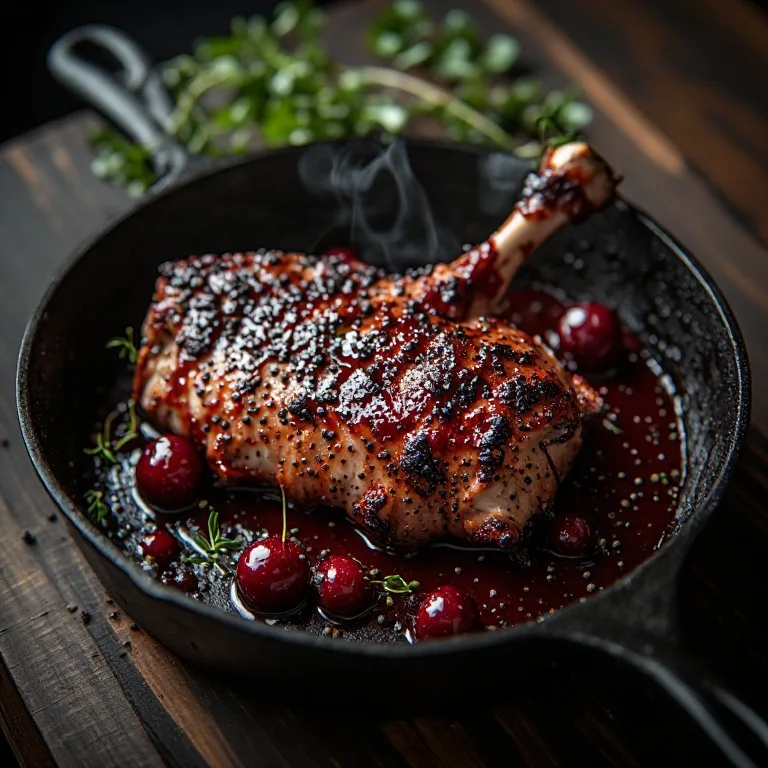
Dirty French's famous duck confit reimagined for Halloween: slow-rendered duck legs crisped in a cast iron until the skin is near-black and crackling, finished with a blood-red cherry-port reduction. The most dramatic Halloween dinner you can serve — about $12 per person at home vs. $46 at the Ludlow Hotel restaurant.

Medium Prep: 20 min (+ overnight cure) Cook: 3 hr 15 min Total: 3h 35m4 servings ~$4.50/serving
Prep20 min (+ overnight cure)
Cook3 hr 15 min
Total3h 35m
Servings
4
At home~$4.50/serving
vs
Restaurant~$20.25/serving
You save ~78%

The Story Behind the Recipe

Dirty French opened in 2014 on Ludlow Street on the Lower East Side inside the Ludlow Hotel, the creation of the Major Food Group team behind Carbone, ZZ's Clam Bar, and The Grill. The name is not an accident: the restaurant fuses classic French technique with American dive-bar energy, Southern smokiness, and the kind of anything-goes irreverence that made the neighborhood famous. The dining room is dim, red-lit, and deliberately theatrical — exactly the kind of place that feels like a Halloween dinner even on a regular Tuesday. Duck confit has been on the menu in various forms since opening, served with rotating seasonal accompaniments; in fall, the preparation typically leans into dark fruit reductions and bitter greens. In 2026 the duck leg entrée at Dirty French runs around $46 before tax and tip.

Duck confit is a centuries-old French preservation technique — legs salt-cured then slow-cooked submerged in their own fat — but it produces results that are genuinely difficult to achieve any other way: silk-tender flesh that falls cleanly from the bone and skin that shatters when you bite through it. The technique divides into three stages you can spread across two days, which makes it ideal for a Halloween dinner party where you want a showstopper on the table without kitchen chaos when guests arrive. The one step most home cooks underestimate: the final sear. The duck needs to go skin-side down in a dry, very hot cast-iron skillet for a full six to eight minutes, undisturbed. Resist every impulse to move it. What comes out — near-black, shatteringly crisp skin over fall-apart meat in a pool of blood-red cherry-port sauce — is one of the most dramatic plates you can put on a Halloween table.

Nutrition Facts

Per serving (4 servings)
Calories580
Total Fat34g
Total Carbs18g
Dietary Fiber2g
Sugars12g
Protein42g
Sodium820mg

* Estimated values based on standard recipe preparation. Actual values may vary.

Ingredients

  • For the cure
  • For the confit
  • For the cherry-port Halloween sauce
  • To serve

Instructions

💡
Pro tip: This recipe tastes even better the next day. The flavors need time to meld together in the fridge.
❄️
Storage: Keeps in an airtight container in the fridge for up to 2 weeks. Freezer-friendly for up to 3 months.
🎃 Free Halloween cookbook — download now The Copycat Halloween Cookbook A ready-made, photo-illustrated PDF of our best halloween copycat recipes — free to download, no building required. Pay what you want to support if you love it.

Free PDF — instant download. We'll also send new seasonal copycat recipes now and then; unsubscribe anytime. Or just download it →

Dirty French Halloween Duck Confit (The Famous Copycat, Made at Home)

Prep time: 20 min (+ overnight cure) Cook time: 3 hr 15 min Servings: 4

This is the most dramatic entrée you can put on a Halloween table, and it happens to be a classic French dish done properly — not a gimmick. Duck legs are salt-cured overnight, slow-cooked in fat until the meat falls from the bone, then seared skin-side down in a dry cast-iron pan until the skin turns near-black and shatters like glass. Spooned over with a deep blood-red cherry-port reduction, the plate is naturally Halloween-colored: charred-black skin against garnet sauce, no food dye anywhere. It reads like something out of Dirty French’s dim, red-lit dining room on Ludlow Street — which is exactly the point.

The reason it works for a dinner party is timing. Duck confit is designed to be made ahead: the legs keep for up to two weeks under their fat in the fridge, so you can confit them days before and store them. The night of the party your only active job is an eight-minute sear and a quick pan sauce. At Dirty French the duck entrée runs about $46; made at home it comes to roughly $12 a person, and the overnight cure plus low-and-slow cook do almost all the work while you’re doing something else.

🥗

Make It Healthier

Love Dirty French Halloween Duck Confit but want a lighter version? Try these simple swaps:

  • ✓Render away as much subcutaneous fat as possible during the slow confit stage — the long, low cook melts out the excess. Blot the skin firmly with paper towels before searing to remove surface fat; this makes the skin crispier and saves roughly 40 calories per leg.
  • ✓Use tart Morello or Amarena cherries instead of sweet Bing cherries in the sauce — the sharper acidity cuts through the richness of the duck and you can reduce or eliminate the honey entirely, saving about 30 calories per serving.
  • ✓Skip the duck fat and confit the legs in a 250°F oven in a tight-lidded Dutch oven with just 1 cup of chicken stock on the bottom — the legs baste in their own rendered fat. The result is nearly identical, and you avoid buying expensive rendered duck fat.
  • ✓Serve alongside bitter greens (endive, radicchio, frisée) dressed with sherry vinegar rather than creamy potato sides — the bitterness cuts the richness of the duck fat and the acid brightens the whole plate without adding significant calories.

Frequently Asked Questions

What is duck confit and what makes it different from roasting?

Duck confit (confit de canard in French) is an ancient preservation technique from Gascony: the duck legs are salt-cured to draw out moisture, then slow-cooked fully submerged in their own rendered fat at very low temperature (200–225°F). The fat never reaches a boiling point, so the meat cooks gently — more like a very slow braise than a roast. The result is dramatically different from roasted duck: the flesh becomes fall-apart tender while retaining extraordinary moisture (the fat prevents any evaporation), and the skin, when subsequently crisped in a hot pan, reaches a crackling, paper-thin texture you cannot get from direct oven heat. The preserved legs also keep for weeks under their layer of fat in the refrigerator, which is how it became a preservation method — and why it's such a practical dinner party dish.

Do I have to use actual duck fat, or can I use something else?

Traditional confit uses duck fat because the flavor is neutral and the result is perfect. But you have good workarounds. The simplest: pack the cured legs tightly in a lidded Dutch oven or baking dish, add about 1 cup of chicken stock, cover tightly with foil and then the lid, and cook at 250°F in the oven. The duck renders enough fat from its own skin to baste the meat throughout the 3-hour cook, and the steam does the rest. The result is about 90–95% as good as fully submerged confit. You can also use olive oil or lard in a pinch, though neither gives quite the clean, neutral fat that makes duck confit taste distinctly like itself. Duck fat is sold in 12–14 oz tubs at most grocery stores (Whole Foods, Trader Joe's, specialty grocers) for around $8–12, which is enough for 4 legs.

Can I make duck confit ahead of time for a Halloween dinner party?

Yes, and it's actually designed to be made ahead — this is part of why duck confit became a French preservation method in the first place. Once confited, the legs stored under their fat in a sealed container will keep in the refrigerator for up to 2 weeks. Make the confit 1–7 days before your Halloween dinner party, refrigerate in the fat, and on the night pull the legs out, bring them to room temperature for 20–30 minutes, and do the final hot-pan sear right before you serve. The cherry-port sauce can also be made hours ahead and reheated. This means your whole stressful cooking window the night of the party is just an 8-minute sear — the kind of low-stakes execution that lets you actually enjoy being a host.

Why does the duck skin need to go in a dry pan with no oil?

Duck legs carry a substantial layer of subcutaneous fat underneath the skin, which renders out rapidly in a very hot pan. If you add oil, the pan fat combines with the rendered duck fat and the skin ends up frying in a pool of oil rather than crisping in its own fat — it comes out greasy rather than shatteringly crisp. Start with a completely dry, preheated cast-iron or stainless skillet over medium-high heat and place the legs skin-side down without any added fat. The skin will initially stick slightly as it releases its own fat; within 2–3 minutes the pan will have a thin film of rendered duck fat, the skin will release on its own, and the searing will proceed perfectly. Press the leg lightly with a spatula to ensure even contact.

What cherries should I use for the Halloween cherry-port sauce?

For the deepest blood-red color and best flavor balance, use dark sweet cherries (frozen Bing cherries work perfectly and are consistent year-round) or Morello/Amarena cherries if you want sharper acidity and a more sophisticated sauce. Avoid maraschino cherries — they are cloyingly sweet with an artificial flavor. Fresh dark cherries in season are ideal if you can find them in October, but frozen work just as well since they're going into a reduction sauce. The port provides the deep garnet base color; the dark cherries deepen it further and add fruit that plays off the rich duck fat. One tablespoon of red wine vinegar at the end prevents the sauce from reading sweet-only and brightens all the fruit notes.

What should I serve with duck confit for a Halloween dinner party?

At Dirty French the duck is typically paired with bitter greens and a citrus element that cuts through the fat — frisée, endive, or radicchio dressed with sherry vinegar and a touch of walnut oil is excellent and looks beautiful on the plate. For something more substantial: creamy white bean purée (Cassoulet-adjacent, very French), crispy roasted fingerling potatoes, or a simple gratin dauphinois. For a full Halloween menu: start with Halloween deviled egg eyeballs or witch finger garlic breadsticks, serve the duck confit as the centerpiece with cherry-port sauce, add a bitter-greens salad, and finish with Halloween graveyard brownies. The blood-red sauce alongside the near-black crispy duck skin is one of the most naturally Halloween-colored plates in classical cooking — no food dye required.

Love this recipe? Share it!

Free PDF: our 12 most-wanted copycat recipes — instant download.

Made it? Buy us a coffee

Every recipe here is free, with no paywalls. If this one was a hit at your table, a small tip keeps new copycats coming.

$

Dirty French is a trademark of its owner, used here only to describe the dish this recipe recreates. This is an independent copycat written in our own words — Copycat Spices is not affiliated with, endorsed by or sponsored by Dirty French.

Ratings & Reviews

—
No ratings yet

Rate this recipe

Click a star to rate

Leave a Review

0/500

CS

Copycat Spices Editorial

Researched + fact-checked. Every recipe on Copycat Spices is built from published sources — official ingredient lists, brand-published recipes, interviews and food-science references — and fact-checked before it goes live, then written as clear, step-by-step instructions for home cooks of all skill levels.

Learn more about our mission →