


Copycat IHOP Colorado Omelette (Four Meats, Not a Denver)
Prep time: 15 min Cook time: 20 min Servings: 2
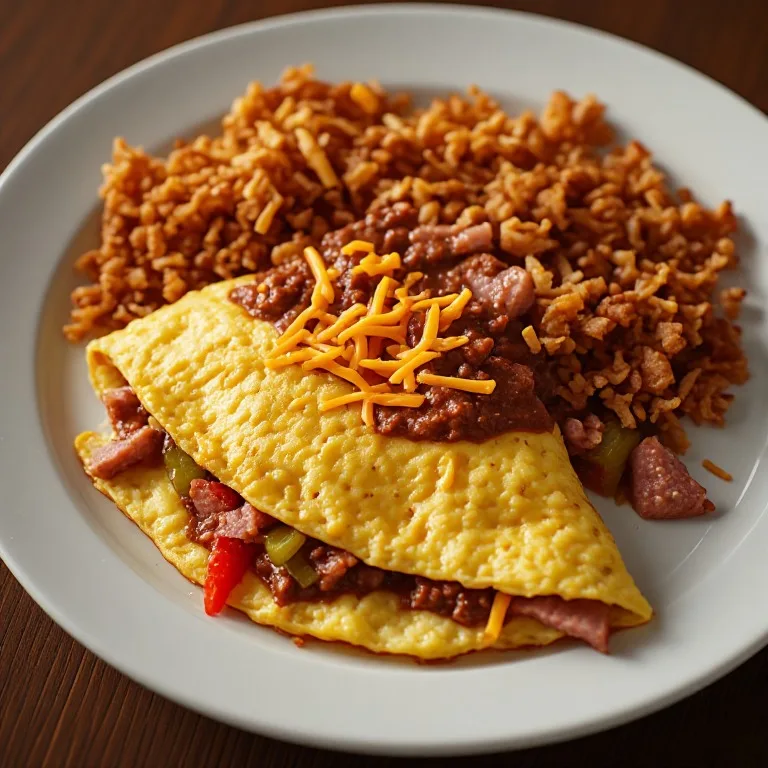
The IHOP Colorado Omelette is one of the most substantive breakfast omelettes in casual dining: four meats — ham, bacon, breakfast sausage, and shredded roast beef — with sautéed green peppers, onions, fresh diced tomatoes, and shredded cheddar, finished with salsa alongside. At around $20.99 (prices vary by location) it’s also one of the higher-priced items on IHOP’s omelette menu. Two omelettes at home cost around $9 in ingredients.
The most important thing to know before you start: this is not a Denver omelette with extras. A Denver omelette has three components: ham, green peppers, and onions. The Colorado adds three more proteins — bacon, breakfast sausage, and shredded roast beef — making it a fundamentally different dish. Without the roast beef specifically, you’ve made a dressed-up Denver — which is exactly what shortcut versions of this recipe produce. The roast beef isn’t a garnish. It’s roughly a third of a cup per omelette, and its mineral depth is what separates the filling from any pork-only version.
Why This Is Harder to Make at Home Than It Looks
Two structural problems separate a home omelette from what comes off IHOP’s flat-top griddle.
The first is the top of the egg. Commercial flat-top griddles heat from below and radiate heat from the surrounding surface area, which helps the top of the egg set even without covering it. In a home skillet, only the bottom gets direct heat. Waiting for the top to set on its own means the bottom overcooks before the top catches up. The solution is a lid: once the bottom is set and the filling is in, a lid traps steam and sets the top in 90 seconds without browning the egg exterior. Most home omelette recipes don’t use a lid; this one does, because it’s the only way to replicate the uniform set of a restaurant flat-top at home.
The second problem is temperature drop. IHOP’s filling lands on a griddle that recovers surface temperature almost instantly. Cold proteins in a home skillet drop the temperature and stall the egg’s cook. Pre-cooking all four meats and letting them come to room temperature before they go near the egg isn’t an optional step — it’s what prevents an omelette that sets unevenly with raw-looking spots near the filling.
The Four Meats: What Each One Contributes
Ham: The Base
Diced Canadian ham provides the mild, slightly smoky foundation that a Denver omelette is built on. Cut it into quarter-inch cubes so it distributes evenly through the filling. Thin-sliced deli ham tears into strands rather than cubing cleanly and produces the wrong texture.
Bacon: The Crunch and Smoke Layer
Crumbled crispy bacon adds textural contrast and a pronounced smokiness that none of the other three meats provide. Cook it fully crispy before crumbling — soft bacon steams into a soft, slightly chewy piece under the lid, which is the wrong result. The rendered fat is useful for cooking the sausage and warming the ham.
Breakfast Sausage: The Seasoning Carrier
Pork breakfast sausage crumbles bring a slightly sweet, fennel-forward seasoning note that neither ham nor bacon has. The higher fat content of the sausage also enriches the filling, carrying flavor through the steam-set stage. Break it into small crumbles before adding it to the filling bowl — large chunks don’t distribute the way small crumbles do.
Shredded Roast Beef: The One Everyone Skips
This is the differentiator. Shredded roast beef has a distinctly deeper, more mineral beef flavor than any pork product, and its pulled-strand texture lets it disperse through the filling rather than sitting as a single chunk. Grocery deli counters typically sell pre-cooked pulled beef directly; leftover pot roast or sirloin tip roast shredded with two forks also works well.
What doesn’t work: thin-sliced roast beef from the deli, folded in whole. It doesn’t distribute. It steams into a flat mat and sits as a distinct layer rather than integrating with the ham, bacon, and sausage.
The question that comes up every time: “Can I skip it?” You can, but the result is then a ham, bacon, and sausage omelette with peppers — genuinely a good thing, but not what IHOP calls a Colorado Omelette. The name refers specifically to the four-meat combination.
The Lid Method: How to Set the Top Without Flipping
IHOP’s omelettes cook flat on a griddle, with heat from below and ambient heat setting the top. At home:
- Get the bottom set first — push the cooked edges toward the center and let liquid egg fill in, working around the pan once or twice.
- Add the filling and cheddar to one half.
- Lid on, heat to low, 90 seconds.
- Lift the lid and look: the surface should be matte — not shiny, not wet. If it’s still glossy, 30 more seconds.
- Fold and plate immediately.
The lid-and-steam method produces the same uniformly set, non-browned exterior that a flat-top produces. Trying to flip a fully loaded four-meat omelette risks breaking it and scrambling the filling into the egg — an outcome that tastes fine but is a different dish.
Tips and Variations
-
Make the filling the night before. The time-consuming part is pre-cooking four proteins. Cook bacon, sausage, and ham the evening before, refrigerate, and bring to room temperature before making omelettes in the morning. Morning assembly drops to about 5 minutes once the filling is ready.
-
Fresh tomatoes, always added raw. Sautéed tomatoes release water into the filling, which makes the eggs set unevenly and the interior wet. Fresh diced tomatoes added at assembly retain their structure and provide clean acidity against the four meats.
-
Use a 10-inch skillet, not a 12-inch. A larger pan spreads the egg too thin — the edges set before the center has anything to fold around. A 10-inch pan creates an egg layer about a quarter inch thick before folding, which produces the right proportion between egg and filling.
-
Smoked paprika in the egg beat (optional). Not an IHOP ingredient, but a pinch of smoked paprika beaten into the eggs ties together the four meats with a warm, cohesive note. Leave it out for the authentic version.
What Comes With It at the Restaurant
IHOP serves this omelette as part of a combo with hash browns and two buttermilk pancakes. The 1,251-calorie restaurant total includes all three components. The omelette itself is approximately 680 calories, 52g protein. If you want the full IHOP experience at home, the IHOP Buttermilk Pancakes recipe covers the two-leavener technique and griddle temperature that produces the authentic fluffy result.
Storage
The omelette doesn’t store well as a complete dish — reheat a cooked omelette in a covered skillet on low heat with a small splash of water if needed; don’t microwave (the egg goes rubbery).
The filling stores excellently. Make a double batch of the four-meat filling and refrigerate for up to 3 days. Each morning, beat 3 fresh eggs, warm a portion of filling in the pan, and make a fresh omelette. The active time drops to about 5 minutes with pre-made filling.
More IHOP copycat recipes: Buttermilk Pancakes · New York Cheesecake Pancakes · Chicken and Waffles · Stuffed French Toast
See all IHOP copycat recipes →