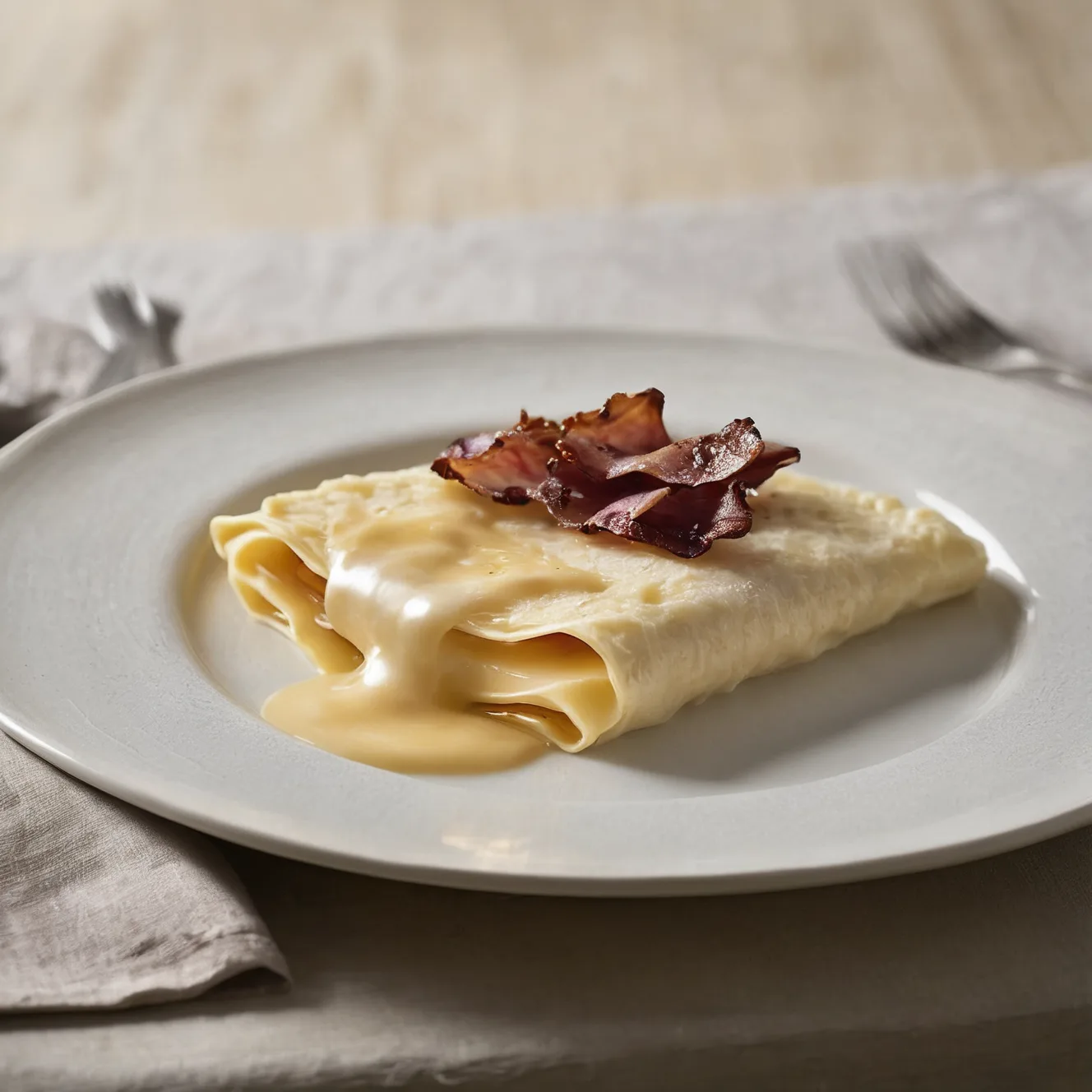
Copycat IHOP Bacon Temptation Omelette (The White Sauce Is What You’re Missing)
Prep time: 10 min Cook time: 20 min Servings: 2
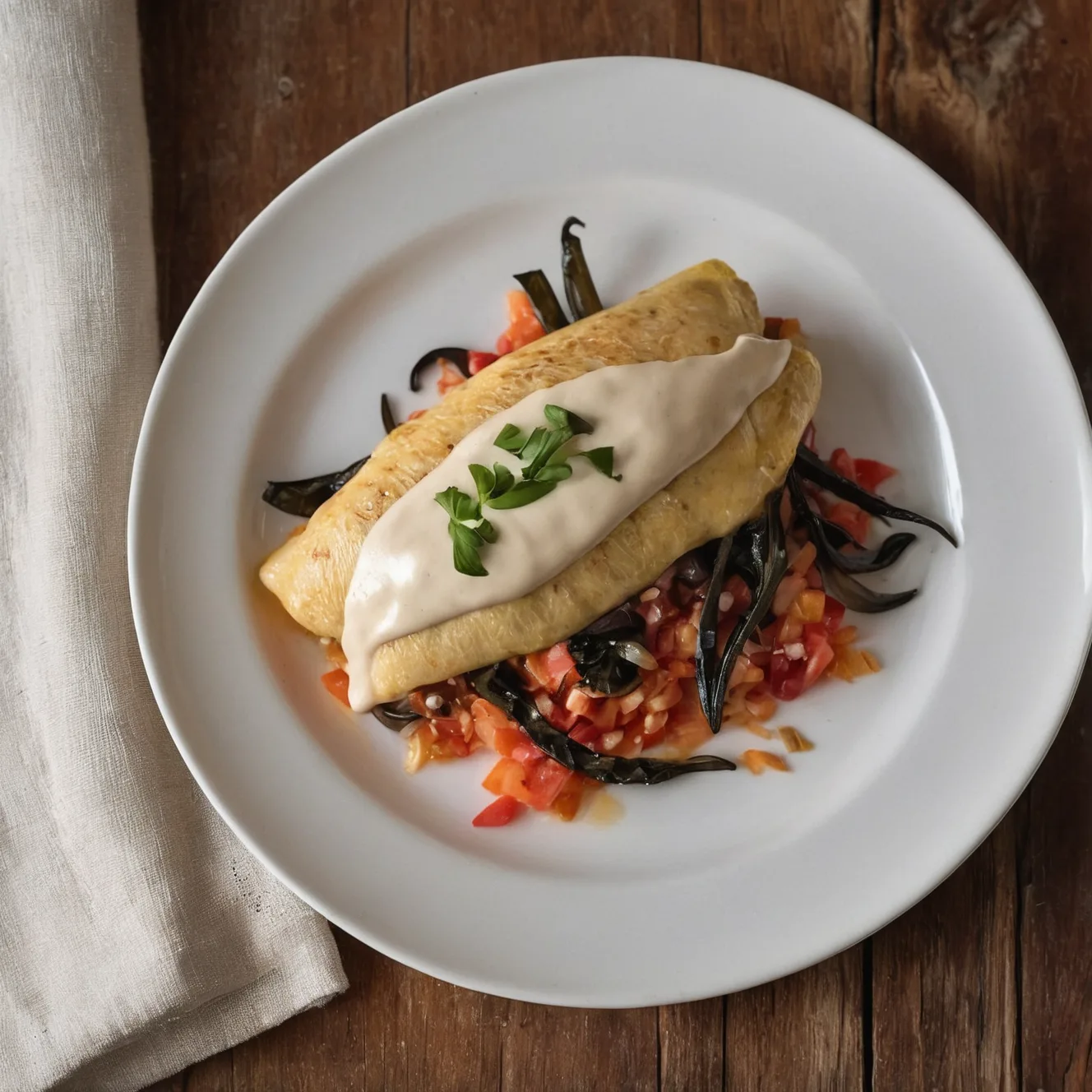
The IHOP Bacon Temptation Omelette is the simplest of the Stuffed ‘N Stacked lineup in structure and the richest in calorie count. It contains one protein (hickory-smoked bacon), one cheese blend inside (Jack & Cheddar), and one sauce outside (white American cheese sauce) — plus fresh diced tomatoes and more bacon strips on top as garnish. The restaurant price is approximately $17.29; two at home cost about $7.
The ingredient most copycat recipes get wrong is the sauce. IHOP’s official description specifies a “white cheese sauce,” which means white American cheese melted with milk — not yellow American, not Velveeta, not shredded mozzarella. The difference matters: white American melts to a pale cream-colored drizzle with a milder, more buttery character that lets the hickory smoke and bacon fat come forward. Yellow American is tangier, sharper, and produces an orange-yellow sauce that looks and tastes like a different dish.
What Sets the Bacon Temptation Apart
Every Stuffed ‘N Stacked omelette has a distinct identity. The Colorado Omelette is a four-meat dish — ham, bacon, sausage, and shredded roast beef — heavy on protein variety and finished with salsa. The Big Steak Omelette hides hash browns inside the filling alongside sirloin and mushrooms. The Chicken Fajita Omelette is built around the contrast between charred Poblano and grilled chicken, finished with sour cream and a Serrano pepper.
The Bacon Temptation eliminates all that complexity and goes deep on one thing: bacon plus cheese. The format — bacon inside, sauce outside, more bacon on top — means execution matters more than ingredient sourcing. There’s nowhere to hide if the sauce is wrong or the egg tears at the fold.
The White Sauce Problem
Most copycat sources use yellow American or standard Velveeta for the sauce, which produces an orange-tinted product that photographs differently and tastes different. IHOP’s wording — “white cheese sauce” — is specific. White American cheese is sold at most grocery store deli counters, usually labeled “Land O’Lakes White American,” “White American” by a store brand, or “White American deluxe.” It’s not the same as provolone or mozzarella; it’s American cheese without the annatto coloring.
Melted with whole milk in a ratio of 4 ounces cheese to 2 tablespoons milk, white American produces a smooth, pourable sauce in about 4 minutes over very low heat. The sauce should coat a spoon and drizzle off it in a slow ribbon — thin enough to spread naturally over the egg surface when poured, thick enough not to run off the plate. It thickens as it cools, so keep it on the lowest burner setting and stir every minute.
One technical point: white American scorches faster than other processed cheeses. The moment you see any browning on the bottom of the pan, pull it off the heat immediately and stir vigorously. Low and slow is the only correct temperature.
The Bacon: Two Treatments for Two Jobs
The omelette uses bacon two ways: chopped inside, whole strips outside. They cook the same way — oven at 400°F on a wire rack — but for different amounts of time.
The inside bacon needs to be fully crispy so it stays crunchy under the 90-second steam step. Crispy bacon inside a steam-set omelette softens somewhat; if it’s under-crispy before the steam, it ends up limp in the finished dish. Pull the garnish strips at 16 minutes — cooked through but not yet at maximum crisp — which helps them lie flat on the egg rather than curling. The remaining 4 slices go to full crispiness for chopping.
The “custom cured hickory-smoked” language on IHOP’s menu refers to a proprietary cure — typically a brown-sugar and salt brine applied before smoking — that gives the bacon a pronounced smoke character. At the grocery store, thick-cut hickory-smoked bacon is the right category. Thin sandwich bacon won’t hold its shape as a garnish strip. Avoid peppered and heavily maple-cured varieties, which compete with the white cheese sauce rather than complementing it.
The IHOP Egg Formula
IHOP discloses it on every menu: “Omelettes and Breakfast Burritos & Bowls are made with a splash of our famous buttermilk & wheat pancake batter!” This is omelette-specific — IHOP’s scrambled eggs don’t use batter.
The ratio is 2 tablespoons of dry buttermilk pancake mix per 3-egg omelette. Any brand works — Bisquick, Hungry Jack, store brand. The baking powder in the mix gives the egg a slight structural boost that prevents tearing at the fold, especially useful here because the inside filling is modest (bacon and cheese, no vegetables) and the omelette can close cleanly if the egg is solid. Use a fork to beat, not a whisk — a whisk over-aerates the egg and produces a more fragile shell.
The Lid Method
IHOP cooks omelettes on a commercial flat-top griddle where radiant heat from the surrounding surface sets the top of the egg from above. At home, only the bottom gets direct heat. The solution is the same as for any loaded IHOP omelette: once the filling is in, place a lid on the skillet, reduce to the lowest setting, and steam for 90 seconds. The test: lift the lid and look at the surface. If it’s matte — dull, no wet sheen — fold immediately. If it’s glossy, lid back on for 30 more seconds. Do not open and check before the 90-second mark; the steam needs the confined space to do its job.
Building the Plate
The finishing order matters: sauce first, then bacon strips, then tomatoes.
Drizzle the white sauce while the omelette is still hot — the heat keeps the sauce fluid and helps it settle naturally across the egg surface. Lay the garnish bacon strips on while the sauce is still wet; they’ll adhere slightly rather than sliding. Add the diced tomatoes last, right before the plate goes to the table. Tomatoes placed early start releasing juice that dilutes the sauce and eventually makes the plate watery.
The Stuffed ‘N Stacked Lineup: Quick Comparison
| Omelette | Protein | Inside Cheese | Sauce/Garnish | Cals |
|---|---|---|---|---|
| Bacon Temptation | Hickory-smoked bacon | Jack & Cheddar blend | White American cheese sauce | 1,160 |
| Colorado | Ham, bacon, sausage, roast beef | Sharp cheddar | Salsa | ~680 (omelette alone) |
| Big Steak | Sirloin + hash browns inside | Sharp cheddar | Salsa | ~1,040 |
| Chicken Fajita | Grilled chicken | Jack & Cheddar blend | Salsa, sour cream | 911 |
Tips
-
Make the sauce before you touch the eggs. The sauce needs low, patient heat and constant attention. If you start the sauce and eggs simultaneously, one of them will overcook.
-
Reserve the garnish bacon strips from a partial oven pull. Pulling them at 16 minutes versus the full time is a small thing that makes a visible difference in presentation — flat strips look restaurant-quality, curled ones don’t.
-
Dice the tomato small and remove the seeds. Large irregular pieces look awkward on top of a drizzled sauce, and the seeds carry the most watery liquid. A small dice — about a quarter-inch — distributes better and holds its shape rather than collapsing.
-
Warm the plates. Run them under hot tap water for 30 seconds, dry, and plate immediately. White American cheese sauce sets and dulls noticeably on a cold plate; on a warm plate it stays glossy and pourable-looking for a couple of minutes.
-
One omelette at a time. Make both bacon batches in advance, make the sauce, then cook one omelette at a time. Trying to keep a plated omelette warm while cooking the second produces better results than attempting both pans simultaneously.
Storage
The sauce doesn’t hold well — it separates or turns grainy when refrigerated and reheated. Make only what you’ll use. The cooked bacon keeps for up to 3 days refrigerated; reheat briefly in a dry skillet to restore crispness. For a second-day version, make a fresh batch of sauce and cook fresh eggs with the stored bacon.
More IHOP copycat recipes: Buttermilk Pancakes · Colorado Omelette · Big Steak Omelette · Chicken Fajita Omelette · Chicken and Waffles · Stuffed French Toast
See all IHOP copycat recipes →