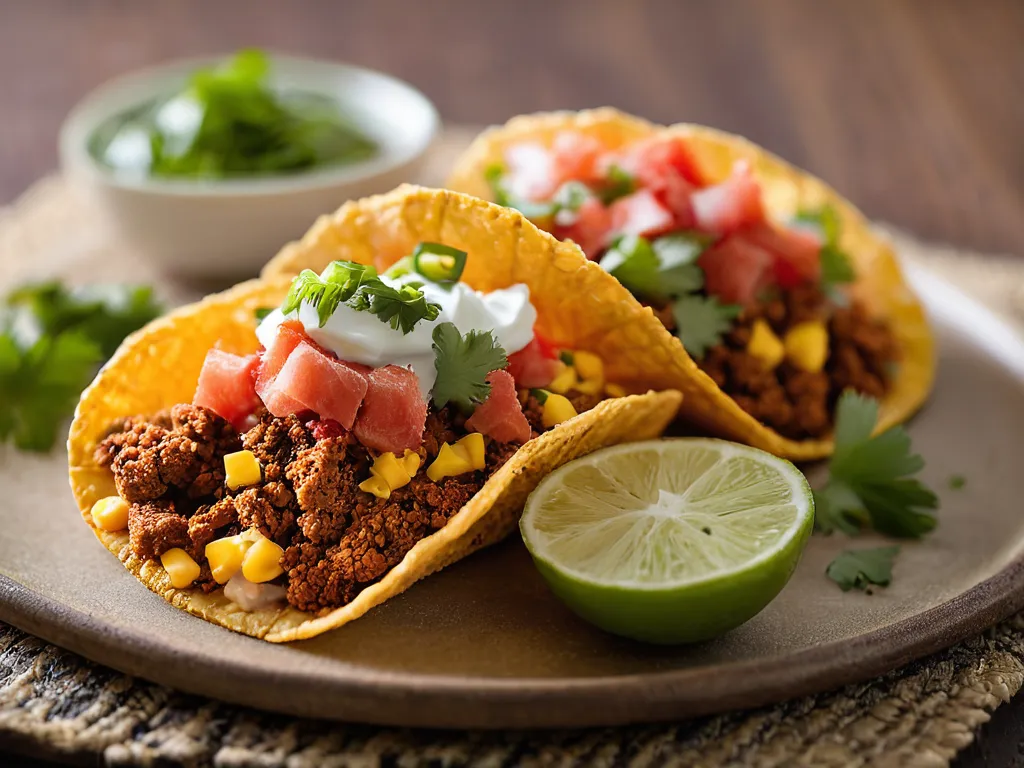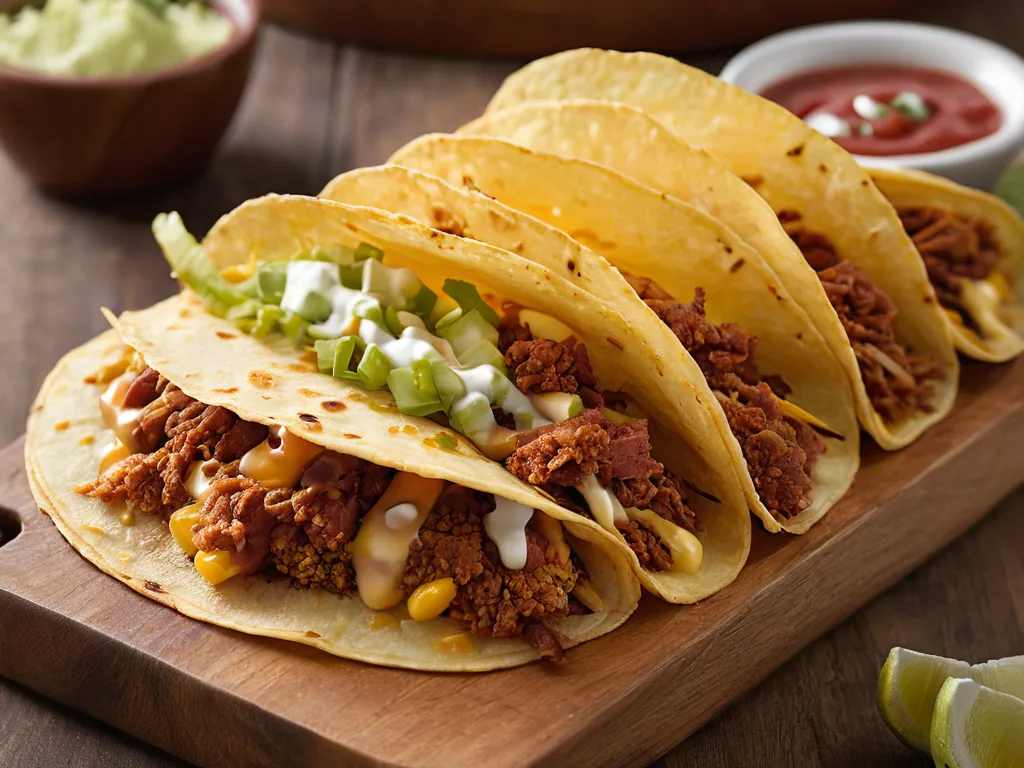
Jack in the Box sells more than 554 million of these tacos every year — a figure widely reported by the Wall Street Journal that works out to roughly 1,055 tacos a minute. They have been on the menu since the chain’s first location opened in San Diego in the mid-1950s, and they have outlasted dozens of fast food trends because the product is genuinely, stubbornly satisfying.
They are simultaneously weird and perfect: a greasy fried shell housing a smooth beef-and-bean paste, topped with cold shredded lettuce and American cheese. You either understand why this works immediately, or you will after the first bite.
This recipe nails the two things that actually matter: the paste-like filling (which requires a food processor step most copycat recipes skip) and the full-shell deep fry. Everything else is assembly.
Why These Tacos Are Different (And Why It Works)
The first thing people notice about Jack in the Box tacos is the filling texture. It is not crumbled beef — it is closer to a spread. The restaurant achieves this with a finely ground meat blend (beef, ground dark chicken, and textured soy protein, per the chain’s ingredient list) emulsified into a smooth, almost pâté-like consistency. There are no beans in the actual restaurant filling — but at home, without industrial grinding equipment, a small amount of refried bean is the easiest way to bind the beef into that same cohesive, spreadable paste that holds its shape when the taco is fried.
The result is a filling that does not fall out, does not dry out during frying, and delivers a mild, savory flavor on every bite rather than the uneven experience of loose crumbled meat.
The second non-negotiable: the taco is assembled before it hits the oil. A Jack in the Box taco is not a pre-formed fried shell filled after cooking — the soft tortilla is folded around the filling and deep-fried while assembled. The interior steams from the moisture in the filling while the exterior crisps in the oil. This gives you a shell that is crispy on the outside and slightly softer on the inside seam, which is part of the texture profile.
The Filling: Get the Texture Right
For this copycat, the filling is 75–80% ground beef, 20–25% refried beans, plus taco seasoning and a small amount of water. To be clear, the bean is a home substitution — the restaurant uses a beef-and-soy blend, not beans — but it is the most reliable way to replicate the smooth, mild, spreadable paste without a commercial grinder. The texture comes together by cooking the mixture down and then briefly processing it.
Four things that matter:
Use 80/20 ground beef. Leaner beef (90/10 or higher) produces a drier filling that does not emulsify as smoothly with the beans. The fat from 80/20 helps bind the mixture and carries the seasoning flavor.
Cook the beans in with the beef. Do not add the beans as a separate layer at assembly. Add them to the seasoned, cooked beef and simmer together — the beans break down into the beef mixture and the result is a unified paste, not two distinct elements.
Pulse in a food processor. This is the step most copycat recipes omit and the reason most fall short. After cooking, transfer the filling to a food processor and pulse 8–10 times. The brief processing produces the smooth, fine texture that is the defining characteristic of JITB taco filling. Hand-crumbled beef, no matter how finely broken up, still has a granular texture. Processed filling is noticeably different — and noticeably more like the original.
Freeze briefly before frying. Place the assembled, filled tacos on a baking sheet and freeze for 10–15 minutes before frying. This firms up the filling so it does not squeeze out into the oil. Skipping this step usually results in filling spillage that burns in the oil and produces uneven shells.
Oil Temperature Is Everything
Hold 350°F. Two things happen if you deviate:
Below 325°F: The tortilla absorbs oil slowly instead of crisping immediately. You get greasy shells instead of crunchy ones, and the tacos require longer frying, which can make the filling gummy.
Above 375°F: The corn tortilla browns too fast. The outer edges go dark before the seam crisps, and the filling interior may still be warm rather than hot. The ideal result is a deeply golden shell with a slightly lighter seam — about 90 seconds per side at 350°F.
The Topping Rule: Cold, and Only Three
Jack in the Box tacos have exactly three toppings: shredded iceberg lettuce, American cheese, and mild taco sauce. All three go on cold, immediately after frying.
This is not laziness on the chain’s part — the temperature contrast is deliberate. The hot, crispy, slightly greasy shell meeting cold, crispy lettuce and barely-melted American cheese is the defining textural experience. Warm lettuce or melted cheese changes the product.
Use iceberg, not romaine or cabbage. Iceberg has a high water content that provides a clean crunch and a cooling contrast. Romaine is too sturdy; cabbage is too vegetal. American cheese — the processed kind, not cheddar — melts just enough from the residual heat of the shell to get slightly sticky without fully liquefying.
Mild taco sauce, not salsa. The sauce should be smooth, slightly sweet, and barely spicy — closer to a seasoned tomato sauce than a fresh salsa. Ortega mild taco sauce or Taco Bell mild sauce packets are the right reference.
Cost Comparison
| Jack in the Box | Homemade | |
|---|---|---|
| Single taco | ~$0.69–0.99 | — |
| 2-pack | ~$1.29–1.79 | — |
| 12-pack (Party Pack) | ~$10 | ~$8–10 |
| Cost per taco | ~$0.75–0.85 | ~$0.65–0.85 |
The price difference between homemade and restaurant is small — Jack in the Box tacos are already among the cheapest items in fast food, and a 12-pack Party Pack at ~$10 is comparable to the home batch cost. The real advantage of homemade: shells that are still hot when you eat them (the chain’s tacos travel poorly in a paper bag), control over the filling ratio, and the ability to customize heat level.
Variations
Make the taco sauce from scratch — The chain’s sauce is not just jarred mild taco sauce; it’s closer to a cooked slurry: combine ¼ cup chili sauce, 1 tablespoon white vinegar, ½ teaspoon cornstarch dissolved in 1 tablespoon water, ¼ teaspoon each of red pepper flakes, garlic powder, onion powder, and cumin, and a dash of Worcestershire. Simmer 3 minutes until slightly thickened. Tangier and more complex than any jarred version.
Bacon Ranch Tacos — Add 3 strips of crumbled cooked bacon to the filling and swap the mild taco sauce for ranch dressing. A popular menu variant Jack in the Box has offered periodically.
Spicy version — Add 1 teaspoon cayenne to the filling and use a hot taco sauce instead of mild. Dice a jalapeño into the filling before cooking.
Oven-baked version — Brush assembled tacos lightly with oil on both sides. Place on a wire rack over a baking sheet and bake at 425°F for 12–15 minutes, flipping halfway. The shell gets crispy but with a slightly different texture — less uniform than deep-fried but much less messy.
Double-decker — Nest a fried taco inside a larger soft flour tortilla with a layer of sour cream between them, Taco Bell style.
Storage and Reheating
Jack in the Box tacos are designed to be eaten immediately. The shell will lose its crispiness within 15–20 minutes as the lettuce wilts and moisture migrates into the shell.
If you have leftovers: store the filling separately in a sealed container for up to 4 days. Assemble and fry fresh tortillas to order — the filling reheats well in a skillet over medium heat with a splash of water to loosen it.
Do not refrigerate assembled fried tacos — the shells go limp immediately and do not recover well in an oven or air fryer (the filling moisture defeats any reheating attempt).
More Fast Food Copycat Recipes
These go well with or next to the tacos:
- Copycat Jack in the Box Egg Rolls — another cult deep-fried JITB item worth making at home
- Copycat McDonald’s Fries — same double-fry principle, different chain
- Copycat Taco Bell Crunchwrap Supreme — the flat-griddle version of a fast food tex-mex icon