


KFC Nashville Hot Chicken Tenders
Prep time: 15 min (plus 2–8 hr marinade) | Cook time: 15 min | Serves: 4
KFC introduced Nashville Hot Chicken nationally in 2016 — a milder, sweeter, more approachable take on a regional dish that had been quietly building a cult following in Nashville since the 1940s. The KFC version is not trying to replicate Prince’s Hot Chicken Shack (that experience is in a different category entirely). It is a very good fried chicken tender with a cayenne-butter glaze calibrated to be hot enough to feel like something, mild enough that most people can eat it on a Tuesday.
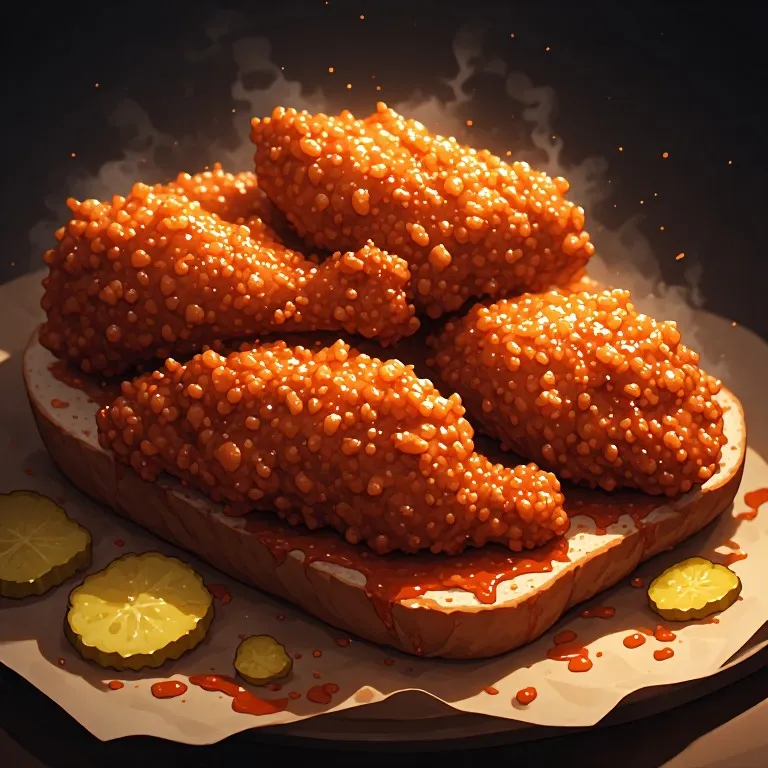
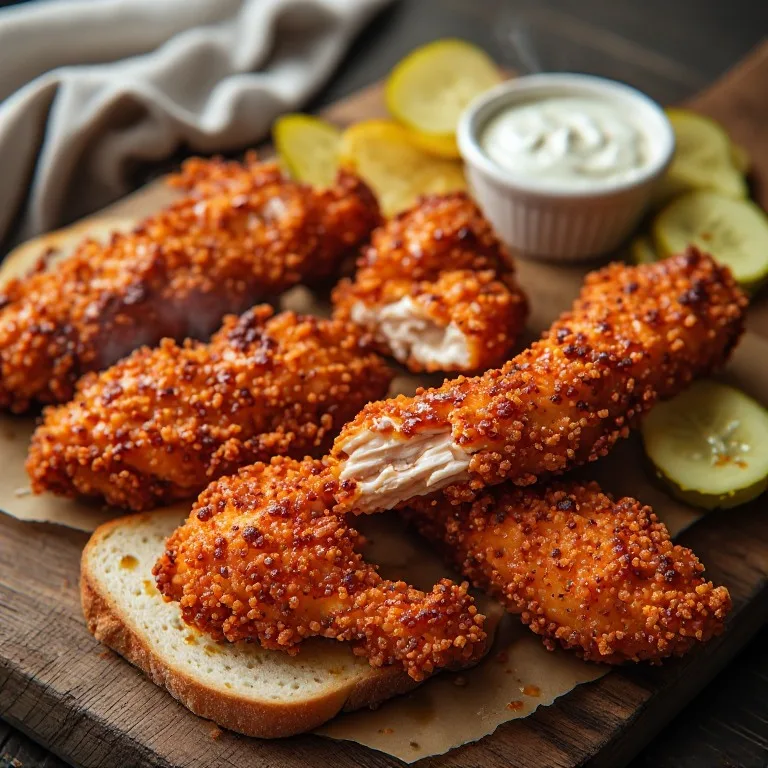
The copycat recipe targets the same result: a thick, craggly, shatter-crisp crust built through a double-dredge and the addition of cornstarch, a proper buttermilk-and-pickle-juice marinade, and a Nashville Hot glaze where the cayenne is balanced by brown sugar and smoked paprika. The white bread underneath is not optional decoration — it soaks up the spiced butter dripping off the tenders, and eating the last piece of bread after the chicken is gone is its own reward.
What Actually Makes It KFC Nashville Hot
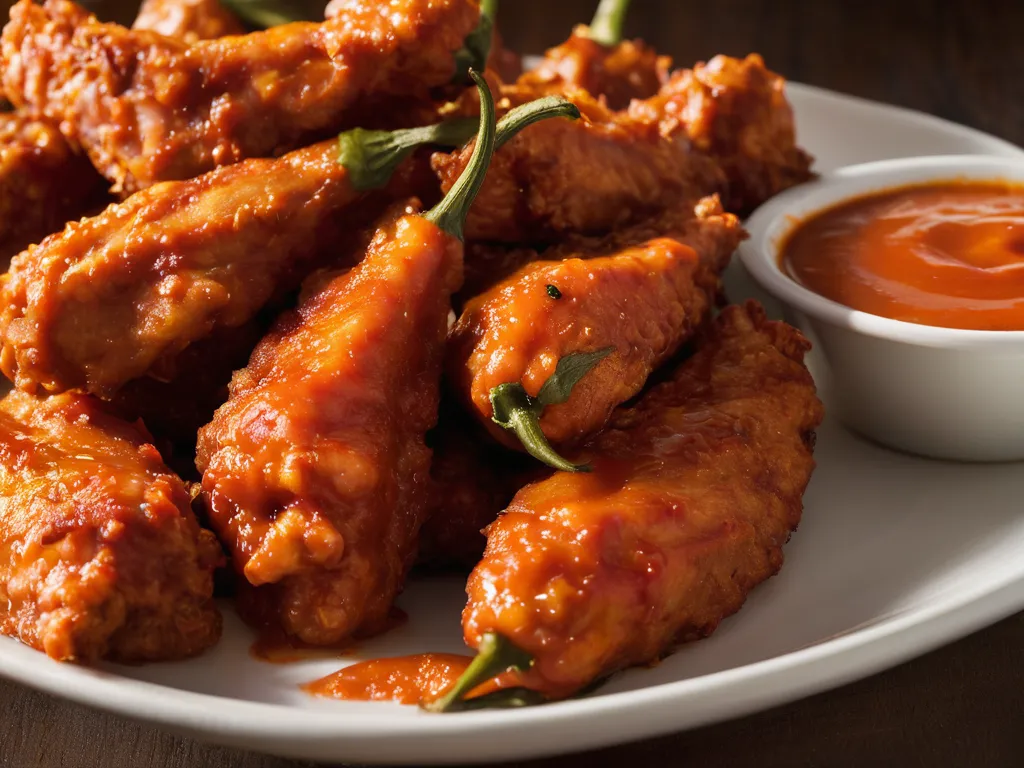
The KFC Nashville Hot layer is applied on top of their standard 11-herb-and-spice breading, not instead of it. This means the tenders taste like KFC chicken first — savory, herbal, crunchy — with the Nashville Hot glaze as a separate, bright layer of heat on top. The recipe here builds the same two-layer structure: seasoned dredge (garlic, chili, mustard, paprika) as the base, cayenne-butter glaze brushed on while the crust is still hot from the fryer.
The key difference between KFC Nashville Hot and generic spicy chicken is the glaze composition. Most “hot chicken” recipes use a cayenne-oil paste similar to Prince’s style. KFC uses butter, which creates a glossier, slightly richer glaze that clings to the crust rather than soaking in. The brown sugar rounds out the heat so the flavor is cayenne-forward without being one-dimensional.
| KFC Nashville Hot | Authentic Prince’s | This copycat | |
|---|---|---|---|
| Cut | Boneless tenders | Bone-in quarters | Boneless tenders |
| Spice carrier | Butter glaze | Cayenne-lard-oil paste | Cayenne-butter glaze |
| Heat level | Moderate (like a medium hot sauce) | Mild to XXX (extreme) | Moderate, adjustable 1–5 tbsp cayenne |
| Base flavor | 11-herb-and-spice breading | Plain fried crust | Seasoned flour + cornstarch dredge |
| Sweetness | Noticeable (brown sugar) | None | Tunable (1–2.5 tsp brown sugar) |
| Served on | White bread + pickles | White bread + pickles | White bread or biscuits + pickles |
The Double-Dredge
The craggly, thick crust KFC tenders are known for comes from a double-dredge: flour → buttermilk → flour again. The second flour coat adheres to the moistened first layer, creating multiple thin layers that separate and crisp independently in hot oil. Cornstarch mixed into the flour dredge is the other essential step — starch gelatinizes differently than flour in hot oil, creating the shatter-crisp surface that stays crunchy for the first few minutes after cooking. Both steps together produce the texture; either one alone gets you most of the way there but not fully.
The Prince’s Original, for Context
If you want to understand what KFC was referencing: Prince’s Hot Chicken Shack (they now have multiple Nashville locations) is a different category of experience. The heat levels are called mild, medium, hot, extra hot, and XXX — the last two are genuinely extreme in a way that sits with you for a while. The dish is bone-in chicken, the sauce is a cayenne-lard-oil paste, and the pickles and white bread are essential rather than decorative. If you’ve never been, it is worth a trip to Nashville solely for this. The KFC version is what you eat on a Wednesday night at home when you want something with that Nashville energy at a fraction of the commitment.