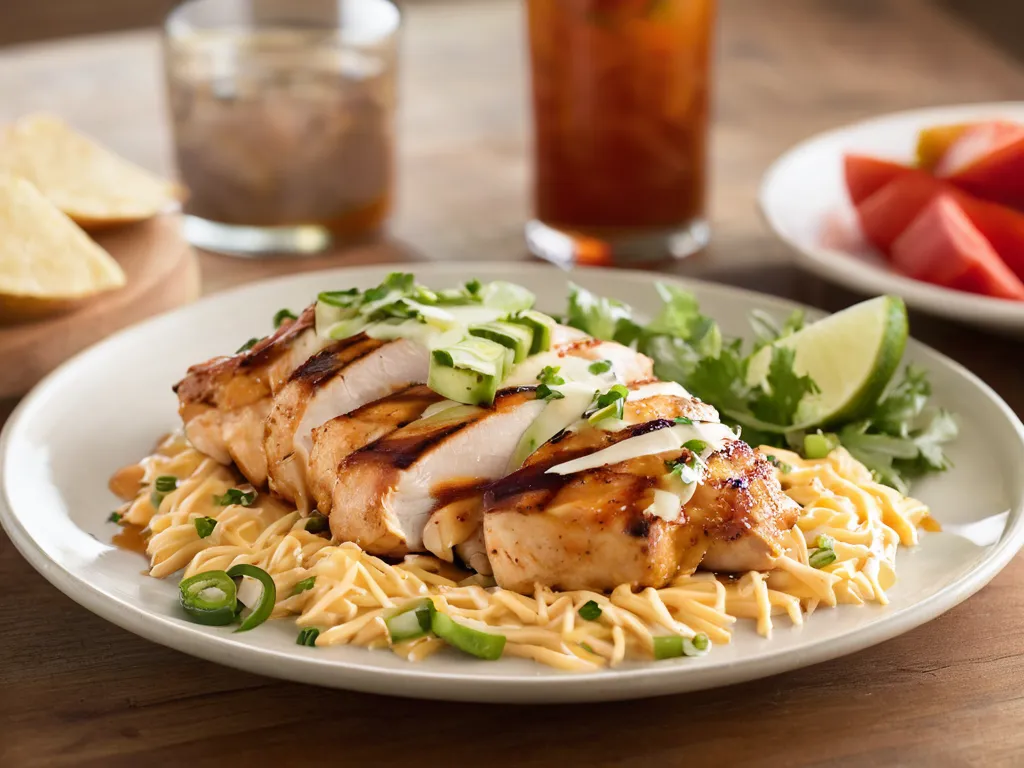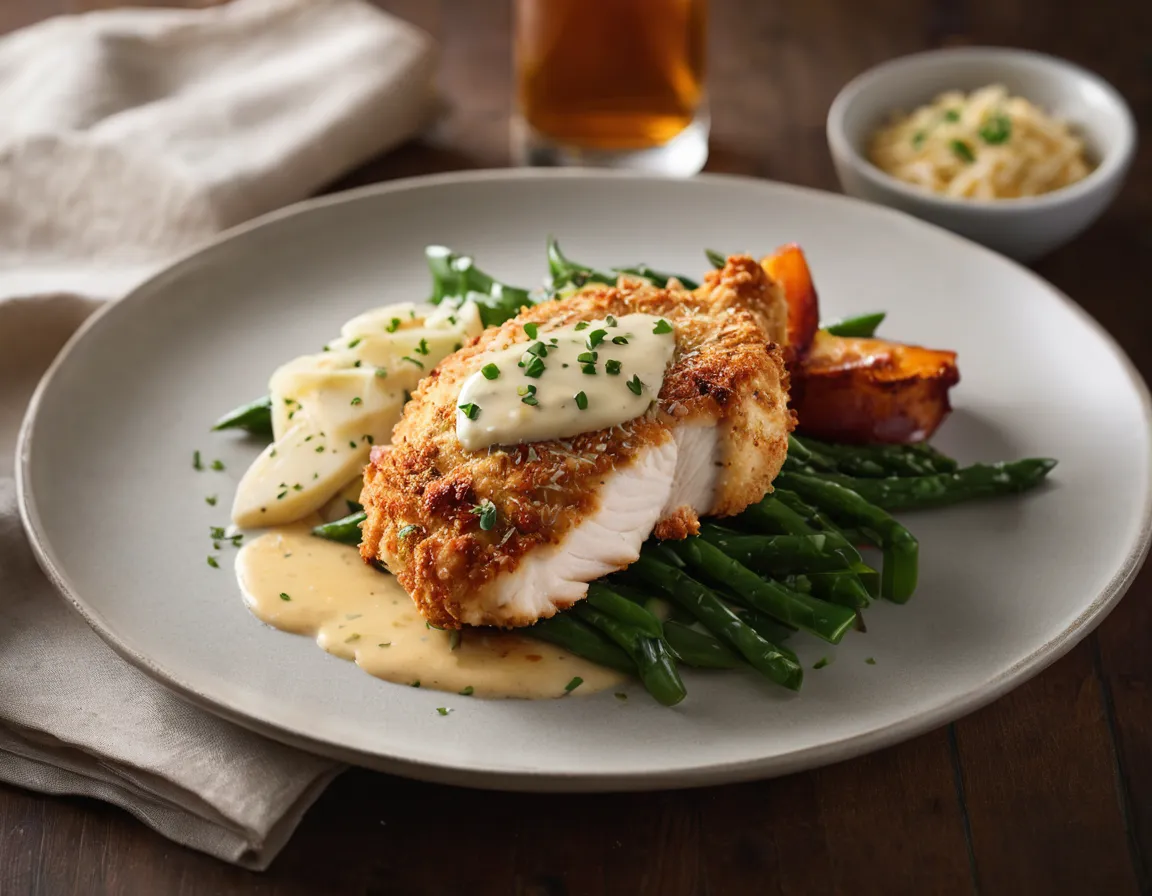
LongHorn Steakhouse’s Parmesan Crusted Chicken is the chain’s most-ordered non-steak item, and it’s worth understanding why: it costs $21–24 per plate at the restaurant and takes the kitchen about 15 minutes to fire. This version produces four servings for roughly $11–13 in ingredients in about 40 minutes total, and it is genuinely difficult to tell apart from the original once the provolone is bubbling under the broiler.
The technique is simple but it has one non-obvious step: the crust goes on after the chicken is fully cooked, not before. The broiler is only for browning the topping, not finishing the meat. Skipping the pounding step and the post-cook crust application are the two reasons most attempts at this dish come out wrong.
Why This Recipe Works
Ranch dressing, not mayo, is the binder. The LongHorn crust uses ranch dressing as the base adhesive for the parmesan-panko mixture. Ranch contains buttermilk, oil, and eggs — when it heats under the broiler it emulsifies into the cheese and sets into a cohesive crust instead of sliding off. Mayo-based versions taste noticeably different and produce a denser crust; sour cream-based versions release too much liquid. Ranch is not interchangeable here.
Pounding to even thickness prevents dry chicken. A raw chicken breast has an uneven profile — the thick end can be twice as thick as the thin end. Without pounding, the thin end overcooks and dries out while the thick end reaches safe temperature. A half-inch even thickness means the whole breast finishes at the same time, and it stays tender enough to hold up under the broiler.
The two-stage broil creates a real crust. The paste layer of ranch + parmesan sets first, creating a structural base. The raw parmesan sprinkled over the paste layer turns golden and develops the nutty, slightly crisp texture you see in the restaurant. The provolone on top melts over everything and seals the crust, creating the characteristic bubbly surface. Doing it in that sequence — paste, then raw parmesan, then provolone — matters.
Cast iron holds the sear. A cast-iron skillet retains heat when cold chicken breasts hit the pan, keeping the surface temperature high enough to brown the exterior in the time it takes the interior to cook. A non-stick pan drops temperature sharply and produces pale, steamed chicken instead of seared. Stainless steel works well too; non-stick is the only surface to avoid.
Cost Comparison
| 4 Servings | Per Serving | |
|---|---|---|
| Restaurant (LongHorn) | $84–96 (4 entrées + tax, before tip) | $21–24 |
| Homemade | $11–13 total | $2.75–3.25 |
Chicken breasts: $7–9 for 1.5 lbs. Ranch dressing: $0.60 for a quarter-cup. Parmesan: $1.50 for half a cup of freshly grated. Provolone: $1.50 for 4 slices. Panko: $0.30. Total ingredients: about $11–13 for four full servings — roughly a seventh of the restaurant tab.
Variations
Parmesan Crusted Salmon. The same crust technique works on salmon fillets. Sear skin-side down in the cast iron for 4 minutes, flip once for 2 minutes, then apply the ranch-parmesan paste, sprinkle raw Parmesan, top with provolone, and broil 3 minutes. The fatty flesh of salmon handles the high broiler heat without drying.
Parmesan Crusted Pork Cutlets. Pound boneless pork chops to 1/2-inch, sear 4 minutes per side, and apply the crust identically. The pork is done when it reads 145°F internal; the broiler step adds about 2 more degrees, so pull the pork off the heat at 143°F before applying the crust.
Extra crust. Double the panko-parmesan ratio in the paste if you want a thicker, crunchier crust similar to a breaded cutlet rather than a broiled topping. The trade-off is that the thicker layer takes an extra 60 to 90 seconds under the broiler and can go from golden to burnt quickly — watch it closely.
Added heat. Stir a 1/4 teaspoon of cayenne pepper into the crust paste. It adds a low-level heat that builds with each bite without making the dish spicy overall — close to the restaurant’s “Outlaw” seasoning profile.
Storage and Reheating
Refrigerator: Store the chicken on a plate, uncovered, for the first hour after cooking — steam from a covered dish condenses on the crust and softens it. After it cools, cover with plastic wrap and refrigerate for up to 3 days.
Oven reheat (recommended): Preheat to 375°F. Place the chicken on a wire rack set over a baking sheet. Heat for 10 to 12 minutes until the crust is warm and slightly re-crisped. The wire rack lets air circulate under the crust so the panko doesn’t steam against a flat pan.
Avoid the microwave. 60 seconds in the microwave turns the panko into a wet mat. If you must microwave, cover the crust with a dry paper towel to absorb some steam, but accept that it won’t recover its texture.
Freezer: This dish does not freeze well — the ranch-based crust weeps liquid when thawed and the crust separates from the chicken. Make it fresh.
More LongHorn Steakhouse copycats: LongHorn Mac and Cheese replicates the four-cheese sauce — Gruyère, Fontina, sharp cheddar and Parmesan — and the bacon-breadcrumb crust that make their side dish so distinctive. For the full LongHorn recipe collection and background on the chain, visit the LongHorn Steakhouse hub. And for a steakhouse-style dinner at home, serve this alongside a Copycat Outback Bloomin’ Onion.