
Pin It

Old Spaghetti Factory Browned Butter and Mizithra Cheese Pasta

Old Spaghetti Factory Browned Butter and Mizithra Cheese Pasta
Jump to Recipe
Prep 10 min Cook 20 min Serves 4
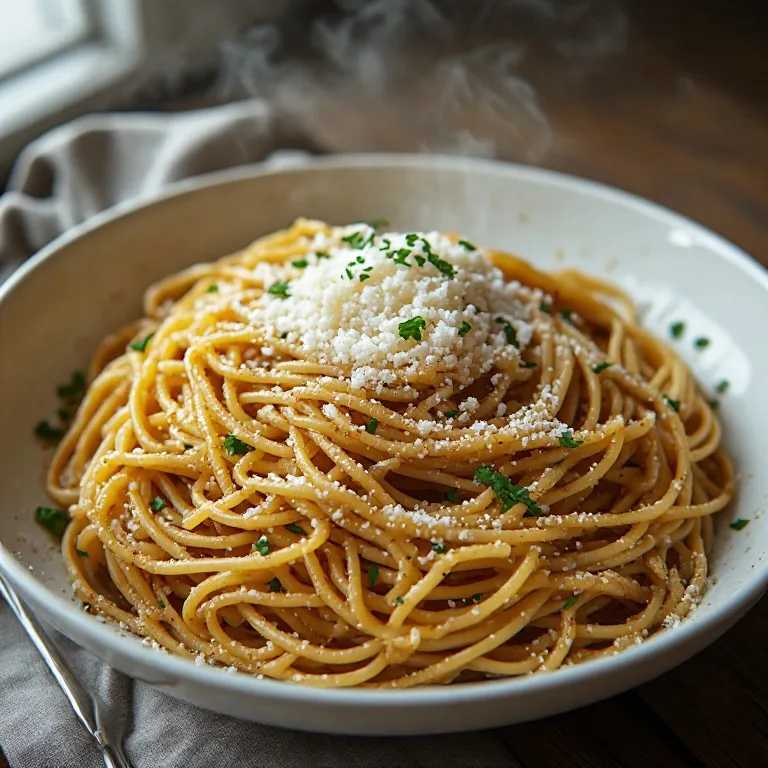
Quick answer: Cook 1 pound of spaghetti in well-salted water until al dente and reserve ¼ cup of the cooking water before draining. While the pasta cooks, cut 1 stick (8 tablespoons) of unsalted butter into cubes and melt it in a light-colored stainless or enameled saucepan over medium heat — use a light pan so you can watch the color. The butter will melt, foam once, then quiet down; once the foam subsides, swirl the pan gently every 30 seconds and watch the bottom: you want the milk solids to turn a deep golden amber and the butter to smell nutty and almost toasty, like hazelnuts. This takes about 5 to 7 minutes from first melt. The moment the solids turn amber, pull the pan off the heat — brown butter goes from perfect to burned in under a minute. Add the drained spaghetti directly to the pan of browned butter and toss immediately with tongs, coating every strand. Add 3 oz of finely grated dry mizithra cheese and 1.5 oz of finely grated Romano cheese (about ¾ cup mizithra and ⅓ cup Romano); toss vigorously until the cheese melts into the butter and clings to the pasta. If the pasta looks dry or the butter is tightening, add the reserved pasta water a tablespoon at a time and toss again until glossy. Divide into warm bowls, add the remaining cheese as a topping, and finish with a handful of chopped flat-leaf parsley. Serve immediately — the butter firms as it cools.

Shop the tools

Gear matched to this recipe. These are Amazon affiliate links — we may earn a small commission if you buy, at no extra cost to you.

As an Amazon Associate, Copycat Spices earns from qualifying purchases. Product images are generic illustrations, not the exact item listed.

Old Spaghetti Factory Browned Butter and Mizithra Cheese Pasta

The Old Spaghetti Factory's most-ordered dish since 1969 — spaghetti tossed in deeply nutty browned butter with grated dry mizithra and Romano. Four ingredients, thirty minutes, and a copycat that tastes exactly like the original.

Easy Prep: 10 min Cook: 20 min Total: 30 min4 servings ~$2.10/serving
Prep10 min
Cook20 min
Total30 min
Servings
4
At home~$2.10/serving
vs
Restaurant~$9.45/serving
You save ~78%

The Story Behind the Recipe

The Old Spaghetti Factory opened in Portland, Oregon in 1969, founded by Guss and Dorris Dussin in a converted warehouse full of antiques, stained glass, and a full-size trolley car inside the dining room. The browned butter and mizithra cheese pasta was on the menu from the very first service and has never come off — a genuine original recipe, not a trend adoption. At most locations it is the most-ordered dish on the menu, often outpacing everything else by a wide margin. The chain grew to around 30 locations across the western and midwestern US, and the dish is the reason many families keep coming back.

What makes it unusual on an American menu is the cheese: dry mizithra is a Greek whey cheese aged until it can be grated, salty and slightly tangy with a floral, nutty edge — it is nothing like Parmesan or Romano and nothing like fresh ricotta. The Old Spaghetti Factory uses it alongside Romano, roughly equal parts, which rounds out the sharpness. A full plate runs about $22 at the restaurant; the ingredients for four servings at home cost $10 to $14 depending on where you find the mizithra. The technique is the same four steps it has always been: boil pasta, brown butter, toss, serve.

Nutrition Facts

Per serving (4 servings)
Calories740
Total Fat34g
Total Carbs85g
Dietary Fiber4g
Sugars2g
Protein22g
Sodium720mg

* Estimated values based on standard recipe preparation. Actual values may vary.

Ingredients

Instructions

💡
Pro tip: This recipe tastes even better the next day. The flavors need time to meld together in the fridge.
❄️
Storage: Keeps in an airtight container in the fridge for up to 2 weeks. Freezer-friendly for up to 3 months.
🎃 Free Halloween cookbook — download now The Copycat Halloween Cookbook A ready-made, photo-illustrated PDF of our best halloween copycat recipes — free to download, no building required. Pay what you want to support if you love it.

Free PDF — instant download. We'll also send new seasonal copycat recipes now and then; unsubscribe anytime. Or just download it →

The Old Spaghetti Factory opened in Portland, Oregon in 1969 in a converted warehouse that Guss and Dorris Dussin filled with Victorian antiques, Tiffany glass lamps, and eventually a full-size trolley car parked in the middle of the dining room. The browned butter and mizithra cheese pasta was on the opening menu and has never been removed — a record very few chain restaurant dishes can claim. The restaurant expanded to around 30 locations across the western and midwestern US, and the pasta has remained the most-ordered item at most of them for over fifty years.

What makes the dish unusual — and what makes it worth seeking out the specific cheese — is the mizithra. It is a Greek whey cheese aged until it can be grated, with a salty, slightly tangy, floral quality unlike any Italian cheese. The Old Spaghetti Factory pairs it with Romano in roughly equal parts: the Romano provides the clean, soluble saltiness that helps the sauce coat the pasta smoothly, while the mizithra provides the character that makes you ask “what is that?” the first time you eat it. A plate at the restaurant runs about $22. Four servings at home cost $10 to $14, and you can brown butter in the time the spaghetti takes to cook.
🥗

Make It Healthier

Love Old Spaghetti Factory Browned Butter and Mizithra Cheese Pasta but want a lighter version? Try these simple swaps:

  • ✓Reduce the butter to 5 tablespoons instead of 8 and the dish still tastes clearly like itself — the brown butter flavor is present with each serving, just less coating per strand. Going below 5 tablespoons makes the pasta dry rather than lighter.
  • ✓The sodium comes almost entirely from the cheeses. If you are salt-sensitive, reduce the mizithra and Romano from a total of 4.5 oz to 3 oz and skip all added salt in the pasta water — the cheese alone will season the dish adequately.
  • ✓A handful of wilted baby spinach tossed in with the pasta in the last 30 seconds of the tossing stage adds fiber without altering the flavor: the spinach disappears into the browned butter and reads as part of the dish rather than an addition.
  • ✓Whole wheat spaghetti works structurally — it holds the brown butter coating the same way — but has a nuttier, earthier flavor that actually complements the mizithra's tang. Add 1 to 2 minutes to the cook time and taste as you go.

Frequently Asked Questions

What is mizithra cheese and where can I buy it?

Mizithra (also spelled myzithra) is a Greek whey cheese made from sheep's or goat's milk — or a combination — that dates back over 2,000 years and is produced primarily on Crete. It comes in two very different forms: fresh mizithra, which is soft, white, and mild like a slightly saltier ricotta; and dry aged mizithra, which is hard, crumbly, and sharp, grated over pasta the way you'd use Pecorino Romano. The Old Spaghetti Factory uses the dry aged version exclusively. Look for it at Greek grocery stores, the cheese section of Whole Foods (usually under the label 'Myzithra'), Mediterranean specialty markets, or online from cheese retailers. It costs roughly $8 to $12 per pound, and a pound goes a long way since you only need a couple of ounces per serving.

How do I know when my butter is properly browned?

Brown butter has three clear signals and one window of perfection. First, color: the butter starts clear yellow, then turns pale gold as it foams, then — once the foam subsides — the milk solids at the bottom of the pan turn from white to golden to deep amber. You want deep amber, not pale tan and not dark brown. Second, smell: the moment brown butter is done, it shifts from a neutral dairy smell to something unmistakably nutty, almost hazelnut-like. Third, texture: the foam will have mostly dissipated and the butter will look clearer than when it started, with visible dark gold specks at the bottom. The catch: brown butter goes from perfect to burned in about 30 to 45 seconds. Use a light-colored pan (stainless steel or white-enameled) — dark nonstick pans make it impossible to see the milk solid color until it's too late. The moment you hit the deep amber stage, pull the pan off the heat — the residual heat in a hot pan will keep cooking it for another 30 seconds even off the burner.

What pasta shape does the Old Spaghetti Factory use?

Spaghetti is the standard shape at The Old Spaghetti Factory for this dish, as it has been since 1969. Some locations offer angel hair as an option. The browned butter coats long thin pasta extremely well because every strand gets pulled through the butter rather than pooling at the bottom like in a short tube shape. If you can't find standard spaghetti or want a variation, spaghettini (thin spaghetti) or angel hair both work — reduce the tossing time by about a minute as they are more delicate. Fettuccine or linguine also work but change the character of the dish slightly, giving a wider surface that holds more butter per bite. Avoid short pasta shapes like penne or rigatoni — they don't coat as evenly and the dish loses its identity.

Why does OSF use both mizithra and Romano?

Dry mizithra alone can be quite sharp and slightly grainy when grated — it has more of a tangy, herbal quality than the clean salty richness of an aged Italian sheep's-milk cheese. Romano is more familiar: consistently salty, slightly pungent, and very soluble in warm fat, which helps the sauce bind to the pasta more smoothly. Together, they balance: the mizithra provides the distinctive Greek cheese character that makes this dish recognizable and different from any Italian pasta, while the Romano rounds it out and helps the sauce achieve a glossier, more cohesive texture. The OSF ratio is roughly equal parts by weight — 50/50. If you go heavier on the mizithra the dish is tangier and more distinct; heavier on Romano and it becomes closer to a conventional cacio e pepe variant.

Can I substitute for mizithra if I can't find it?

A 50/50 blend of Romano and Parmesan is the most common substitute and works reasonably well — it produces a rich, salty, aged-cheese pasta that is excellent on its own even if it doesn't have the specific character of mizithra. Ricotta salata (dried and salted Italian whey cheese) is closer to the texture and slightly closer to the flavor, but is milder and less sharp. Kasseri, another Greek cheese, is the most similar in origin but is softer and doesn't grate as finely. None of these are exact substitutes — if you want the dish to taste like The Old Spaghetti Factory specifically, finding dry mizithra is worth the effort. Order it online if your local stores don't carry it.

Can I use salted butter instead of unsalted?

Unsalted is strongly preferred. Dry mizithra and Romano are both aggressively salty cheeses. Using salted butter compounds the sodium significantly and you lose control of the final seasoning — the dish can end up unpleasantly salty with no way to fix it. With unsalted butter, you can taste and adjust at the end. If you only have salted butter, skip adding any salt to the pasta water and taste before serving — you may need none at all.

How do I reheat leftovers without the butter seizing?

Brown butter firms back to a waxy solid as it cools, so cold leftover browned butter pasta looks like dry, clumped noodles. The fix: add 1 to 2 tablespoons of water to the pasta before reheating, then warm it gently in a skillet over low heat, tossing constantly as the butter melts back into the pasta. The water gives the emulsion something to work with and prevents the pasta from sticking. Avoid the microwave — it creates hot spots that cook the pasta unevenly and the steam makes the cheese texture gummy. The dish is best fresh by a significant margin; if you plan to have leftovers, under-dress the pasta slightly when making it so there's butter to spare on the reheat.

Love this recipe? Share it!

Free PDF: our 12 most-wanted copycat recipes — instant download.

Made it? Buy us a coffee

Every recipe here is free, with no paywalls. If this one was a hit at your table, a small tip keeps new copycats coming.

$

The Old Spaghetti Factory is a trademark of its owner, used here only to describe the dish this recipe recreates. This is an independent copycat written in our own words — Copycat Spices is not affiliated with, endorsed by or sponsored by The Old Spaghetti Factory.

Ratings & Reviews

—
No ratings yet

Rate this recipe

Click a star to rate

Leave a Review

0/500

CS

Copycat Spices Editorial

Researched + fact-checked. Every recipe on Copycat Spices is built from published sources — official ingredient lists, brand-published recipes, interviews and food-science references — and fact-checked before it goes live, then written as clear, step-by-step instructions for home cooks of all skill levels.

Learn more about our mission →