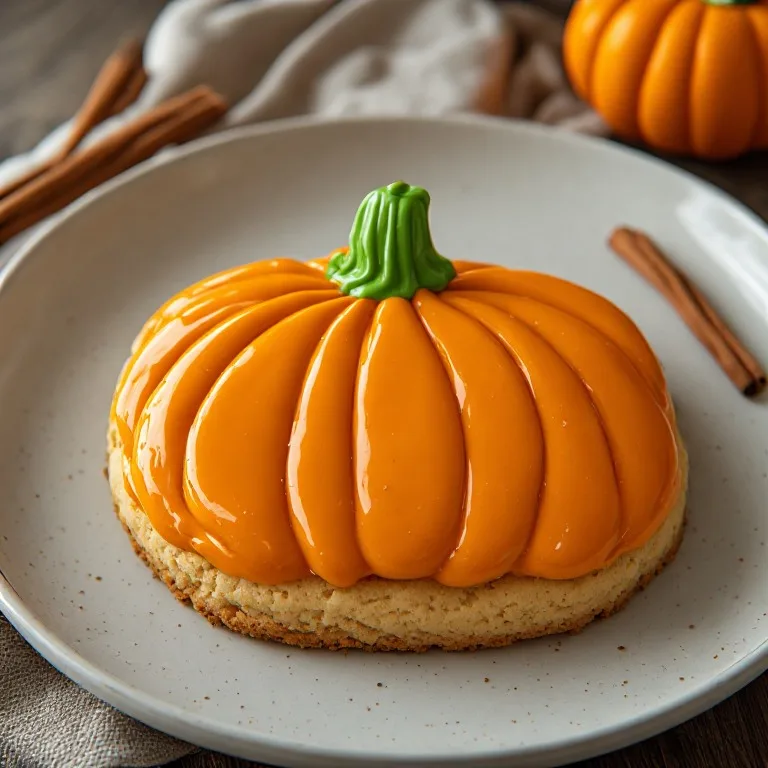


Panera brings back its Pumpkin Shaped Shortbread Cookie every fall — it returned this year on August 19, 2026, alongside the new Pumpkin Cinnamon Roll and Caramel Pumpkin Slice. At 360 calories and about $2.79 each, it’s a simple, buttery shortbread cut into a pumpkin shape and decorated with orange icing and a green stem. No exotic ingredients, no hidden complexity. The reason people look for a copycat recipe isn’t that Panera’s is technically impressive — it’s that shortbread this straightforward genuinely is easy to make in volume at home, and 18–20 pumpkin cookies cost about $8 total rather than $50.
What Kind of Cookie Is It, Actually
Panera calls it a “Pumpkin Shaped Shortbread Cookie” on its nutrition page. Shortbread is a specific thing: it’s primarily butter and flour with minimal sugar and no eggs. The high butter-to-flour ratio produces a cookie that’s dense and crumbly — it breaks with a snap rather than bending, and the interior is uniform rather than airy. It doesn’t have the soft center of a sugar cookie or the chew of a chocolate chip cookie.
The pumpkin reference is entirely in the shape and the orange icing. The dough is lightly spiced with pumpkin pie spice, but it’s a background note — the cookie tastes like buttery shortbread with a subtle warmth. The icing does the visual work. If you’re expecting a bold pumpkin-butter flavor in the cookie itself (like a pumpkin bread), this isn’t that. It’s closer to a decorated holiday shortbread.
Don’t Confuse the Two Panera Pumpkin Cookies
Panera’s nutrition data lists two different fall cookies, and it’s easy to mix them up when checking calories:
- Pumpkin Shaped Shortbread Cookie — 360 calories. The buttery, pumpkin-shaped shortbread with orange icing and a green stem. This is the one this recipe replicates.
- Pumpkin Cookie — 450 calories. A larger, softer decorated cookie, not shortbread.
If a nutrition tracker shows 450 calories for “Panera pumpkin cookie,” that’s the bigger soft cookie, not the shortbread. The seasonal shortbread version is 360 calories per cookie at Panera’s serving size.
The One Thing That Makes Shortbread Work
Bake it pale. Shortbread should come out of the oven looking like it’s not quite done — very pale, barely set, with the faintest color at the very edge. It firms as it cools. If you bake until the edges are golden (the instinct from baking drop cookies), you’ll get a too-hard cookie that crumbles aggressively rather than breaking cleanly.
The target is an internal temperature of 200–205°F. At that point the starch is gelatinized and the cookie is structurally set, even though it looks underdone. Pulling at 190°F or below gets you a too-soft result that collapses when handled; above 210°F and you’re in overbaked territory. An instant-read thermometer takes the guesswork out.
Why Gel Food Coloring Matters for the Icing
Liquid food coloring adds water to the icing. Royal icing depends on a specific ratio of powdered sugar to liquid to achieve the flood consistency that levels out and sets hard. Adding liquid food coloring disrupts that ratio, thinning the icing and forcing you to add more powdered sugar to compensate, which often creates an uneven, gummy result or paler-than-intended color.
Gel food coloring is concentrated pigment in a gel base with negligible water content — a tiny amount delivers intense color without changing the icing’s texture. For a true pumpkin orange, start with a toothpick-tip of orange gel and adjust from there. Adding a tiny amount of red gel deepens it if needed.
Getting the Icing Thickness Right
The 10-second test: drag a spoon through the icing and count how long it takes for the surface to smooth back over. At 10–15 seconds, the icing will self-level on the cookie without running off the edges. Much faster (5 seconds) and it’s too thin; much slower (30+ seconds) and it’s too thick to flow into the cookie’s surface grooves.
For pumpkin cookies with defined ridges in the cutter, slightly thicker icing (12–18 second test) looks better — it pools slightly in the ridges while staying more prominent on the raised sections, giving a subtle 3D effect. Flood-thin icing (10-second test) levels everything flat and smooth.
Make-Ahead and Storage
Undecorated baked shortbread keeps at room temperature for up to 10 days — its low moisture content makes it one of the longest-keeping homemade cookies. Decorated (iced) cookies keep for 5–7 days once the icing has fully hardened, which takes 2–4 hours at room temperature.
For volume baking: bake and freeze the uniced cookies (single layer until solid, then transfer to a sealed container) for up to 3 months. Thaw at room temperature for 20 minutes and decorate the day you want to serve them. This is the practical approach for making a large batch for Thanksgiving or holiday trays — one afternoon of baking, then decorating in stages over the following weeks.