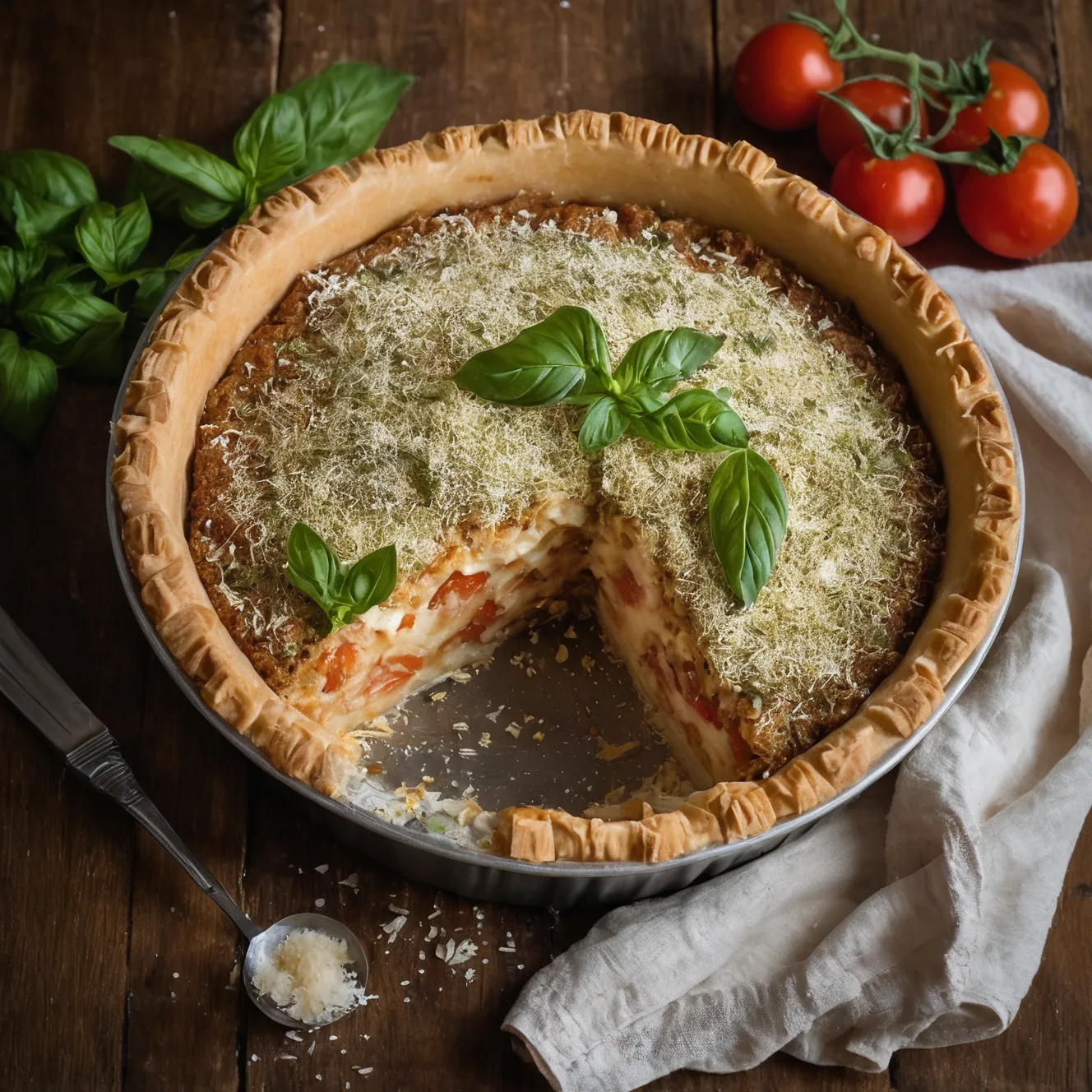
If you’ve ever eaten at Pizzeria Uno and wondered what makes a Chicago deep dish feel so different from other thick-crust pizza, the answer isn’t the thickness — it’s the order of assembly. Everything is reversed. Cheese on the crust first. Sausage patty on top of the cheese. Chunky tomatoes poured over everything at the end. The sauce never touches the dough. That single structural decision is what produces a crisp, flaky crust after a 30-minute bake instead of a soggy one — and it’s the thing almost every home copycat recipe gets wrong by instinct.
This recipe builds Uno’s Numero Uno, the chain’s signature deep dish as it’s served today: Italian sausage and pepperoni with sliced mushrooms, green peppers, and onions. (The 1943 original was a simpler sausage pie; pepperoni is part of the standard Numero Uno build now.) The crust uses the authentic three-fat formula — butter, olive oil, and vegetable oil — not cornmeal. The cheese goes down first. The sausage is pressed flat as a single patty. The tomatoes are hand-crushed San Marzanos that stay chunky through the bake. This is the pizza that started Chicago’s most argued culinary tradition.
Why the reverse layering matters
Standard pizza builds from sauce out: dough → sauce → cheese → toppings. Chicago deep dish inverts that entirely for a practical reason: bake time. A thin-crust pizza bakes in 8–12 minutes at very high heat; any moisture from the sauce evaporates quickly. A deep dish bakes for 25–30 minutes at moderate heat, and sauce sitting on raw dough for that long would saturate it. The fat in the cheese (and the butter in the pan and the crust itself) creates a barrier that keeps the dough crisping against the pan while the sauce reduces and concentrates on top. The sausage patty acts as a second barrier between the melting cheese and the tomatoes. Get the order wrong and you get a soggy bottom. Get it right and you get a crust that pulls cleanly from the pan in slices.
The crust: three fats, no cornmeal
The flaky, almost pastry-like texture of Uno’s crust is not from cornmeal — the original recipe doesn’t use it. The texture comes from an unusual amount of fat for a pizza dough: butter plus olive oil plus vegetable oil, worked into the flour before the water goes in. This coats the gluten strands before they fully develop, producing a tender, short crumb rather than a chewy bread structure. The best-documented reverse-engineered versions of the original dough contain no cornmeal; that addition came from copycat developers trying to explain the texture and has propagated widely. If you want slightly more rustic chew, 2 tablespoons of fine cornmeal won’t ruin it — but it’s not traditional.
What most copycat recipes get wrong
1. Crumbled sausage instead of a patty. Crumbled sausage migrates into the cheese during baking and loses its texture. A flat patty stays distinct, gives each slice a full cross-section of sausage, and holds the sauce up off the cheese while it renders. Press the patty before assembly, not after the cheese is in the pan.
2. Adding sauce under the cheese. Every instinct from making other pizzas tells you to put sauce on the dough first. That instinct is wrong here. The sauce under the cheese turns the crust into a wet sponge in a 30-minute bake. Always cheese first.
3. Not buttering the pan generously. The butter in the pan is not just for release — it fries the exterior of the crust against the metal, producing the lacy, caramelized bottom that is the hallmark of a well-made deep dish. An undersized amount of butter and the crust steams instead of frying. Use the full 2 tablespoons; the pan should look shiny and well-coated.
4. Rushing the rest. Five minutes of resting after the bake lets the mozzarella firm back up from its bubbling state. Cut immediately and the cheese slides off the crust; wait and each slice is structurally intact.
Cost comparison
| Restaurant | Home | |
|---|---|---|
| Numero Uno, 7” individual | $16.49 | — |
| Numero Uno, 10” regular | $26.69 | — |
| Numero Uno, 12” large | $32.99 | — |
| Home 9” (feeds 4) | — | ~$10–12 |
| Per serving | — | ~$2.50–3 |
Restaurant prices are from Uno Pizzeria & Grill’s current menu. The home 9-inch pizza sits between the restaurant’s 7-inch individual and 10-inch regular in size and feeds four comfortably for the price of one restaurant slice.
Notes
- Make ahead: The dough can be made the night before and cold-proofed in the refrigerator. Pull it out 45 minutes before baking to come to room temperature.
- Original sausage-only version: For the simplest 1943-style pie, skip the pepperoni and vegetables and build with just the sausage patty, cheese, and sauce. Clean and classic — this is what many people picture as Uno’s original.
- Extra pepperoni: For a meatier pie closer to Uno’s Prima Pepperoni, double the pepperoni to 6 oz and lay it in two overlapping layers over the sausage.
- Cheese-only: For a straight cheese deep dish, skip the sausage and vegetables. Double the mozzarella to 3 cups (12 oz) and proceed with the sauce on top. Simple and very good.
- Pan size: A 10-inch cast iron skillet works slightly better than a 9-inch cake pan because it retains heat longer and produces a crispier bottom. If using cast iron, preheat it in the oven for 5 minutes with the butter in it before pressing in the dough.
If you’re working through the Uno’s menu, the Rattlesnake Pasta (penne in a spicy asiago-jalapeño cream sauce) and the Spinach & Artichoke Dip are the restaurant’s other most-searched dishes. For a different thick-pan approach with a caramelized cheese border, the Detroit-Style Pizza guide covers the rectangular-pan method with Wisconsin brick cheese — a completely different style but shares the same emphasis on the pan-fried crust. The Little Caesars Deep Dish and Pizza Hut Pan Pizza are the chain comparisons if you want to taste all three deep-pan styles side by side.