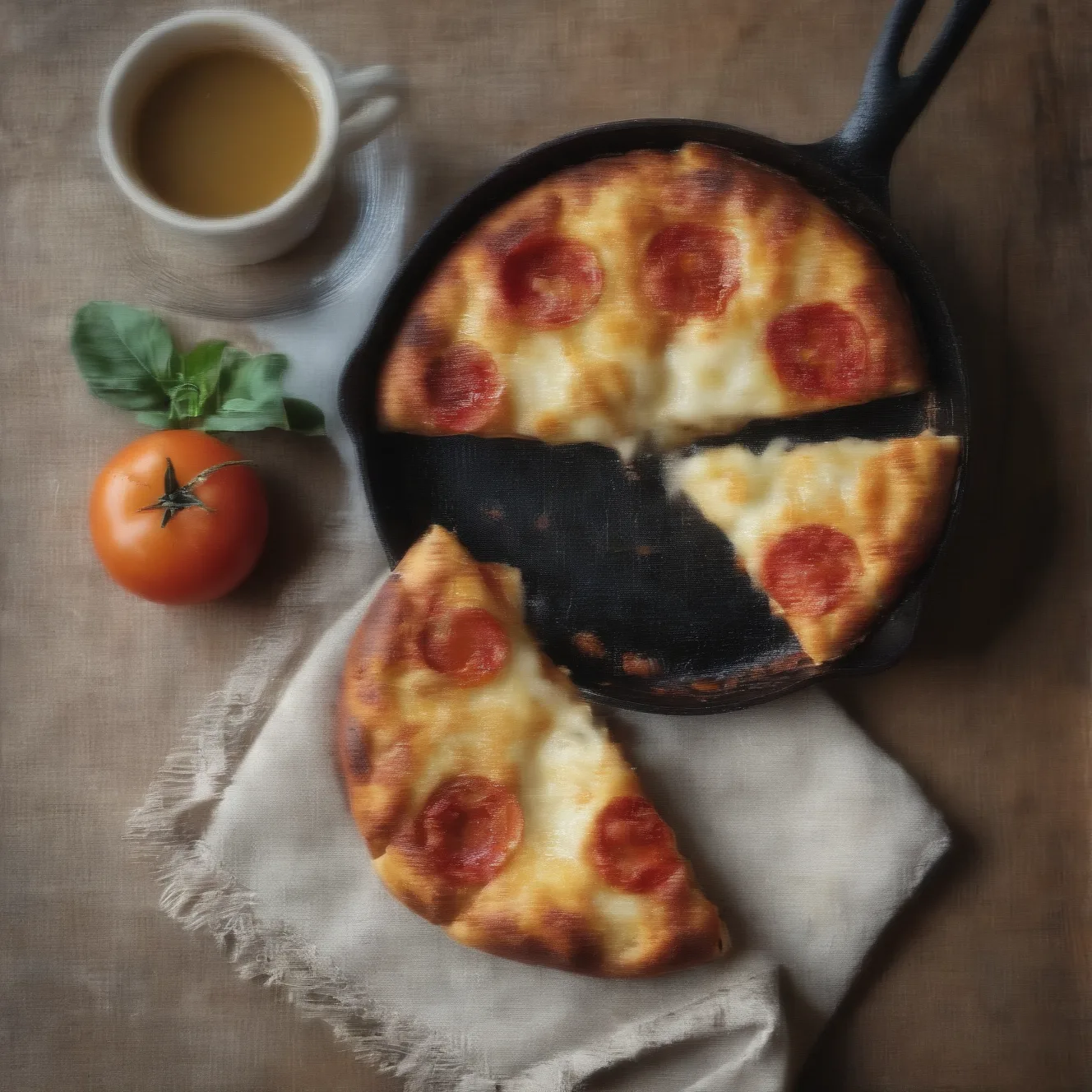
Pizza Hut Pan Pizza
Prep: 25 min (plus 45–60 min pan rise) | Cook: 22 min | Serves: 4 | Cost: ~$7–8 vs $14–22 at Pizza Hut
Pizza Hut’s pan pizza is fundamentally a different dish from most homemade pizza — not just a thicker version of the same thing. The crust is soft and pillowy in the interior, deeply brown and almost fried-crispy on the bottom, and richly flavored in a way that plain baked dough isn’t. Getting there requires one non-obvious move that almost every copycat recipe gets wrong.
TL;DR:
- Vegetable oil in the pan, not butter — butter creates steam that prevents crisping
- The dough rises in the oiled pan (45–60 min) — that’s what creates the fried-bottom effect
- Lowest oven rack position, 475°F — bottom heat drives crust temperature
- 9-inch round metal cake pan is the closest equivalent to Pizza Hut’s restaurant pans
- Standard pizza sauce under the cheese, then toppings — different from Detroit style
The Origin Story
Dan and Frank Carney borrowed $600 from their widowed mother in 1958 to open a pizza restaurant in Wichita, Kansas. They were college students at Wichita State University and had no experience in the restaurant business. A friend had suggested pizza as a business concept; the building they rented for their first location resembled a small hut. The sign they installed had room for only eight letters: Pizza Hut.
The first location opened in June 1958. It was a converted building on a high-traffic corner at Kellogg and Bluff in Wichita. It worked. The first franchise opened in Topeka, Kansas in 1959, and the chain grew to hundreds of locations through the 1960s. PepsiCo acquired Pizza Hut in 1977, the same era in which the pan pizza that would define the brand was being developed.
Pan pizza wasn’t part of the original Pizza Hut menu — the chain’s early identity was built on the thin-crust and hand-tossed styles. The Original Pan Pizza was introduced in 1980, and it transformed the chain. The thick, oil-fried crust offered a completely different experience from the thin-crust competition, and it became Pizza Hut’s signature product. The Personal Pan Pizza format followed in 1983, giving individual diners their own small pan.
The specific technique — heavy oil coating, pan-rise proofing, fried bottom crust — was borrowed from Italian-American pizzeria traditions that had been using olive oil in pans for decades, but Pizza Hut standardized and scaled it in a way that made it into a recognizable product Americans associate with a specific chain.
Oil, Not Butter — The Critical Correction
It’s tempting to reach for butter in the pan — it’s richer, more flavorful, and seems like an upgrade from plain oil. Plenty of home cooks do it, and older stub recipes call for it. But it’s wrong for pan pizza technique, and the reason is physical chemistry. (The faint buttery note people associate with Pizza Hut’s crust doesn’t come from butter in the pan at all — it comes from a butter-flavored oil release sprayed on the rim of the dough before baking. The pan itself gets plain oil.)
Butter is approximately 80% fat and 18% water, with 2% milk solids. When a butter-coated pan enters a 475°F oven, the water content boils off as steam — starting the moment butter reaches 212°F, the boiling point of water. That steam migrates upward through the dough, creating moisture between the dough surface and the pan. Steam is the enemy of Maillard browning: the crust surface can’t exceed 212°F (can’t get hotter than boiling water) until all the moisture evaporates, which takes several minutes of baking time.
Vegetable oil contains no water. It’s 100% fat with a smoke point around 400–450°F depending on the specific oil. When a vegetable-oil-coated pan enters the oven, the oil stays as oil — it doesn’t vaporize into steam. The moment the bottom of the dough contacts hot oil and the hot metal pan surface, the temperature at that interface climbs well above 212°F. The Maillard reaction — the browning of proteins and sugars — begins at roughly 280–300°F. The starch-rich bottom of the dough achieves that temperature quickly and starts crisping within the first few minutes of baking.
The result: the bottom of a vegetable-oil pan pizza is genuinely fried from below, not just baked. The texture is different from the interior, different from the edges, and different from anything you get with butter.
Why the Pan Rise Matters
Most pizza recipes involve rising the dough in a bowl, then transferring it to a pan or pizza stone. Pan pizza skips the bowl rise entirely and goes straight into the oiled pan.
This sequence matters for two reasons. First, the dough rises against the pan surface during its final fermentation, which means it spreads to exactly the right shape and makes contact with the oil. By the time the pan goes into the oven, the bottom surface of the dough has absorbed a thin film of oil — that oil-saturated surface starts crisping almost immediately when heat arrives.
Second, the pan rise happens at room temperature and typically takes 45–60 minutes. During this time, the yeast is still actively fermenting, producing CO2 and creating the open, airy interior structure. When the pizza goes into the oven, the interior continues to puff briefly (oven spring) while the bottom is already crisping in the oil. The two processes — airy interior expansion and fried-bottom crust formation — happen simultaneously, which is why the finished result has the specific contrast of soft-inside, crispy-outside.
If you rush the pan rise or skip it, the dough doesn’t have the same oil penetration or the same final fermentation, and the crust tastes like baked bread rather than pizza.
Pan Selection
9-inch round metal cake pan: The closest equivalent to Pizza Hut’s restaurant aluminum pans. Produces a thick crust that fills the pan completely, with well-formed edges. Dark-colored cake pans (typically non-stick or anodized) produce a more browned bottom than light silver aluminum pans because darker surfaces absorb more radiant heat.
Cast iron skillet (12-inch): Works well and produces excellent crust if you’re careful about temperature. Cast iron’s high heat capacity means it gets very hot and stays hot — the bottom crust will brown aggressively in the first 10 minutes. This is great for crispiness but requires watching. The 12-inch cast iron produces a pizza with thinner edges than a 9-inch cake pan, since the same dough amount spreads across more surface area.
Stainless steel skillet (12-inch): Works but less well than cast iron or dark metal. Stainless steel reflects heat more than it absorbs it and doesn’t hold temperature as consistently. Use the same amount of oil, keep to the lowest rack, and add 3–4 minutes to baking time.
What not to use: Glass baking dishes — glass is a poor heat conductor and won’t produce a fried bottom at home oven temperatures. Silicone — same problem. Non-stick skillets — the non-stick coating can’t withstand the sustained high heat required.
The Dough: Enriched and Oil-Forward
Pan pizza dough is richer than a thin-crust dough. The olive oil in the dough (3 tablespoons for this recipe) does two things: it coats the gluten strands as they form, creating a more tender crumb, and it contributes to browning on the bottom and edges when the dough contacts the hot oil in the pan.
Higher flour-to-water ratio here than a Neapolitan crust — the dough is soft and slightly tacky but not slack. Over-kneading is less of a concern with pan pizza than with thin-crust pizza; the extra gluten development actually helps the dough hold its shape during the pan rise without collapsing.
The dough is enriched enough that it can be made with all-purpose flour rather than bread flour. Bread flour (higher protein) creates more chew and structure; all-purpose gives a softer, more uniform crumb that’s closer to what Pizza Hut produces.
Topping Order for Pan Pizza
Pan pizza uses the traditional stacked order: sauce first, directly on the dough, then toppings, then cheese. This is the opposite of Detroit-style pizza (which puts cheese first, sauce last) but matches the familiar pan pizza assembly.
Sauce under the cheese acts as a moisture barrier between the toppings and the crust, preventing the cheese from direct contact with the dough surface and letting each layer cook somewhat independently. The mozzarella blanket traps steam and promotes even melting across the whole surface.
For the cheese: use block mozzarella that you shred yourself, not pre-shredded bags. Pre-shredded mozzarella contains cellulose or potato starch as an anti-caking agent. This coating prevents the cheese from melting smoothly — instead of flowing into a continuous molten layer, it melts in uneven patches with a grainy texture. A block of whole-milk low-moisture mozzarella, shredded on a box grater just before use, melts into a perfectly even golden layer.
5 Variations Worth Making
Meat Lovers (the most popular Pizza Hut pan pizza) Add pepperoni, crumbled cooked Italian sausage, and diced Canadian bacon on top of the sauce before the cheese. Use 1½ cups mozzarella + ½ cup shredded provolone for a slightly sharper, more complex base. The provolone doesn’t melt as smoothly as mozzarella but adds a tangy, salty depth the plain mozzarella version lacks.
Pepperoni Cup + Honey Use the standard recipe but cup pepperoni (the small Hormel pepperoni rounds; regular rounds also work but won’t cup). Bake as normal. When the pizza comes out, drizzle 1 tablespoon of hot honey over the top. The sweet-spicy-salty-fatty combination has become a standard high-end pizza topping pairing, and pan pizza’s rich, oily crust handles the honey weight better than thin crust.
Garlic Herb Replace the olive oil in the dough with garlic-infused olive oil (steep 4 smashed cloves in ½ cup olive oil for 20 minutes; strain; use 3 tablespoons in dough). Top with ricotta instead of mozzarella, scattered in spoonfuls, and bake until the ricotta browns at the edges. Finish with fresh basil and a drizzle of garlic oil. No tomato sauce.
White Pizza Skip the tomato sauce entirely. Make a garlic cream sauce: 2 tablespoons butter + 2 cloves minced garlic + 1 tablespoon flour (cook 1 minute) + ½ cup heavy cream + ¼ cup Parmesan + pinch of nutmeg. Spread on the risen dough, top with shredded mozzarella and sliced fresh mushrooms. Bake as normal. Finish with fresh thyme.
Personal Pan Pizza (6-inch individual) Divide the dough into two pieces. Use two 6-inch round cake pans with 1½ tablespoons oil each. Press and rise as normal; bake for 14–16 minutes at 475°F. Each pizza serves 1–2. This is the format Pizza Hut famously paired with the Book It! reading program starting in 1984 — elementary-school students earned personal pan pizzas for hitting reading goals.
Common Mistakes
Using butter instead of vegetable oil. The water in butter steams the crust instead of frying it. The resulting bottom is pale, soft, and doesn’t have the signature crispy bottom.
Not enough pan oil. Three tablespoons for a 9-inch pan is the right amount. Reducing to 1–2 tablespoons produces a drier bottom that doesn’t fry properly.
Skipping or shortening the pan rise. The 45–60 minute pan rise is where the dough absorbs the oil and completes its fermentation. A 20-minute rush produces a dense, bread-like crust without the airy interior or the oil-fried bottom.
Using the middle or top oven rack. The bottom rack is essential for directing maximum heat toward the pan bottom. Middle-rack pan pizza bakes the toppings faster than the crust and produces a pale, soft bottom.
Pre-shredded mozzarella. See the topping order section above — the anti-caking coating prevents proper melt. Buy a block and shred it.
Cost Breakdown
| Item | Cost |
|---|---|
| Pizza dough ingredients | ~$1.50 |
| Pizza sauce (1 cup) | ~$1.00 |
| Mozzarella (2 cups block) | ~$3.00 |
| Toppings (pepperoni, etc.) | ~$1.50–2.00 |
| Vegetable oil | ~$0.25 |
| Total (serves 4) | ~$7–8 |
A medium pan pizza at Pizza Hut runs $14–18 before delivery fees and tip; a large is $18–22. This recipe makes a full 9-inch pan that comfortably serves four — roughly a medium pan pizza’s worth of food — for under $8 in ingredients and 25 minutes of active work. Split it into two 6-inch pans and you’ve made two Personal Pans for the price of one soda.
For the other Pizza Hut classic, see the Pizza Hut breadsticks copycat — same dough base, butter-brushed finish. For a different thick-pan approach with a caramelized cheese lace border, the Detroit-style pizza guide covers the rectangular-pan method with Wisconsin brick cheese. For the stuffed-crust variation, see Pizza Hut Stuffed Crust. And for a straightforward guide to pizza dough technique that works across all styles, the Papa John’s pizza dough copycat covers gluten development, hydration, and fermentation from scratch.