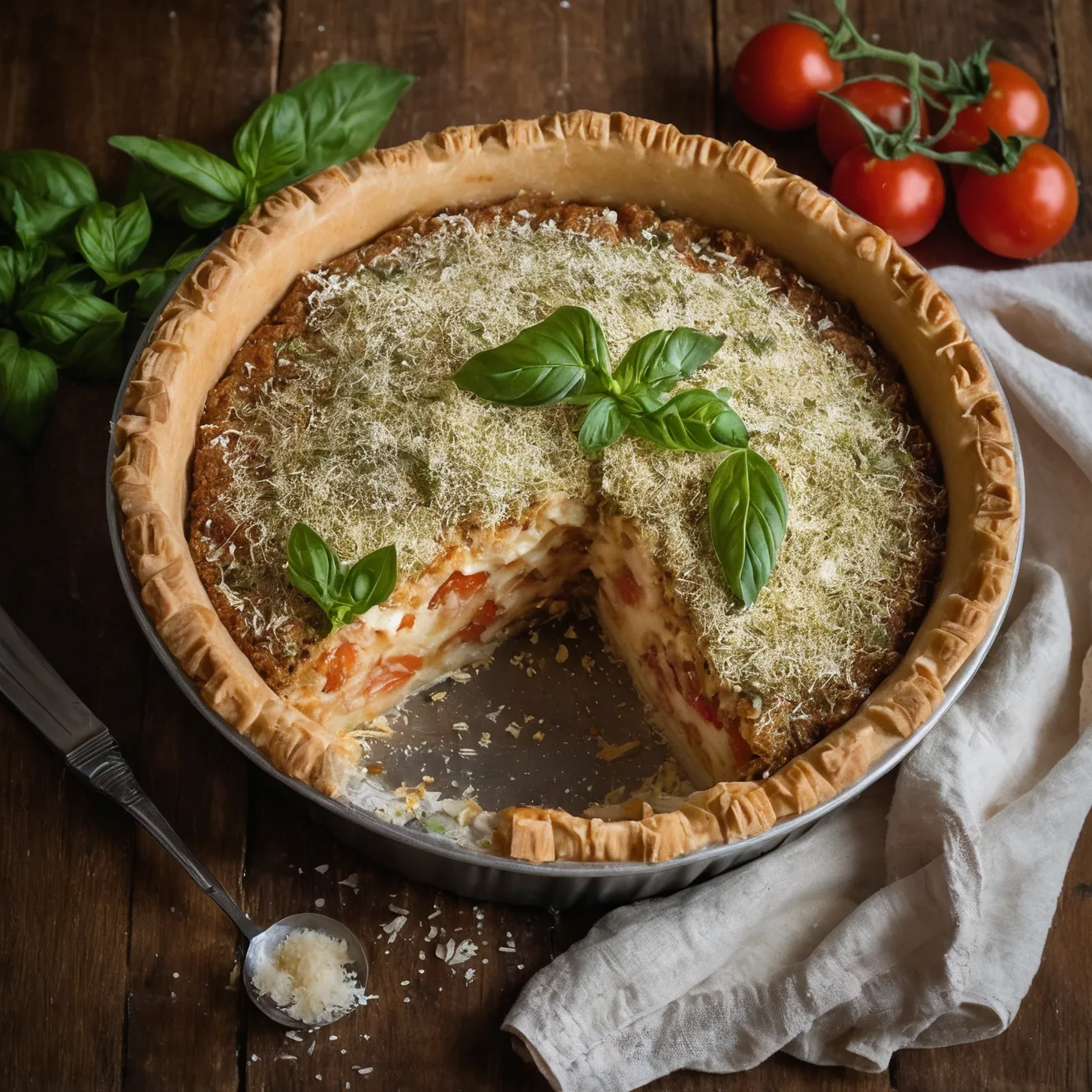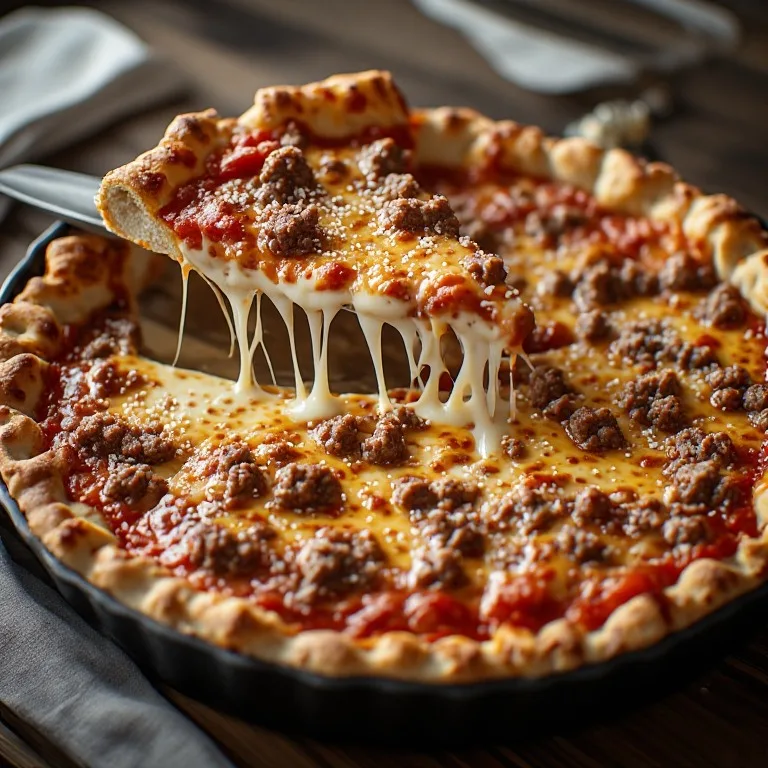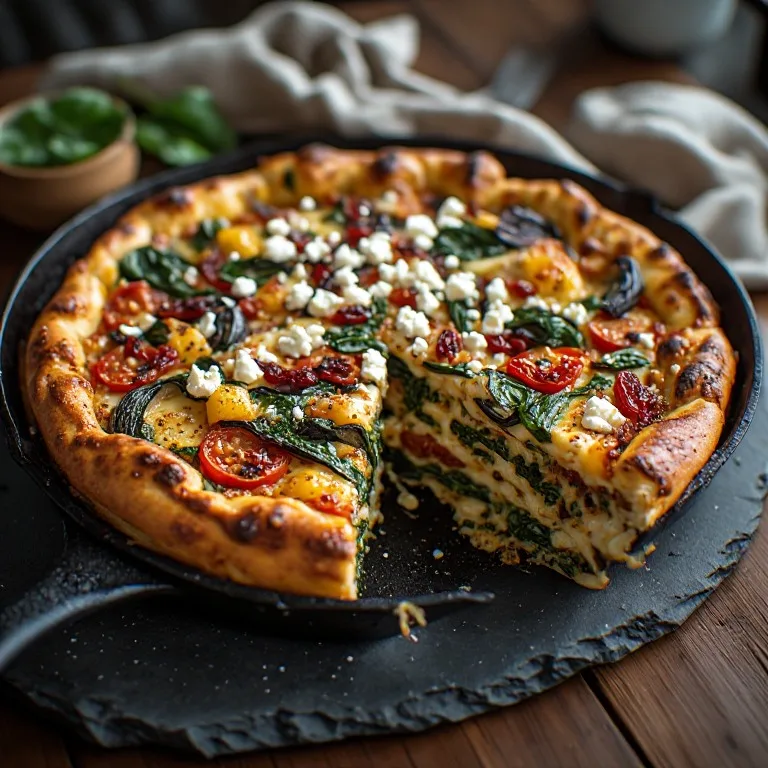



Uno’s Farmer’s Market Deep Dish is the vegetarian version of the Numero Uno — same three-fat crust, same reverse-layering technique, same chunky tomatoes on top, but built around caramelized onions, eggplant, spinach, pesto, and feta instead of Italian sausage. It’s a genuinely good pizza that most people overlook because it sits next to the Numero Uno on the menu.
There are two techniques that separate a watery, limp attempt from a version that holds up like the restaurant’s: salting the eggplant to remove moisture before it touches the pan, and keeping the pesto under the vegetables where it won’t scorch. Skip either step and the pizza shows it.
The eggplant problem (and how to solve it in 30 minutes)
Eggplant holds an unusual amount of water inside its sponge-like cell structure. Heat — including 30 minutes at 450°F in a deep dish — releases it. If you put raw or unsalted eggplant directly into a pizza filling, the water it releases during the bake pools under the tomato layer, steams the vegetables from below, and prevents the crust from fully setting. You end up with a soggy center and eggplant that tastes steamed instead of roasted.
The fix is simple: cut the eggplant, toss it with kosher salt, spread it on paper towels or a clean kitchen towel, and leave it for 30 minutes. The salt draws the moisture out through osmosis. Then pat or press the cubes dry before they hit the pan. You’ll see the towel absorb visible liquid and the eggplant shrink slightly — that’s what you’re removing. After this step, sauté the cubes in olive oil over medium-high heat until golden. The result is eggplant with concentrated flavor and no excess water.
You can run this step in parallel with caramelizing the onions; both take about 30 minutes and don’t require attention once they’re started.
Pesto placement matters
Pesto is mostly olive oil and fresh basil, both of which oxidize and scorch at sustained high heat. If you spread pesto directly on top of the tomato layer, it will brown and lose its fresh herb character over 30 minutes at 450°F. The solution is to tuck it into the filling instead: spread the pesto across the mozzarella layer, then stack the vegetables on top of it. Protected by the cheese below and the vegetables above, the pesto stays bright, retains its basil character, and perfumes the whole interior of the pizza without burning.
Cost and comparison
A restaurant Farmer’s Market individual (7-inch) runs approximately $16–$18 depending on location. The home version makes a 9-inch pizza serving four for roughly $12–15 in ingredients. At the restaurant, the full individual is about 1,578 calories; this home recipe estimates approximately 560 calories per serving (one quarter of the 9-inch), with comparable ingredients but no restaurant fryer or pan-grease overhead.
The time investment is real — 30 minutes for the eggplant salt, 30–35 minutes for the onions, and 1 hour for the dough rise — but the active work is minimal. The salt-and-press and caramelizing steps can run simultaneously, cutting the front-end prep time significantly.