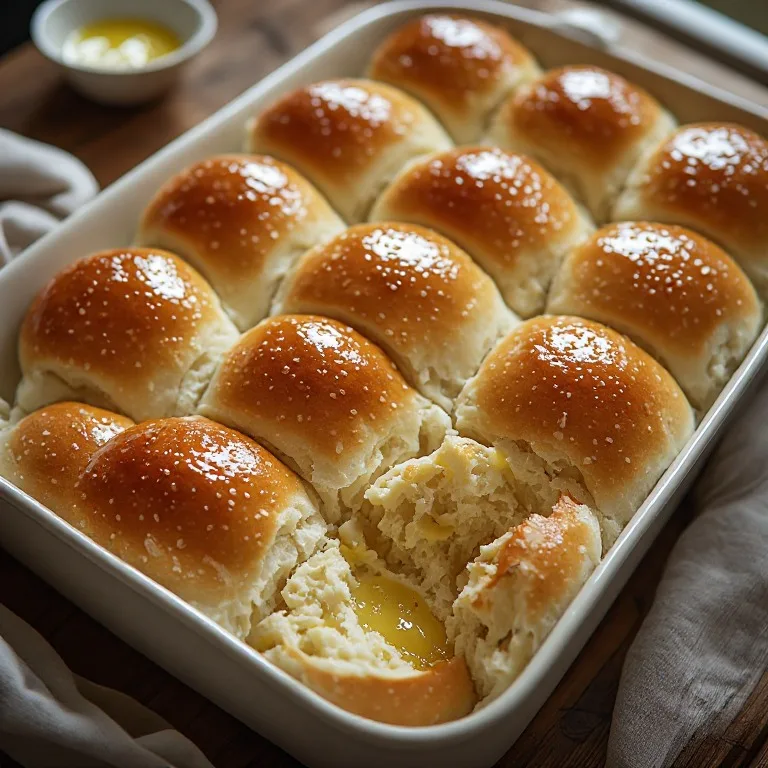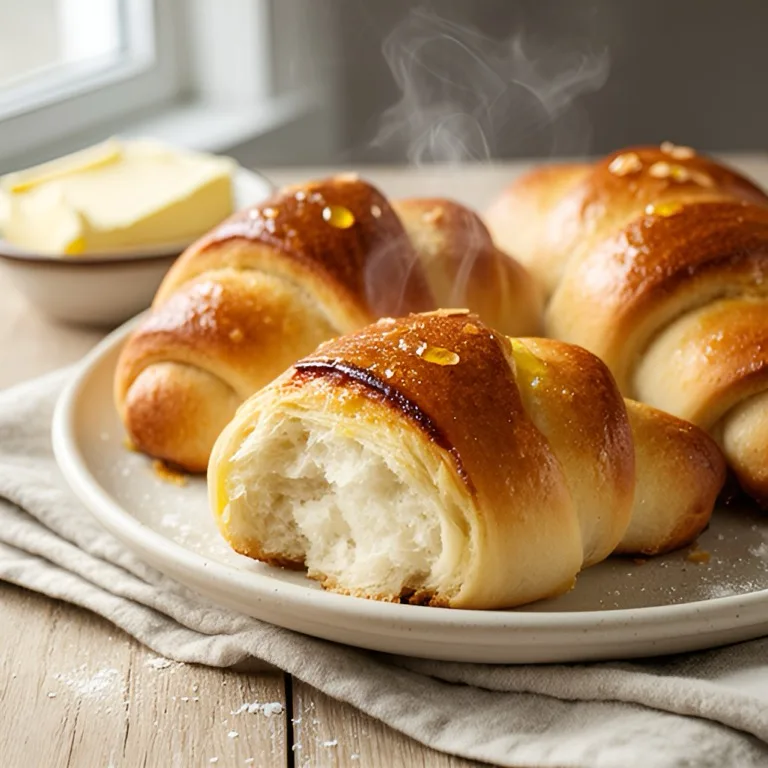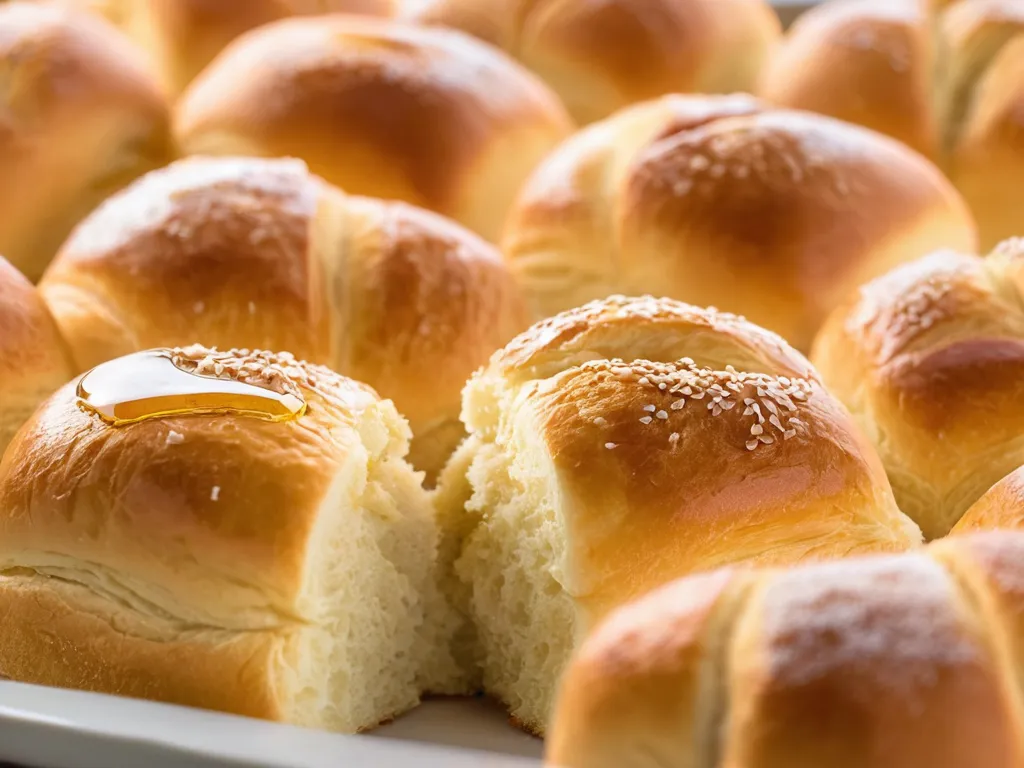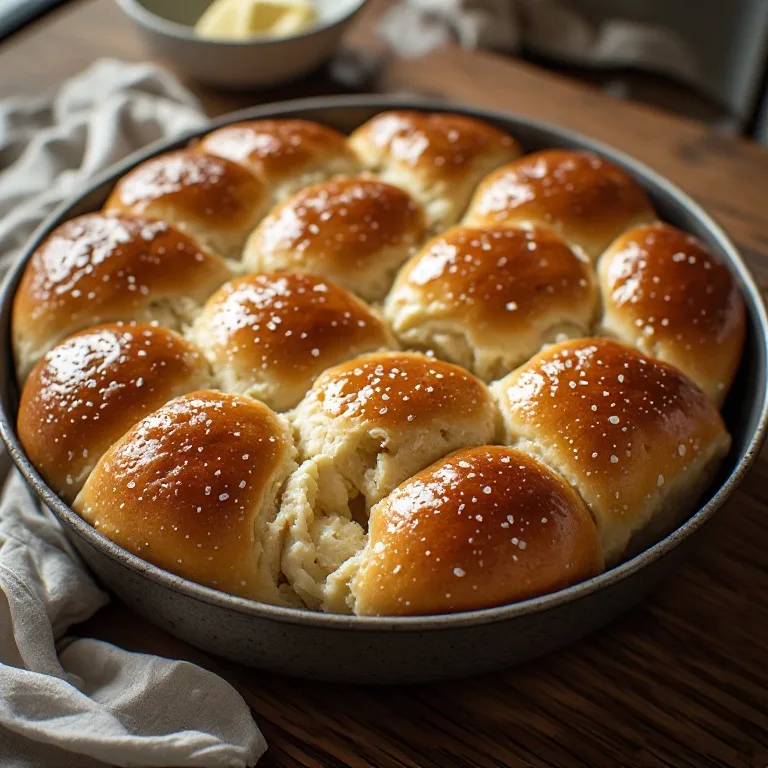

Sister Schubert’s Parker House rolls are the soft, folded dinner rolls that appear on Thanksgiving tables across the South and, increasingly, the country — the frozen bake-and-serve format that Patricia Barnes launched from her Troy, Alabama home in 1991 from her grandmother’s recipe. This copycat nails the signature texture: pillow-soft, pull-apart, butter-brushed inside and out, with the distinctive half-moon fold that makes each roll peel apart at the crease.
Homemade vs. Store-Bought Sister Schubert’s
| Homemade copycat | Frozen Sister Schubert’s | |
|---|---|---|
| Count & size | 12 rolls, about 62 g each | 16 rolls, about 17 g each |
| Calories per roll | ~195 | ~60 |
| Cost | $3–4 in ingredients | ~$4.49 per 16-count bag |
| Active time | ~20 minutes (plus 1.5–2 hr rising) | 0 — thaw and bake |
| Texture | Fresh-baked, custom softness | Consistent, reliably soft |
| Flavor control | Adjust sugar, salt, butter to taste | Fixed |
The homemade rolls are noticeably larger than the dinner-roll-sized commercial ones, which is why the per-roll calorie count is higher — scale each dough piece to about 1 oz (24 pieces) if you want a smaller, closer-to-the-original size. The real trade-off is time: the frozen product wins on convenience, the homemade version wins on the fresh-from-the-oven texture you can’t buy.
The Parker House Fold
The shape is what makes these a Parker House roll rather than a standard dinner roll. Each roll is a circle of dough, buttered on the inside, folded in half and pressed lightly to hold its crescent shape. When baked touching each other in a pan, the folded side faces down and the rounded dome faces up — the rolls pull apart along the fold line and peel back to reveal the buttered interior.
The fold originated at Boston’s Parker House Hotel in the 1870s, where the kitchen is thought to have invented the shape either by design or, according to the more entertaining legend, when a frustrated baker threw unfinished rolls — not yet shaped round — into the oven. The Omni Parker House still serves the rolls today.
Why You Add the Butter Last
Most dinner roll recipes cream or melt the butter into the liquids at the start. This recipe adds softened butter in small pieces after the flour is partially incorporated — the enriched dough technique. Adding butter late coats the gluten strands rather than tightening them, which is what produces the pillowy, slightly stretchy crumb rather than a bready one. The process looks messy for a few minutes (the dough will slap around and look like it won’t come together), but after 2–3 minutes of mixing, it does.
If you substitute melted butter mixed in with the milk upfront, the rolls will taste fine but the crumb will be slightly denser and less pull-apart. The gradual addition is worth the extra step.
The Single Most Important Rule: Stop Adding Flour
Enriched dough is supposed to feel softer than you think it should. If it’s easy to handle and barely sticky, you’ve added too much flour — the rolls will be dense, not cloud-soft. The dough should clear the sides of the bowl and form a cohesive ball but still feel slightly tacky when you press your finger into it. Resist the urge to add more flour to make it feel “normal.” The softness of the raw dough is the softness of the baked roll.
Shape the Fold Cleanly
Divide the dough into 12 equal pieces — about 1.8 oz each, which is why a scale helps. Flatten each piece into a rough 3½-inch circle with a rolling pin or the heel of your hand. Brush the top with melted butter (a light coat, not saturated), then fold the circle in half with the buttered side inside. Press the folded edge gently with your fingers so the roll holds its crescent shape. Don’t press the curved side — just the fold.
Arrange fold-side down in a greased 9x13 pan, 3 across and 4 down. They should just touch — this is intentional. As the rolls proof and bake, they push against each other and the sides stay soft with no hard crust forming between them.
Make the Dough Ahead
This is the real secret for using these on Thanksgiving: make the dough the night before and let it rise in the refrigerator. After shaping the 12 rolls in the pan, cover tightly with plastic wrap and refrigerate for up to 16 hours. The morning of the meal, pull the pan and let it sit at room temperature for 1 to 1.5 hours until puffy, then bake as directed. The cold overnight rise also deepens the yeast flavor — a bonus over same-day dough. No sacrifice to texture.
If you want to go further ahead, fully bake and cool the rolls, freeze in an airtight bag for up to 2 months, and warm at 300°F for 8–10 minutes before serving. This is essentially how the Sister Schubert’s product works: frozen after baking, reheated at low heat.
How These Compare to Other Holiday Rolls
If you want a sweeter, pull-apart Hawaiian-style roll for the bread basket, the King’s Hawaiian rolls use pineapple juice and honey for their tropical sweetness — a different roll for a different purpose. For a buttery crescent with a crispier layered exterior, Pillsbury crescent rolls are the benchmark. If you want a steakhouse-style enriched round roll that arrives at the table warm with cinnamon butter, Texas Roadhouse rolls are what you’re after. The Sister Schubert’s fold — soft, neutral, and classic — is the one that holds its own next to gravy and turkey without competing with anything else on the plate.