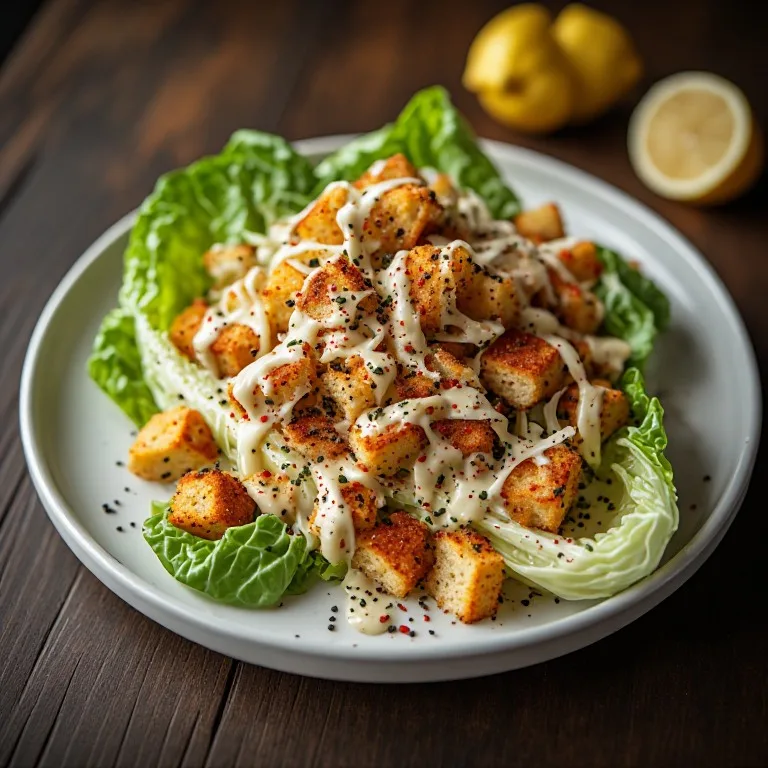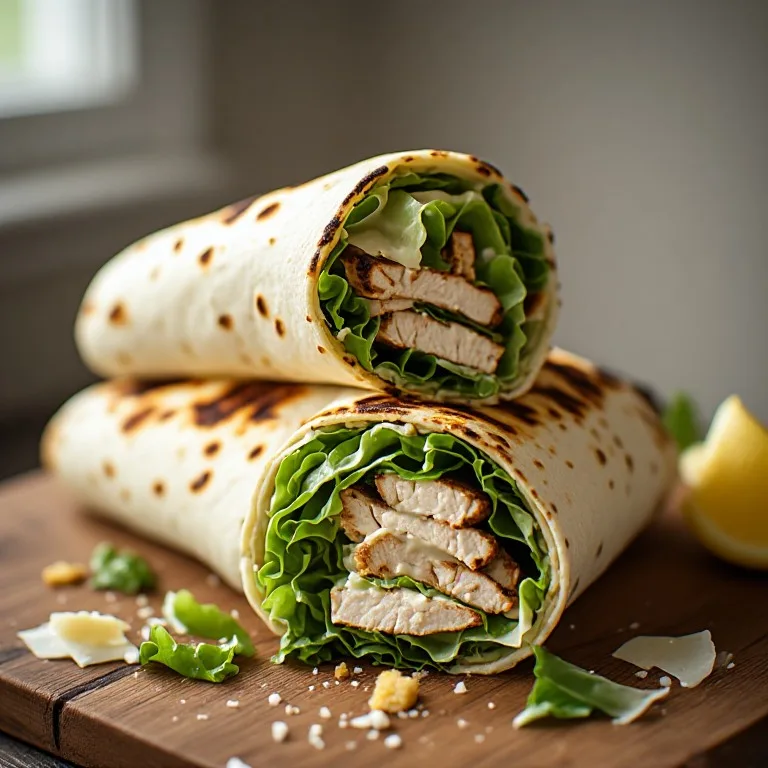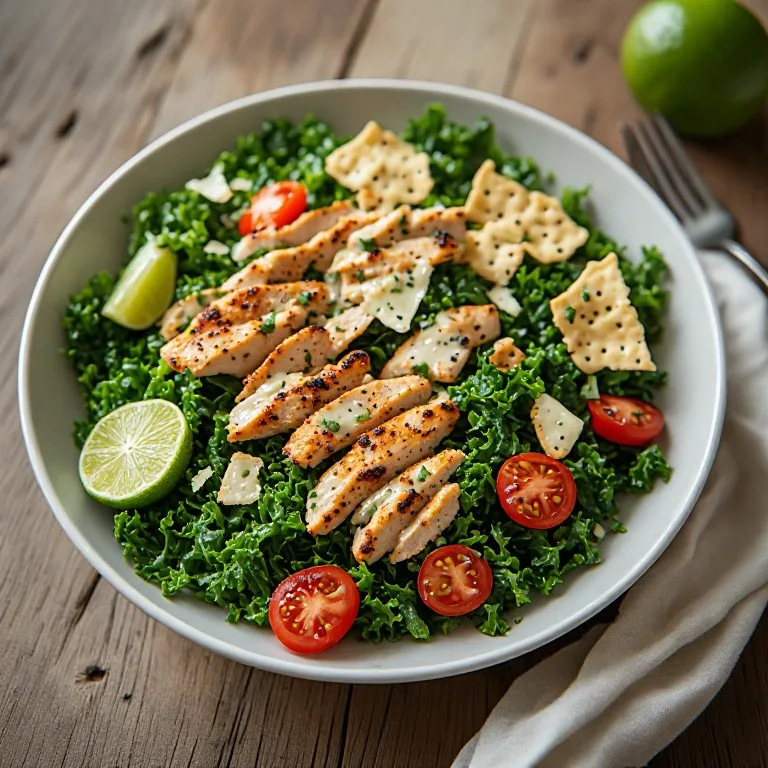



The Sweetgreen Kale Caesar is one of those lunch orders that becomes a reflex — the thing you get when you know you should eat something good and don’t want to think too hard about it. Massaged kale, chopped romaine, herb-roasted chicken, halved grape tomatoes, homemade parmesan crisps, shaved parmesan, and a lighter-than-usual caesar dressing. Then a squeeze of fresh lime over the whole thing at the table, which Sweetgreen counts as an ingredient, not a garnish.
At $15 to $17 per bowl with chicken, and given how often people eat it, this is one of the more worthwhile recipes to nail at home. Four bowls from this recipe run roughly $18 to $22 in ingredients, or $4.50 to $5.50 per bowl. If this is your default lunch twice a week, the math compounds quickly.
For the bowl that started the chain’s rise, see our copycat Sweetgreen Harvest Bowl — warm wild rice, roasted sweet potato, apple, and balsamic vinaigrette.
Why you need both kale and romaine
All-romaine wilts the moment dressing touches it and turns soggy within a few minutes of sitting — something a restaurant can handle because the bowl goes straight from the counter to your hand, but a problem the moment you dress a bowl and walk back to your desk. All-kale, even well-massaged, is dense and slightly bitter in a way that needs something lighter to balance it.
The Sweetgreen approach is about half-and-half: massaged kale provides structure, chew, and staying power; romaine provides crunch, lightness, and mild sweetness. The only rule is to massage only the kale, not the romaine — massage the romaine and it collapses.
Massage the kale until it darkens and the volume reduces by roughly a third. You’ll feel when it’s ready: the leaves go from stiff and somewhat resistant to soft, almost silky, and the bitterness drops noticeably. This takes 60 to 90 seconds and is not a step to skip.
The dressing: lighter than a traditional caesar, but still anchovy-forward
Traditional restaurant caesar dressings are built on a coddled-egg-yolk emulsion — rich, thick, and substantial. Sweetgreen’s is noticeably lighter and more pourable. The home approximation that works best is a good-quality mayo base (mayo is already an egg-oil emulsion, just a stable one) thinned with fresh lemon and lime juice, then seasoned with anchovy paste, Dijon, garlic, parmesan, and Worcestershire.
Two things matter here. First, the anchovy paste: it’s the backbone of the dressing. The savory, umami depth that makes a caesar dressing taste like a caesar — not like a lemony creamy dressing — comes from anchovy. Use anchovy paste from a tube, or mince oil-packed anchovy fillets to a smooth paste. If you want to see what a more intensely anchovy-and-parmesan caesar looks and tastes like, the richer Carbone caesar is the comparison point.
Second, the lime juice in the dressing (separate from the finishing squeeze) keeps the whole mixture brighter than all-lemon would. The full dressing keeps covered in the refrigerator for up to 3 days.
The parmesan crisps are worth making from scratch
Store-bought parmesan crisps (Parmesan Whisps, Trader Joe’s crisps) work as a substitute, but homemade are noticeably better: thinner, more delicate, and they shatter when you bite them rather than requiring a chew.
The only requirement is proper parmesan — grated finely from a block of Parmigiano-Reggiano or Grana Padano. Pre-grated powder from a green canister doesn’t melt into a cohesive crisp; it stays powdery and burns before it can come together. Portion the grated cheese into small rounds on parchment, bake at 375°F (lower than the chicken — too hot and they go from golden to burnt in seconds), and do not touch them until they’ve cooled fully on the pan. They look soft when they come out; they harden into proper crisps as they cool.
The lime is not optional
The lime wedge that comes with every Sweetgreen Kale Caesar is listed on the menu as an ingredient. It’s there to be squeezed over the whole bowl immediately before eating — not squeezed into the dressing at the prep stage, not used as a table decoration.
A freshly squeezed lime changes the bowl in a way that lemon juice in the dressing doesn’t fully achieve: it hits every component simultaneously, brightens the caesar dressing, cuts the richness of the parmesan, and adds a top note that ties the chicken, greens, and tomatoes into a coherent whole. Most homemade versions omit this step entirely and then wonder why the bowl tastes slightly flat compared to the restaurant’s. Squeeze the lime.
Meal prep
The components store well separately. The caesar dressing keeps refrigerated for up to 3 days. Roasted chicken keeps for 4 days. Parmesan crisps keep at room temperature in a sealed container for up to 5 days — once airtight, they stay crispy. Tomatoes are best halved fresh, but hold cut for about 2 days. Dress only the kale portion in advance (massaged, tossed with dressing); add the romaine fresh so it doesn’t wilt. For a full week of lunches, make a double batch of the chicken and dressing on Sunday.