


Copycat Carbone Caesar alla ZZ (The Tableside One, Made at Home)
Prep time: 20 min Cook time: 15 min (croutons) Servings: 4
In 2013, Mario Carbone, Rich Torrisi, and Jeff Zalaznick opened Carbone at 181 Thompson Street in Greenwich Village, in the former space of Rocco’s — a classic New York red-sauce Italian-American restaurant that had fed the neighborhood for decades. The concept was to take the mid-century Italian-American dining era seriously: the long tablecloths, the tuxedoed servers, the amber lighting, the tableside rituals — and execute everything at the level of a fine-dining kitchen.
The Caesar alla ZZ — named for Jeff Zalaznick’s nickname, ZZ — is one of the two most-ordered dishes on the menu, alongside the spicy rigatoni. It is prepared tableside on a cart by a server, in front of the diner, a practice that has nearly vanished from New York City dining. Carbone kept it, and it is part of why the salad tastes the way it does: freshly built dressing tossed with cold lettuce and eaten in the same room where it was made has a quality that a kitchen-plated Caesar assembled twenty minutes earlier cannot match.
Getting a table to experience it is the hard part. Carbone seats about 90 people and the reservation system — phone-in, through Resy, limited slots released at specific times — has made it one of the most difficult bookings in New York for over a decade. The home version is the most reliable path to eating this salad.
Three Things Most Copycat Recipes Get Wrong
1. The lettuce: little gem, not romaine
This is the most fundamental error in virtually every copycat recipe for Carbone’s Caesar. Most copycat writers assume romaine because that is what the original 1924 tableside Caesar by Caesar Cardini used in Tijuana. Carbone uses little gem — smaller heads with sweeter, more tender, more buttery leaves than romaine. The flavor is less assertive, the texture less crunchy, and the cup shape of each leaf cradles dressing in a way romaine cannot. The salad made with little gem is softer, rounder, and more elegant than the same dressing on romaine.
2. The croutons: tomato paste and semolina bread
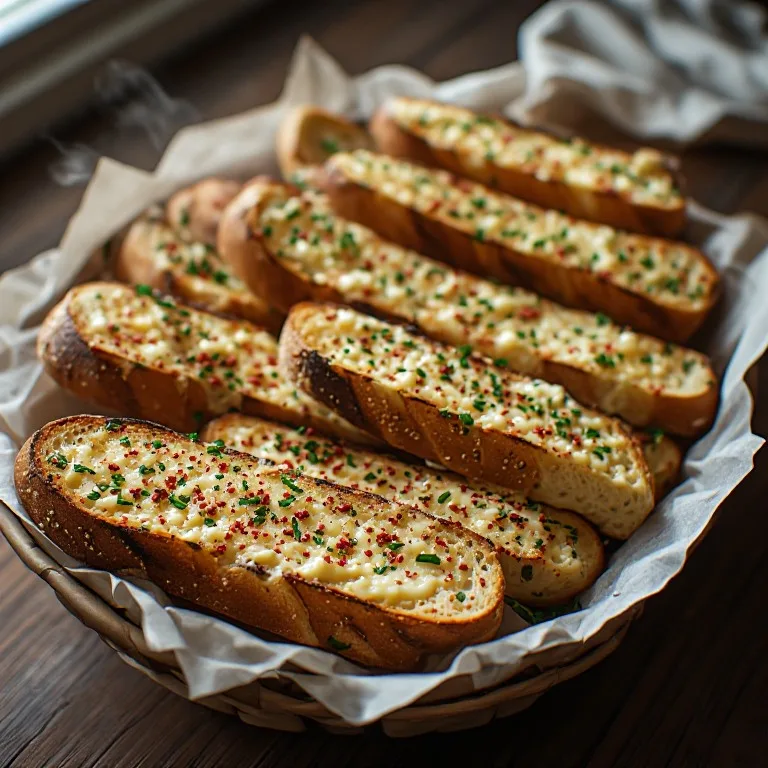
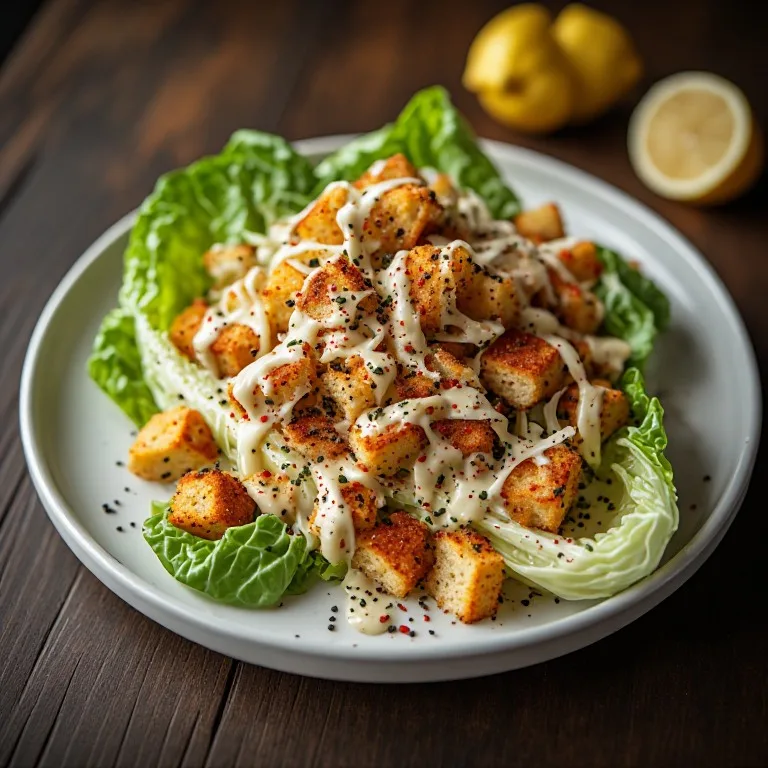
The croutons on a Carbone Caesar are visibly orange-red. This is not a variation; it is how they are supposed to look, and the color is the tell when you see the cart coming to your table. The croutons are made from semolina bread — an Italian bread made with durum semolina flour, with a slightly yellow crumb and firm crust — coated before baking with tomato paste, roasted garlic, dried oregano, and red pepper flakes. The tomato paste caramelizes in the oven, giving the croutons their color and adding a savory-sweet tomato depth that registers in the salad without tasting like pizza. Most copycat versions use plain garlic-butter croutons and wonder why the result looks nothing like the restaurant.
3. The mustard: whole-grain, not smooth Dijon
Standard Caesar dressing uses smooth Dijon, which fully emulsifies into the oil and egg base and leaves no visible trace. The Carbone dressing uses whole-grain mustard — the seed-flecked kind — which leaves visible texture in the finished dressing. The dressing looks paste-like and handmade rather than sleek and uniform. The whole seeds also deliver bursts of mustard flavor rather than a diffuse background note. This is a small change with a noticeable effect on both appearance and taste.
The Double-Parmesan Finish
One technique detail that is easy to miss but makes a meaningful difference: the dressing gets ¼ cup of finely grated Parmigiano-Reggiano whisked in before the lettuce is added. This is the Parmesan that disappears into the sauce. Then, after plating, a full 2 ounces of Parmigiano is shaved over the top with a vegetable peeler — wide, thin ribbons of cheese that remain visible and separate in the salad rather than dissolving. The two applications do different things: grated Parm adds body and salt to the dressing; shaved Parm adds texture and a slightly sharper, nuttier flavor at the finish. Use a wedge and a peeler; pre-grated Parmesan contains anti-caking agents that prevent clean shaving.
Cost Comparison: Home vs. Carbone
| Carbone (NYC) | Homemade (4 servings) | |
|---|---|---|
| Per plate | ~$25 | — |
| Full order (4 people) | ~$100 | ~$24–28 |
| Per serving | ~$25 | ~$6–7 |
| Savings per person | — | ~$18 |
The biggest home line items are the Parmigiano-Reggiano wedge ($8, used for multiple recipes), the anchovy tin ($3–4), and the little gem lettuce (~$5 for 3 heads). The semolina bread and tomato paste are minimal cost.
Tips & Variations
- Cold plates help. Rinse dinner plates under cold water and dry them right before plating — or refrigerate them for 5 minutes. Cold plates keep the dressed little gem crisp for another 3 to 4 minutes after serving, which matters if people are slow to start eating.
- Roast the garlic for the croutons in advance. Squeeze a roasted head of garlic into a small jar and refrigerate; it keeps for two weeks and makes the crouton prep instant. Roasted garlic brings sweetness rather than raw garlic’s sharpness, which is why it works better for the croutons.
- Whole leaves for a dramatic presentation. Instead of halving the little gem heads, separate each leaf and dress them individually, then arrange in parallel on the plate with the tips pointing outward. Each leaf functions as a small boat of dressing. This is the most visually striking way to serve the salad.
- The tableside ritual at home. If you are serving guests at a dinner party, build the dressing in the serving bowl at the table while they watch — mashing the garlic and anchovy, coddling the eggs earlier in the evening and having them ready, whisking in the oil. The theater is part of why the salad tastes memorable. It also guarantees freshness.
- Tabasco is not optional. It is a small amount (2 to 3 dashes) but it adds a vinegary heat that differs from the mustard heat and rounds out the other acids. Do not substitute sriracha or hot sauce — the vinegar-forward character of Tabasco specifically is what you want.
Storage & Make-Ahead
The croutons keep up to 2 days ahead, uncovered at room temperature. The little gem can be prepped (outer leaves removed, heads halved) and refrigerated up to 4 hours ahead. The dressing cannot be made more than 4 hours ahead — the coddled egg should be used within 30 minutes. Dressed little gem wilts within 15 minutes; assemble just before serving.
More Famous NYC Salads and Carbone Recipes
- Copycat Via Carota Insalata Verde — the West Village’s most-copied salad, built on a shallot-thyme vinaigrette with warm water that regulars eat by the spoonful
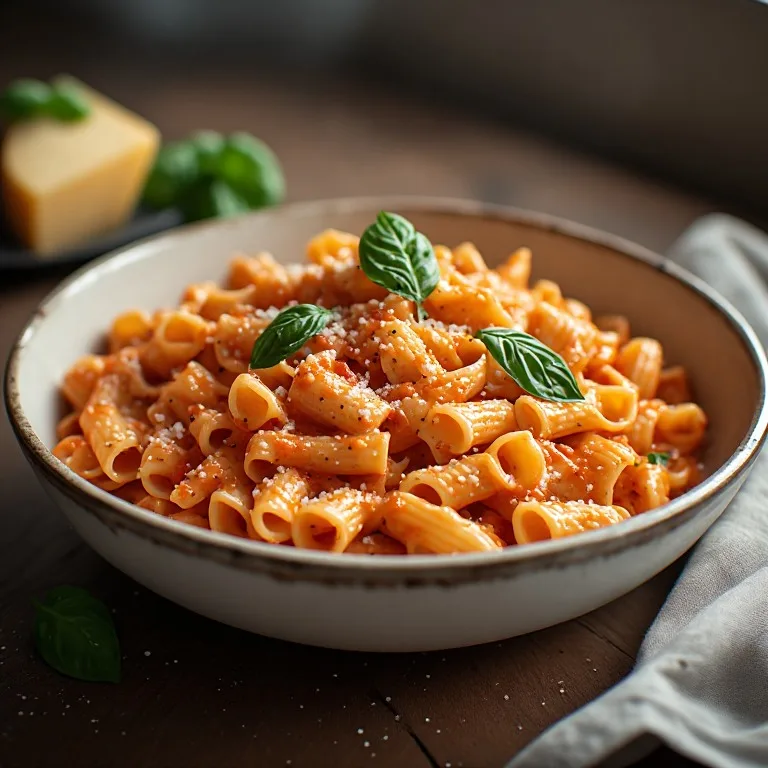
- Copycat Carbone Spicy Rigatoni Vodka — the other Carbone signature, built on a full tube of tomato paste cooked to brick-red and finished with Calabrian chili paste and cream
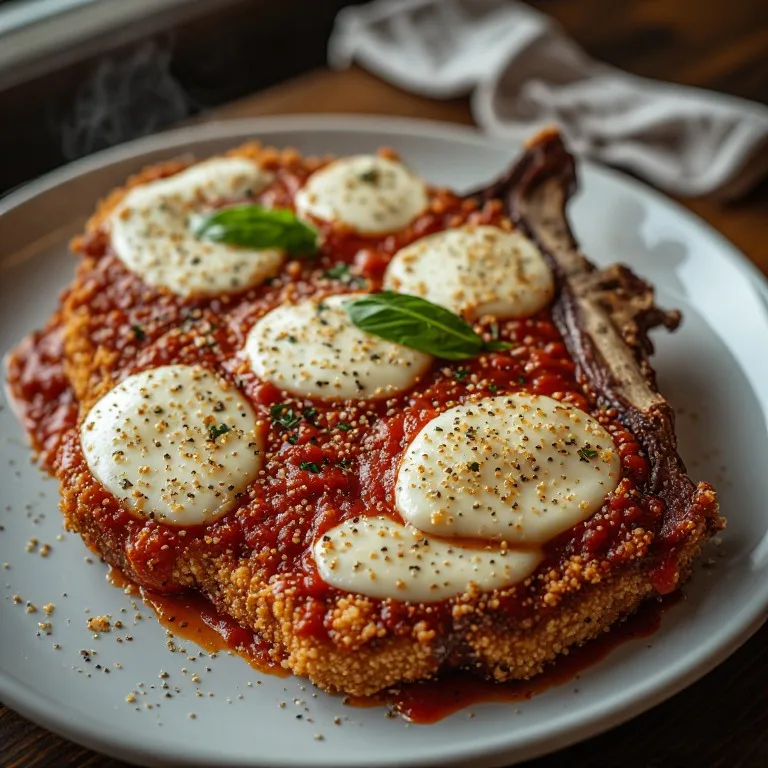
- Copycat Carbone Veal Parmigiana — the mid-century Italian-American classic executed at fine-dining level