Pin It

Copycat Texas Roadhouse Fall-Off-The-Bone Ribs

Copycat Texas Roadhouse Fall-Off-The-Bone Ribs
Jump to Recipe
Prep 20 min (plus 4–12 hr dry rub rest) Cook 3.5 hours Serves 4
Quick answer: Texas Roadhouse Fall-Off-The-Bone Ribs are pork baby back ribs rubbed with a brown sugar–smoked paprika–chili blend, then wrapped tightly in foil over a small pool of apple juice and liquid smoke and baked at 275°F for 3 to 3.5 hours — the trapped steam braises the meat from inside the packet until it pulls cleanly from the bone without effort. The rack is unwrapped, slathered in their St. Louis–style sweet-and-smoky BBQ sauce (ketchup, brown sugar, molasses, honey, yellow mustard, Worcestershire, liquid smoke), and broiled 5 minutes to caramelize and char the edges. Texas Roadhouse uses a commercial HALO oven with a liquid smoke and water bath below the racks — the home foil-over-apple-juice method produces the same result. At the restaurant a full rack runs about $24.99–$26.99 with two sides (prices vary by location); this version makes two racks (serves four) for roughly $25 in ingredients and takes about 20 minutes of active work.

Copycat Texas Roadhouse Fall-Off-The-Bone Ribs

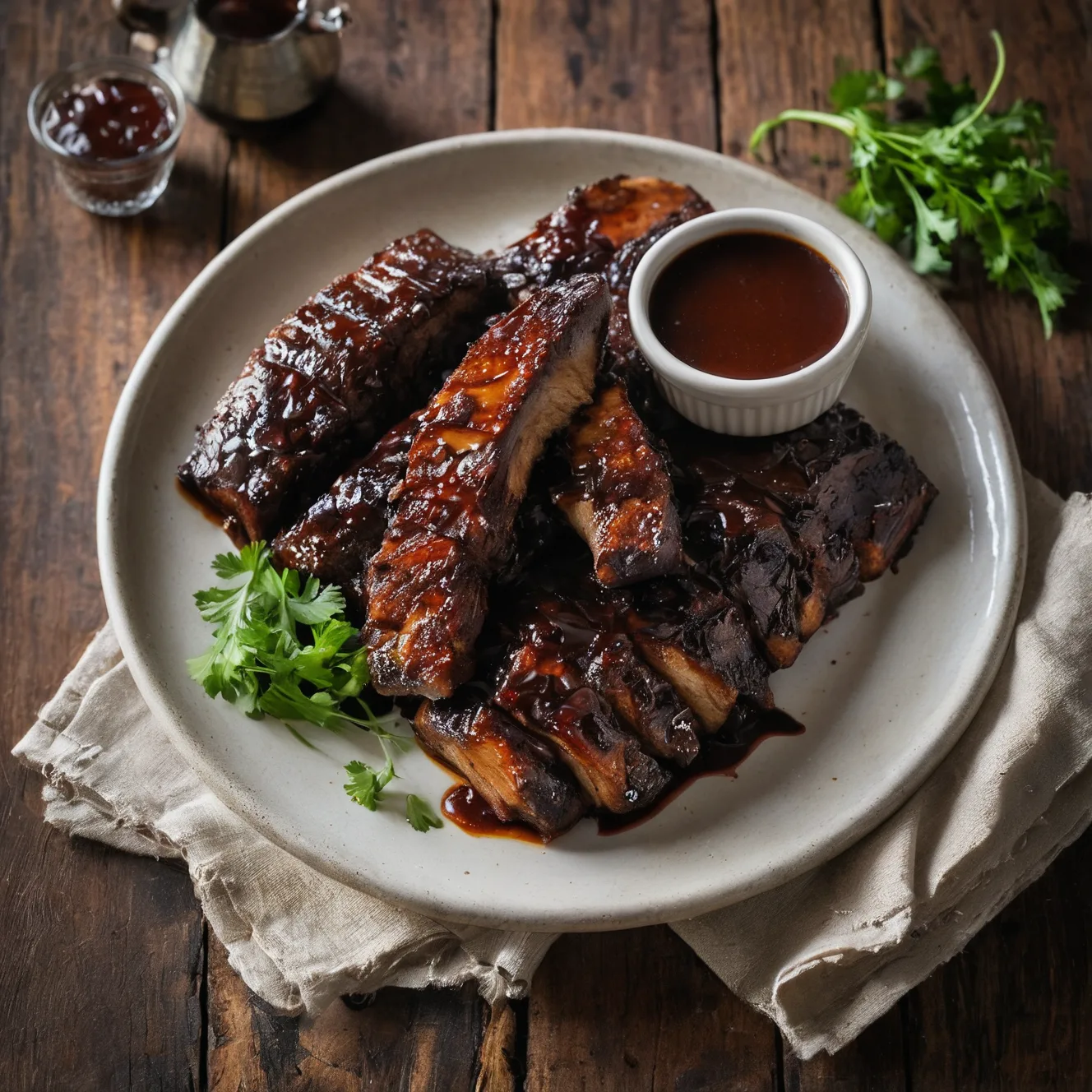
Texas Roadhouse Fall-Off-The-Bone Baby Back Ribs at home: the brown sugar–paprika–chili rub, the apple juice foil-steam method that replicates TR's commercial oven technique, and the sweet St. Louis–style BBQ sauce finished under a broiler to caramelize the crust. Two racks serve 4 for around $25 total — about the price of a single rack at the restaurant.

Medium Prep: 20 min (plus 4–12 hr dry rub rest) Cook: 3.5 hours Total: 17h 20m4 servings ~$4.50/serving
Prep20 min (plus 4–12 hr dry rub rest)
Cook3.5 hours
Total17h 20m
Servings
4
At home~$4.50/serving
vs
Restaurant~$20.25/serving
You save ~78%

Ingredients

Instructions

💡
Pro tip: This recipe tastes even better the next day. The flavors need time to meld together in the fridge.
❄️
Storage: Keeps in an airtight container in the fridge for up to 2 weeks. Freezer-friendly for up to 3 months.
~300-500 cal/serving

The Story Behind the Recipe

Copycat Texas Roadhouse Fall-Off-The-Bone Ribs

Prep: 20 minutes active (plus 4–12 hours dry rub rest) Cook: 3 to 3.5 hours braise + 5 minutes broil Servings: 4 (half rack each, or 2 with full racks) Cost: ~$25 at home for two racks (serves 4) vs. ~$25–27 for a single rack at the restaurant

Texas Roadhouse is not a BBQ joint — they don’t run a smoker out back. Their Fall-Off-The-Bone Ribs are a masterclass in the industrial braising technique that restaurant chains use to produce consistent, extremely tender ribs at high volume: low heat, a complete moisture seal, and enough time for connective tissue to break down completely. The result doesn’t have the smoke ring of a proper barbecue pit, but it has something different — a gelatin-rich, pull-free tenderness that no short-cook method can match.

The home version here uses the same logic: foil-sealed, 275°F, 3+ hours. The dry rub borrows the same brown-sugar-and-paprika backbone that makes their famous steak seasoning work — brown sugar for caramelization, smoked paprika and chili powder for the smoky-spiced color — then swaps in cumin and cayenne, which suit pork and a long braise better than the turmeric-forward steak blend. The BBQ sauce leans sweet and hickory-forward with molasses as the backbone, which is the TR signature versus the vinegar-forward sauces you’d get in the Carolinas or the mustard-forward style common in South Carolina.

TL;DR

Membrane off → mustard binder → rub on → 4–12 hour rest → sealed foil → 275°F for 3–3.5 hours → sauce → broil 5 minutes → eat.

The dry rub: why brown sugar and chili powder?

Brown sugar in a pork rib rub does two separate things that no other ingredient replicates: first, it creates a paste against the mustard binder that helps the entire rub adhere during a long cook; second, and more importantly, it caramelizes during both the braise and the final broil, producing the dark, slightly sweet crust that gives TR ribs their visual character and a slightly caramelized edge on every bite. Skip the sugar and you have a spice coating. Include it and you have a crust.

The chili powder adds a complex, mild heat and a deep red-brown tone to the rub that pushes the color toward the mahogany finish that TR’s ribs develop. Together with the smoked paprika, it provides the backbone of the rub’s flavor — the “smoky, spiced” character that sits behind the sweetness of the brown sugar.

The foil seal: why it’s not optional

The fall-off-the-bone result depends entirely on braising, which depends entirely on steam pressure. Even a small gap in the foil crimp drops the internal environment from a braise (with steam and moisture) to a bake (dry ambient heat). A bake at 275°F for 3 hours gives you tender ribs; a braise at 275°F for 3 hours gives you ribs where the bone slides out clean. Use heavy-duty foil, overlap at least 2 inches on each crimp, and fold the overlap over itself twice. When the packet comes out of the oven, it should be visibly inflated with steam — that’s correct.

The two-sauce approach

One coat goes on before the broiler, one coat goes on after. The first coat caramelizes under the broiler’s direct heat — the sugars darken, the liquid drives off, and the sauce bonds to the meat’s surface and forms the sticky, slightly charred exterior you see at the restaurant. The second coat, applied right after broiling, provides a glossy, thick sauce layer over the caramelized base — the restaurant “wet” finish that both looks and eats differently from a single-coat application. It’s not redundant; each coat does different things.

Full prep-to-plate timeline
  • Night before (10 min): Remove membrane, apply mustard and rub, refrigerate
  • Day of (20 min active): Wrap in foil, into 275°F oven
  • 3–3.5 hours: Unattended braise
  • While braising (15 min): Make the BBQ sauce
  • Broil (5 min): Sauce and caramelize the crust
  • Rest (5 min): Then cut and serve
Serving suggestions

Texas Roadhouse pairs the ribs with two sides and their fresh rolls. The mashed potatoes and green beans are the easiest to make alongside without adding complexity. The TR rolls with cinnamon honey butter are worth the extra effort — the bread’s sweetness is a direct counterpart to the smoky-sour BBQ sauce and makes the full meal feel like the restaurant. If you’ve also made the Chili’s baby back ribs, this recipe is the side-by-side comparison worth trying: Chili’s finishes on a grill and has a vinegar-forward sauce; Texas Roadhouse braises and uses a molasses-heavy sweet sauce — the same base ingredient, two completely different eating experiences.
Nutrition Facts

Per serving (4 servings)
Calories720
Total Fat42g
Total Carbs38g
Dietary Fiber1g
Sugars31g
Protein52g
Sodium1340mg

* Estimated values based on standard recipe preparation. Actual values may vary.

🥗

Make It Healthier

Love Texas Roadhouse Fall-Off-The-Bone Ribs but want a lighter version? Try these simple swaps:

  • Use a half rack (6–7 bones) per person instead of a full rack — with two substantial sides, a half rack is a complete and satisfying meal at the restaurant portion size.
  • Reduce the brown sugar in the dry rub to 1.5 tablespoons and cut the sauce by half on the first broil coat to lower sugar by roughly 15g per serving.
  • For a slightly leaner result, look for racks labeled 'loin back ribs' rather than 'baby back' — they're trimmed closer, with slightly less fat cap between the bones.
  • Pair with coleslaw (fiber, crunch, acid balance) and roasted vegetables rather than mashed potatoes to keep the full meal under 1,000 calories.

Equipment You'll Need

Heavy-duty aluminum foil

Standard foil tears at the crimped edges and breaks the seal — heavy-duty holds through 3.5 hours at 275°F

Rimmed sheet pan

Two-stage use: holds the foil packets during braising, then holds the racks for broiling

Small saucepan

For making the BBQ sauce while the ribs braise — the 15-minute simmer is what thickens the sauce to coating consistency

Kitchen tongs

For lifting the rack to do the bend test (the rack bending heavily indicates doneness) and for moving the sauced racks

Pastry brush

For the two-coat sauce application — a brush gives more even coverage than spooning

Frequently Asked Questions

Does Texas Roadhouse smoke their ribs or bake them?

Texas Roadhouse does not smoke their ribs on a traditional wood-burning pit. Their kitchen process uses commercial HALO ovens: the racks sit on grates above a bath of liquid smoke and water, covered in foil, and cook at below 300°F for several hours. The steam rising from the liquid-smoke bath infuses the ribs with smokiness from below while the low heat and moisture-trap produce the fall-off-the-bone tenderness. Before serving, racks are basted with BBQ sauce and finished on a gas grill to caramelize the coating and add char to the bone tips. At home, the equivalent is placing a small pool of apple juice mixed with liquid smoke on the sheet pan under the foil-wrapped racks — the juice generates steam inside the sealed packet and the liquid smoke carries the flavor upward. You won't replicate it on a traditional wood smoker, because dry smoke heat doesn't create the enclosed braising environment that produces the fall-off texture.

What is the difference between Texas Roadhouse's regular ribs and their Fall-Off-The-Bone ribs?

Texas Roadhouse offers the same baby back ribs prepared two ways: standard (still tender but with some pull-off-the-bone chew) and Fall-Off-The-Bone (braised significantly longer so the meat literally separates from the bone without any effort). The key difference is an extra 45–60 minutes of covered cook time and a complete foil seal during the entire cook — no air exposure. This recipe targets the Fall-Off-The-Bone preparation, which is the most requested version.

What cut of ribs does Texas Roadhouse use?

Baby back ribs — the curved ribs from the upper section of the pig's rib cage where the ribs meet the spine. Baby backs are shorter, leaner, and more tender than St. Louis-cut spare ribs, which come from the lower rib section and have more fat and connective tissue. Texas Roadhouse uses baby backs specifically because they're more uniform in size, cook more evenly, and have a more delicate pork flavor. A full rack of baby backs typically has 10–13 bones and weighs 1.5–2 lbs. Buy them with the membrane still on (you'll remove it — see instructions) and avoid any rack with large gaps between bones, which signals thin meat coverage.

Why do you remove the silverskin membrane?

The silverskin is a thin, paper-like membrane on the bone side of the rack. It doesn't break down during cooking — it turns rubbery and tough, blocks seasoning from penetrating through to the meat on the bone side, and creates an unpleasant texture when you bite into a rib. Removing it is the single most important prep step. To do it: insert the tip of a butter knife under the membrane at one of the middle bones, work it loose until you have enough to grip, then grab it with a paper towel (for traction) and peel in one firm motion toward the larger end. It usually comes off in one piece.

What temperature should I cook ribs at?

275°F for this fall-off-the-bone method. Lower than that (225°F) takes too long and creates drier meat; higher than that (325°F) risks tightening the muscle fibers before the connective tissue fully breaks down, which produces tender-but-not-falling-off ribs. 275°F is the sweet spot: hot enough to cook through in 3–3.5 hours, low enough to slowly dissolve the collagen in the connective tissue into gelatin, which lubricates the meat and creates the fall-off quality. The foil seal is as important as the temperature — it traps steam from the meat's own moisture and creates a braising environment inside the packet.

How do I know when the ribs are done?

Three visual checks that are more reliable than time alone: (1) The bones have pulled back — the meat has visibly retracted from the ends of the bones by at least 1/4 inch. (2) The rack bends — pick the rack up from one end with tongs; properly done ribs will bow significantly under their own weight (fall-off-the-bone ribs will nearly crack in the middle). (3) The toothpick test — a wooden toothpick slides through the thickest part of the meat between two bones with zero resistance. If you hit any spring-back, give the rack another 20 minutes in the foil. Don't rely on time alone — racks vary significantly in weight and density.

Can I make these on a grill instead of in the oven?

Yes. Set up a two-zone fire — one side on high for finishing, one side off for indirect cooking. Place the foil-wrapped racks on the indirect side, close the lid, and maintain 275°F for 3–3.5 hours (add charcoal or wood chips as needed to maintain temperature). Then unwrap, sauce, and move to the direct heat side for 3–4 minutes per side with the lid open to caramelize. The result is identical to the oven method but adds real smoke character if you use wood chips or chunks.

What sides does Texas Roadhouse serve with ribs?

Texas Roadhouse ribs come with two sides from their full menu. The most common pairings are mashed potatoes with gravy, street corn, seasoned rice, green beans, coleslaw, house salad, baked potato, or loaded sweet potato. Their fresh-baked rolls with cinnamon butter are automatically served at the table and are the most iconic part of the TR experience. At home, the fall-off-the-bone ribs pair best with mashed potatoes (which soak up extra BBQ sauce), coleslaw (the cool acidity cuts the richness), and TR rolls — all of which have copycat recipes on this site.

How many calories are in Texas Roadhouse ribs?

A full slab of Texas Roadhouse Fall-Off-The-Bone Ribs is approximately 1,450 calories, with about 102g fat and 116g protein, per Texas Roadhouse's published nutrition data. A half rack runs approximately 725 calories. The BBQ sauce and any sides are separate — two sides can add 400–600 calories depending on what you order. The home version in this recipe comes in at approximately 720 calories per serving (half rack equivalent), which is close to the restaurant half-rack portion before sides.

Love this recipe? Share it!

Shop the tools

Gear matched to this recipe's equipment list. We may earn a small commission if you buy through these links — at no extra cost to you.

As an Amazon Associate, Copycat Spices earns from qualifying purchases.

Free PDF: our 12 most-wanted copycat recipes — instant download.

Ratings & Reviews

No ratings yet

Rate this recipe

Click a star to rate

Leave a Review

0/500

CS

Copycat Spices Test Kitchen

Every recipe on Copycat Spices is developed and tested in our home test kitchen. We reverse-engineer beloved restaurant dishes and refine each one until the flavors and the instructions work reliably for home cooks of all skill levels.

Learn more about our mission →