Copycat Texas Roadhouse Mashed Potatoes
Prep time: 10 minutes Cook time: 20 minutes Servings: 4
Texas Roadhouse mashed potatoes arrive at the table in a small crock, smooth enough to be creamy but not so processed they’re glossy and stiff. They taste richer than they look. Most people assume there’s something complicated going on, but the actual technique is straightforward — the version at the restaurant just uses more butter and a better liquid than standard home recipes.
The official recipe was shared publicly by Jason McKinney, a Texas Roadhouse managing partner, in a demo for KTAL News. His version: russet potatoes, 4 oz of butter, 6.5 oz of milk, salt, pepper. Simple. But the demo drew pushback in the comments from people who claimed to have worked there, and one ingredient kept coming up in their corrections: chicken base. A Redditor identifying themselves as a former employee spelled it out directly — the correct recipe uses half-and-half, not milk, with chicken base dissolved in it before mashing. Another former employee put it plainly: “mashed potatoes, margarine, salt, pepper, half & half, and chicken base.”
That’s the article. Everything else is technique.
Serve alongside Texas Roadhouse Rolls and Green Beans for the full Texas Roadhouse side spread.
Why These Taste Different From Your Mashed Potatoes
The chicken base
This is the most important detail and the one most home cooks overlook entirely. Chicken base — Better Than Bouillon chicken flavor is the most widely available — is a concentrated paste that dissolves in warm liquid and adds glutamates (the savory compounds that make food taste more deeply seasoned). It doesn’t make the potatoes taste like chicken. It makes them taste like something you can’t identify but want more of. The chemical reason is that glutamates enhance the perception of fat and salt, so the butter and seasoning taste more present without increasing either.
One teaspoon per two pounds of potatoes is enough. More than that and you’ll start to taste it as a specific flavor; less and you may not notice it at all.
Half-and-half, not milk
The official demo used milk, but former employees consistently say half-and-half. The difference is fat content: whole milk is about 3.5% fat; half-and-half is 10–18%. More fat in the liquid means the mash absorbs richer flavor throughout, not just from the butter you add separately. At the restaurant ratio (4 oz butter + 6.5 oz half-and-half for 2 lbs of potatoes), this is a significantly higher-fat mash than the typical home version. That’s why it tastes the way it does.
The ratio
4 oz of butter — one full stick — for 2 lbs of potatoes (4 servings) is twice the amount most home recipes call for. If your mashed potatoes taste good but flat compared to Texas Roadhouse, the butter ratio is probably where you’re losing. A common home recipe uses 2–4 tablespoons per pound of potatoes. Texas Roadhouse uses 4 tablespoons per pound. At this ratio, the butter coats every starch granule and the mash becomes genuinely rich rather than just soft.
A potato masher, not a mixer
This was the specific instruction in the official demo. McKinney described the correct texture as “little lumps, like Mom used to make” — not silky smooth. The reason isn’t aesthetic. Electric mixers, especially stand mixers, over-agitate the starch granules in the cooked potato. When starch cells rupture from mechanical force, they release amylose into the surrounding liquid, which forms a gel. The result is gluey, sticky, dense. A food processor produces this effect in under 30 seconds. A potato masher — used with a folding motion, not aggressive pressing — breaks the large pieces without rupturing the cell walls of most granules, leaving the starch light and fluffy.
The Chicken Base Question
The most common question about this recipe is whether chicken base is really in it. There’s no official Texas Roadhouse press release confirming it. But the pattern across Reddit, former-employee comments, and food media coverage is consistent: the official demo left it out, and multiple people who claim to have worked there said so directly.
The practical test: make this recipe twice. Once without the chicken base (just butter, half-and-half, salt, pepper). Once with it. Taste them side by side. The version with chicken base is the one that tastes like the restaurant. That’s the check.
If you don’t have chicken base, the closest substitute is a teaspoon of low-sodium chicken broth powder or a small pinch of MSG (monosodium glutamate), which provides the same glutamate boost through a different source.
Russet vs. Yukon Gold: Which Potato to Use
McKinney’s demo used russets, and for the Texas Roadhouse style, russets are correct.
Russet potatoes are high-starch, low-moisture. They boil dry, meaning the flesh absorbs very little water during cooking and drains cleanly. When mashed, they break down into a light, fluffy texture that readily absorbs fat. The trade-off is that they’re bland on their own — all their flavor comes from what you add.
Yukon Gold potatoes have less starch and more moisture. They produce a denser, creamier mash with a naturally buttery flavor. This is excellent for mashed potatoes you want to eat with a lighter hand of butter and cream. But it’s a different texture than Texas Roadhouse — waxier, more compact.
For this recipe, use russets and don’t second-guess it.
Step-by-Step Technique Notes
Salt the boiling water heavily. This is one of the most impactful things you can do in mashed potato prep. Potatoes absorb salt as they cook; water-cooked-without-salt produces potatoes that taste hollow no matter how much you season afterward. The water should taste noticeably salty — around 1 tablespoon of kosher salt per quart of water.
Return the empty pot to the heat after draining. Once drained, put the empty pot back on the burner for 60–90 seconds over low heat before returning the potatoes to it. The residual steam from the pot walls evaporates, and the pot is warm and dry when the potatoes go back in. This step prevents the potatoes from sitting in a puddle of drainage and makes the mash fluffier.
Add butter before liquid. This sequence matters more than most people realize. If you pour in the half-and-half before the butter is incorporated, the liquid saturates the starch granules before the fat has a chance to coat them. Butter first means the fat forms a barrier around the granules, limiting how much liquid they absorb in the next step, which keeps the mash lighter.
Warm the liquid. Cold half-and-half poured into hot potatoes causes the starch to seize. Warm it to steaming — 140–150°F if you have a thermometer — before adding. This also helps the chicken base dissolve completely without clumping.
Cost Comparison
| Texas Roadhouse | Homemade (4 servings) | |
|---|---|---|
| Price | ~$3.49 as a side | |
| Calories | ~260 per serving | ~260 per serving (same ratio) |
| Sodium | ~590mg | ~500–600mg (with low-sodium adjustments) |
The cost is nearly identical. The advantage at home is that you control the chicken base amount, can use half-and-half vs. whole milk, and can keep the mash warm in a low oven for guests without the holding degradation that inevitably happens in a restaurant line.
Serving Suggestions
These mashed potatoes go directly under anything with pan drippings: Texas Roadhouse-style ribeye, the chicken critters plate, or the loaded sweet potato if you want a comparison point for how the chain handles potato sides differently.
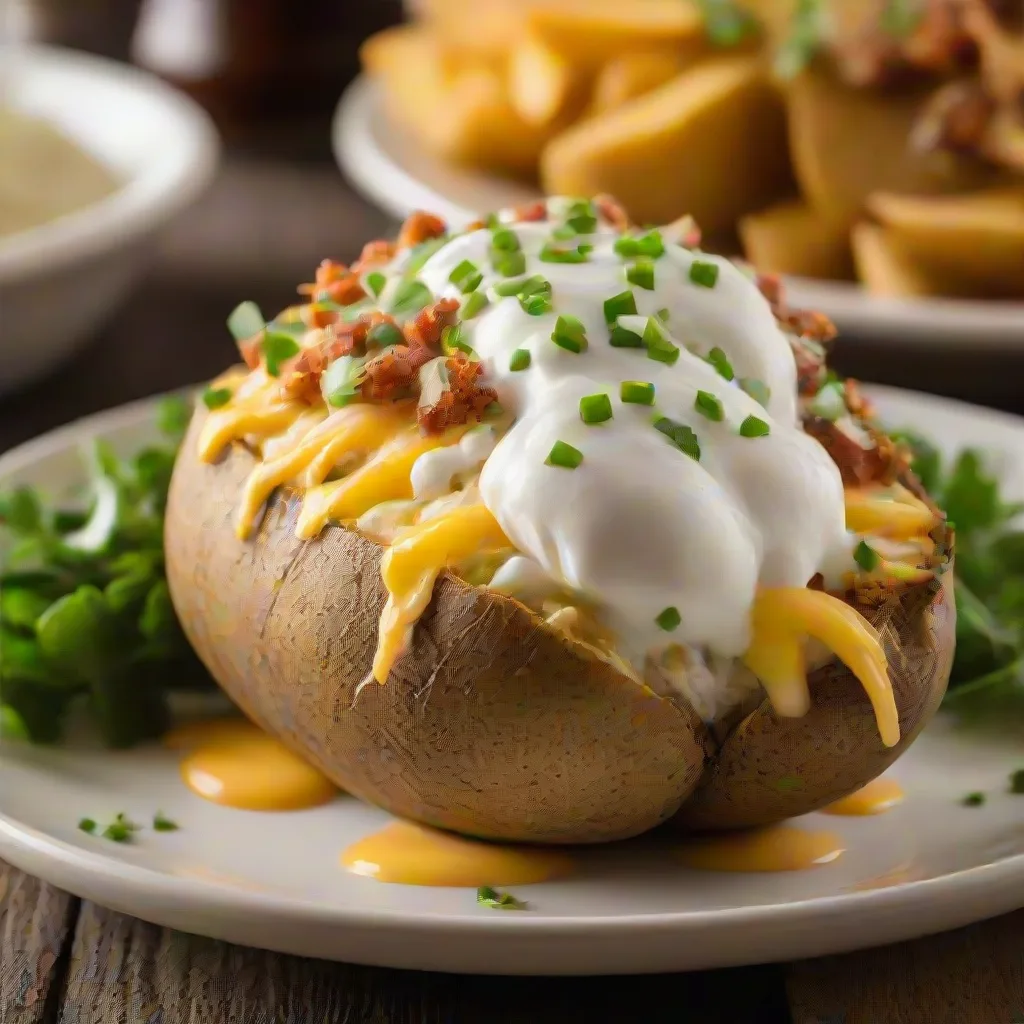
The Texas Roadhouse rolls belong on the same table. The steak seasoning can be stirred into the potatoes for a spiced variation. If you’d rather have the potato whole, the same russet-and-butter logic carries over to the loaded baked potato. To browse every copycat on the site, see the full Texas Roadhouse recipe collection.
For gravy: Texas Roadhouse serves these with brown gravy on request. A simple version is 1 tablespoon of butter, 1 tablespoon of flour, 1 cup of low-sodium beef broth, and 1/4 teaspoon of the Texas Roadhouse steak seasoning — cook until thickened and pour over the top.
Storage and Reheating
Refrigerator: Up to 3 days in an airtight container. The texture will firm up considerably as it chills — this is normal.
Reheating: Stovetop is best. Add 2–3 tablespoons of half-and-half per cup of cold mashed potatoes, heat over low with constant stirring until smooth and hot. Avoid high heat — the proteins in the dairy will break and the potatoes will turn grainy.
Microwave (single portion): Cover the bowl, microwave on medium power (50–60%) in 90-second intervals, stirring between, until hot. Full power on a large portion will overheat the edges and dry them out before the center is warm.
Make-ahead for guests: Cook and mash fully, transfer to a slow cooker set on warm, and place a tablespoon of butter on top. It holds perfectly for 2–3 hours with occasional stirring.