Copycat Texas Roadhouse Loaded Baked Potato
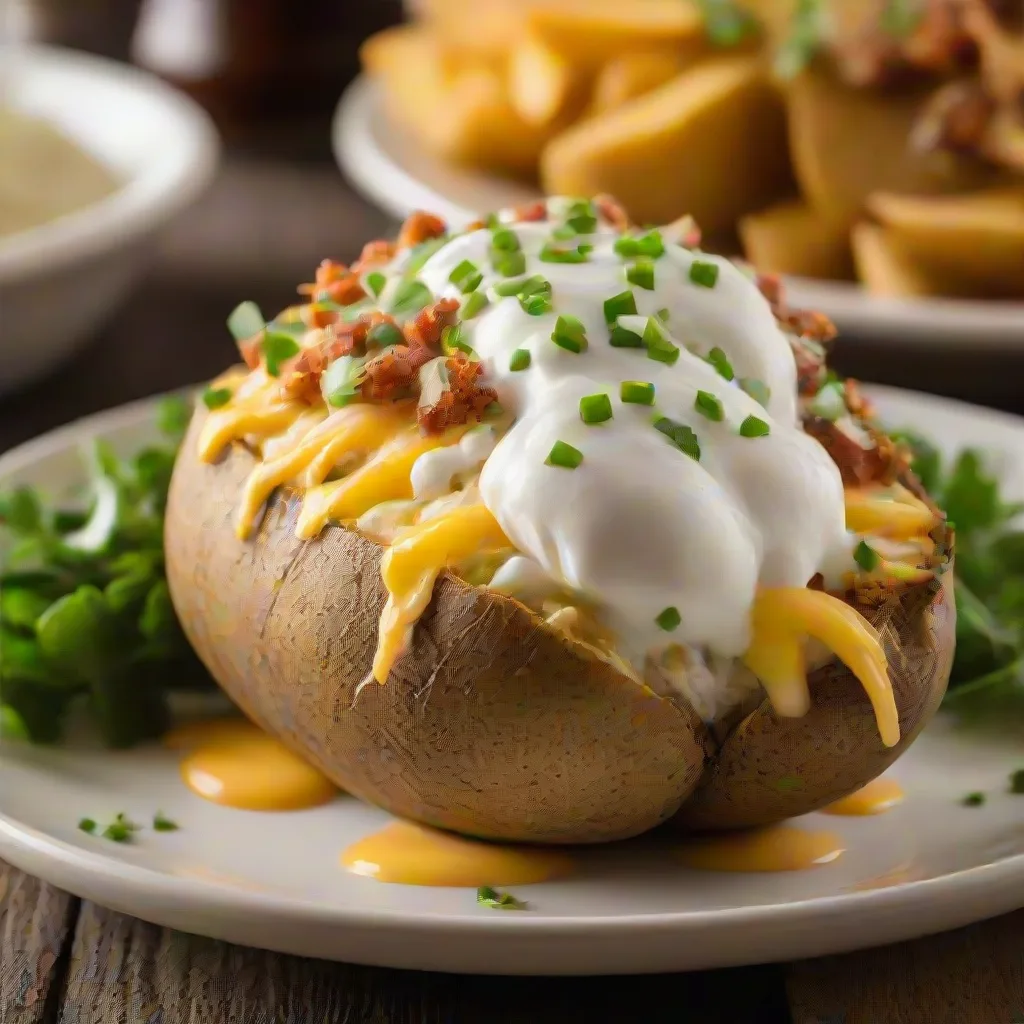
Texas Roadhouse’s loaded baked potato is a steakhouse classic: crispy salted skin, a light fluffy interior that practically falls apart, and a pile of butter, sour cream, sharp cheddar, crispy bacon, and fresh chives. It’s a side that regularly steals attention from the steak.
The version most people make at home never quite gets there — the skin is pale and leathery, the interior is dense rather than fluffy, and the whole thing somehow feels less satisfying than what comes out of a chain restaurant. Two specific technique gaps account for nearly all of that difference.
TL;DR
Cook the bacon first and reserve the fat. Rub large russet potatoes in bacon grease (or neutral oil) and coarse kosher salt. Bake directly on the oven rack at 400–425°F for 55–65 minutes until internal temperature hits 205–210°F (not just fork-tender — use a thermometer). Open with the squeeze-and-push technique. Load in this order: butter first (let it melt into the flesh), then sour cream, sharp cheddar shredded from a block, crumbled crispy bacon, chopped chives. Broil 60–90 seconds if the cheese needs a push. About $3–4 per potato at home versus $3.49–$3.99 at the restaurant (before tip).
What Most Copycat Recipes Get Wrong
Oil instead of bacon grease. The technique food writers and copycat cooks consistently point to for that savory, crackly Texas Roadhouse skin is bacon grease, not neutral oil — and it makes a noticeable difference. Bacon grease seasons the skin with a subtle savory depth, has a high smoke point, and produces a slightly crispier shell than most oils. At a restaurant that’s cooking bacon constantly, there’s always fat available; at home, the easiest move is to cook your topping bacon first and reserve the drippings. Using neutral oil instead is an acceptable shortcut but not the same. The other thing most copycat recipes miss: coating the entire oiled potato in coarse kosher salt before baking. The salt seasons the skin deeply and draws moisture to the surface so it can evaporate cleanly during the bake.
Foil. Wrapping a potato in foil before baking traps steam around the skin and converts the oven from a dry-heat environment to essentially a steam chamber. The skin comes out soft and pale. Don’t do it. The potato goes directly on the rack, uncovered.
Pulling too early. This is the core problem with most home baked potatoes: they come out before reaching 210°F internally. The fork says “done” — it slides in without resistance — but the interior is still noticeably dense and slightly waxy rather than genuinely fluffy. Large russets (the kind Texas Roadhouse uses) need the full 55–65 minutes at 400°F, and even then, checking with a thermometer instead of a fork is the only reliable way to know you’ve hit the target.
Pre-shredded cheese. Anti-caking agents in bagged shredded cheddar coat the surface of each strand and prevent clean melting. The cheese looks clumped and slightly grainy on the finished potato. Buy a block and shred it yourself; it melts flat and smooth.
The Science of Fluffy: Why 210°F Matters
A russet potato is roughly 80% water, 18% starch, and 2% protein, fiber, and minerals. The starches — primarily amylose and amylopectin — exist as tightly packed granules inside the cells. During baking, these granules absorb the potato’s own internal water and swell. At 210°F, the swelling is complete: the granules have fully hydrated, the cells rupture along natural boundaries, and the starch chains separate from each other. This is what produces the dry, almost powder-light, falling-apart texture of a properly baked potato interior.
Below 205°F, the granules have partially swelled but haven’t fully released. The cells are intact rather than ruptured at their seams. The interior looks cooked but behaves differently — it’s slightly compact, holds together more when you press it, and doesn’t fluff up the same way when you squeeze the potato open. This difference — which feels small on a thermometer — is obvious on the fork.
The other consequence of hitting 210°F is that the potato interior becomes genuinely dry. That dryness is why toppings absorb into the flesh rather than sitting on top of it. The butter melts into the starch rather than pooling on the surface. The sour cream integrates rather than sliding off.
The Skin Technique
The skin is not packaging you push aside to get to the good part. At Texas Roadhouse, people eat the skin. The technique is simple and the results are noticeably different from an untreated potato.
Bacon grease first. The widely reported move for a Texas Roadhouse-style skin is to coat the potatoes with bacon grease before baking — not neutral oil, not olive oil. A restaurant that’s cooking bacon constantly has a steady supply of rendered fat at hand; at home, the best approach is to cook your topping bacon first and reserve the drippings. Use enough grease to lightly coat every surface, including the ends. Bacon grease has a high smoke point, produces a crispier shell than butter, and adds a subtle savory note that neutral oil doesn’t. If you don’t have bacon grease, neutral vegetable oil is the correct substitute — olive oil’s lower smoke point and pronounced flavor aren’t right here.
Kosher salt, not table salt. Roll the greased potato in coarse kosher salt, pressing gently so the crystals adhere. Kosher salt has a larger crystal size that stays on the surface during baking rather than dissolving into the fat immediately. The larger crystals also provide crunchy seasoning bursts when you bite into the finished skin. Table salt dissolves almost instantly and leaves a pale, under-seasoned skin.
Direct rack contact. Place the salted potato directly on the oven rack, with a sheet pan on the rack below to catch any drips. This gives dry heat access to all six sides of the potato, including the bottom. The bottom on a sheet pan would steam against the metal surface and come out soft.
Building the Toppings
Order matters. Add butter to the freshly opened, steaming-hot potato first and let it melt into the flesh for 30 seconds before adding anything else. The hot interior melts the butter and it absorbs into the starchy surface — coating it so the sour cream has something to cling to rather than hitting bare starch.
Sour cream goes on next, followed by the shredded cheddar. For the cheddar to melt properly from the potato’s residual heat, it needs to go on top of the warm (but not cold) sour cream layer while the potato is still extremely hot. If it’s not melting, 60–90 seconds under the broiler finishes it cleanly.
Bacon and chives go on last — after any broiling — so neither gets scorched or wilted.
Texas Roadhouse and Mesquite
Texas Roadhouse is known throughout the restaurant industry for their mesquite charcoal grill stations, which is the source of the char flavor on their steaks, chicken, and ribs. Baked potatoes don’t go on the mesquite grill — they’re cooked in separate high-temperature ovens, so the mesquite flavor you associate with Texas Roadhouse is a feature of their grilled proteins, not the potato program. What you’re replicating in the potato is the technique: the skin treatment, the oven temperature, and the internal temperature target.
Cost vs. the Restaurant
| Texas Roadhouse | This Copycat | |
|---|---|---|
| Price per potato | ~$3.49–$3.99 (side) | ~$3–4 (4-batch) |
| Active time | — | ~15 min |
| Skin treatment | Bacon grease + kosher salt | Bacon grease + kosher salt |
| Interior | Fluffy (205–210°F) | Fluffy if thermometer used |
| Cheddar | Shredded | Shred from block |
| Bacon | Crispy | Oven-baked rack method |
Variations
Twice-baked loaded potato: Bake the potatoes through the full process to 210°F. Cut in half lengthwise and scoop out the interior, leaving a 1/4-inch shell. Mix the scooped potato with butter, sour cream, half the bacon, and half the cheddar. Spoon back into the shells, top with remaining cheddar and bacon, and bake at 375°F for 20 minutes until the top is golden. Excellent make-ahead option — prep through the filling step, refrigerate, and bake to order.
Chili-loaded: Substitute a ladle of Texas Roadhouse-style chili for the sour cream layer. Add cheddar, a small dice of raw white onion, and pickled jalapeño slices. This is a full meal on its own and pairs with the same cinnamon butter rolls that come to the table.
Broccoli-cheese: Swap the sour cream, bacon, and chives for steamed broccoli florets and double the cheddar. Good option for those avoiding pork; broil until the cheddar goes golden across the broccoli tops.
Storage and Reheating
Baked potatoes don’t hold well once loaded — the toppings settle and the skin loses its crackle. If you’re making ahead, bake and cool the potatoes completely, then refrigerate them unloaded and uncovered for up to 3 days. Reheat in a 400°F oven directly on the rack for 15–20 minutes until the skin re-crisps and the interior temperature comes back up. Load fresh after reheating.
Avoid the microwave for reheating — it steams the skin from the inside and the resulting texture is soft throughout, which is the opposite of what you want.
More Texas Roadhouse Recipes
- Copycat Texas Roadhouse Rolls — the warm, yeasted dinner rolls with cinnamon honey butter that arrive at the table before anything else
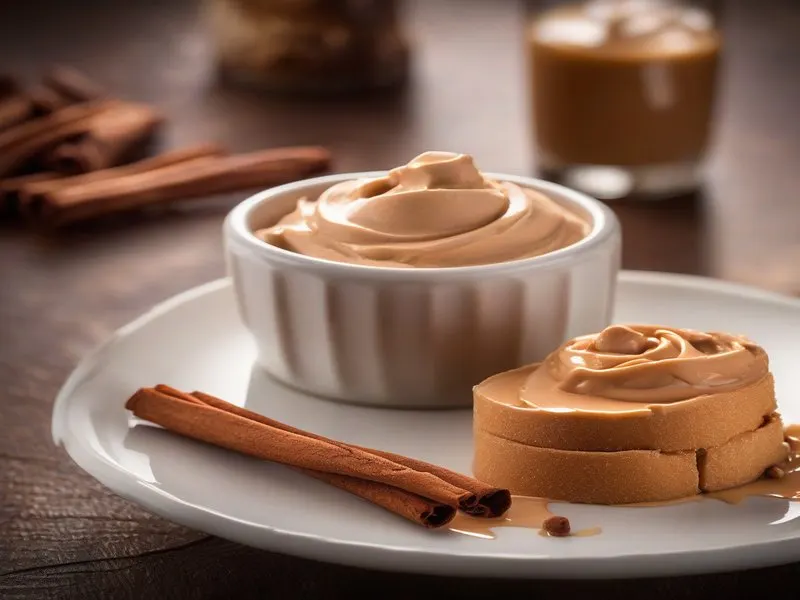
- Texas Roadhouse Cinnamon Butter — the whipped compound butter from the rolls, made in 10 minutes at home
- Copycat Texas Roadhouse Mashed Potatoes — the secret is chicken base dissolved into the half-and-half before mashing
- Texas Roadhouse Loaded Sweet Potato — the dessert-adjacent counterpart with cinnamon honey butter, caramel, and broiled marshmallows