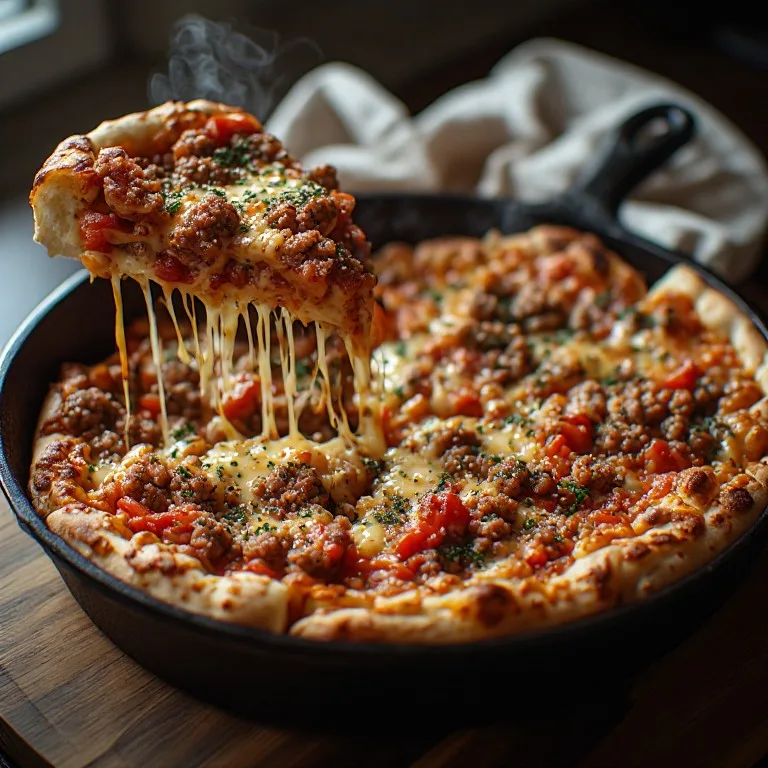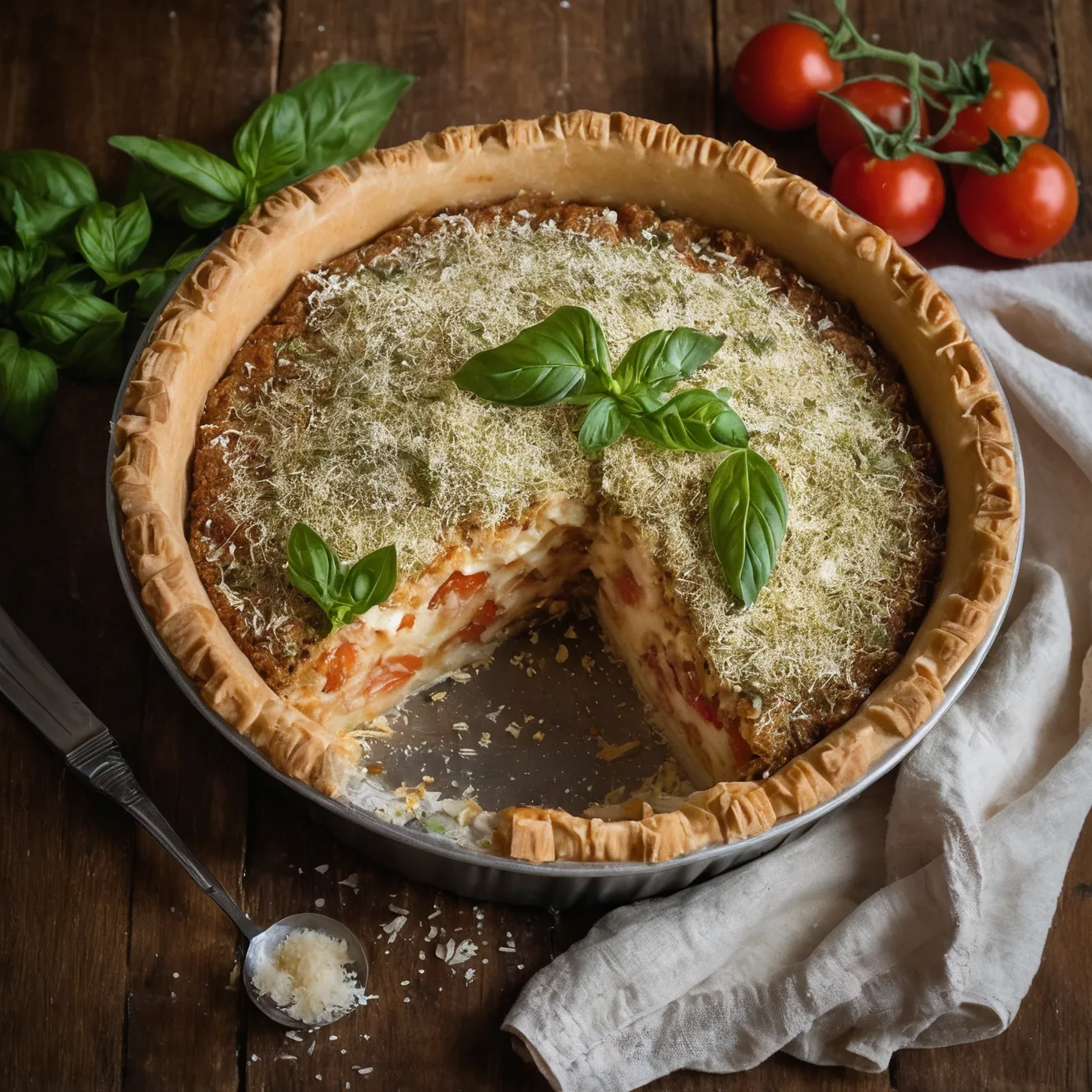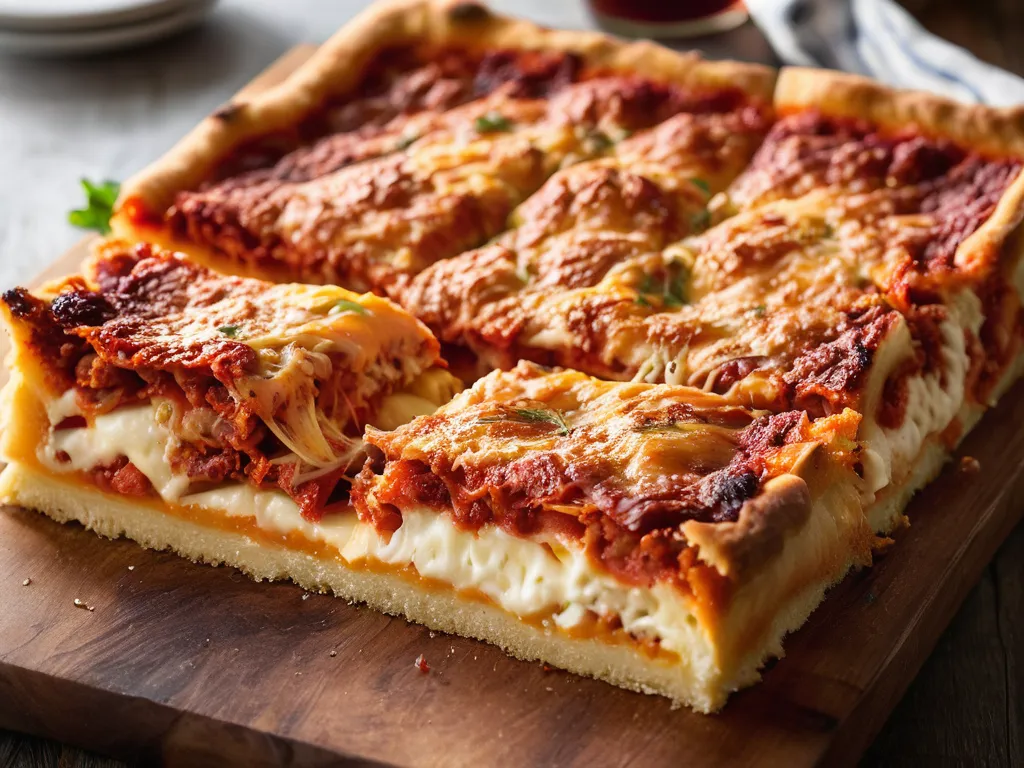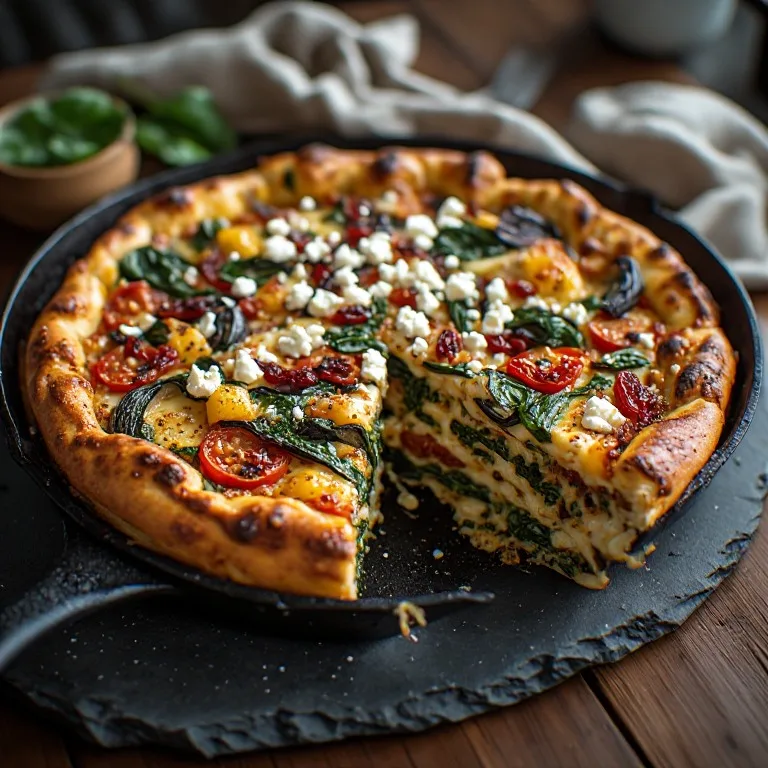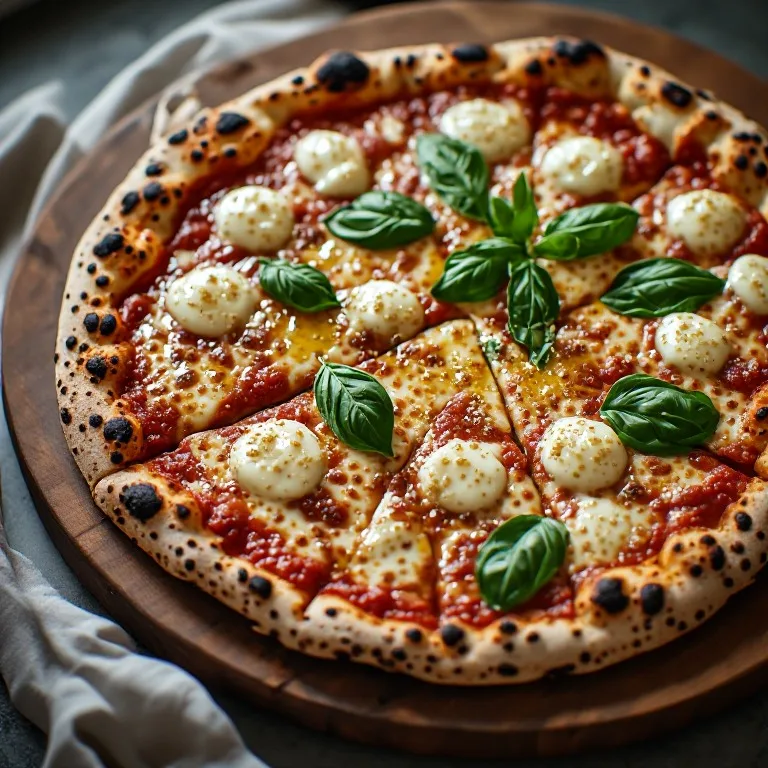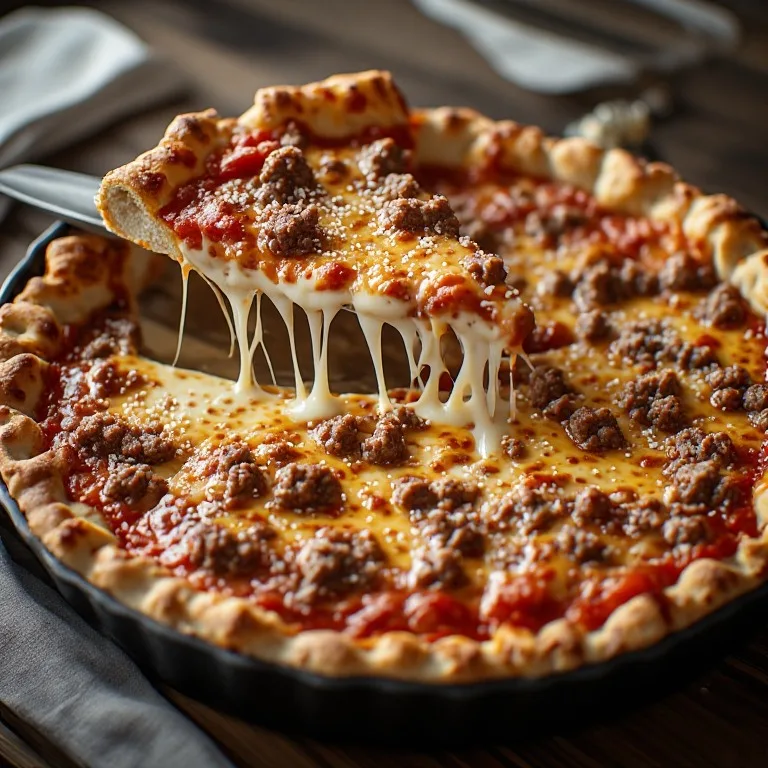



Giordano’s stuffed deep dish is not a thicker version of regular deep dish. It is a different object: two layers of dough sealed around an enormous cheese and sausage filling, with chunky tomato sauce spread on the outside of the upper crust. When you cut through it, you see five distinct layers — bottom crust, mozzarella, sausage, thin top crust, tomato sauce — and the construction holds them together so a single slice contains all five in every bite.
The recipe came from the Boglio brothers’ mother in Torino, Italy. She made Torta Pasqualina, a savory Northern Italian Easter pie with two thin pasta dough sheets enclosing a ricotta-and-greens filling. Efren and Joseph Boglio adapted that two-crust seal for pizza when they opened on South Pulaski Road in Chicago in 1974. The restaurant now has 60+ locations and ships nationwide. A medium (9-inch) stuffed pizza starts at $26 and requires a 45-minute wait at the restaurant. Making it at home costs about $15 in ingredients.
The structural difference from other Chicago deep dish
Lou Malnati’s and Pizzeria Uno use a single crust pressed into a deep pan, with cheese and toppings filling the well and sauce on top. Giordano’s uses two crusts: the lower one forms a bowl, the upper one seals over the filling like a pie lid, and the sauce goes on the outside of the upper crust. The enclosed construction means the filling cooks in its own steam — which is why the restaurant waits 45 minutes and why the home version needs a full 45–55 minutes in a 425°F oven. Pulling it early leaves the top crust undercooked under the sauce.
What actually separates the home version from the restaurant
Two dough portions, not one. Divide the dough: about two-thirds for the bottom crust (it needs to cover the pan floor and climb 2+ inches up the sides) and one-third for the top crust (rolled thin, just enough to cover the filling). If you make one uniform ball and cut it in half, the top crust will be too thick and the bottom won’t reach the sides.
Seal before you sauce. Fold the overhanging bottom crust up and over the edge of the top crust, then press to seal before you add the tomato sauce. The seal is the whole architecture — if it fails, the cheese escapes, the filling dries out, and the sauce runs underneath. Take your time crimping the edge firmly all the way around.
Score, then sauce. Cut three or four small slits in the sealed top crust before spreading the sauce. Without vents, steam builds up inside and forces moisture into the upper crust from below, making it gummy. The slits let steam escape; the sauce on top conducts heat evenly and browns as it bakes.
Equipment
- Large mixing bowl or stand mixer with dough hook
- 9- or 10-inch round cake pan (2+ inch sides) or 10-inch cast iron skillet
- Rolling pin
- Small saucepan
- Instant-read thermometer (optional but useful)
Make-ahead notes
The dough can be cold-proofed for up to 48 hours. Divide, oil, and seal the portions in airtight containers in the refrigerator instead of doing the 1-hour room-temperature rise. Pull both portions out 45 minutes before you plan to assemble, letting them relax to room temperature so the dough presses and rolls without springing back. The sauce can be made 3 days ahead and refrigerated. That make-ahead cold proof helps any yeast crust, including the sweet copycat Papa John’s pizza dough if you want a thin-crust night instead.