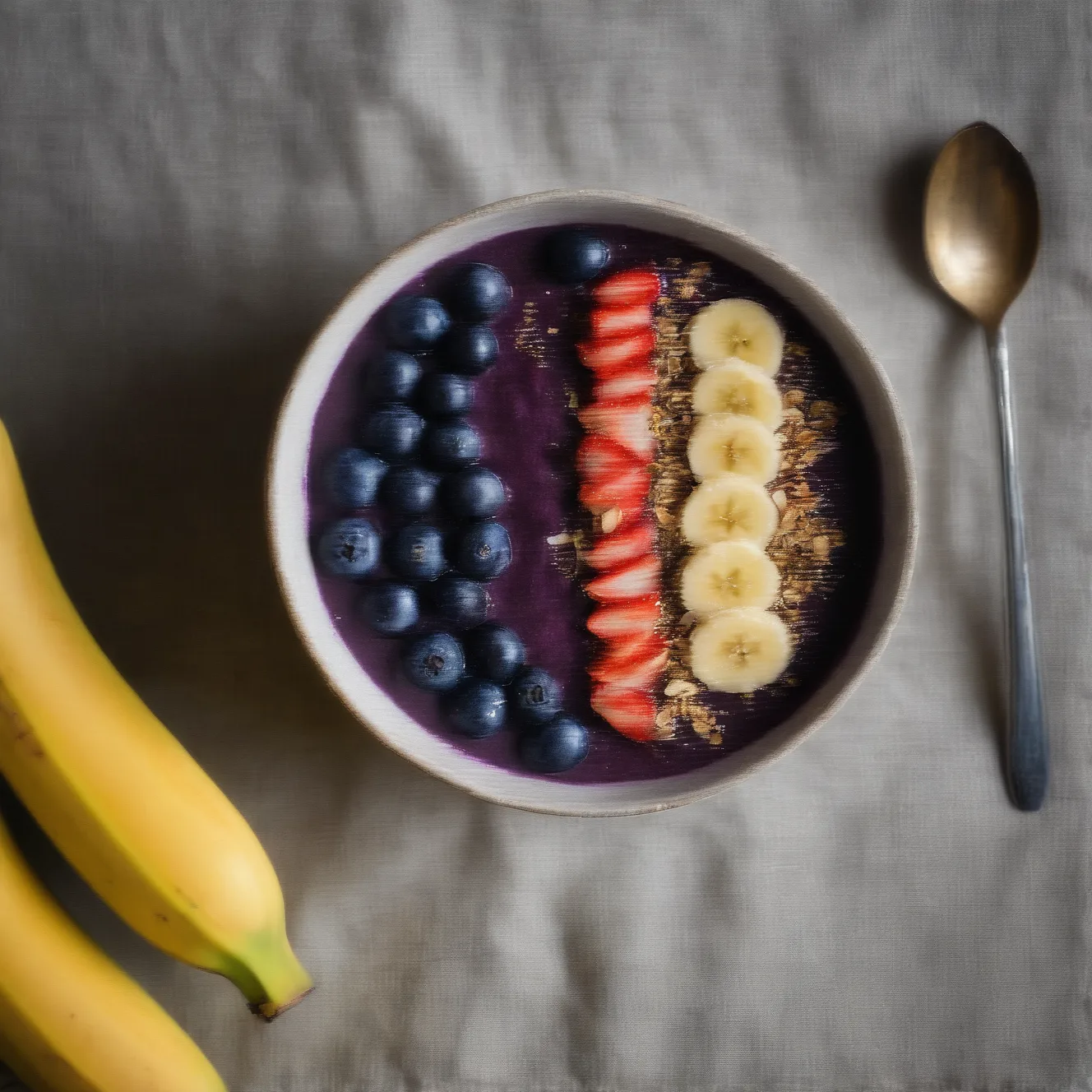
Açaí bowls have been one of the most photographed breakfasts on social media for years, and they’re worth making at home — not because they’re Instagram-worthy (they are) but because the home version costs less than $5 per bowl vs. $12–16 at a juice bar and takes about 10 minutes once you know one rule.
The rule: use almost no liquid.
TL;DR
Two Sambazon açaí packets + one frozen banana + a splash of almond milk, blended to soft-serve thickness. The base should resist pouring. Arrange toppings fast and eat immediately. Total cost: under $10 for two substantial bowls.
What Açaí Actually Is
Açaí is the fruit of a palm tree native to the Amazon River floodplain in Brazil. It grows in large purple-black clusters and has the size and structure of a large grape — most of it is seed, with a thin layer of edible pulp on the outside. The fruit is so perishable that it begins fermenting within hours of picking, which is why you can only get it frozen or freeze-dried in the US. The deep purple color comes from anthocyanins, the same antioxidant compounds that color blueberries and red cabbage.
The taste surprises people who expect something sweet. Açaí is earthy, mildly bitter, and vaguely chocolatey — closer to unsweetened dark cocoa than to berries. The banana in the base and the sweet toppings do the heavy lifting for sweetness.
Brazilian surfers popularized the bowl format in the 1970s as a post-session energy food. The trend moved to US health food circles in the late 1990s (Sambazon imported the first commercial US supply in 2000), then spread globally through Instagram and TikTok.
Where to Buy Açaí Packets
Sambazon is the dominant brand in the US. Their packets are sold at Whole Foods, Target, Walmart (freezer section, not always easy to find), Costco (multipacks), and Amazon Fresh. A 4-pack of 100g packets runs $7–10 at most stores; Costco sells larger cases for less per packet.
The three main Sambazon varieties:
- Original Blend: Slightly sweetened, the easiest to work with for beginners. Smooth, creamy base.
- Pure Unsweetened: No added sugar. Better if you want to control sweetness entirely with toppings.
- Superfruit Blend: Mixed with blueberry and pomegranate. More fruit-forward, slightly less earthy. Good for people who find pure açaí too bitter.
Trader Joe’s sells their own branded unsweetened açaí packets (in the frozen section near the smoothie packs) at a competitive price. Acai Roots is another solid option available at health food stores.
Freeze-dried açaí powder (sold at Whole Foods and Amazon) is a pantry shelf option — no blending required, just add water — but it doesn’t produce the thick, soft-serve texture of frozen packets. It’s a shortcut for adding açaí to yogurt or oatmeal, not for a real bowl.
The Thickness Problem
Almost every failed açaí bowl comes down to too much liquid. A frozen açaí packet, a frozen banana, and a handful of frozen berries contain plenty of moisture — enough to blend with as little as 2 tablespoons of almond milk.
When people add a quarter cup or half a cup of liquid (the amount they’d use in a regular smoothie), the result is drinkable but not spoonable. It won’t hold the toppings and collapses into a purple puddle within minutes.
The technique:
- Start with exactly 2 tablespoons of liquid.
- Blend in 15-second bursts, stopping to push the mixture toward the blade with a tamper.
- Add one additional tablespoon only if the motor is completely stalled.
- Stop blending the moment you reach soft-serve consistency.
The blender will sound labored. The mixture should almost stick to itself. This is correct.
Blender Requirements
A high-powered blender (Vitamix, Blendtec, Ninja Professional, or similar) handles this without complaint. The mixture is very thick, and standard consumer blenders — particularly those with less than 1000 watts — often stall, overheat, or fail to achieve a truly smooth consistency.
If you only have a standard blender: let the açaí packets sit on the counter for 3–4 minutes until they’re softened but still mostly frozen (you can squeeze them slightly through the packaging). Break them into smaller pieces before adding to the blender, and add one extra tablespoon of liquid. You’ll get a workable result with more patience.
A tamper (the stick that comes with Vitamix blenders, used to push ingredients toward the blade) is worth having. Without a tamper, you’ll need to stop the blender frequently to scrape down the sides with a spatula.
The Classic Topping Breakdown
A great açaí bowl hits at least three texture notes: crunchy, creamy, and fresh. Here’s how to build it:
Crunchy: Granola is the standard. Use a granola with visible oat clusters rather than loose granola — it holds up to the wet base longer. Alternatively: toasted coconut chips, macadamia nuts, or hemp seeds (less sweet, more protein).
Creamy: Sliced banana is the classic. Nut butter (almond or peanut, 1 tablespoon) adds protein and a richness that plays well against the earthy açaí.
Fresh/tart: Blueberries, sliced strawberries, or raspberries. The acidity wakes up the base, which can taste flat without something bright. Passion fruit pulp is the Brazilian traditional topping — excellent if you can find it.
Drizzle: Honey is the standard. Agave works. A very light drizzle of tahini over nut butter and banana is non-obvious and excellent.
Nutritional Reality
Commercial açaí bowls are often marketed as a “healthy” meal, but a large bowl from a juice bar can hit 600–800 calories and 60–80g of sugar once granola, honey, and toppings are added.
The açaí base itself is nutritionally solid: high in healthy fats (monounsaturated and omega fatty acids), anthocyanins, fiber, and low in sugar. Sambazon’s Pure Unsweetened packet runs about 70 calories, 5g fat, and zero sugar per 100g — more fat than carbs, unusual for fruit. The sweetened Original Blend is higher: roughly 100 calories and 12g sugar per packet, so it shifts the math below if you use it.
The calories come from the build:
| Ingredient | Approx. calories (per bowl) |
|---|---|
| 1 Sambazon Pure Unsweetened packet (100g) | 70 |
| ½ banana in base | 45 |
| Frozen berries | 20 |
| Granola (3 tbsp) | 80 |
| Fresh banana (¼ cup) | 30 |
| Fresh berries | 15 |
| Coconut flakes (1 tbsp) | 18 |
| Honey (1 tbsp) | 64 |
| Total | ~340 |
At home, swapping granola for seeds (hemp, pumpkin) and cutting the honey to a light drizzle drops the bowl to 250–270 calories while keeping the açaí base intact.
Variations
Tropical: Blend frozen mango with the açaí instead of mixed berries. Top with pineapple chunks, mango slices, macadamia nuts, and toasted coconut. Skip the honey (the mango adds enough sweetness).
Chocolate-açaí: Add 1 tablespoon of cacao powder to the blender. Top with cacao nibs, banana, and a small drizzle of honey. This leans into açaí’s naturally chocolate-adjacent flavor instead of fighting it.
Protein bowl: Use protein granola or skip granola entirely and top with 2 tablespoons hemp seeds, 1 tablespoon chia seeds, and a tablespoon of almond butter. Add a scoop of vanilla protein powder to the base (blend it in). A filling post-workout breakfast at around 400 calories with 20+ grams of protein.
Green açaí: Add a large handful of frozen spinach to the blender. The açaí’s deep purple completely masks the color, and the flavor is undetectable. You get an extra serving of vegetables in what looks like a normal purple bowl.
Cost vs. the Juice Bar
| Juice bar | Home | |
|---|---|---|
| Price per bowl | $12–16 | $4–5 |
| 2 bowls | $24–32 | $8–10 |
| Time to eat | 10+ min wait | 10 min total |
The açaí packets are the main cost. Once you have a bag of granola, coconut, and frozen fruit in the freezer, the incremental cost per bowl is low. Sambazon packets from Costco bring it closer to $3–3.50 per bowl.
Serving Tips
- Arrange toppings in distinct sections rather than scattering them — rows or quadrants look significantly more intentional and slow down the granola-getting-soggy problem.
- Serve in wide, shallow bowls rather than deep bowls; the topping-to-base ratio is better and it’s easier to eat.
- Eat immediately. The base softens in 10–15 minutes, and soggy granola is a textural disappointment.
For more cold breakfast bowls, the viral salmon rice bowl covers a savory version of the composed bowl format. For high-protein no-cook breakfasts, baked oats offer a similarly minimal-prep morning option that meal-preps well.