Nature’s Cereal — The Fruit Bowl That Hit 600 Million TikTok Views
TL;DR: A Jamaican-inspired fruit bowl from TikTok creator Sherwayne Mears (@natures_food) — berries and pomegranate seeds in chilled coconut water, eaten with a spoon. Singer Lizzo posted her own strawberry-forward version with ice cubes on March 5, 2021, and it sparked hundreds of millions of views under #naturescereal. Vita Coco reportedly saw a 33% sales spike in the week the trend peaked. Takes 5 minutes. Genuinely delicious.
The Creator Most People Don’t Know
Everyone credits Lizzo. The actual creator is Sherwayne Mears, a plant-based food enthusiast who grew up in Jamaica and runs the TikTok account @natures_food.
Mears posted the original Nature’s Cereal video in February 2021. He came up with the idea late one night — thinking about fruit, thinking about coconut water, combining them, naming the result. The next morning he filmed it and posted it. His original used fresh coconut water from a whole green coconut, poured over a mix of blackberries, blueberries, strawberries, and pomegranate seeds.
The video picked up steam organically. Then Lizzo — at the time one of the biggest names on the platform — discovered it. On March 5, 2021, she posted her own version to her millions of followers across TikTok and Instagram. She called it delicious, leaned into a strawberry-forward bowl, and added ice cubes — the two touches most associated with her version. Her post racked up millions of views within days and pushed the trend mainstream.
Mears has spoken graciously about Lizzo’s role: she discovered his February video and gave him a platform he didn’t have before. The credit issue is worth knowing because Mears’s background — specifically his Jamaican upbringing around whole coconuts and tropical fruit — is the actual reason the recipe works the way it does.
Why the Name Did Everything
“Fruit in coconut water” is a description. “Nature’s cereal” is a concept.
The name reframes an obvious thing (eat fruit for breakfast) as something intentional, named, and slightly rebellious. You’re not eating cereal — you’re eating Nature’s cereal. It implies the cereal industry has been doing it wrong.
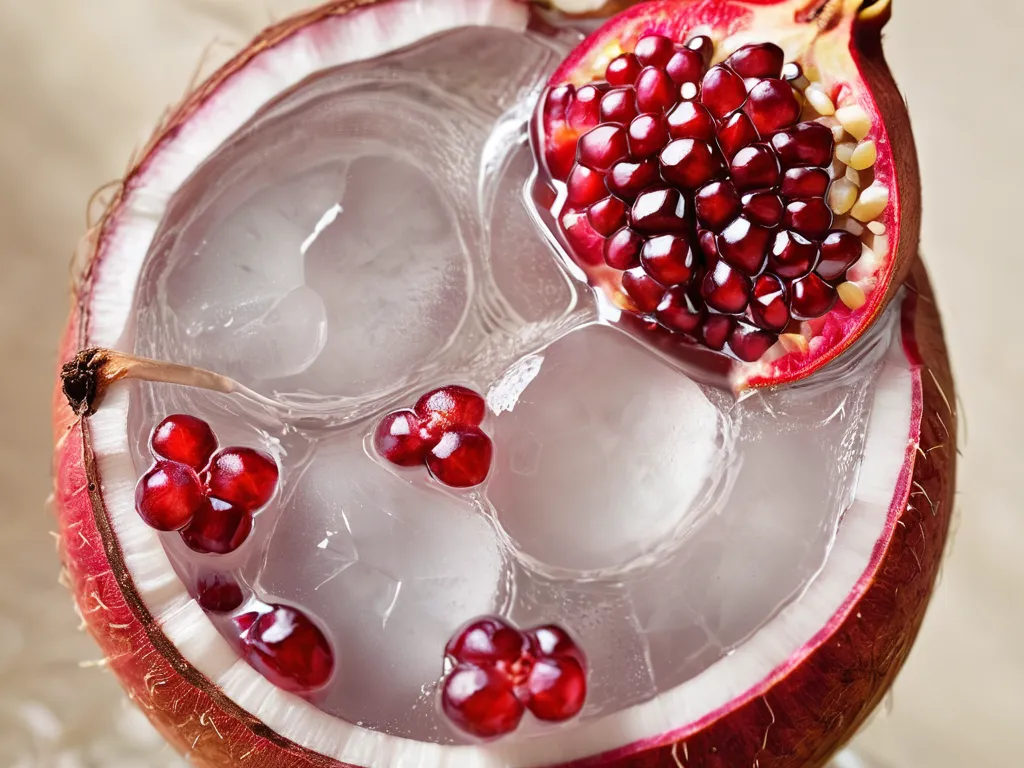
Combined with the visual — jewel-bright berries floating in clear liquid in a white bowl, pomegranate arils glinting like little rubies — it was perfectly made for a 15-second TikTok. It looked like something from a wellness retreat that cost $400/night, and you could make it in your kitchen in four minutes.
By the time #naturescereal hit 600 million views on TikTok (some counts put it over 770 million), it had spawned hundreds of variations, dietitian breakdowns, and at least one clever marketing campaign from a coconut water brand that knew a cultural moment when it saw one.
The Coconut Water Question: Fresh vs. Packaged
Mears’s original used fresh coconut water — cracked directly from a green coconut, sweet and slightly floral, with a flavor that packaged versions approximate but don’t quite match.
Lizzo’s version used packaged coconut water — widely available, consistently flavored, and perfectly good. It’s also what most people have access to.
Here’s what to know about packaged coconut water in this context:
What to look for: Unsweetened, not-from-concentrate. The best widely available options — Vita Coco, Harmless Harvest (raw/unpasteurized, tastes closest to fresh), Zico — all work well. Avoid “coconut water drinks” or flavored varieties, which add sugar and change the flavor profile.
Why it works as cereal milk: Coconut water has a mild natural sweetness (~45 calories per cup, 9g natural sugar) without the heaviness of dairy or plant milks. It doesn’t compete with the berries — it amplifies them. The slight electrolyte minerality (potassium, magnesium, sodium) makes it taste more complex than water, but not so rich that it feels like a smoothie.
The temperature rule: It must be cold. Room-temperature coconut water is noticeably flat-tasting and turns the berries soft faster. Always refrigerate before using.
If you want the full original experience: crack open a green coconut, pour the water over the fruit, eat it outdoors. It’s a different level of good.
Berry Selection: What to Use and Why
This recipe leans on three sturdy fruits as its base, each doing a specific job, with strawberries as a popular fourth option.
Blueberries are the base. They’re round, bite-sized, hold their shape in liquid, and have a mild-sweet flavor that doesn’t dominate. Their skin is firm enough to stay intact for 10–15 minutes in coconut water. Buy them ripe (dusty blue-purple, not red-tinged) — underripe blueberries are tart and firm in a bad way.
Blackberries add size, visual contrast, and a slight tartness that prevents the bowl from being cloying. Their texture — the little drupelets — gives each bite something to chew. Ripe blackberries are deep purple-black, not red, and should give slightly when pressed. Avoid any that are leaking juice before you get them home (they’ll turn your coconut water purple immediately).
Pomegranate seeds (arils) are the element that makes this feel like cereal and not just a fruit cup. They’re firm, crunchy, and jewel-bright. They pop when you bite them. They don’t soften in liquid the way berries do. They provide textural contrast that makes every spoonful more interesting. More on seeding technique below.
Strawberries: the Lizzo touch. Lizzo’s March 2021 version was strawberry-forward, and halved fresh strawberries have been associated with the trend ever since. They add sweetness and color, and you can use them alongside or in place of the blackberries. The trade-off: strawberries release juice faster than firmer berries, so if you use them, eat immediately (within 5 minutes).
What not to use: Raspberries fall apart in liquid almost immediately. Grapes work but feel out of place. Any cut fruit (watermelon, mango) releases water fast and dilutes the coconut water. Stick with whole berries and pomegranate arils for the best texture.
The Pomegranate Seed Technique (Not the Hard Way)
The most common reason people skip pomegranate is that they don’t know this shortcut.
The whacking method:
- Cut the pomegranate in half across its equator — not top-to-bottom through the stem end, but horizontally through the middle.
- Hold one half cut-side-down over a large bowl.
- Take a wooden spoon and whack the back of the pomegranate firmly, rotating as you go.
- The arils fall out in 10–15 seconds. Pick out any pieces of white membrane that fall with them.
You get clean, intact arils in under a minute per half. No underwater bowl required, no red juice everywhere. The white membrane (pith) is bitter and should be discarded; the arils are sweet-tart and ready to use.
Buy pre-seeded arils if this still sounds like effort. Whole Foods, Trader Joe’s, and most major grocery chains carry pomegranate arils in the refrigerated produce section, pre-packaged in 4–8 oz containers. They’re more expensive per unit but they eliminate all friction. One tablespoon of arils is about ¼ cup, which is exactly what this recipe calls for.
How to Make It More Filling (Because 150 Calories Won’t Carry You)
Nature’s cereal is ~150 calories per bowl. It’s packed with antioxidants, hydrating, and genuinely delicious. It is not a protein source and will not keep most adults full until lunch.
This is fine if it’s part of a broader breakfast, but worth knowing if you’re expecting it to replace your normal meal.
Ways to add staying power without wrecking what makes it good:
- Chia seeds: 1 tablespoon on top adds about 4g fiber, 2g protein, and 4g fat. They don’t change the flavor and absorb the coconut water gradually as you eat.
- Hemp seeds: 2 tablespoons add about 6g protein and 9g fat with a mild nutty flavor that works with the berries.
- Handful of nuts on the side: Almonds or walnuts eaten alongside (not in the bowl — they’ll get soggy) add fat and protein.
- Cottage cheese on the side: The protein play Lizzo herself is known for making. High-protein, neutral, and a meaningful 14g protein per half cup.
The bowl itself is as close to a perfect antioxidant delivery vehicle as breakfast gets — blueberries and blackberries are among the highest-antioxidant foods by ORAC score, pomegranate arils add additional polyphenols, and the electrolytes in coconut water (potassium, magnesium) make it more hydrating than water. The gap is protein and fat.
Variations That Actually Work
Tropical version: Swap blackberries for diced mango (¼ cup) and add a few slices of kiwi. Use the same coconut water base. The mango sweetness works especially well with fresh coconut water if you can get it. This is the variation closest to what Mears would have eaten growing up.
Citrus-forward: Add the zest of one lime to the coconut water before pouring. The oils from the zest give the whole bowl a brightness that cuts through the sweetness of the berries. Finish with a mint leaf or two.
Watermelon base: Replace the bowl’s regular fruit with 1 cup small watermelon cubes and fresh blueberries. Use sparkling coconut water instead of still. Very hydrating, very low calorie, and the sparkling water adds a texture change that feels surprisingly intentional.
Warm-weather mint version: Use all three original berries plus a generous handful of fresh mint leaves. The mint steeped in cold coconut water for 60 seconds before pouring gives the liquid a subtle herbal complexity. Remove the mint leaves before serving (or leave them in as garnish).
High-protein twist: Serve over a base of plain Greek yogurt with a thin pour of coconut water over the top. Technically more of a parfait than a nature’s cereal, but the coconut-water-and-berries combination still shows up, and you’re looking at 15g+ protein per serving.
The Vita Coco Effect: A Brand’s 36-Hour Response
What happened to coconut water sales when nature’s cereal went viral is a good case study in how brands can move fast.
Within 36 hours of the trend taking off, Vita Coco had a video ad on TikTok — repurposing content they’d shot earlier that morning for Instagram, quickly edited and pushed. The campaign linked directly to Amazon for purchase. Vita Coco saw a 33% sales increase in the week the trend peaked. They doubled their TikTok following from the campaign.
Vita Coco uses a social listening service to monitor trends and flag moments like this early. The nature’s cereal moment was exactly what they were built to respond to — a viral use case for their product, already organic, already credible, requiring only that the brand show up fast and not get in the way.
It’s also why Vita Coco became the brand most associated with nature’s cereal in people’s minds, even though Mears’s original used fresh coconut water straight from a green coconut — no carton in sight.
What Dietitians Actually Think
The dietitian consensus on nature’s cereal is largely positive with one honest caveat:
The fruit is excellent. Blueberries, blackberries, and pomegranate arils are legitimately among the most nutrient-dense foods you can eat. The fiber (8g per bowl) is meaningful. The antioxidant load is high. The hydration benefit from coconut water is real.
The honest caveat: the 21g of natural sugar in a standard bowl is worth knowing about, particularly for people managing blood sugar. The fiber mitigates the glycemic hit versus eating fruit juice, but it’s still a mostly-carbohydrate meal. For most healthy adults eating a balanced day overall, this is a non-issue. For diabetics or people following a low-carb protocol, the carb load (36g) is worth factoring in.
The article on Viral TikTok Chia Pudding covers a higher-protein overnight prep option if you want something in the same healthy-breakfast category with a more substantial nutritional profile.
If you’re looking for more healthy no-cook breakfast ideas, the Viral TikTok Açaí Bowl covers another fruit-forward breakfast with more protein options, and the Viral TikTok Baked Oats is worth trying when you want something warm and more filling. For the other viral “cereal” format that took off around the same time, Viral TikTok Croissant Cereal is the indulgent opposite end of the spectrum.