Pin It

Viral TikTok Overnight Chia Pudding (The Full Science + Ratio Guide)

Viral TikTok Overnight Chia Pudding (The Full Science + Ratio Guide)
Jump to Recipe
Prep 5 min Cook 0 min Serves 1
Quick answer: Combine 3 tablespoons chia seeds with 3/4 cup milk (or any liquid), add a splash of vanilla and sweetener, and stir. Let sit 5 minutes, then stir again β€” this second stir breaks up clumps that form as the seeds start gelling. Cover and refrigerate overnight (minimum 4 hours). The seeds absorb the liquid and swell to roughly 12 times their dry size, forming a tapioca-like pudding. In the morning, add toppings and eat cold. The ratio is 1 part chia seeds to 4 parts liquid by volume.
Viral TikTok Overnight Chia Pudding (The Full Science + Ratio Guide)

Viral TikTok Overnight Chia Pudding (The Full Science + Ratio Guide)

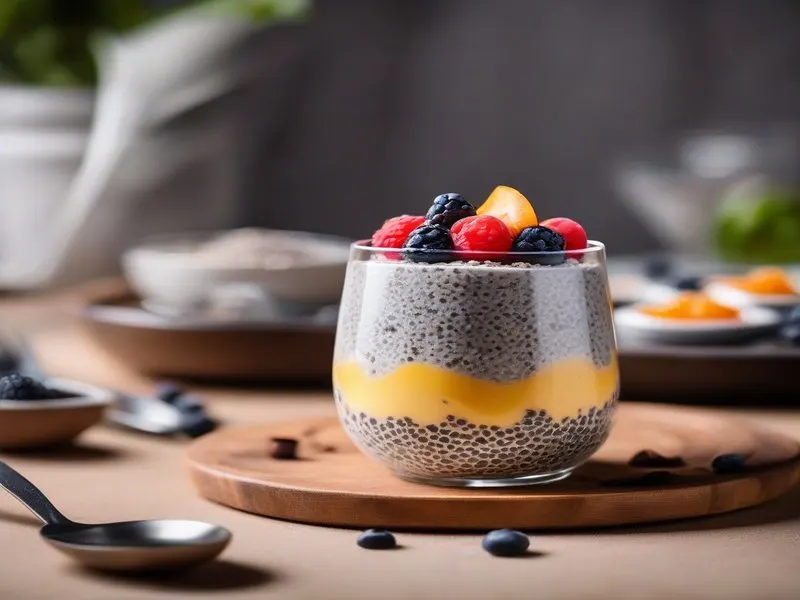
The TikTok breakfast made right: the exact 4:1 liquid-to-seed ratio, the double-stir technique that prevents clumps, which milk works best, and 7 flavor variations from chocolate to mango coconut.

Easy Prep: 5 min Cook: 0 min Total: 5 min1 servings ~$2.10/serving
Prep5 min
Cook0 min
Total5 min
Servings
1
At home~$2.10/serving
vs
Restaurant~$9.45/serving
You save ~78%

Ingredients

Instructions

💡
Pro tip: This recipe tastes even better the next day. The flavors need time to meld together in the fridge.
❄️
Storage: Keeps in an airtight container in the fridge for up to 2 weeks. Freezer-friendly for up to 3 months.
~350-550 cal/serving Β· Rich & IndulgentπŸ”₯

The Story Behind the Recipe

Viral TikTok Overnight Chia Pudding: Ratio, Science & 7 Flavor Variations

Prep: 5 min | Wait: 8 hr (overnight) | Servings: 1

In 2021, a combination of forces hit simultaneously: the meal-prep aesthetic was peaking on TikTok, the mason jar was having a cultural moment, and everyone was looking for an easy, photogenic, actually-healthy breakfast they could prepare the night before and grab in the morning. Chia pudding checked every box.

Creators competed to make the most beautiful layered jars β€” alternating strata of pudding, fruit, and yogurt β€” and the hashtag accumulated hundreds of millions of views. The recipe itself is one of the most foolproof on the platform: combine seeds and milk before bed, and breakfast makes itself while you sleep.

But the most common mistake is also the most common complaint. Chia pudding looks simple β€” and it is β€” but there are two things most recipes underexplain: the ratio, and the second stir. Get those right, and it works every time.

The Science: Why Chia Seeds Form a Gel

Chia seeds (Salvia hispanica) are covered in a thin outer coating called mucilage β€” a branched polysaccharide that is extraordinarily hydrophilic, meaning it attracts and binds water molecules aggressively. When seeds contact liquid, the mucilage expands outward from the seed surface, forming a clear gel layer around each seed. Each seed becomes its own tiny gel capsule.

As more seeds gel and the gel layers expand, they contact each other and form a continuous network throughout the liquid β€” the loose mesh that gives chia pudding its distinctive tapioca-like texture. Chia seeds can absorb up to 10 to 12 times their own weight in liquid β€” the gel mass of a single tablespoon of chia seeds in full hydration is dramatically larger than the dry seeds.

The mucilage is almost tasteless, which is why chia pudding takes on the flavor of whatever liquid you use. The gel is heat-stable and acid-tolerant β€” it forms in cold liquid, warm liquid, fruit juice, and dairy alike. This versatility is what makes chia so useful across the wide range of flavor variations below.

Why Warm vs. Cold Liquid Matters

Cold liquid (from the fridge) works but gels more slowly β€” the mucilage hydrates faster in warmer environments. Room temperature milk produces a fully set pudding in 30–45 minutes. Cold milk from the refrigerator takes 4–6 hours to reach full gel development. This is why every recipe tells you to refrigerate overnight: it’s not that the cold is necessary, it’s that most people start the pudding before bed and are not going to check on it at the 45-minute mark.

If you want same-day chia pudding, mix at room temperature and let it sit uncovered on the counter for 30–45 minutes before toppings and serving. It works identically to the overnight version.

The Ratio: 1 Part Seeds to 4 Parts Liquid

The standard ratio is 3 tablespoons chia seeds to 3/4 cup (6 oz) liquid. This is the sweet spot between a spoonable pudding and a drinkable liquid.

Too many seeds (say, 4 tablespoons to 3/4 cup): the gel network is so dense that the pudding is paste-like, heavy, and hard to stir. Some people prefer this β€” it is closer to a proper pudding in firmness β€” but most people find it unpleasant.

Too few seeds (2 tablespoons to 3/4 cup): the gel network is too thin to set properly. You get a slightly thickened liquid with seeds floating in it, closer to a chia agua fresca than a pudding.

The 3:3/4 ratio produces a texture that is thick, holds its shape on a spoon, and has a consistency somewhere between tapioca pudding and yogurt β€” what most people expect when they search for chia pudding.

Fine-tuning: If your refrigerator runs warm or you use a thinner milk (almond milk is the thinnest common option), you may need to add half a teaspoon more seeds. If you use thick canned coconut milk, reduce seeds by a teaspoon since the milk itself adds body.

The Double-Stir Technique

This is the step most recipes mention casually and most home cooks skip. It is the single biggest difference between clumpy chia pudding and smooth chia pudding.

Chia seeds clump because they are small, hydrophilic, and they start gelling instantly on contact with liquid. In the first minute after combining, the seeds settle toward the bottom of the jar. Each seed begins forming its gel coat β€” and adjacent seeds, pressed together at the bottom, gel to each other, forming a mass.

The first stir distributes the seeds immediately after combining. But 5–10 minutes later, the seeds have gelled just enough to have some grip, but not enough to have formed permanent bonds. This is the window for the second stir β€” you can still break the small clumps apart and redistribute the seeds evenly through the liquid. After that window (20+ minutes in), the gel has set enough that clumps are permanent.

To execute: stir thoroughly at time zero, set a timer, stir again at 5–10 minutes. If you see clumps in the 5-minute stir, stir once more at 10 minutes and once more at 15. Then refrigerate.

The Milk Guide

The milk you choose changes both the flavor and the texture of the finished pudding more than any other ingredient.

MilkTextureFlavorBest for
Oat milkThick, creamyMildly sweet, neutralAll-purpose default
Full-fat canned coconutThickest, densestStrong coconut, richTropical variations
Almond milkThin, lightFaint nuttinessLower-calorie result
Cashew milkUltra-creamyNearly flavorlessMost dairy-like plant milk
Whole dairy milkCreamy, mediumClean dairyChia-forward base

Oat milk: The most popular choice on TikTok, and for good reason. It is thick (thicker than almond milk), mildly sweet on its own, and produces a neutral, creamy base that does not compete with toppings. Barista oat milks are even thicker due to their higher fat content. Best all-purpose choice.

Full-fat canned coconut milk: The richest option. Full-fat canned coconut milk (not the refrigerated carton version, which is much thinner) produces a pudding that is nearly as dense as a proper dairy pudding. It is naturally sweet and adds a strong coconut flavor, which makes it ideal for tropical variations. Best for mango coconut or pineapple variations; not a neutral base.

Almond milk: The lightest and lowest-calorie option. Unsweetened almond milk produces a thin pudding with a faint nuttiness. The gel network still forms completely, but the texture is less creamy than oat. Best if you want a lower-calorie result or you are topping with heavy, rich toppings like nut butter and granola that provide their own richness.

Cashew milk: Ultra-creamy, nearly flavorless β€” the most dairy-like of the plant milks. Harder to find and more expensive, but it produces a very neutral, rich pudding that is closer to a dairy-based result without any identifiable plant milk flavor. Good for anyone who does not love the oat or almond milk taste in the pudding itself.

Whole dairy milk: Produces a result that is creamier than almond milk but lighter than oat. The fat content (3–4%) helps create a more cohesive gel. Many people who prefer the taste of dairy find this makes the best-tasting base pudding when the chia flavor is the focus.

Coffee: Strong brewed coffee or cold brew (cooled) works as the liquid for a coffee-chia pudding that functions like a caffeinated breakfast dessert. Use the same ratio. Add 1 tablespoon cocoa powder for a mocha version.

7 Flavor Variations

1. Chocolate Chia Pudding

Add 1 tablespoon unsweetened cocoa powder (Dutch-process for a darker, smoother flavor; natural cocoa for a lighter, more fruity chocolate). Increase sweetener to 1.5–2 teaspoons since cocoa powder is bitter. Top with sliced banana, a drizzle of peanut butter, and a few mini chocolate chips. Optional: add 1/4 teaspoon espresso powder β€” it amplifies the chocolate flavor without adding significant coffee taste.

2. Mango Coconut

Use full-fat canned coconut milk as the liquid. Add 1/4 teaspoon ground ginger and 1/4 teaspoon turmeric for color and a subtle warmth. Top with fresh or frozen (thawed) mango chunks, toasted coconut flakes, and a squeeze of lime. The coconut milk pudding base is richer and thicker than a standard oat milk version β€” reduce chia seeds to 2.5 tablespoons if you prefer a less dense result with coconut milk.

3. Matcha Green Tea

Whisk 1 teaspoon ceremonial-grade matcha powder into the milk before adding chia seeds β€” matcha does not dissolve into cold liquid easily; whisk vigorously until fully incorporated, or blend the matcha-milk briefly before adding seeds. Use honey instead of maple syrup (honey pairs better with matcha’s grassy bitterness). Top with red bean paste, fresh kiwi, or a few raspberries. Pairs well with an Iced Matcha Latte on the side.

4. Peanut Butter Banana

Stir 1 tablespoon natural peanut butter directly into the milk before adding chia seeds. Peanut butter does not incorporate easily into cold liquid β€” whisk vigorously. Add a pinch of cinnamon and use banana slices as the primary topping alongside a honey drizzle. The peanut butter adds fat that makes the finished pudding extra rich and slightly heavier; reduce chia to 2.5 tablespoons if using oat milk (oat milk + peanut butter already provides significant body). See also: Peanut Butter Banana Toast for the same flavor profile in a different format.

5. Vanilla Cinnamon

Double the vanilla extract to 1 teaspoon. Add 1/4 teaspoon ground cinnamon and a pinch of cardamom. This is the most neutral variation and the best starting point for experimenting with exotic toppings: fresh fig, pomegranate seeds, or sliced stone fruit all work well on the vanilla-cinnamon base. Best with oat milk or whole dairy milk.

6. Berry Compote

Warm 1/2 cup mixed berries (frozen works perfectly) in a small saucepan with 1 teaspoon maple syrup and a squeeze of lemon juice until the berries burst and release juice, about 4 minutes. Cool completely. Spoon the compote over the set chia pudding in the morning rather than mixing it in before setting β€” the compote’s acidity will not interfere with gelling if kept separate. Alternatively, layer the raw berries in the jar below the chia mixture before refrigerating for a layered effect.

7. Lemon Curd + Blueberry

Use whole milk or oat milk. Add 1 teaspoon lemon zest directly to the seed-milk mixture. In the morning, top the set pudding with a spoonful of store-bought or homemade lemon curd, fresh blueberries, and a small amount of granola. This version leans more toward a dessert than a breakfast β€” the tartness of the lemon curd contrasts sharply with the neutral, gelled chia base.

Meal Prep: 5 Jars on Sunday

Chia pudding is one of the most practical meal-prep breakfasts because it holds its texture for 5 full days refrigerated. The week-at-a-glance approach:

Scale up the base recipe by 5. Combine 15 tablespoons (approximately 1 cup) of chia seeds and 3.75 cups of milk in a large bowl. Add sweetener, vanilla, and salt. Stir at time zero and again at 5 minutes. Divide into 5 mason jars and refrigerate overnight.

In the morning, add different toppings to each jar for variety: Monday might be mango coconut (add coconut milk variation), Tuesday peanut butter banana, Wednesday plain with granola and honey, Thursday chocolate with berries, Friday lemon curd and blueberries. The base pudding itself is identical in each jar; the topping provides the variation.

Do not add wet toppings β€” fresh fruit, compote, or yogurt β€” the night before. The liquid they release dilutes the pudding and changes the texture over multiple days. Add toppings at serving time.

Troubleshooting

Pudding is too thick to eat. Stir in milk one tablespoon at a time until you reach your preferred consistency. This happens most often with thick milks (full-fat coconut, barista oat) or when extra seeds were added.

Seeds are floating in liquid β€” it hasn’t set. Either the ratio was wrong (too little seed) or it wasn’t refrigerated long enough. Add a teaspoon of chia seeds, stir well, and refrigerate for at least 2 more hours.

There’s a solid clump of seeds at the bottom and liquid on top. The second stir was missed. This is the most common problem and the only one with no fix after the fact β€” the gel has permanently set in clumps. The pudding is still edible but the texture is uneven. For the next batch, stir at 0 and 5 minutes.

Pudding tastes bland. Chia seeds themselves have almost no flavor. The pudding’s taste depends entirely on the milk quality and the sweetener. Neutral milks + mild sweeteners produce a very subtle result. Increase vanilla, add a pinch of salt (salt amplifies sweetness significantly), or use a more flavorful milk (oat milk has more inherent flavor than almond).

Seeds feel crunchy or gritty. The pudding was not refrigerated long enough. At 4 hours the seeds should be fully gelled and soft. At 1–2 hours you still have a crunchy seed center in each gel capsule. Refrigerate overnight.

The Ancient Origin

Chia seeds are not a modern wellness invention. Salvia hispanica was domesticated in the valley of Mexico as early as 2,700 BC and served as a primary caloric staple for the Aztec, Mayan, and other Mesoamerican peoples. The name comes from the Nahuatl word chian, meaning β€œoily,” a reference to the seed’s high oil content β€” the Mexican state of Chiapas takes its name from the same root. (You will often read that β€œchia” is a Mayan word for β€œstrength”; that association appears in Mayan-speaking regions, but linguists trace the name itself to Nahuatl.)

Aztec warriors carried chia seeds as one of their primary field rations on long marches and before battle. The seeds could be stored for months without spoiling, were extremely calorie-dense by weight, and provided sustained energy. Aztec tribute records β€” the Matricula de Tributos, painted before the Spanish conquest β€” show chia seeds as one of the four primary tribute crops collected from conquered regions, alongside corn, beans, and amaranth.

The Spanish colonial administration actively suppressed chia cultivation because the seeds were central to Aztec religious ceremonies and were offered to their gods. By the late 16th century, chia had nearly disappeared from the broader food supply.

The modern rediscovery began in the 1990s in South America, where agricultural researchers identified the seeds’ nutritional profile. The β€œsuperfood” labeling followed in the 2000s. TikTok did not invent chia pudding β€” it took a 4,700-year-old food and made it photogenic.

Nutrition (Base Pudding, Oat Milk, No Toppings)

One serving (3 tbsp chia + 3/4 cup oat milk + 1 tsp maple syrup + vanilla):

  • Calories: approximately 280
  • Protein: 9g (5g from chia, 4g from oat milk)
  • Fat: 11g (predominantly from chia seeds β€” ~60% of chia fat is omega-3 ALA)
  • Fiber: 12g (roughly 40% of the daily recommended intake)
  • Carbs: 35g (from chia, oat milk, and the teaspoon of maple syrup)
  • Sugar: 14g (11g from oat milk, 4g from maple syrup)
  • Calcium: roughly 15–20% of daily recommended intake (from chia seeds alone, before milk)

Adding toppings changes these numbers significantly: a tablespoon of granola adds ~50 calories; a tablespoon of almond butter adds 100 calories and 4g protein; 1/2 cup fresh berries adds 35 calories and 4g sugar.


More make-ahead breakfasts: Viral TikTok Baked Oats (single-serve, cake-like, oven or microwave), Viral TikTok Peanut Butter Banana Toast (the sourdough + natural PB technique), and Viral TikTok Avocado Egg Toast (smashing technique and everything bagel seasoning guide). For an iced matcha alongside your chia pudding, see Copycat Starbucks Iced Matcha Latte.

Nutrition Facts

Per serving (1 servings)
Calories280
Total Fat11g
Total Carbs35g
Dietary Fiber12g
Sugars14g
Protein9g
Sodium130mg

* Estimated values based on standard recipe preparation. Actual values may vary.

πŸ₯—

Make It Healthier

Love Viral TikTok Overnight Chia Pudding (The Full Science + Ratio Guide) but want a lighter version? Try these simple swaps:

  • βœ“Use unsweetened almond milk and omit the maple syrup β€” rely on fresh fruit for sweetness. Drops to roughly 190 calories per serving.
  • βœ“Add a tablespoon of hemp seeds or a scoop of unflavored protein powder to push protein to 15–20 grams per jar.
  • βœ“Use full-fat coconut milk for a keto-compatible version (higher fat, lower carbs from the milk itself) β€” omit the maple syrup and sweeten with 2–3 drops of liquid stevia.
  • βœ“Top with a tablespoon of flaxseed meal alongside the chia for extra ALA omega-3s and lignans.

Equipment You'll Need

Mason jar with lid

Wide-mouth pint jars (16 oz) are ideal β€” wide enough to stir easily, lidded for overnight refrigeration, and photogenic for the TikTok layered look. A regular bowl with plastic wrap works equally well.

Fork or small whisk

A fork works better than a spoon for breaking up chia seed clumps in a narrow jar. A small balloon whisk is even more effective.

Frequently Asked Questions

What is the correct chia pudding ratio?

The standard ratio is 3 tablespoons of chia seeds to 3/4 cup (6 oz) of liquid β€” approximately 1 part seeds to 4 parts liquid by volume. This produces a thick, spoonable pudding. For a thinner consistency closer to a drinking yogurt, use 2 tablespoons seeds to 3/4 cup liquid. For an extra-thick pudding, use 4 tablespoons to 3/4 cup. The ratio is the single most important variable β€” get it wrong and you get either a watery glass of floating seeds or a dense paste. If your finished pudding is too thick, stir in milk one tablespoon at a time until you reach the texture you want. If it's too thin, stir in half a teaspoon of chia seeds and refrigerate another 30 minutes.

Why did my chia pudding turn out clumpy instead of smooth?

Chia seeds begin gelling the moment they contact liquid β€” and they clump together before the gel has a chance to distribute evenly. The fix is the double-stir: stir thoroughly when you first combine the seeds and milk, then stir again 5–10 minutes later when the seeds have just started swelling. This second stir breaks up any clumps that formed in the first few minutes and redistributes the seeds evenly through the liquid. Once the seeds are fully gelled (after 4+ hours), clumps are permanent β€” there is no way to break them up once the gel has set. If you skip the second stir, you often end up with a solid mass of seeds at the bottom and a watery layer on top.

What is the best milk for chia pudding?

Oat milk produces the creamiest, most neutral-flavored chia pudding and is the most popular choice on TikTok. Full-fat canned coconut milk produces the thickest, richest result and is best for tropical flavor variations β€” it's essentially a dessert pudding. Almond milk is the lowest in calories and produces a lighter, thinner pudding with a mild almond undertone. Dairy whole milk produces a result that is richer than almond but thinner than oat; the fat content helps create a more cohesive gel. Cashew milk is exceptionally creamy and nearly flavorless β€” the most dairy-like of the plant milks. Any liquid works β€” including coffee (for a mocha pudding), orange juice (citrus variation), or even brewed tea.

How long does chia pudding take to set?

Chia seeds need a minimum of 4 hours in the refrigerator to form a proper pudding. In that time, the mucilage (the soluble fiber coating on each seed) fully hydrates and forms the gel network that gives the pudding its tapioca-like texture. Overnight β€” 8 hours β€” produces the best texture. At 1 hour you get a thickened liquid with seeds that are still slightly crunchy at their core. At 2–3 hours the gel is partially set but the texture is uneven. At 4 hours the gel is complete and the texture is uniform. If you need it fast, let it sit at room temperature for 30 minutes before refrigerating β€” warm temperatures accelerate gelling slightly.

Is chia pudding actually healthy?

One ounce of chia seeds (2–3 tablespoons) contains about 140 calories, 4 grams of protein, roughly 10 grams of fiber, and 5 grams of omega-3 ALA β€” the plant-based omega-3 fatty acid. The fiber is predominantly mucilage and insoluble fiber, which supports digestive health and increases satiety. Chia seeds are one of the few plant sources considered a complete protein, containing all nine essential amino acids. The omega-3 content per ounce rivals flaxseed. However, the body converts plant-based ALA to EPA and DHA (the marine omega-3s) at low efficiency β€” chia pudding is a meaningful ALA source but not a substitute for fish or algae-based omega-3 supplements. The calorie and sugar content of the finished pudding depends heavily on the milk and toppings chosen.

How long does chia pudding keep in the refrigerator?

Up to 5 days in a covered jar or container. Chia pudding is one of the best meal-prep breakfasts because it holds its texture well for the full work week. Make 5 single-serve jars on Sunday and add toppings each morning. The pudding may thicken slightly over successive days as the seeds continue to absorb any remaining liquid β€” add a splash of milk and stir to loosen. Fresh fruit toppings should be added at serving time, not stored in the jar, since cut fruit releases liquid that dilutes the pudding over time.

Can I make chia pudding without refrigeration?

Yes β€” room temperature works, but takes longer. At room temperature (70–75Β°F), chia seeds gel in approximately 30–45 minutes. The resulting pudding is identical in texture to refrigerator-set pudding. The reason most recipes specify refrigerator time is that most people are making this overnight and it's simply more convenient to store it cold. If you want same-day chia pudding, mix at room temperature and let it sit for 30–45 minutes with a cover, then add toppings and serve. For food safety, don't leave it at room temperature for more than 2 hours once liquid is added.

Love this recipe? Share it!

Shop the tools

The right tools make all the difference. We earn a small commission if you buy through these links β€” at no extra cost to you.

Free PDF: our 12 most-wanted copycat recipes β€” instant download.

Ratings & Reviews

β€”
No ratings yet

Rate this recipe

Click a star to rate

Leave a Review

0/500

CS

Copycat Spices Test Kitchen

Every recipe on Copycat Spices is developed and tested in our home test kitchen. We reverse-engineer beloved restaurant dishes and refine each one until the flavors and the instructions work reliably for home cooks of all skill levels.

Learn more about our mission →