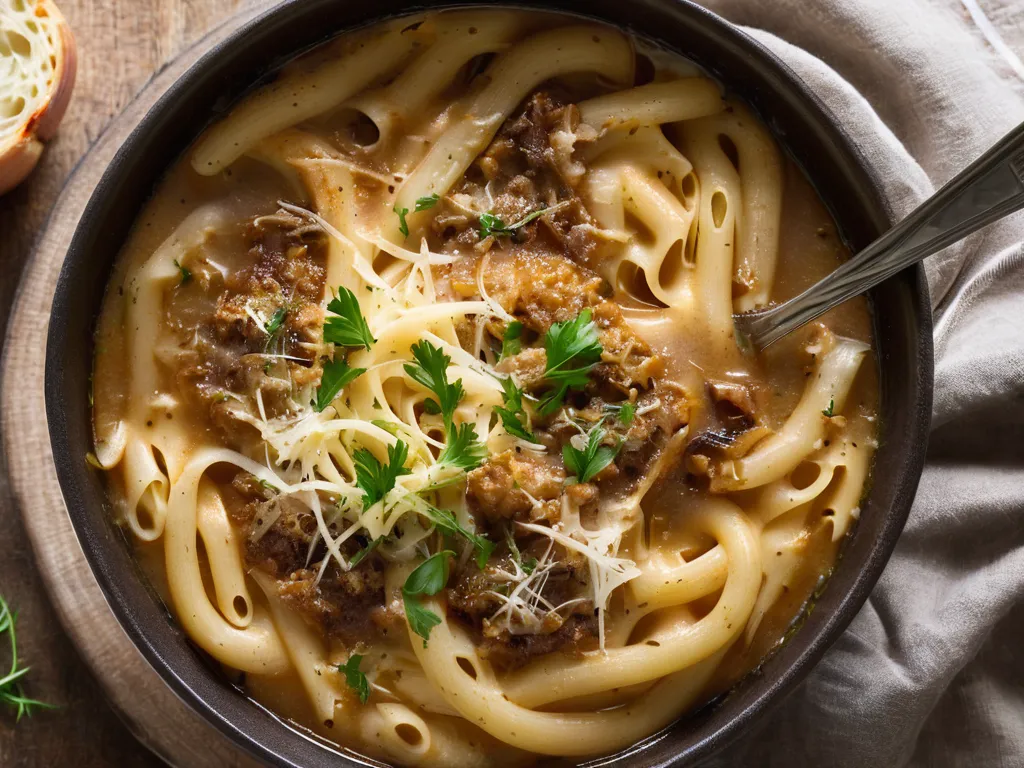
French Onion Soup Pasta — The TikTok Mashup That Exposed the Biggest Lie in Recipe Writing
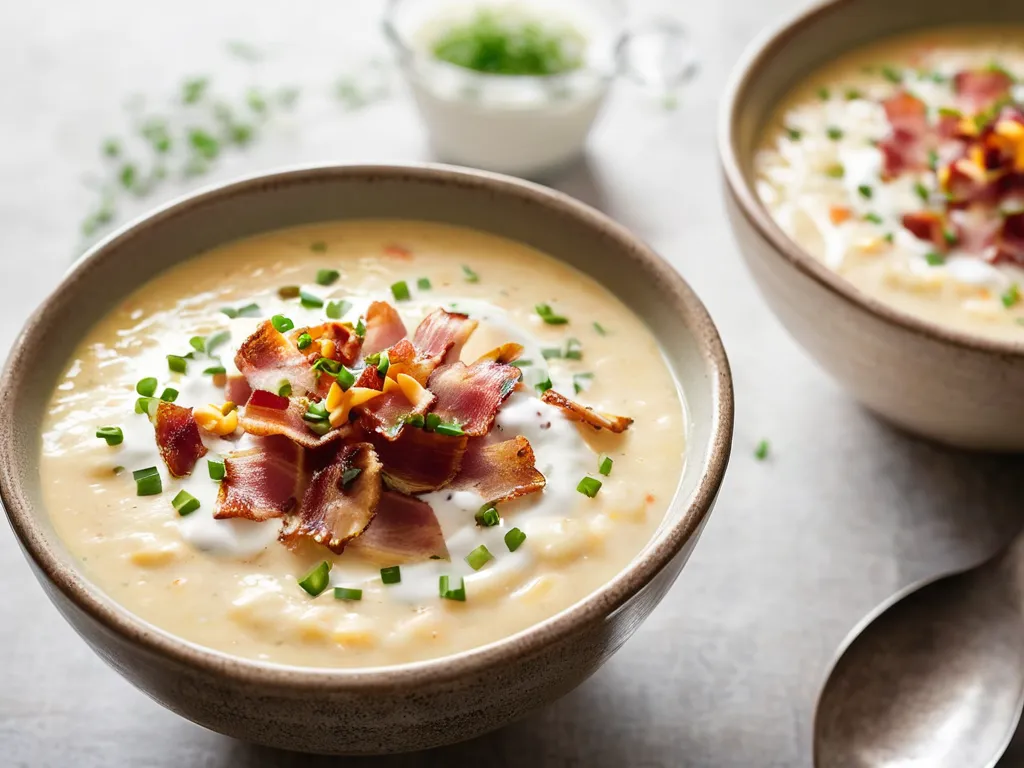
French onion soup pasta took TikTok by storm around 2022–2023, with TikTok creator Carol Bee Cooks (@carolbeecooks) widely credited for the one-pot version that spread the recipe across food media. The concept is simple but smart: it took the most beloved parts of French onion soup — the glossy caramelized onions, the beefy, wine-laced broth, the bubbling Gruyère crust — and put pasta where the bread used to go.
The dish is legitimately excellent. It is also the most useful test case in food media for one of the most common lies in recipe writing: the claim that onions can be caramelized in 5–10 minutes.
TL;DR
Caramelize 3 large yellow onions in butter over medium-low heat for 40–50 minutes. Deglaze with white wine, add beef broth and Worcestershire, then toss in par-cooked rigatoni and 1/2 cup of starchy pasta water. Top with Gruyère (plus some mozzarella for pull) and broil until deeply golden and bubbly. The caramelization is non-negotiable and non-rushable — but there is a baking soda shortcut that cuts the time in half if you need it.
The Caramelization Timeline — And Why So Many Recipes Lie
Properly caramelized onions take 40–50 minutes over medium-low heat. If a recipe tells you 5 or 10 minutes, it is either describing translucent softened onions (which have flavor but nothing like the real thing) or describing a technique that will scorch the outside while leaving the inside undercooked.
Here is what is actually happening chemically:
Raw yellow onions are approximately 89% water by weight and about 5% simple sugars. When you put them in a hot pan, the water begins to evaporate. For the first 20–25 minutes, the onions essentially simmer in their own released liquid — they soften, collapse, and become translucent, but the temperature cannot rise above 212°F (the boiling point of water) while liquid is present. No browning reaction occurs below ~285°F.
Only after most of the water cooks off does the surface temperature climb high enough for two reactions to begin simultaneously:
- Maillard reaction (around 285–330°F): amino acids in the onion proteins react with the reducing sugars to form hundreds of new flavor compounds — the savory, roasty, brown notes that characterize properly caramelized onions.
- Sugar caramelization (around 320°F): the onion’s own sugars begin to break down and rearrange into new compounds with complex sweetness and bitter notes.
These reactions create the jammy, deeply amber, complex onions that make French onion soup taste like itself. They cannot happen faster without burning because burning and caramelizing happen at nearly the same temperature — the difference is control, not speed. High heat evaporates the surface moisture too quickly, scorches the outside, and leaves the inside raw and sharp.
The practical upshot: Set a timer, put on a podcast, and stir every 4–5 minutes. Forty-five minutes is the honest minimum.
The Baking Soda Shortcut (With Its Trade-offs)
If you need to cut the time, add baking soda in the first few minutes of cooking — no more than 1/4 teaspoon per pound of onions (up to 1/2 teaspoon for the 2 pounds in this recipe). Baking soda is alkaline — it raises the pH of the onion’s surface, and the Maillard reaction is significantly faster at higher pH. The result: caramelized color and flavor in 20–25 minutes instead of 40–50. This is the technique the food scientist J. Kenji López-Alt documented at Serious Eats.
The trade-offs are real:
- The texture becomes softer and mushier than slow-caramelized onions — they lose some structural presence in the dish.
- Too much baking soda (beyond 1/4 teaspoon per pound) produces a soapy, metallic undertone that doesn’t cook out.
- The flavor is slightly simpler — you get the brown sweetness but less of the multi-layered complexity of the slow version.
Use the shortcut on weeknights. Use the full method when you want the real thing.
Why the Wine and Broth Choices Matter
Wine: Classic French onion soup calls for dry white wine — traditionally a French white like Burgundy or a simple Sauvignon Blanc. The wine’s primary function is deglazing: it dissolves the caramelized fond stuck to the pan bottom (which is concentrated flavor) and adds brightness and acidity that the rich onions need to stay balanced. Dry sherry works as a substitute and adds a slightly nuttier depth. Red wine produces a more robust result with a darker sauce — workable but diverges more from the original. Use whatever dry wine you’d be comfortable drinking, not cooking wine from a bottle.
Beef broth: Beef broth is correct because it provides deep, savory body that chicken broth doesn’t. French onion soup traditionally simmers beef bones for hours — the commercial broth approximates that character without the effort. Worcestershire sauce (2 tablespoons) is the shortcut for deepening the broth quickly without reducing it for hours; it adds umami and a faint sweetness that rounds the flavor.
For a vegetarian version: Porcini mushroom broth is the strongest substitute. Soak 1/2 oz of dried porcini in 2 cups of hot water for 20 minutes; strain and use the soaking liquid as your broth. The glutamate content in porcini is high enough to create genuine umami depth. Standard vegetable broth works but produces a noticeably lighter result — add a parmesan rind during the simmer to compensate.
Which Cheese to Use — And Why Not Mozzarella Alone
Gruyère is the correct choice, and it is worth buying. Here is why it works and why substitutes fall short:
Gruyère is a Swiss AOP cheese aged a minimum of 5 months — most of what you’ll buy for cooking is aged 8–12 months, and “Reserve” wheels go 10 months or longer. Aging develops a complex, nutty flavor from the breakdown of milk proteins and fats. It flows smoothly when melted and, critically for this dish, browns faster under a broiler than most other cheeses — the sugars and proteins in the rind react quickly to the high heat, producing the deeply golden, slightly blistered crust that characterizes a proper French onion soup. Its nutty depth complements caramelized onions without competing with them.
Comté (the French equivalent) is aged similarly and behaves identically — use it if you find it.
Swiss Emmental (the one with the holes) is the most common grocery-store substitute. It melts well and has a correct flavor profile — milder and less complex than Gruyère, but a reasonable substitute if Gruyère isn’t available.
Mozzarella alone is the most common mistake. It melts beautifully and gives an impressive cheese pull (which is why it shows up in TikTok videos), but its mild, milky flavor contributes almost nothing to a dish built on 45 minutes of caramelized onion work. The solution: blend two-thirds Gruyère with one-third mozzarella. You get the flavor from the Gruyère and the dramatic visual from the mozzarella.
One critical technique note: Shred the Gruyère yourself from a block. Pre-shredded cheeses contain cellulose or potato starch as anti-caking agents, which interfere with even melting and can produce a grainy, separated texture under the broiler.
The Pasta Shape Argument
Short tube shapes — rigatoni or penne — are the right call for this dish, and the reason is structural:
The base of this pasta is a brothy sauce, not a cream sauce. Broth is thin; it needs somewhere to go or it pools at the bottom of the bowl. Tube-shaped pasta captures the onion-flavored broth inside each piece so every bite has liquid running through it. Rigatoni’s ridged exterior also grips the bits of caramelized onion.
Long pasta (spaghetti, fettuccine, pappardelle) doesn’t hold a brothy sauce well — it slides off smooth strands and puddles beneath the pasta rather than distributing through it. Wide pasta shapes like large shells (lumache) or malloredus work well if that’s what you have. Small pasta like orzo works for a one-pot stovetop version but loses the textural contrast between pasta and cheese crust.
The Pasta Water Technique
Reserve a full cup of pasta cooking water before you drain the pasta — you’ll use half of it, but have extra available. The starchy pasta water serves two functions:
-
Emulsification: The dissolved starch from the pasta acts as a binder between the beef broth and the butter from the caramelized onions. Without it, the broth and fat separate under the broiler’s heat and the cheese crust sits on a watery, broken pool. With starchy water stirred in, the sauce stays cohesive and glossy.
-
Texture control: The pasta absorbs broth quickly as it sits. If the mixture looks too dry before broiling, the pasta water lets you adjust without adding more broth (which would dilute the flavor you just built).
Add the pasta water in two stages: half when you add the cooked pasta to the broth, then more as needed to achieve the right consistency — saucy but not soupy.
The Broiler Finish
The broiler is what transforms this from a pasta dish into a French onion soup pasta. Here is how to get it right:
Middle rack, not top. The top rack puts the pan 3–4 inches from the element; the cheese burns in 2–3 minutes before it bubbles. The middle rack (8–10 inches) gives you 4–6 minutes of broiling time — enough for the cheese to melt fully, bubble, and develop the dark golden spots that taste like the most flavorful part of a French onion soup crock.
Watch it. The window between deeply caramelized cheese and burnt cheese is about 90 seconds. Don’t walk away from the oven during the broil. The cheese will look pale at first, then begin to bubble at the edges, then go golden across the surface, then develop dark spots — that’s when it’s done.
Rest before serving. The cheese crust needs 3–4 minutes to set. Scoop immediately from the broiler and the crust slides off in sheets; wait 4 minutes and it holds its structure when you lift it with a large spoon, giving you that French onion soup “the crust is part of the serving” experience.
Variations
Mushroom version: Add 8 oz of sliced cremini or shiitake mushrooms to the pan after the onions are halfway caramelized (around the 20-minute mark). The mushrooms caramelize alongside the onions and add an earthy, meaty quality that makes the vegetarian version more substantial than the meatless label implies.
Beefy version: Add 1/2 lb of thinly sliced sirloin or leftover braised short rib, stirred into the broth after deglazing. The beef and caramelized onion combination is the French onion soup flavor made literal.
Breadcrumb crust: For more texture, mix 1/4 cup panko breadcrumbs with 1 tablespoon melted butter and scatter over the Gruyère before broiling. The panko toasts alongside the cheese and mimics the crouton in a traditional French onion soup crock.
Creamy version: Add 1/4 cup heavy cream to the broth before adding the pasta — it produces a richer, more unctuous sauce and a creamier base under the cheese. Less traditional but popular in restaurant adaptations.
Cost Comparison
| At a restaurant (French onion soup pasta, where available) | Homemade | |
|---|---|---|
| Per portion | $18–24 | $4–5 |
| Time | 45 min wait | 60 min active |
The main cost variables at home are the Gruyère ($10–14/lb, roughly $3 per serving at 6 oz total) and the beef broth. Everything else is pantry staples and onions ($1.50 for 3 large onions).
More Baked Cheese Pastas Worth Making
If this dish clicked for you, the baked-cheese-pasta category has several strong entries:
- Baked Feta Pasta — the original TikTok baked cheese pasta, where a whole block of feta roasts with cherry tomatoes and collapses into a creamy sauce (the one that caused a global feta shortage in 2021)
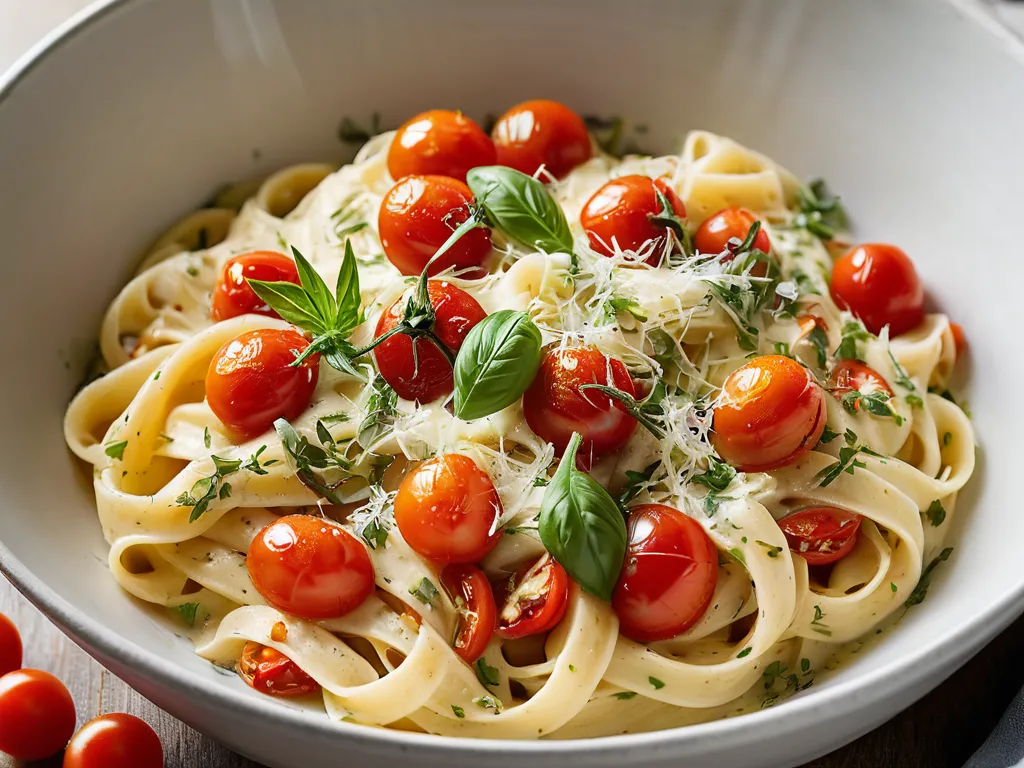
- Boursin Cheese Pasta — the more elegant cousin: Boursin’s herb-and-garlic cultured cheese baked with tomatoes into a silky French-style sauce
- Spicy Vodka Rigatoni — rigatoni coated in a blush tomato cream sauce, with a full breakdown of why the vodka actually matters
- Butter Pasta — the technique-focused guide to pasta al burro, including the emulsification method that makes it silky rather than greasy