

Brown Sugar Boba — The TikTok Tiger Milk Tea
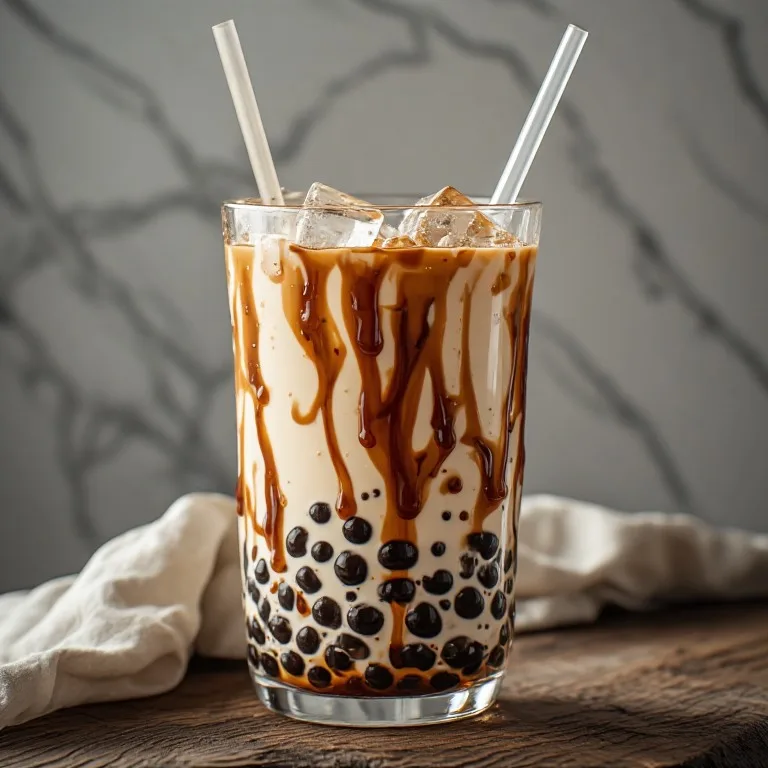
Tiger milk tea — brown sugar boba — is the drink that made boba go from specialty café item to something people actively attempted to recreate at home. The visual hook is undeniable: dark caramel streaks dripping down the inside of a clear glass, milk clouding through them in real time, glossy black pearls piled at the bottom. It films like a slow-motion commercial and it tastes like liquid caramel candy with a chewy finish.
The trend exploded after the Taiwanese chain Tiger Sugar expanded internationally and copycat videos started flooding TikTok around 2020–2022. Unlike many viral drinks, this one actually requires some cooking — but the skills involved are basic and the payoff is high.
The Origin: Tiger Sugar and the Stripe Effect
Tiger Sugar, a Taiwanese chain founded in 2017, popularized the format: fresh-made brown sugar syrup poured over tapioca pearls in a clear cup, then streaked up the sides before milk is added. The “tiger stripes” are created by the syrup clinging to the cold glass as milk pushes through it.
The drink was already popular across Southeast Asia before TikTok, but the visual format — pour videos, the clouding milk, the dripping syrup — made it perfect for short-form content. It became the reference point for “fancy boba you can make at home.”
How to Nail the Tiger Stripes
The stripe effect depends on timing and temperature:
- Warm syrup, cold glass. If both are the same temperature, the syrup just pools at the bottom. The temperature contrast is what makes syrup cling to the glass walls.
- Tilt and rotate. Tilt the glass to about 45 degrees. Spoon the syrup-coated pearls against the inside wall, then slowly rotate the glass upright — gravity pulls syrup drips down the sides as you move.
- Film the milk pour. The most viral moment is the milk hitting the ice and streaming through the syrup stripes. Add it slowly.
The Syrup Is Everything
Dark brown sugar (not light brown sugar, not white sugar) is non-negotiable. The molasses content in dark brown sugar is what creates the deep, bitter-caramel flavor that makes this drink distinct from regular sweet milk tea. Light brown sugar produces a flatter, less interesting syrup. White sugar produces a completely different drink.
Add a pinch of salt to the syrup — it amplifies the caramel quality and rounds out the sweetness.
Milk Options
| Milk | Notes |
|---|---|
| Whole dairy milk | Classic choice — rich, creamy, clean contrast against the syrup |
| Barista oat milk | Excellent — creamy, neutral, shows the gradient well |
| Regular oat milk | Works well, slightly thinner |
| Coconut milk | Adds tropical flavor; rich but competes with the brown sugar |
| Almond milk | Too thin — the gradient visual is weaker and it tastes watery |
Three Variations Worth Trying
Taro Brown Sugar Boba
Add 2 tablespoons of taro powder to the milk and whisk until dissolved before pouring. The milk turns lavender-purple — the contrast against brown sugar streaks is striking. Taro adds a light, starchy sweetness that complements the caramel.
Brown Sugar Boba with Cheese Foam
Top with a layer of lightly salted cream cheese foam: whisk 2 oz cream cheese, 2 tablespoons heavy cream, and a pinch of salt until it’s pourable but frothy. Spoon over the top of the drink. The savory-sweet contrast is a Taiwanese café staple and more interesting than it sounds.
Hojicha Brown Sugar Boba
Brew strong hojicha (roasted green tea) and chill it. Use hojicha as the liquid base instead of plain milk — the roasted, smoky-caramel flavor of hojicha echoes and deepens the brown sugar syrup in a way that black tea doesn’t.