

Pin It

Buckeye Balls

Buckeye Balls
Jump to Recipe
Prep 30 min Cook 0 min Serves 48 balls
Quick answer: Beat 2 cups creamy peanut butter, 6 tablespoons softened butter, and 1 teaspoon vanilla until smooth. Mix in 3 cups sifted powdered sugar until the dough holds its shape. Chill 20 minutes, then roll into 1-inch balls (about 1 tablespoon each). Insert a toothpick in the top of each and freeze 30 minutes. Melt 3 cups semi-sweet chocolate chips with 2 tablespoons coconut oil. Dip each frozen ball into the chocolate, leaving a ½-inch circle of peanut butter exposed at the top. Set on parchment, remove the toothpick, smooth the hole. Refrigerate 15 minutes until set.

Buckeye Balls

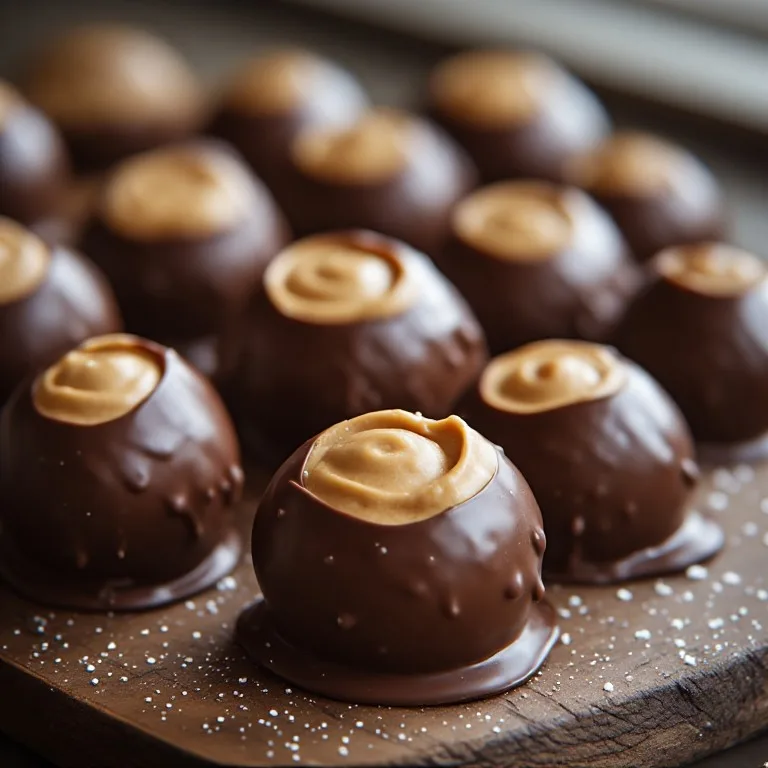
The viral TikTok buckeye ball: creamy peanut butter + powdered sugar formed into balls, half-dipped in chocolate to leave that signature peanut butter eye. Ohio's no-bake Christmas candy, ready in 90 minutes, makes 48 pieces, and tastes better than a Reese's Cup.

Easy Prep: 30 min Cook: 0 min Total: 30 min48 balls servings ~$4.50/serving
Prep30 min
Cook0 min
Total30 min
Servings
48
At home~$4.50/serving
vs
Restaurant~$20.25/serving
You save ~78%

The Story Behind the Recipe

Buckeye balls are Ohio's unofficial state dessert — named for the fruit of the Ohio buckeye tree (Aesculus glabra), the state tree, which each fall drops a dark brown nut with a distinctive tan patch that looks exactly like a deer's eye. The candy as we know it is usually credited to Gail Tabor Lucas, a Columbus journalist who in 1964 was recreating her mother's chocolate peanut butter balls and happened to leave the tops undipped — the exposed peanut butter circle made each one look like a buckeye nut, and the name stuck. The recipe spread by word of mouth and newspaper columns through the 1970s and 80s and has been a fixture at Ohio holiday potlucks, church cookie swaps, and football tailgates ever since. A batch of 48 costs about $8 in ingredients and takes 90 minutes.

The TikTok dipping reveal — toothpick-held peanut butter ball going into gleaming chocolate, pulled out with that perfect tan "eye" still showing — is exactly the kind of satisfying, ASMR-adjacent content that racks up millions of views every December. The practical appeal is equally real: no oven, no candy thermometer, stores for two weeks, ships well in a tin. They taste like a Reese's Peanut Butter Cup but with a better ratio — more peanut butter, less sugar, and a thinner shell that lets the filling dominate.

Nutrition Facts

Per serving (48 balls servings)
Calories133
Total Fat8g
Total Carbs14g
Dietary Fiber1g
Sugars12g
Protein3g
Sodium55mg

* Estimated values based on standard recipe preparation. Actual values may vary.

Ingredients

  • Peanut butter filling
  • Chocolate coating
  • Equipment

Instructions

💡
Pro tip: This recipe tastes even better the next day. The flavors need time to meld together in the fridge.
❄️
Storage: Keeps in an airtight container in the fridge for up to 2 weeks. Freezer-friendly for up to 3 months.
🎃 Free Halloween cookbook — download now The Copycat Halloween Cookbook A ready-made, photo-illustrated PDF of our best halloween copycat recipes — free to download, no building required. Pay what you want to support if you love it.

Free PDF — instant download. We'll also send new seasonal copycat recipes now and then; unsubscribe anytime. Or just download it →

Buckeye balls — also called buckeye candy, or just buckeyes — are one of the few no-bake Christmas candies that genuinely earn the hype. Three ingredients in the filling (peanut butter, butter, powdered sugar), a 30-minute freeze, and a chocolate dip, and you have 48 chocolate-covered peanut butter balls that look more impressive than they are.


The Two Rules That Matter

Most buckeye recipes fail in the same two places:

Rule 1: Use conventional peanut butter, not natural. Natural peanut butter (the kind with oil separation) is too greasy — the filling won’t hold a ball shape, the toothpick pulls through, and the balls flatten in the chocolate. Jif or Skippy contains stabilizers that keep the filling firm enough to roll and dip cleanly. If you insist on natural PB, use a stabilized version (Smucker’s Natural, which doesn’t separate) and reduce the powdered sugar by ¼ cup.

Rule 2: Freeze the balls before dipping. Not just chill — freeze, for at least 30 minutes until completely firm. Hot melted chocolate hitting a room-temperature peanut butter ball deforms it immediately. The frozen ball keeps its shape during the 3-second dip and the chocolate sets in seconds on contact with the cold surface. This is the step most recipes mention but don’t explain, and it makes the difference between clean, round balls and misshapen lumps.


The Chocolate

Chocolate chips + coconut oil is the modern standard. The coconut oil (or shortening) thins the melted chocolate slightly, gives it a glossy sheen, and makes the set coating slightly flexible rather than brittle. Use semi-sweet for the classic version; dark chocolate (60–70% cacao) for a more sophisticated flavor that contrasts better with the sweet filling.

Temperature matters. Ideal dipping temperature for semi-sweet chocolate is 88–90°F. If you have an instant-read thermometer, use it. If not, the visual cue is a thick-but-fluid consistency that coats a toothpick in a smooth layer and starts to set within 30 seconds at room temperature.

To keep chocolate at dipping temperature while working through 48 balls: set the mug or jar of chocolate in a bowl of hot (not boiling) water. The ambient heat keeps it fluid without overheating it.


Getting the Dip Right

The dip is the one step that intimidates people, and it shouldn’t. The technique:

  1. Hold the toothpick firmly. Tilt the ball slightly as you enter the chocolate — this reduces the air bubble under the ball that can make the chocolate set unevenly.
  2. Submerge about ¾ of the ball. The goal is a ½-inch tan circle of peanut butter showing at the top. Too much PB showing = structural weakness; too little = it doesn’t look like a buckeye.
  3. Lift straight out and let excess drip for 2 to 3 seconds. Don’t swirl or tap — this can dislodge the ball from the toothpick.
  4. Set down, pull the toothpick, smooth the hole within 30 seconds while the chocolate is still slightly soft.

If the chocolate gets too thick mid-batch (it cools as you work), microwave it in a 10-second burst and stir. If the balls start to get soft and hard to handle (they warm up quickly outside the freezer), slide the baking tray back into the freezer for 5 minutes.


Flavor Variations

Classic (this recipe): Creamy PB + semi-sweet chocolate. The template.

Dark Chocolate Buckeyes: Use 70% dark chocolate chips. The bittersweet coating against the sweet filling is the best version. Highly recommended over the classic.

White Chocolate Buckeyes: Melt white chocolate chips with 1 tablespoon coconut oil. White chocolate is more prone to seizing — heat it more gently than dark or semi-sweet. The result is a sweet, buttery coating that makes them look elegant; good for holiday gift tins.

Pretzel Buckeyes: Press a mini pretzel into the bottom of each peanut butter ball before freezing. The pretzel shows at the bottom of the dipped ball, adds crunch, and the sweet-salty-chocolate combination is excellent.

Chocolate PB Filling: Replace ¼ cup of the powdered sugar with Dutch-process cocoa powder. The filling turns chocolate-brown and tastes like a Tagalong cookie crossed with a fudge truffle. Dip in semi-sweet chocolate as usual.


Making and Gifting at Scale

Buckeyes are one of the best Christmas tin candidates:

  • Scale easily. The recipe scales 2× or 3× without any adjustments. A double batch makes about 100 balls and fits in two large sheet pans.
  • They ship. Arrange in a tin lined with parchment, balls flat-side down so they don’t roll. They hold at room temperature for 5 to 7 days in transit. Avoid summer shipping — the chocolate softens above 75°F.
  • Make ahead. Fully dipped and set buckeyes keep refrigerated for 2 weeks or frozen for 3 months. Roll and freeze the undipped balls up to a month ahead, then dip the week of gifting for the freshest chocolate coating.
  • Label for allergies. Peanut butter and chocolate — two of the major eight allergens. Label clearly for any tin going to people you don’t know well.
🥗

Make It Healthier

Love Buckeye Balls but want a lighter version? Try these simple swaps:

  • ✓Use dark chocolate chips (70% cacao) instead of semi-sweet — bittersweet chocolate against sweet PB filling is genuinely better, and the coating has about 30% less added sugar per ball.
  • ✓Use stabilized natural peanut butter (Smucker's Natural) instead of Jif or Skippy — reduce the powdered sugar by ¼ cup to compensate for its slight sweetness, and freeze the balls 15 extra minutes before dipping. Saves about 30mg sodium per ball.
  • ✓Roll balls to ¾ tablespoon instead of 1 tablespoon — you get 65 balls instead of 48, and each drops from 133 to about 95 calories. A 2-ball serving is 190 calories instead of 266.
  • ✓Replace ¼ cup of the powdered sugar with cocoa powder for a chocolate-peanut butter filling — cuts roughly 15g of sugar per serving and adds a Tagalong-cookie complexity that most people prefer.

Frequently Asked Questions

Why are they called buckeye balls?

They're named for the buckeye nut produced by the Ohio buckeye tree (Aesculus glabra), Ohio's state tree. The nut is dark brown with a distinctive tan circular patch that resembles a deer's eye — 'buck-eye' in hunting slang. The peanut butter ball, half-dipped in chocolate and leaving a tan circle of PB exposed at the top, replicates the nut's pattern almost exactly. The candy is usually traced to Gail Tabor Lucas, a Columbus journalist who made the first batch in 1964 while recreating her mother's fully-dipped peanut butter balls. Ohio State University's mascot, Brutus Buckeye, draws on the same tree name.

Why do buckeye balls leave a circle of peanut butter showing? Is that intentional?

Yes — that's the defining feature. The peanut butter circle at the top is what makes it look like the buckeye nut and is why the candy has its name. The technique is intentional: you insert a toothpick into the top of each frozen ball, dip it so only the bottom ¾ is submerged, and the toothpick acts as a handle that naturally leaves a small peanut butter patch exposed. The ½-inch circle is considered correct — too small and it doesn't look like a buckeye; too large and the ball loses structural integrity. Some recipes dip the entire ball, but that's a chocolate-covered peanut butter ball, not a buckeye.

Can I use natural peanut butter for buckeyes?

You can use stabilized natural peanut butter (like Smucker's Natural, which doesn't require stirring), but not the kind with separated oil on top. Stirred natural peanut butter has too much surface oil — the balls come out greasy, won't hold their shape, and the filling stays sticky even after chilling. Conventional peanut butter (Jif, Skippy, Peter Pan) is the traditional choice and works reliably because the stabilizers (partially hydrogenated oil or palm oil) keep the texture firm and rollable. If using stabilized natural PB: reduce powdered sugar by ¼ cup and freeze the balls an extra 15 minutes before dipping.

Do I need to add paraffin wax to the chocolate?

Old recipes (1970s–1990s) often call for a small block of paraffin wax melted into the chocolate — it helped the coating set firm and gave it a glossy, crack-resistant finish at room temperature. Paraffin is food-safe but increasingly hard to find at grocery stores, and most modern bakers skip it. The replacement is 2 tablespoons of coconut oil or vegetable shortening per 3 cups of chocolate chips — it thins the chocolate for easier dipping, gives it a glossy sheen when set, and makes it less brittle when bitten. The result is nearly identical to the paraffin version. If you want true shelf-stability at room temperature (for gifting in a tin), use solid shortening instead of coconut oil.

Why do you freeze the peanut butter balls before dipping?

Freezing the balls for 30 minutes before dipping is essential, not optional. Hot melted chocolate will dissolve or deform a room-temperature peanut butter ball — the surface softens, the toothpick pulls through, and the round shape flattens. A frozen ball stays firm during the 3-second dip and the chocolate sets almost immediately on contact with the cold surface, so the ball comes out clean and round. It also means you can process the whole batch quickly: dip, set, move on, and the chocolate has set before the next ball goes in. Don't freeze them longer than an hour before dipping — over-frozen balls can crack the chocolate as they warm up.

How long do buckeye balls keep, and can I freeze them?

Refrigerated in an airtight container, buckeyes keep for 2 weeks without any quality loss. Layer them between sheets of parchment or wax paper so they don't stick together. At room temperature they keep for 5 to 7 days, though the filling can soften slightly in a warm kitchen. Frozen (in a sealed container, layered with parchment) they keep for up to 3 months — thaw in the refrigerator overnight or at room temperature for 30 minutes. They ship well in a tin with crumpled parchment between layers and hold at room temperature for 5 days in transit, making them a reliable edible gift.

Love this recipe? Share it!

Free PDF: our 12 most-wanted copycat recipes — instant download.

Made it? Buy us a coffee

Every recipe here is free, with no paywalls. If this one was a hit at your table, a small tip keeps new copycats coming.

$

Ratings & Reviews

—
No ratings yet

Rate this recipe

Click a star to rate

Leave a Review

0/500

CS

Copycat Spices Editorial

Researched + fact-checked. Every recipe on Copycat Spices is built from published sources — official ingredient lists, brand-published recipes, interviews and food-science references — and fact-checked before it goes live, then written as clear, step-by-step instructions for home cooks of all skill levels.

Learn more about our mission →