Christmas Crack (Saltine Toffee Bark)
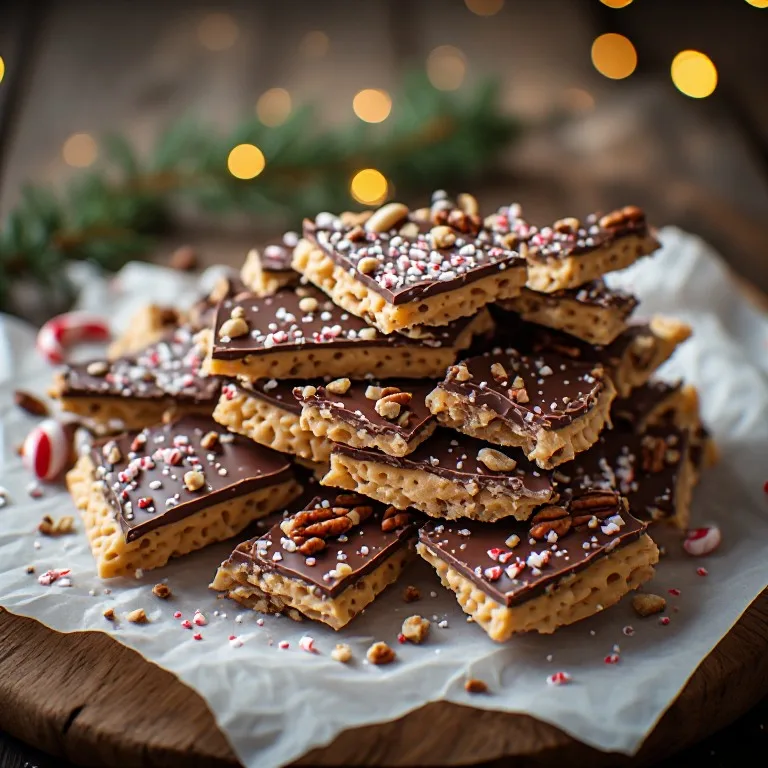
Quick answer: Preheat oven to 400°F. Line a 12×17 rimmed baking sheet with foil then parchment. Lay out 40 saltine crackers in a single layer. In a saucepan, melt 1 cup butter with 1 cup brown sugar, bring to a boil, and cook without stirring for exactly 3 minutes until the toffee reaches 285–300°F and turns deep amber. Pour immediately over crackers, spread to cover, and bake 5 minutes. Scatter 2 cups chocolate chips over the hot toffee, wait 3 minutes, spread smooth, add toppings (flaky salt, crushed candy canes, nuts). Cool completely, then break into pieces.
Shop the tools
Gear matched to this recipe. These are Amazon affiliate links — we may earn a small commission if you buy, at no extra cost to you.
 Illustrative imageNordic Ware Half Sheet PanCommercial-quality aluminum, bakes dead evenCheck price on Amazon →
 Illustrative imageInstant-Read Digital ThermometerNail fry-oil and doneness temps every timeCheck price on Amazon →
 Illustrative imageLodge 6 Qt Enameled Dutch OvenDeep-frying, braising, soups — the workhorse potCheck price on Amazon →
 Illustrative imageStainless Steel SaucepanThe everyday pot for syrups, sauces, and small-batch simmersCheck price on Amazon →
As an Amazon Associate, Copycat Spices earns from qualifying purchases. Product images are generic illustrations, not the exact item listed.
Christmas Crack (Saltine Toffee Bark)
The viral TikTok Christmas crack recipe: buttery homemade toffee poured over a single layer of saltine crackers, topped with melted chocolate, and broken into shards. The addictive holiday candy that's on every TikTok gifting reel — 4 ingredients, ready in 30 minutes.
Easy
Prep: 10 min
Cook: 20 min
Total: 30 min24 servings
~$3.50/serving
At home~$3.50/serving
vs
Restaurant~$15.75/serving
You save ~78%
The Story Behind the Recipe
Christmas crack has circulated under a dozen names — saltine toffee, cracker toffee, cracker candy, saltine brittle — since it first appeared in American church cookbooks and Junior League fundraiser pamphlets in the 1980s. The name is straightforwardly descriptive: the candy cracks when you break it (and it's addictive enough that "crack" fits on both counts). TikTok discovered it in earnest in 2022 and it now peaks on the platform every November, with thousands of holiday gifting videos filmed against twinkle-light backgrounds. The hook is the contrast: saltines are a $1.50 pantry staple that tastes cheap, but hot butter-brown sugar toffee transforms them into something that costs $18 a pound at a specialty candy shop.
The entire batch — 40 crackers, two sticks of butter, a cup of brown sugar, two cups of chocolate chips — runs about $8 in ingredients and makes 24 pieces. A comparable pound of handmade toffee bark at a holiday market or specialty grocer is $12–20. The technique is simple but has one step worth getting right: the butter-sugar mixture must boil undisturbed for a full 3 minutes to reach hard-crack stage. Under-cooked toffee stays chewy and sticky (it won't harden into the characteristic snap). A thermometer removes the guesswork; aim for 285–300°F (140–149°C) before pulling it from the heat.
Nutrition Facts
Per serving (24 servings)Calories190
Total Fat12g
Total Carbs21g
Dietary Fiber0g
Sugars16g
Protein1g
Sodium74mg
* Estimated values based on standard recipe preparation. Actual values may vary.
Ingredients
- Toppings (all optional — choose one or combine)
Instructions
Pro tip: This recipe tastes even better the next day. The flavors need time to meld together in the fridge.
Storage: Keeps in an airtight container in the fridge for up to 2 weeks. Freezer-friendly for up to 3 months.
Free PDF — instant download. We'll also send new seasonal copycat recipes now and then; unsubscribe anytime. Or just download it →
🎉 Your Thanksgiving Cookbook is ready!
It's free — but if it's worth something to you, you can pay what you want. It keeps the recipes coming.
$
✓ Downloading your free Thanksgiving Cookbook — check your downloads folder. Happy cooking!
Make It Healthier
Love Christmas Crack (Saltine Toffee Bark) but want a lighter version? Try these simple swaps:
- ✓Swap the 2 cups semi-sweet chocolate chips for 70–72% dark chocolate — you cut the sugar by about 4g per piece and the more intense chocolate flavor means most people are satisfied with fewer pieces; Guittard Extra Dark or Endangered Species 72% are widely available
- ✓Use coconut oil chocolate bark topping instead of chips: melt ½ cup coconut oil with ¼ cup cocoa powder and 3 tablespoons maple syrup, pour over the hot toffee, and let set — the layer is thinner, slightly lower calorie, and sets to a snappable finish in the freezer (must stay chilled)
- ✓Replace the saltine base with whole-grain water crackers (Back to Nature Classic Rounds or Wasa Crispbread cut to fit) — more fiber and a slightly nuttier flavor that complements the toffee; the texture is similar once the toffee sets
- ✓Make a smaller batch deliberately: a 9×13 pan (half the recipe) yields ~12 pieces at the same quality level — the best 'healthier' approach for this recipe is simply making less of it
Frequently Asked Questions
Why is my Christmas crack sticky and chewy instead of crunchy?
Under-cooked toffee. If the butter-sugar mixture didn't reach at least 285°F before you poured it, the water hasn't fully evaporated and the candy won't harden to a snap — it stays in a soft, sticky 'soft-crack' stage. Fix for next time: use a thermometer and cook to 285–300°F, or use the timed method and cook a full 3 minutes at a rolling boil. If your stove runs cool, the boil may need 4 minutes. Humidity also matters — avoid making toffee on a rainy day if you can; sugar candy absorbs atmospheric moisture.
What is Christmas crack?
Christmas crack is a layered no-bake candy made by baking buttery homemade toffee over a single layer of saltine crackers, then immediately covering it with melted chocolate. It cools into a crisp, shatter-able bark that snaps into pieces — hence the name 'crack.' It's also called saltine toffee, cracker toffee, or cracker candy. The recipe has circulated in American cookbook culture since the 1980s and goes viral on TikTok every holiday season. The core appeal: 4 ingredients, 30 minutes, tastes like expensive candy.
Can I use graham crackers instead of saltines?
Yes, and it's a popular variation. Graham crackers give a sweeter, less salty base with a cinnamon-forward flavor. The bark will be sweeter overall (no saltine salt to balance the toffee), so using dark chocolate and a generous pinch of flaky sea salt is strongly recommended. Ritz crackers also work and give a slightly buttery base — many people prefer Ritz for a more buttery result. Matzah works as a passover version and is also delicious. The saltine version is considered the original because the salt-sweet contrast is the defining flavor.
My chocolate looks dull and streaky after it sets — what happened?
Bloom — either fat bloom (chocolate that separated as it cooled too quickly) or sugar bloom (moisture got into the chocolate). For Christmas crack, this is almost always from putting the bark in the refrigerator before the chocolate has had a chance to begin setting at room temperature. Let the chocolate sit at room temperature for at least 5–10 minutes before refrigerating. Bloomed chocolate looks less appealing but tastes identical. To avoid it entirely, let the bark set at room temperature for the full 2 hours. Bloom doesn't affect the flavor or the crunch.
How do I make Christmas crack for gifts?
Layer pieces in a tin or cello bag with parchment between layers to prevent sticking. A standard gift tin (the round holiday tins from the dollar store or craft stores) holds one full batch in 2–3 layers. Cello bags tied with a ribbon hold 3–4 pieces each for party favors. The bark keeps for 2 weeks at room temperature and 3 weeks refrigerated, so you can make it up to 2 weeks before Christmas and it will still be perfect. Keep it away from heat sources — above 75°F the chocolate softens and the toffee can get tacky.
Can I use salted butter?
Yes — the finished candy will just be saltier overall. If you use salted butter, skip or reduce the flaky sea salt topping, since the candy already has enough salt from both the crackers and the butter. Some bakers prefer salted butter in toffee for a more pronounced salt-sweet contrast; it's a genuine preference, not a mistake. Unsalted butter gives you more control.
Does Christmas crack need to be refrigerated?
No — it keeps perfectly at room temperature for up to 2 weeks in an airtight container. In fact, room temperature gives a better crunch; refrigerated bark can get a light frost of condensation when you take it out and bring it to room temperature. Refrigerate only if your kitchen is above 75°F or if you're making it far in advance. Never leave it in a hot car or near a heat vent — the chocolate softens above about 78°F.
Love this recipe? Share it!
Made it? Buy us a coffee
Every recipe here is free, with no paywalls. If this one was a hit at your table, a small tip keeps new copycats coming.
$
💛 Support checkout is coming soon — the cookbook stays free either way.

Ratings & Reviews
Rate this recipe
Click a star to rate