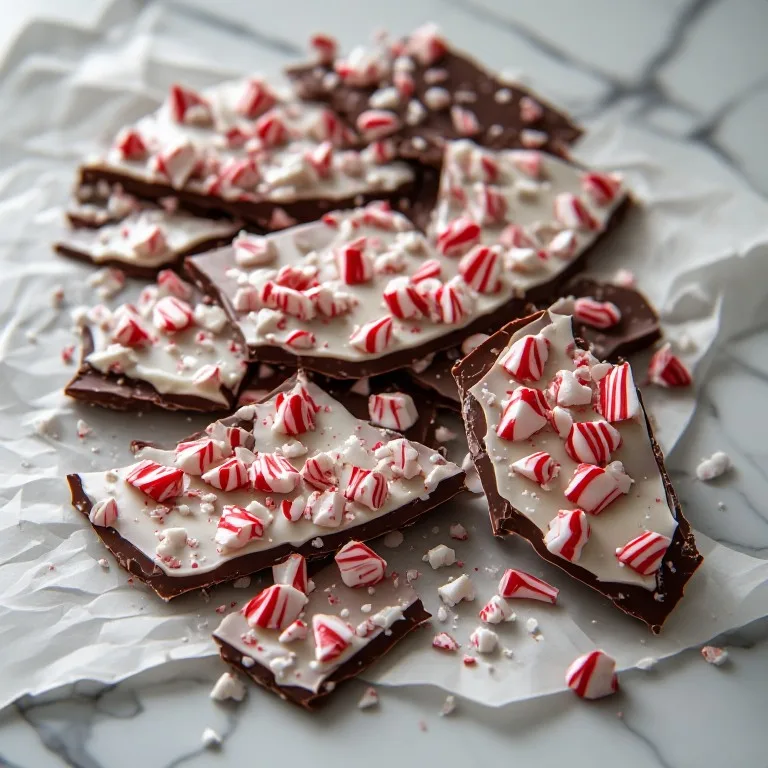


Williams-Sonoma Peppermint Bark
Prep: 15 minutes | Cook: 10 minutes | Chill: 45 minutes | Makes: About 1 lb (16 pieces)
Williams-Sonoma has sold their peppermint bark every holiday season since the early 1990s — the red tin, the green tissue paper, the $30–40 price tag. This recipe costs about $10–12 for the same yield, and the flavor is identical when you use real chopped chocolate and food-grade peppermint oil instead of chips and extract.
What to Buy
Dark chocolate: Any good 60–70% cacao bar or block — Guittard Semisweet Baking Bars, Valrhona Caraïbe, Lindt Excellence 70%, or Trader Joe’s Pound Plus Dark. Do not use chips.
White chocolate: Read the ingredient label before buying. You need white chocolate that lists cocoa butter as an ingredient — not “palm kernel oil,” not “vegetable fat.” Guittard Choc-Au-Lait wafers melt cleanly and contain cocoa butter; so do Valrhona Ivoire, Callebaut W2, and Ghirardelli Premium Baking White Chocolate Bar. Most store-brand white chocolate “chips” do not — they will not bond properly to the dark layer.
Peppermint: Food-grade peppermint oil (sold at specialty kitchen stores, Whole Foods, and online) is the best option — it disperses evenly in fat and does not risk seizing. If using pure peppermint extract, add it in small amounts (start with 1/2 tsp, stir, taste, add more carefully) and have an extra 1–2 oz of white chocolate standing by in case the extract causes the chocolate to seize.
The One Technique That Matters
Peppermint bark has exactly one failure mode worth worrying about: the two layers peel apart instead of snapping. Two things cause it, and they pull in opposite directions.
First, don’t let the dark layer harden all the way before you pour the white. Chill it only until it’s just set but still slightly tacky to a light touch — about 10 minutes. A tacky surface is what the warm white chocolate fuses to. A rock-hard, fully-set dark layer gives the white nothing to grip, and that is the most common reason homemade bark delaminates.
Second, don’t pour scalding white chocolate. If the white is hotter than about 115°F when it hits the dark layer, it remelts the surface and the two merge into a muddy, blurred border that looks wrong and peels. Let the white cool to warm-and-pourable — around 105–110°F, warm but not hot on the inside of your wrist — before it goes on.
Get both right — a just-set, tacky dark layer and warm (not scalding) white chocolate — and the layers bond into one piece that breaks with a clean snap.
Related Holiday Chocolate Recipes
For more holiday chocolate: York Peppermint Patties use the same peppermint-and-dark-chocolate combination in a different shape; Starbucks Cranberry Bliss Bar is the other iconic holiday bar recipe worth making in November. For a full holiday cookie spread, the Lofthouse Frosted Sugar Cookies round out any gift tin.