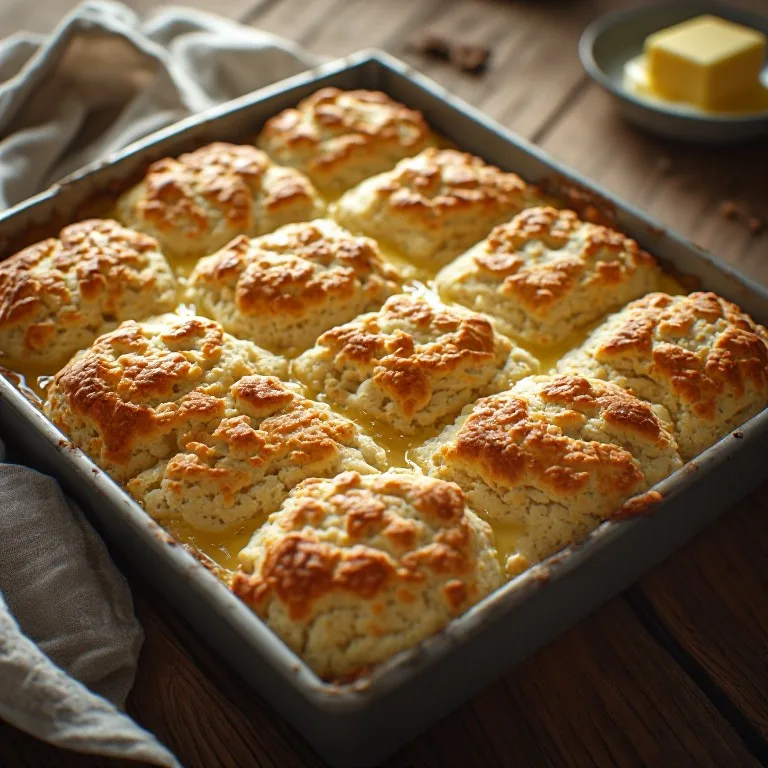

If you’ve seen a TikTok where someone pours biscuit batter directly into a pan of melted butter and the whole thing bakes into something golden and absurd — that’s butter swim biscuits. The name is literal: the dough sits in a pool of butter the entire time it bakes.
No rolling pin. No biscuit cutter. No folding cold butter into flour. No chilling. One bowl, one pan, eight minutes of prep. The butter that seems like too much at the start gets absorbed during baking, leaving a bottom crust that’s crispy and almost caramel-like and an interior that’s fluffy and rich throughout.
This recipe went viral on TikTok because the results look impossible for the amount of effort involved.
Why This Works (and Why Other Biscuit Recipes Feel Like Work)
Standard biscuit recipes require cold butter cut into flour until pea-sized, minimal handling, folding, chilling, cutting with a sharp cutter so the layers don’t compress — a process with a dozen failure points. One warm hand and the butter melts too fast. One overworked fold and the gluten tightens. One dull cutter and the edges compress, blocking the rise.
Butter swim biscuits sidestep all of that. The fat isn’t inside the dough — it’s underneath and around it. This means you can mix the batter more casually, use room-temperature hands, pour instead of cut, and still end up with something that tastes like it came from a Southern breakfast place.
The buttermilk does the heavy lifting on flavor: its natural acidity reacts with the baking powder (a double-acting leavener) to produce CO2 bubbles that expand in the oven, and its acid tenderizes the gluten network so the interior stays soft rather than chewy.
If you like this pour-and-bake, no-technique approach to baking, the same logic drives our viral cinnamon roll focaccia — dump the dough, let the oven do the work.
The One Thing That Kills Them: Overmixing
The batter is meant to look rough. Lumpy, even. The moment you start chasing a smooth batter is the moment you’ve activated too much gluten and compressed too many leavening bubbles. Stop stirring as soon as the flour disappears — count your strokes if it helps, 15–20 is usually plenty.
Score Before Baking
Pour the batter, spread it to the corners, then use a butter knife to score a 3×3 grid before the pan goes into the oven. The score lines become clean break lines after baking. Skip this and you’re trying to cut a finished biscuit slab, which shatters the bottom crust.
Variations Worth Making
Cheddar garlic: Add ½ cup shredded sharp cheddar + ½ tsp garlic powder + ¼ tsp smoked paprika to the dry mix. Serve alongside soup or chili.
Honey cinnamon: Add 1 tsp cinnamon + 1 tbsp honey to the batter with the buttermilk. Drizzle with more honey straight from the oven.
Loaded breakfast: Stir in 4 strips cooked crumbled bacon + 2 tsp chives with the last few folds. A sharp cheddar addition here is excellent.
Herb and cream cheese: After scoring, drop small spoonfuls of cream cheese (about ½ tsp each) into each square, press them in slightly, and sprinkle fresh chives on top before baking.
Serve these warm with butter and honey, or turn them into the base of a full breakfast spread alongside a French toast bake for a crowd. However you finish them, the dark, crispy butter-fried bottom is the part everyone fights over.