

French Toast Bake — The Make-Ahead Crowd-Pleaser That Broke Breakfast
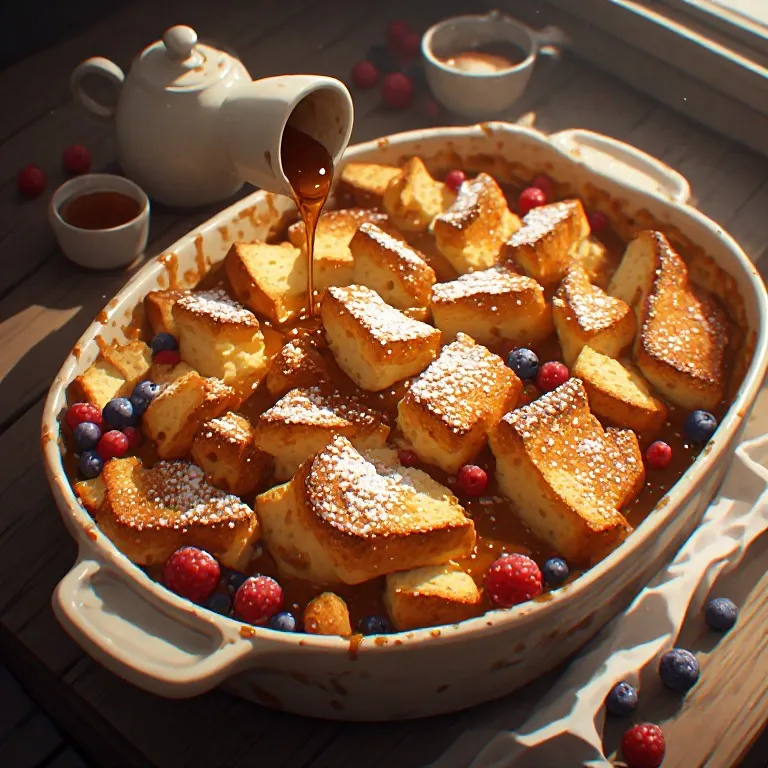
There is something almost theatrical about pulling a golden, puffed French toast casserole out of the oven and setting it in the center of the table. No one is scrambling eggs to order. No one is flipping individual slices. The dish just sits there, gorgeous and steaming, smelling of cinnamon and browned butter — and the whole table goes quiet for a second before everyone lunges for a spoon.
That moment is exactly why this dish exploded on TikTok.
How It Went Viral
The French toast bake isn’t new — Southern home cooks and bed-and-breakfast owners have been making custard bread casseroles for generations. What TikTok did was reframe it as the ultimate “do nothing in the morning” breakfast. Creators started posting their fridge-to-oven routines: mix the custard at 10 pm, pour it over torn brioche, wake up, bake for 45 minutes, done. The videos racked up tens of millions of views because the payoff — that glossy, caramelized top with a pillowy, eggy interior — looks wildly impressive relative to the effort involved.
The overnight soak is the secret. When bread sits submerged in a custard of eggs, cream, maple syrup, and vanilla for several hours, the crumb structure softens completely and the liquid becomes one with the dough. You get something closer to bread pudding than toast — custardy through to the center, with edges that crisp and caramelize against the hot dish.
The Technique That Makes It Work
Bread choice matters more than anything else. Brioche is the undisputed TikTok champion because its butter-enriched crumb holds moisture without dissolving into mush. Challah is a close second. Both have enough structural integrity to survive an overnight soak and still give you distinct, pull-apart pieces after baking. Regular sandwich bread turns to paste. If that’s all you have, cut the soak time to 2 hours maximum.
Tear, don’t slice. Torn edges create more surface area and irregular pockets that trap custard. Those jagged edges also brown faster than flat cuts, giving you the golden, slightly crispy peaks that make the bake look so good in photos and on camera.
The butter-and-brown-sugar crown is non-negotiable. Dotting cold cubed butter over the top before baking accomplishes two things: it bastes the bread as it melts, and it creates pools of caramel where the sugar dissolves into it. The result is an irregular lacquer across the top that looks like it took skill but required zero extra effort.
Serving the Bake
Pull the dish from the oven and let it rest for five minutes — this is important. The custard needs time to firm up slightly so you get clean scoops rather than a collapsing mess. Dust generously with powdered sugar, add fresh berries in whatever arrangement you feel like, and put a jug of warm maple syrup on the table.
Serve it straight from the baking dish. The communal, help-yourself nature of it is part of the appeal.
Variations Worth Trying
Cream cheese swirl: Before pouring the custard, drop tablespoon-sized dollops of softened cream cheese mixed with a little powdered sugar between the bread chunks. It melts into a cheesecake-like ribbon through the interior.
Berry-lemon: Add a cup of fresh blueberries or sliced strawberries to the bread before soaking. Stir a teaspoon of lemon zest into the custard. Bright, summery, and slightly tart against the sweet base.
Savory-sweet: A handful of crispy bacon crumbles scattered over the top before baking adds a salty contrast that cuts through the richness and makes the whole thing taste more balanced. This variation in particular tends to disappear fast.
The French toast bake is the kind of recipe that earns you a reputation as an effortless host. The reality is that it asked almost nothing of you — but there’s no need to say that at the table.